
Published: March 2020 | Last Updated:February 2026
© Copyright 2026, Reddog Consulting Group.

For CPG operators, SEO isn't about vanity metrics or chasing top-of-funnel traffic. It's a direct lever for profitable growth. A spike in top-line revenue is a liability if it compresses contribution margin through higher channel fees, inflated ad spend, or poor inventory velocity. This is not a generic marketing checklist. It's a CPG operator's playbook of eight high-impact, low-effort seo quick wins designed to improve unit economics across Amazon, Walmart, and your DTC channel.
We will move from foundational marketplace visibility to the optimization levers that directly influence conversion and profitability. The goal is to build a durable growth engine, not just react to fleeting algorithm changes. This roadmap focuses on the foundational and optimization steps that create real enterprise value, from auditing site health to refining marketplace listings, all with a clear focus on driving measurable financial results. These are the immediate actions you can take to strengthen your digital shelf presence and improve your channel economics without significant capital investment.
Your product title is the most valuable SEO real estate on any marketplace. Algorithms, particularly Amazon's A9, heavily weight the keywords in your title and bullet points to determine search ranking. With over 60% of marketplace traffic originating from the search bar, this is a foundational tactic for discoverability and a true SEO quick win. This isn't keyword stuffing; it's embedding high-intent search terms that align with how shoppers actually look for products.
This directly impacts inventory velocity by placing your product in front of more qualified buyers. The difference is stark: a generic "Energy Bar" title gets lost, while "Plant-Based High-Protein Energy Bar, 12 Count" captures specific, high-value search segments and clarifies the unit economics for the buyer.
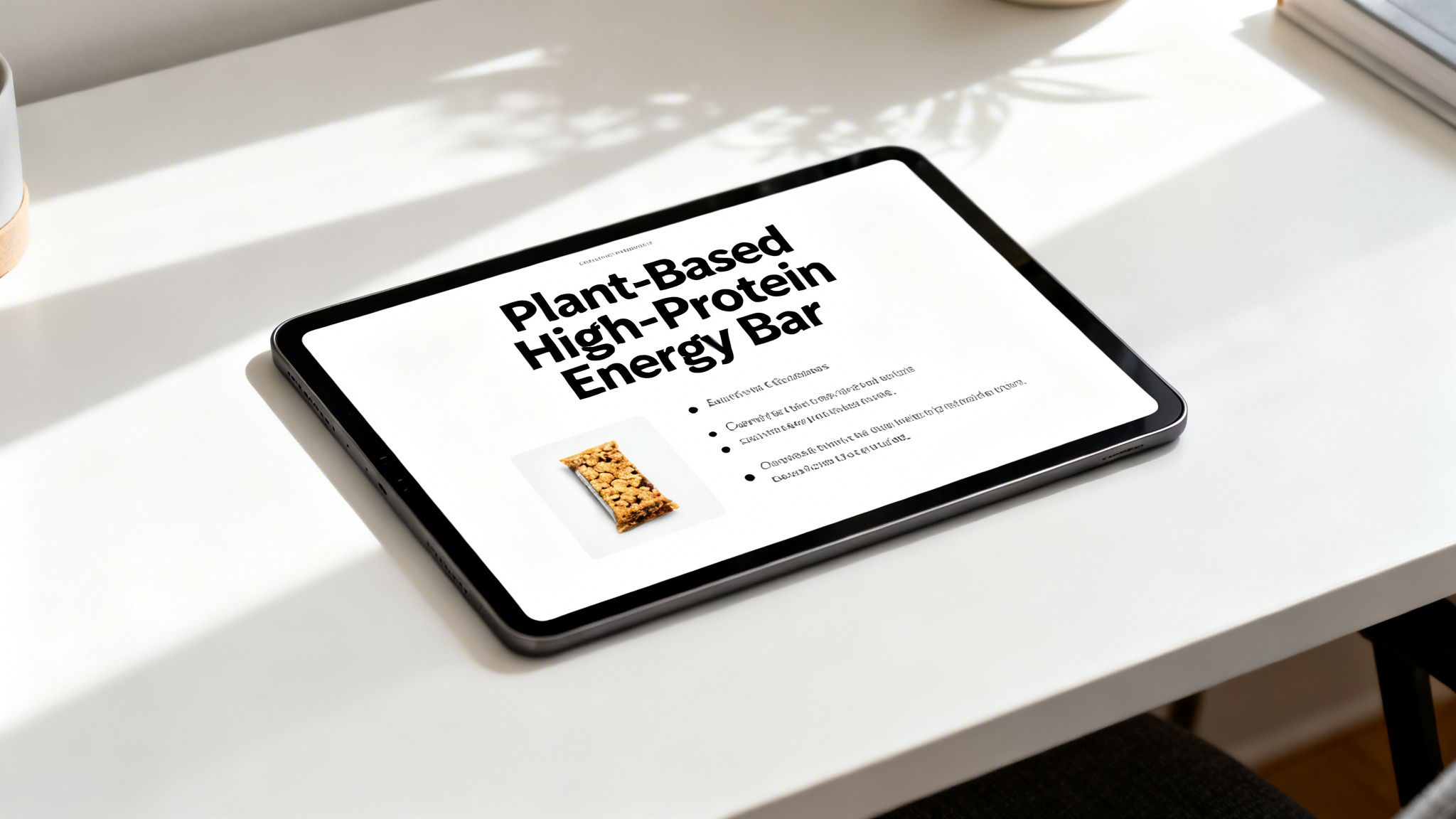
Front-Load the Core Keyword: Place your highest-volume, most relevant keyword at the very beginning of the title. A supplement brand should lead with "Sugar-Free Collagen Powder for Joint Support," not "Premium Brand Collagen Powder."
Use Bullets for Benefits and Secondary Keywords: Your five bullet points are critical for both conversion and ranking. Use them to answer purchase-blocking questions and weave in secondary keywords. Address operational realities directly, like "EBT SNAP ELIGIBLE" or "KETO-FRIENDLY & ZERO SUGAR," which can be decisive conversion triggers.
Analyze Competitor Gaps: Use tools like Helium 10 to scrape the top 10 competitor titles for a target keyword. Identify common terms but, more importantly, find the keyword gaps they are missing. This is where you can differentiate and rank.
Test and Measure Incrementally: Don't overhaul your entire catalog at once. Isolate 5-10% of your ASINs, apply title changes, and monitor sessions and unit session percentage (conversion rate) for 2-4 weeks. A 0.5% lift in unit session percentage on a high-velocity ASIN can significantly improve its contribution margin. If you see a lift, roll it out methodically. Learn more about how to optimize your Amazon product listings effectively.
Effective keyword research is the foundation of a margin-focused SEO strategy. It’s not about finding the highest-volume terms; it’s about identifying high-intent, low-competition keywords that create a direct path for qualified buyers to your product. For CPG brands, this is a critical SEO quick win that prevents wasting ad spend and optimization efforts on battles you can't win against established giants.
This approach pinpoints "white space" opportunities where you can rank faster and more cost-effectively. For example, a snack brand might find that "high-protein low-sugar snack" has a lower search volume than "healthy snack" (2,400 vs. 18,000 monthly searches) but also ten times lower competition. This translates to a lower cost-per-acquisition and a healthier break-even ACOS, directly protecting your margin.
Focus on the Mid-Tail Sweet Spot: For most CPG products, target keywords with 300 to 3,000 monthly searches. These terms often represent a perfect balance of significant search volume and achievable ranking difficulty. A supplement brand could find "collagen peptides for hair skin nails" has 3x less competition than "collagen" while signaling stronger purchase intent.
Build Keyword Clusters, Not Silos: Don't optimize a product page for a single keyword. Build a cluster around a primary keyword with 15-25 related long-tail variations. This signals topical authority to search algorithms and helps you rank for a broader range of valuable search queries.
Analyze Competitor Gaps: Use tools like Semrush or Ahrefs to identify keywords your top competitors are ranking for that you aren't. Conversely, find valuable keywords they are missing. This analysis often reveals untapped opportunities to establish a foothold.
Validate with Multiple Tools: Never rely on a single data source. Cross-reference findings from Helium 10 (for Amazon) and Semrush (for Google) to validate search volume and competition data. To effectively target your audience, a robust understanding of your target keywords is essential; learn more about how to do keyword research that drives results. By understanding the most searched keywords on Amazon, you can better align your strategy with actual consumer behavior.
While keyword optimization gets products seen, visual optimization gets them sold. This is a conversion-focused SEO quick win. High-quality lifestyle images, informative infographics, and enhanced brand content like Amazon's A+ or Walmart's Rich Content directly impact purchase confidence and reduce return rates. For CPG brands, where shoppers cannot physically inspect the product, your visuals are your digital shelf. Up to 40% of cart abandonment stems from poor or inadequate product imagery.
This tactic acts as a powerful multiplier. As SEO efforts drive more traffic, optimized visuals ensure that traffic converts into revenue at a higher rate. It transforms increased sessions into proportionally higher sales, improving inventory velocity and unit economics.
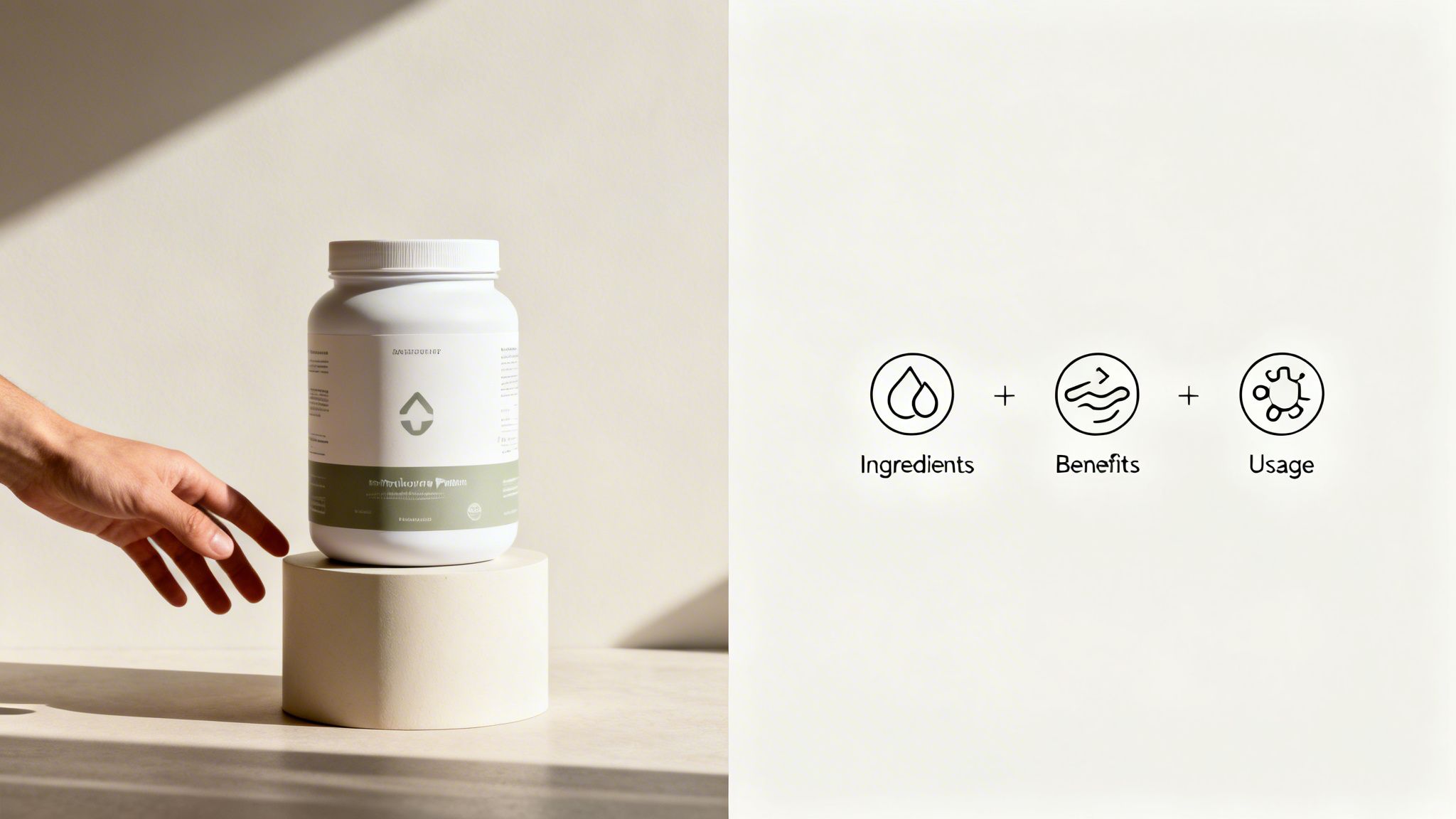
Structure Your Image Stack Strategically: Your primary image must be a clean, compliant product-on-white shot. The second should be a lifestyle image showing the product in use by your target demographic. Follow with infographics that call out key benefits (e.g., a supplement brand highlighting 'clinically studied doses'), and then an image providing a size or scale reference to manage expectations and reduce returns.
Leverage A+ and Rich Content for Storytelling: Use this space to address purchase barriers and tell your brand story. A protein powder brand can use A+ Content modules to show clear mixing instructions, provide recipes, and feature social proof. This builds trust a simple bullet point cannot.
Use Infographics for Functional Benefits: Marketplace rules often restrict text on primary images. Use your secondary images as infographics to communicate complex information quickly. Detail ingredients, highlight certifications like "KETO-FRIENDLY," or show a before-and-after usage scenario, like an energy bar brand showing a person transforming from tired to energized.
Invest in High-Impact Video: Both Amazon and Walmart are prioritizing listings with video content. A simple 30-90 second video demonstrating product use or key features can increase conversion rates by 15-25%. This is no longer a "nice-to-have" but a critical conversion asset. Learn more about mastering visual presentation through effective product photography for Amazon.
For both marketplace and DTC channels, customer reviews and Q&A are dynamic content engines that directly influence search rankings. Marketplace algorithms like Amazon's A9 heavily weight review quantity, recency, and star rating. This makes managing reviews a crucial SEO quick win, as authentic user-generated content signals trust and relevance to both algorithms and shoppers. For CPG brands in health, supplement, or food categories, this is non-negotiable; 44% of consumers will not purchase without seeing reviews.
This tactic directly impacts your conversion rate and ranking velocity. A snack brand that actively generates 150 new reviews in 60 days through a post-purchase email sequence can see its average rating climb from 3.2 to 4.3 stars, leading to an 18% improvement in organic search ranking and a tangible lift in sales.
Implement a Post-Purchase Sequence: Use your email service provider or a marketplace tool to send a review request 7-14 days after delivery—the optimal window where the customer's experience is fresh. An offer of loyalty points or entry into a drawing can boost response rates, but never make it contingent on a positive review.
Respond to All Reviews and Questions: Aim to respond to all new reviews (positive and negative) within 48 hours and all Q&A submissions within 24 hours. Marketplace algorithms prioritize seller responsiveness, and unanswered questions can suppress a listing’s visibility. A fast, professional response shows you are an engaged seller.
Mine Feedback for Optimization Clues: Systematically analyze your reviews and Q&A. An energy drink brand that noticed "is this keto?" being asked 47 times in their Q&A can optimize their title and bullets to highlight "Keto-Friendly," resulting in a 23% lift in search impressions from that segment.
Monitor Review Velocity: Keep an eye on the rate at which you receive new reviews. A sudden drop can be an early indicator of a product quality issue, a change in a marketplace algorithm, or a problem with your fulfillment process that needs immediate attention.
For marketplace sellers, pricing isn't just a financial lever; it's a powerful ranking signal. Amazon’s algorithm heavily weighs competitive pricing, fulfillment speed, and seller metrics when awarding the coveted 'Buy Box'. Since the Buy Box accounts for over 80% of sales, a smart pricing strategy is a direct path to increased visibility and sales velocity, making it an essential SEO quick win. For CPG brands operating on thin margins, this is often the fastest way to boost both sales and unit economics simultaneously.
This approach moves beyond simple repricing by considering demand elasticity and contribution margin protection. For example, a CPG brand could strategically lower the price of an energy bar by just $0.50 to consistently win the Buy Box. This might increase velocity by 35% while only decreasing the per-unit margin by 8%, resulting in a 22% lift in total contribution margin dollars.
Establish Your Margin Floor: Before adjusting prices, build a simple spreadsheet tracking your COGS, marketplace referral fees, FBA/WFS fees, and shipping. Calculate the absolute minimum price you can sell at to remain profitable (your contribution margin floor). Never compete on price below this threshold.
Monitor Competitors and the Buy Box: Use tools like Jungle Scout or Helium 10 to track competitor pricing and your Buy Box win percentage daily. This data reveals how pricing shifts from key competitors directly impact your sales and ranking.
Test Price Elasticity: Don't just race to the bottom. Isolate 10-20% of your SKUs and test a 5-10% price increase. Measure the impact on sales volume and revenue for 2-4 weeks. You may find that certain products can sustain a higher price with minimal sales loss, directly improving your margins.
Use Seasonal Windows for Premium Pricing: Leverage high-demand periods like holidays or Prime Day to test premium pricing. A ready-to-drink beverage brand, for instance, can implement a premium price in summer and a discounted price in the fall, improving annual profit far more than a static price would.
While marketplace SEO is algorithm-driven, your owned DTC channel runs on Google. Technical SEO is the foundation of your website's performance, impacting everything from search rankings to conversion rates. It ensures search engines can crawl, index, and understand your site efficiently. For omnichannel brands, a technically sound DTC site is non-negotiable, as it’s often the first place customers go to validate your brand after discovering you on Amazon or Walmart.
A slow website is a direct hit to your bottom line. Google’s Core Web Vitals are a confirmed ranking factor, meaning that site speed and mobile responsiveness directly affect your visibility. Fixing these underlying issues is a powerful SEO quick win because it improves every other marketing effort, from paid ads to email campaigns, by providing a better landing experience that doesn't waste ad spend.
Benchmark and Diagnose: Use free tools like Google's PageSpeed Insights and Mobile-Friendly Test to get an immediate baseline. These reports will highlight specific problems, such as slow server response times or unoptimized images, giving you a clear action plan.
Compress and Lazy Load Images: Images are frequently the biggest cause of slow load times, often making up 50-70% of a page's total weight. Use tools like TinyPNG to compress all product and lifestyle images. Implement "lazy loading" so images below the fold only load as the user scrolls, significantly improving initial page load speed.
Monitor Core Web Vitals in Search Console: Install Google Search Console and navigate to the "Core Web Vitals" report. This dashboard will show you which URLs are "Poor," "Need Improvement," or "Good." Monitor this report monthly to catch and fix issues before they hurt your rankings.
Conduct a Comprehensive Audit: For a deeper analysis, a full site review can uncover hidden issues like broken links, redirect chains, or missing schema markup. While tools can help, complex problems often require expertise. To ensure a complete and thorough approach to fixing issues, many businesses also benefit from engaging professional SEO audit services to create a prioritized roadmap for improvement.
Strategic content creation is one of the most powerful and underutilized SEO quick wins for CPG brands. Instead of chasing broad, high-volume keywords, this tactic focuses on creating blog posts that target high-intent search terms. These are the queries shoppers use when they are actively evaluating options and are close to making a purchase, such as "best collagen powder for joint pain" or "vegan protein powder vs whey."
This approach funnels qualified, bottom-of-the-funnel traffic directly to your website. A snack brand publishing an article on "High-Protein, Low-Sugar Snacks for Post-Workout Recovery" can capture searchers actively looking for a solution their product provides. This content doesn't just inform; it directly supports inventory velocity by converting educated readers into customers.
Target the "Sweet Spot" Keywords: Focus on search terms with 300 to 3,000 monthly searches. This range typically has enough volume to drive meaningful traffic but low enough competition for brands without massive domain authority to rank.
Structure Content for Featured Snippets: Organize your articles using H2 and H3 headers that directly answer common customer questions. This structure significantly increases your chances of capturing Google's "People Also Ask" boxes and other featured snippets, which drives high-visibility traffic.
Front-Load Your Product in Comparisons: When creating comparison articles, such as "Our Brand vs. Competitor X," position your product first. This simple psychological trick frames your product as the benchmark and captures preference from readers who skim.
Drive Conversions with Strategic Internal Links: Embed internal links from your content directly to your product pages. Use benefit-driven anchor text like "our best collagen peptides for joint health" instead of a generic "click here." This transfers SEO authority and guides the reader seamlessly from consideration to purchase.
Strategic use of customer photos, reviews, and testimonials is more than a conversion tactic; it's a powerful driver of organic visibility. Search engines reward fresh, authentic, and relevant content, and user-generated content (UGC) provides a constant stream of it. With 92% of consumers trusting peer recommendations over brand marketing, UGC is a dual-threat SEO quick win, simultaneously boosting social proof for conversions and providing keyword-rich content that search algorithms favor.
This approach fuels the content flywheel without draining your marketing budget. For example, a supplement brand can build its identity on user testimonials from fitness creators, driving a significant portion of its DTC conversions. Integrating authentic customer experiences into your product pages creates a more trustworthy brand image and strengthens your site's topical authority.

Launch a Branded Hashtag Campaign: Create a simple, memorable hashtag and incentivize customers to share photos and experiences. Offer a discount on their next order or a feature on your social channels to encourage participation and generate a steady flow of content.
Integrate UGC Directly onto Product Pages: Use a tool like Yotpo or Loox to build a gallery of real customer photos directly on your product detail pages. This visual proof can increase time-on-page, a positive SEO signal, and has been shown to improve conversion rates by over 20%.
Actively Seek and Request Permission: Use social listening tools to find organic brand mentions. When you find high-quality UGC, reach out directly to request permission for use. Always get explicit consent before republishing; permission management tools can help automate this.
Showcase Diverse Representation: Actively curate and feature UGC that shows your product being used by a wide range of people. Highlighting different ages, lifestyles, and body types not only promotes inclusivity but also allows more potential customers to see themselves using your product, broadening your market reach.
| Item | 🔄 Implementation Complexity | ⚡ Resource Requirements | 📊 Expected Outcomes | ⭐ Key Advantages | 💡 Ideal Use Cases |
|---|---|---|---|---|---|
| Optimize Amazon and Walmart Listing Titles and Bullet Points | Low–Medium — copy updates + keyword testing | Low — time and keyword tools (Helium 10, Jungle Scout) | 15–35% organic visibility lift in 30–60 days; improved CTR/conversion | Immediate visibility gains with high ROI; platform-compliant SEO | Launching/scaling CPG SKUs; high-intent search capture |
| Conduct Keyword Research and Competitive Gap Analysis | Medium — cross-channel analysis and clustering | Medium — tool subscriptions (Semrush/Ahrefs/Helium10) and analyst time | 30–50% better targeting efficiency; 10–20% more qualified traffic | Identifies white‑space opportunities and prioritizes effort | Managing 50+ SKUs; naming, portfolio prioritization |
| Optimize Product Images and A+ Content for Conversion | Medium–High — photo/video production and A+ design | High — pro photography/video ($500–5,000+), Brand Registry for A+ | 8–15% conversion lift; 20–30% return reduction | Strong conversion uplift; improves trust and differentiation | Visual products (supplements, beverages); seasonal campaigns |
| Build and Optimize Customer Reviews and Q&A Sections | Medium — systems, moderation, policy compliance | Low–Medium — email sequences, review tools, monitoring | 12–25% conversion increase; 15–30% search ranking improvement | Authentic social proof drives trust; surfaces product issues | Review-sensitive categories (food, supplements) |
| Implement Strategic Price Optimization and Competitive Monitoring | Medium–High — repricing rules and elasticity modeling | Medium — repricer tools, analyst, inventory strategy | 20–40% Buy Box win rate improvement; 15–25% margin gains | Directly improves velocity and unit economics | Thin-margin CPG; Buy Box–competitive SKUs |
| Audit and Fix Technical SEO Issues (Site Speed, Mobile, Metadata) | High — developer work and architectural fixes | Medium–High — dev time, CDN, monitoring tools | 15–30% organic visibility lift; 5–10% DTC conversion improvement | Foundational for Google rankings and site UX | DTC/brand sites with performance problems |
| Create High-Intent Content for Product-Comparison and How‑To Keywords | Medium — content strategy, research, production cadence | Medium — writers/SEO ($500–2,000 per piece) and editorial workflow | Drives durable traffic; 40–60% of content traffic → product pages; 2–5% purchase rate | Captures purchase-ready searchers; builds authority long-term | Research-heavy categories (supplements, ingredient-led products) |
| Leverage User-Generated Content (UGC) and Social Proof for SEO and Conversion | Low–Medium — campaigns, curation, permission workflows | Medium — UGC platforms/permission tools and incentives | 15–30% conversion increase; 20–40% faster content velocity | High-authenticity trust signal; low ongoing content cost | Lifestyle brands, social-native products, community-driven growth |
These tactics represent more than a checklist; they are foundational levers for driving immediate, measurable improvements to your digital shelf. From refining listing titles to fixing critical technical SEO issues, each of these SEO quick wins is designed to deliver a high return on a minimal investment of time and resources. You now have a clear roadmap to capture low-hanging fruit and see tangible lifts in traffic, conversion rates, and, ultimately, contribution margin.
The most crucial takeaway is understanding how these individual actions connect to form a cohesive growth engine. Optimizing product images is powerful, but its impact is amplified tenfold when informed by rigorous keyword gap analysis. Similarly, building a robust customer review section not only boosts social proof but also provides a continuous stream of user-generated content and long-tail keywords that search algorithms favor.
The most common pitfall for operators is treating these optimizations as one-off projects. The trade-off brands consistently underestimate is the operational discipline required to turn these quick wins into a sustainable process. Launching a new product without a pre-planned review generation strategy, or adjusting prices without a system to monitor competitor movements and its impact on conversion, leaves money on the table. For example, a 1% drop in your Amazon Unit Session Percentage because of a new competitor can erase thousands in contribution margin if left unchecked for a month.
True channel mastery comes from integrating these efforts into your standard operating procedures. This means your keyword research should inform not only listing titles but also your content strategy and PPC campaigns. A technical SEO audit should be a quarterly health check, not a one-time fix. This disciplined approach transitions a brand from a reactive, algorithm-chasing mindset to a proactive, data-driven operation. It's the difference between temporary boosts and building a resilient, margin-focused e-commerce asset.
This is the core of a structured growth framework: establishing a solid Foundation (technical SEO, keyword strategy), moving to continuous Optimization (listings, pricing, conversion), and finally achieving Amplification where each element reinforces the others. Higher visibility drives more traffic, which generates more data to refine conversion, leading to improved unit economics. That improved margin then funds further inventory and strategic growth, creating a durable competitive advantage.
Executing these SEO tactics is the first step. The next is integrating them into a system that ties directly to your P&L. If you are a CPG founder or operator ready to connect your marketplace performance to profitable growth, RedDog can help build that system.
Book a complimentary 30-minute growth strategy call and we will conduct a working session to analyze your channel economics, identify your highest-impact optimization levers, and map out a clear plan for profitable scale.
Leave a comment: