
Published: March 2020 | Last Updated:January 2026
© Copyright 2026, Reddog Consulting Group.

Struggling to move the needle on your Amazon sales? Too many brands get stuck chasing isolated tactics—a keyword tweak here, a new ad campaign there—and wonder why real growth remains elusive.
Sustainable success on Amazon doesn't come from a single magic bullet. It’s the result of a disciplined, systematic approach that builds momentum over time. The most successful sellers learn how to increase Amazon sales by first building a rock-solid operational base, then optimizing every element for conversion, and finally, amplifying their reach to win their category.
Navigating the Amazon marketplace can feel overwhelming. With millions of sellers competing for attention, simply listing a product isn't enough. Many brands fall into the trap of random tactics, leading to wasted ad spend and flatlined sales.
This is where a proven framework makes all the difference. Instead of throwing strategies at the wall to see what sticks, you need a repeatable system for growth. At RedDog Group, we build every client's omnichannel plan around three core pillars designed to work in sequence.
This isn't just a checklist; it's a strategic progression where each stage builds on the last. You wouldn't run ads to a broken product page, would you? This approach prevents that, ensuring every dollar you invest delivers maximum impact.
Here's the breakdown:
This visual shows how each pillar creates a clear path to scalable growth.
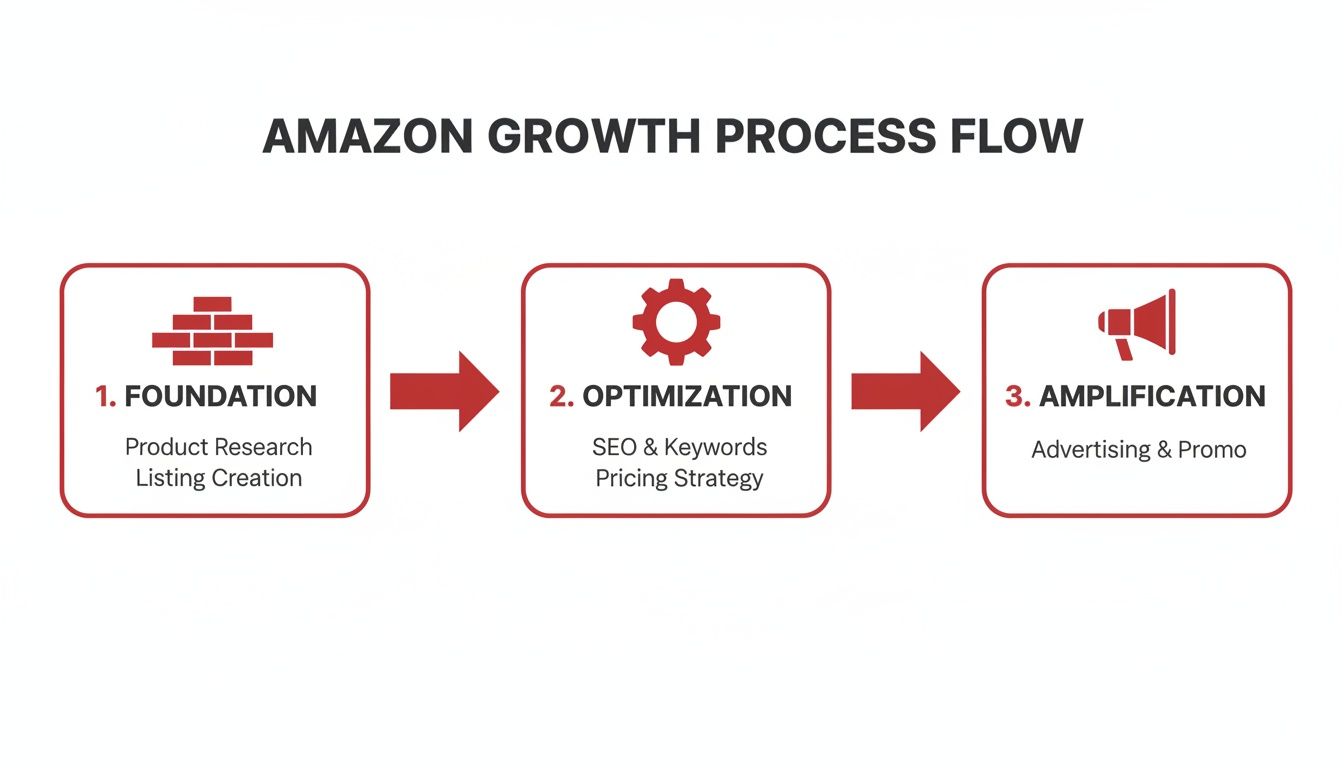
Following this Foundation → Optimization → Amplification model creates a powerful flywheel effect where every component strengthens the others, driving measurable results.
Here's a quick overview of how these pillars fit together into a cohesive strategy.
This table outlines the core pillars for systematically increasing Amazon sales, from building a solid base to scaling your reach.
| Pillar | Focus Area | Key Objective |
|---|---|---|
| Foundation | Catalog Health & Operations | Build a stable, error-free base for all future growth activities. |
| Optimization | Conversion Rate & SEO | Turn clicks into sales by making your product listings irresistible. |
| Amplification | Traffic & Visibility | Drive targeted shoppers to your optimized listings to scale revenue. |
This framework isn't just theory; it’s a practical roadmap for turning a sales channel into a predictable and profitable growth engine.
The opportunity for brands that execute this well is massive. According to recent market share reports, Amazon captures nearly 40% of the entire U.S. e-commerce market. That’s a huge slice of the pie for sellers who can build and execute a strategic plan.
By treating Amazon sales growth as a holistic system rather than a checklist of tasks, you shift from reactive problem-solving to proactive, strategic scaling.
Ready to build your growth engine? Let's start with the most critical pillar: your foundation.
Before you spend a single dollar on ads, your Amazon operations must be flawless. Many brands leak revenue by ignoring the basics, but on a marketplace as competitive as Amazon, a shaky foundation undermines every growth effort. This is the first and most critical pillar of our Foundation → Optimization → Amplification framework.
This stage is about plugging leaks and ensuring operational readiness. It involves a systematic audit of your catalog health, brand protection, and fulfillment capabilities. Fixing these core issues isn't just housekeeping; it directly impacts your visibility, conversion rates, and long-term profitability. Think of it as tuning the engine before hitting the accelerator.
Getting this right is non-negotiable, especially considering modern shopping behavior. According to recent studies on shopping behavior, 56% of consumers now start their product search on Amazon—well ahead of Google. This means for many brands, their Amazon presence is their primary digital storefront. Any foundational cracks will turn customers away.
Your product catalog is the digital backbone of your Amazon business. Simple errors, like incorrect categorization or a suppressed listing, can make your products invisible to buyers. A suppressed listing is the equivalent of being out of stock—it generates zero sales.
A healthy catalog means every product is listed correctly, is easily discoverable, and has no compliance issues. This requires regular audits to catch and fix problems before they damage your sales velocity.
Common issues to address include:
If you own a trademark, enrolling in Amazon Brand Registry is one of the most powerful moves you can make. It's not just a defensive tool; it’s a key that unlocks a suite of marketing and analytics tools essential for brand growth.
This is what Amazon's dashboard for Brand Registry looks like, showcasing the tools you gain access to.
Enrollment gives you true control over your product detail pages and unlocks A+ Content, Brand Stores, and Sponsored Brands ad formats. These tools allow you to build an authentic brand experience on the platform, elevating you from a simple product listing to a legitimate digital storefront.
Brand Registry transforms your presence from that of a simple reseller to a protected, authoritative brand owner. This control is fundamental to building long-term customer trust and increasing sales.
Finally, a bulletproof foundation demands operational excellence, starting with inventory management. Even a perfectly optimized listing with a massive ad budget will fail if the product is out of stock. Stockouts are silent killers on Amazon; they halt your sales and crush your product's organic ranking.
Maintaining a healthy Inventory Performance Index (IPI) score is crucial. Amazon uses this metric to evaluate how well you manage your FBA inventory. A low score can lead to storage limits, preventing you from sending in enough stock to meet demand—a disaster during peak seasons.
Here’s a practical checklist to start auditing your foundational health now.
Use this checklist to audit the core components of your Amazon account and identify immediate areas for improvement.
| Checklist Item | Why It Matters for Sales | Action Step |
|---|---|---|
| Catalog Audit | Ensures all products are visible and correctly categorized for search. | Run a weekly "Listing Quality" report in Seller Central to identify and fix suppressions. |
| Brand Registry | Protects against counterfeiters and unlocks advanced marketing tools. | If you have a trademark, enroll immediately via the Brand Services portal. |
| IPI Score | Determines your FBA storage limits and impacts your ability to stay in stock. | Monitor your IPI weekly and focus on improving sell-through rates and reducing excess inventory. |
By methodically nailing these foundational elements—catalog health, brand protection, and operational readiness—you build a stable platform primed for growth. Once this base is secure, you can confidently move to optimizing your listings to turn every click into a sale.
With a solid foundation in place, the next step is turning browsers into buyers. This is the Optimization stage of our framework. The goal is to transform your product detail pages from simple information sheets into high-performance sales machines that maximize the value of every click, whether from organic search or a paid ad.
A well-optimized listing answers a customer's questions before they ask them, building trust and demonstrating value at every scroll. Think of your listing as your best salesperson, working 24/7. It must be clear, compelling, and persuasive.
Your product title is often the first and only thing shoppers see in search results. Its job is to grab attention and signal relevance immediately. An effective title blends your most important keywords with key product benefits, such as material, quantity, or a primary use case.
For example, a title like "Yoga Mat" is weak and gets lost in the noise. A much stronger, optimized title would be: "Extra-Thick TPE Yoga Mat (6mm) – Non-Slip, Eco-Friendly with Carrying Strap for Hot Yoga & Pilates". This version tells shoppers exactly what they’re getting and why it’s a better choice.
Your bullet points are where you close the sale. Don't just list features; translate them into benefits that solve a customer's problem.
This approach helps customers visualize themselves using the product, making the purchase decision easier.
People shop with their eyes. On Amazon, your images and videos are your product. High-quality, professional visuals are a non-negotiable requirement for building trust and boosting your conversion rate.
Your visual strategy should include:
For sellers in a niche like apparel, visual presentation is everything. A strong apparel product photography guide can provide specific techniques to make your clothing stand out, which directly impacts sales.
Your product photography isn't just about showing what a product looks like; it's about conveying its quality, value, and the experience the customer will have. Skimping on visuals is a guaranteed way to lose sales.
For Brand Registered sellers, A+ Content is one of the most powerful tools available. It allows you to add rich text, comparison charts, and high-quality images to your product description, effectively creating a mini landing page within your listing.
Use this space to tell your brand story, explain product features in detail, or address common customer questions. A well-designed A+ Content layout can significantly increase conversion rates by giving shoppers the extra information and brand confidence they need to click "Add to Cart." For a complete walkthrough, explore our in-depth guide to optimize your Amazon product listings.
Optimization isn’t a one-time task; it's an ongoing process fueled by customer feedback. Your customer reviews and the "Voice of the Customer" dashboard in Seller Central are goldmines of actionable information.
This dashboard aggregates customer feedback and return data to flag issues with your products or listings. For example, if multiple returns cite "wrong item sent," you likely have a labeling problem. If reviews repeatedly mention a product is "smaller than expected," it’s a clear signal to add better dimension infographics to your images.
By actively monitoring this feedback and using it to refine your copy, images, and even the product itself, you create a powerful improvement loop that continuously boosts your conversion rate. This customer-centric approach is the key to figuring out how to increase Amazon sales for the long term.
Once your product listings are optimized and converting well, it's time for the final pillar of our growth framework: Amplification. This is where you scale your efforts to reach a wider audience.
With a solid foundation and a high-converting product page, every dollar invested in ads and promotions delivers a greater return. Now, we move beyond organic visibility to actively capture new customers through a strategic mix of Amazon's advertising tools and external traffic strategies.

Simply enabling an automatic Sponsored Products campaign is a quick way to burn through your budget with minimal results. Real success with Amazon advertising starts with clear, defined goals. Your campaign structure should differ completely depending on whether you're launching a new product, defending your market share, or liquidating inventory.
Before adjusting any campaign settings, define your objective:
While Sponsored Products are the workhorse of Amazon PPC, an effective strategy utilizes all available ad types to create a full-funnel presence.
For a deeper dive into structuring these campaigns for maximum impact, explore our guide on expert Amazon Ads management.
A smart PPC strategy doesn't just chase sales; it builds a defensive moat around your brand while creating new pathways for customer discovery. It’s an investment in both immediate revenue and long-term brand equity.
Ads bring traffic to your page, but promotions can provide the final nudge needed for a purchase. Amazon offers powerful tools to attract deal-seeking shoppers and provide a significant sales boost.
Coupons are highly effective. The small orange badge stands out in search results and can dramatically increase your click-through rate. Lightning Deals, featured on the popular "Today's Deals" page, can drive a massive volume of sales in just a few hours—perfect for boosting sales velocity and improving organic rank.
The key is to be strategic. Overusing deals can train customers to wait for a discount. Use them for key shopping holidays, to kickstart a new product launch, or to clear out aging inventory.
An underutilized strategy is driving your own traffic to Amazon. Amazon rewards sellers who bring new customers from external channels like social media, email lists, or blogs.
The Amazon Brand Referral Bonus program gives brand-registered sellers a bonus—typically around 10% of the sale price—on sales originating from external traffic. This bonus is credited back to you, effectively lowering your referral fees and making external marketing campaigns more profitable.
This isn't just about the bonus. The additional sales velocity sends a strong positive signal to Amazon's A9 ranking algorithm, which can provide a significant organic boost. It demonstrates how integrating on-Amazon strategy with well-executed modern e-commerce advertisement strategies can pay dividends across all your channels.
You can't improve what you don't measure. After building a solid foundation, optimizing your listings, and amplifying your reach, the final piece is creating a data-driven feedback loop. This is how you transition from reactive problem-solving to proactive, strategic brand management.
Guesswork is the most expensive mistake on Amazon. Relying on gut feelings for inventory planning, ad spend, and product launches is a surefire way to waste capital. The key to consistently increasing Amazon sales is knowing your numbers. Amazon provides the necessary reporting tools; learning to interpret them separates the amateurs from the pros.

It's easy to get lost in the data within Seller Central. Instead of drowning in vanity metrics, successful brands focus on a few Key Performance Indicators (KPIs) that reveal the true health of their business.
These are the core metrics to monitor:
By obsessing over these core metrics, you can spot problems in real-time and make smarter, data-backed decisions. It’s about finding the signal in the noise.
Data is useless without action. The real skill is connecting your KPIs to your next strategic move, creating a cycle of continuous improvement where every decision is a calculated one.
For instance, if your Unit Session Percentage suddenly drops for a specific product variation, it’s time to investigate. Check your returns data and the Voice of the Customer dashboard. Are shoppers complaining the color doesn't match the photos? Is there a sizing issue?
Similarly, a rising TACOS could mean your ad campaigns are becoming less effective or your organic rank is slipping, forcing you to pay more to maintain sales. That insight should trigger an immediate audit of your PPC campaigns and keyword strategy. This type of monitoring is a fundamental part of effective digital shelf analytics and is critical for maintaining growth momentum.
This data-first approach allows you to anticipate challenges and address issues before they become major problems. It helps you answer key business questions with confidence:
When you consistently track KPIs and translate them into clear action items, you stop merely managing an Amazon store and start actively growing a resilient, profitable business. This is how you build a brand that lasts.
To conclude this guide, let's address a few of the most common questions brands ask us. These topics frequently come up in client discussions and will help clarify how to put these strategies into practice.
This is a common question, and the honest answer is: it depends on the action.
Some fixes, like relisting a suppressed product, deliver immediate results. A well-timed coupon can boost sales within hours.
However, true, sustainable growth—the kind that comes from building organic rank through strong SEO and consistent sales velocity—is a long-term play. You should expect to see meaningful, stable improvements within 3 to 6 months of consistently applying these principles.
The goal isn't a temporary sales spike; it's building a predictable growth engine. Short-term tactics provide a lift, but a long-term strategy creates lasting momentum and profitability.
The choice between Fulfillment by Amazon (FBA) and Fulfillment by Merchant (FBM) depends on your operational capabilities and business model.
Many successful brands use a hybrid approach, placing their best-sellers in FBA for the Prime advantage while fulfilling niche or oversized items themselves via FBM.
There is no magic number. Instead of focusing on a specific dollar amount, you should monitor your Total Advertising Cost of Sale (TACOS).
This is the metric that truly matters. It measures your ad spend against your total sales (both paid and organic), providing a clear picture of how advertising is fueling your overall brand growth.
During a product launch, a higher TACOS is often necessary to gain initial traction. As your organic rank improves, your TACOS should decrease. This signals that your ad spend is working efficiently, driving both paid traffic and lifting organic sales simultaneously.
Ready to stop guessing and start growing? The RedDog Group team builds and executes data-driven strategies that turn your Amazon channel into a powerful revenue engine. Let’s build your growth plan.
Leave a comment: