
Published: March 2020 | Last Updated:January 2026
© Copyright 2026, Reddog Consulting Group.

Most American retail brands underestimate the impact of digital shelf analysis, even though over 60 percent of online product views come from competitive search rankings. For e-commerce managers, understanding how your products stack up on major marketplaces can spell the difference between steady growth and missed opportunities. This guide demystifies digital shelf analysis, exposes common myths, and shows how any small or medium-sized American brand can use data-driven techniques to secure a stronger online foothold.
| Point | Details |
|---|---|
| Holistic Digital Shelf Management | Digital shelf analysis encompasses product visibility, content optimization, pricing strategy, and consumer perception across online platforms. Brands must regularly track key metrics to enhance their digital market position. |
| Inclusivity for All Brands | Digital shelf analysis is beneficial for both large retailers and small to medium brands, providing insights that can improve their online sales performance. |
| Data-Driven Decision Making | Utilizing diverse data sources and analytics platforms enables brands to make informed decisions that enhance discoverability and sales conversion rates. |
| Avoiding Common Pitfalls | Businesses must ensure data accuracy and compliance to prevent costly mistakes that can harm their reputation and profitability. |
Digital shelf analysis represents a comprehensive approach to monitoring and strategically managing product performance across online retail platforms. At its core, digital shelf management involves tracking how products appear, perform, and compete within digital marketplaces.
The fundamental goal of digital shelf analysis goes far beyond simple product listing. It encompasses a holistic view of product visibility, content optimization, pricing strategy, and consumer perception across multiple online channels. Brands must track critical metrics like search ranking, product image quality, customer reviews, pricing competitiveness, and inventory availability to understand their true digital market position.
Contrary to popular misconceptions, digital shelf analysis is not exclusively for large retailers or ecommerce giants. Small and medium-sized brands can leverage these insights to improve their online presence and drive sales. Common myths include the belief that digital shelf management is static or requires expensive tools. In reality, it’s a dynamic process that demands continuous monitoring and strategic adaptation.
Pro tip: Conduct a monthly digital shelf audit to identify performance gaps and optimize your online product presentation across different marketplaces.
Understanding the critical digital shelf metrics is essential for driving e-commerce growth and strategic decision making. Businesses can leverage comprehensive data sources to track performance across multiple online platforms and optimize their digital presence.
Key digital shelf metrics encompass several critical dimensions of online product performance. These include product availability, search visibility, pricing accuracy, content quality, and competitive positioning. Brands must track metrics such as search ranking position, product listing completeness, customer review ratings, price competitiveness, and real-time inventory levels. E-commerce performance data reveals that these metrics directly correlate with sales conversion and market share.

Here’s a summary of key digital shelf metrics and why they matter:
| Metric | What It Measures | Why It Matters |
|---|---|---|
| Product Availability | Stock status across channels | Prevent lost sales due to out-of-stock |
| Search Visibility | Rank in search results | Improve discovery and traffic |
| Pricing Accuracy | Correctness vs. competitors | Protect margins and conversion rates |
| Content Quality | Images and descriptions | Increase buyer confidence and sales |
| Competitive Positioning | Performance vs. rivals | Identify market strengths and gaps |
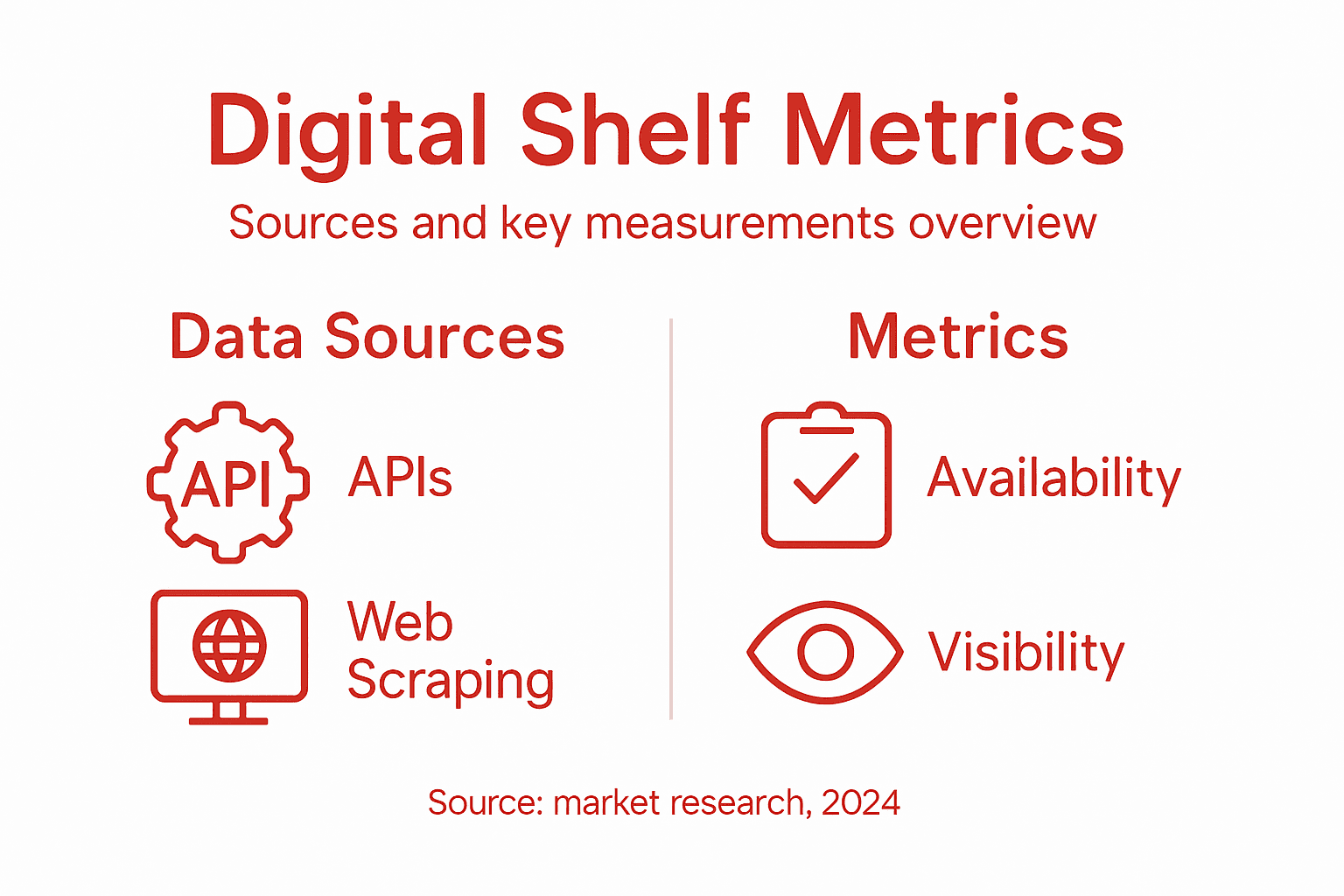
Data sources for digital shelf analysis are diverse and multifaceted. They range from e-commerce platform APIs and web scraping tools to point-of-sale systems and consumer feedback mechanisms. Government datasets, third-party aggregator feeds, and specialized analytics platforms provide rich insights into product performance. By integrating data from multiple sources, brands can develop a comprehensive understanding of their digital marketplace positioning and identify strategic opportunities for improvement.
Pro tip: Implement a monthly cross-platform data integration strategy to consolidate metrics from different digital shelf sources and track your brand’s holistic online performance.
Digital shelf analytics platforms have evolved dramatically, offering businesses increasingly sophisticated tools to understand and optimize their online marketplace performance. Digital analytics solutions range from basic dashboard tools to advanced artificial intelligence-powered platforms that provide comprehensive insights across multiple sales channels.
The primary categories of digital shelf analytics platforms include product content management systems, competitive benchmarking tools, pricing intelligence platforms, and omnichannel performance tracking solutions. Each platform type serves a unique purpose in helping brands understand their digital market positioning. Enterprise-grade analytics systems utilize advanced technologies like online analytical processing (OLAP) and machine learning to deliver real-time, actionable insights into product performance, enabling businesses to make data-driven strategic decisions.
When selecting a digital shelf analytics platform, businesses must consider factors such as their operational scale, budget constraints, integration capabilities, and specific performance tracking requirements. Some platforms specialize in specific metrics like pricing intelligence, while others offer comprehensive, end-to-end digital shelf management solutions that integrate multiple data sources and provide holistic performance views.
Compare features and strengths of major digital shelf platform types:
| Platform Type | Main Function | Best Use Case | Business Impact |
|---|---|---|---|
| Content Management | Centralize product details | Brands managing many SKUs | Ensures data consistency |
| Benchmarking Tools | Track competitor metrics | Pricing and market analysis | Reveal improvement areas |
| Pricing Intelligence | Monitor and optimize pricing | Dynamic pricing strategies | Boost margins and competitiveness |
| Omnichannel Tracking | Aggregate cross-platform data | Multichannel retailers | Enables unified performance insights |
Pro tip: Conduct a thorough needs assessment and request demo versions from multiple digital shelf analytics platforms to find the most suitable solution for your specific business requirements.
Digital shelf analysis transforms e-commerce performance by providing actionable insights that directly impact sales potential. E-commerce sales strategies have become increasingly sophisticated, with data-driven approaches enabling brands to optimize their online marketplace presence and drive significant revenue growth.
The primary mechanisms through which digital shelf analysis boosts sales include enhanced product discoverability, dynamic pricing optimization, and improved content quality. By tracking search rankings, customer engagement metrics, and competitive positioning, brands can make precise adjustments that increase visibility and attract more potential buyers. Market performance insights reveal that businesses utilizing advanced digital shelf analytics can respond rapidly to market trends, reducing out-of-stock incidents and implementing more effective promotional strategies.
Competitive analysis represents another critical avenue for sales enhancement. Digital shelf tools enable brands to benchmark their performance against competitors, identify pricing gaps, and understand consumer preferences in real-time. This granular understanding allows businesses to make strategic adjustments that improve product positioning, optimize marketing efforts, and ultimately drive higher conversion rates across digital sales channels.
Pro tip: Implement a weekly digital shelf performance review to quickly identify and address potential sales optimization opportunities.
Digital shelf analysis demands precision and strategic oversight to avoid costly errors and regulatory pitfalls. Data integration challenges can significantly undermine the effectiveness of e-commerce performance tracking, creating potential risks for businesses that rely on digital marketplace insights.
The most critical mistakes in digital shelf analysis include inaccurate data synchronization, delayed platform updates, and inconsistent cross-channel information management. These errors can lead to misguided pricing strategies, incorrect product representations, and diminished consumer trust. Compliance risks extend beyond operational inefficiencies, potentially exposing businesses to legal challenges related to pricing regulations, promotional claim accuracy, and consumer data privacy protection.
Digital recordkeeping compliance requires meticulous documentation and robust data management practices. Organizations must implement comprehensive auditing processes, maintain transparent data retention policies, and develop systematic approaches to verifying the authenticity and integrity of their digital shelf information. Failure to establish these protocols can result in significant financial penalties, reputational damage, and loss of consumer confidence.
Pro tip: Develop a monthly compliance checklist that systematically reviews data accuracy, regulatory alignment, and digital shelf information integrity.
Struggling to keep up with fluctuating product availability and fierce online competition? The article revealed key challenges like pricing accuracy, search visibility, and content quality that directly impact e-commerce success. At Reddog Group, we specialize in helping small and medium-sized brands overcome these exact pain points through proactive omnichannel retailing, fine-tuned marketplace management, and strategic brand growth. Our tailored services deliver measurable improvements across Amazon FBA, DTC channels, and beyond to elevate your digital shelf performance.

Take charge of your online marketplace presence today. Visit Reddog Group to discover how our proven strategies in product listing optimization, inventory management, and marketing campaigns will boost your visibility and drive sustainable sales growth. Don’t let inaccurate data or missed opportunities hold you back. Connect with us now to transform insights into actionable results and stay ahead in a competitive digital market.
Digital shelf analysis is the process of monitoring and managing product performance across online retail platforms to improve visibility, optimize content, set competitive pricing, and enhance consumer perception.
Digital shelf analysis boosts e-commerce sales by enhancing product discoverability, optimizing dynamic pricing, and improving content quality, which collectively attract more potential buyers and increase conversion rates.
Key metrics include product availability, search visibility, pricing accuracy, content quality, and competitive positioning, all of which are essential for evaluating online product performance and guiding strategic decisions.
Common mistakes include inaccurate data synchronization, delayed updates across platforms, and inconsistent information management, which can lead to misguided strategies and loss of consumer trust.
Leave a comment: