
Published: March 2020 | Last Updated:November 2025
© Copyright 2026, Reddog Consulting Group.

Think of an Amazon FBA freight forwarder not just as a shipping company, but as a strategic partner essential for scaling your brand. They are the logistics experts who manage the complex journey your products take from an overseas factory all the way to an Amazon fulfillment center.
Getting this partnership right is the foundation of a reliable supply chain—and a key driver of measurable growth.
For many Amazon sellers, the path from manufacturing to a customer's doorstep is a black box. You place an order with your supplier, cross your fingers, and weeks (or months) later, your inventory hopefully shows up in Seller Central.
But what happens in between is a complex dance of logistics, paperwork, and strict regulations. This is where a skilled freight forwarder steps in, turning a potentially chaotic process into a predictable, growth-driving machine. An expert forwarder does more than just book space on a ship; they’re your operational quarterback.
This entire process, shown below, highlights the key stages a forwarder manages to get your products from the factory floor into Amazon's network.
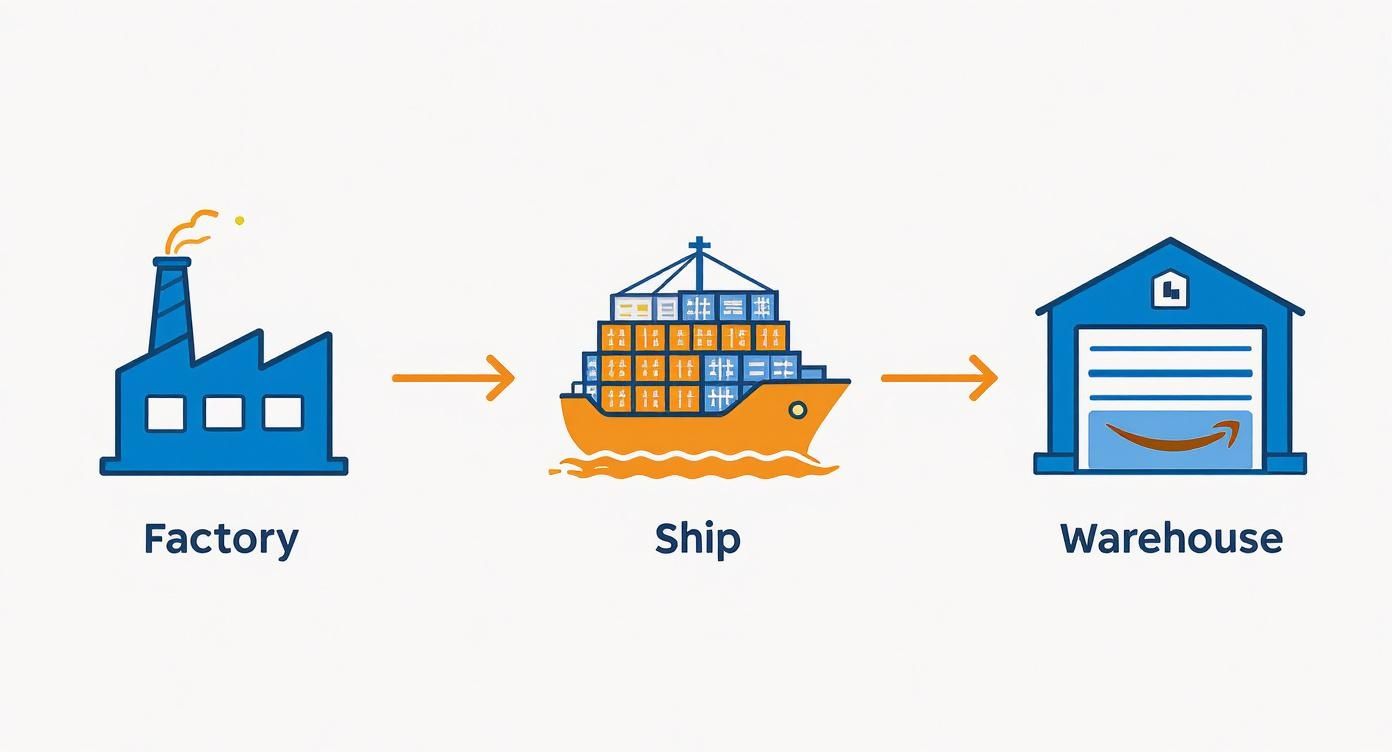
This streamlined flow shows how a forwarder acts as the central hub connecting manufacturing, global transit, and final-mile delivery to Amazon, creating an integrated logistics system.
Here’s a real-world example of what happens when logistics fail. A promising CPG brand sourced a new product line from Vietnam, timing the launch for a major holiday sale. Their supplier recommended a cheap shipping agent who offered a price that seemed too good to be true. It was.
The problems started immediately. The agent filed the Importer Security Filing (ISF) late, resulting in a $5,000 fine before the container even left the port.
When it finally arrived in the US, customs flagged the shipment for an exam due to incorrect paperwork. This caused a two-week delay and racked up thousands in demurrage fees. By the time the goods were released, they had missed Amazon’s delivery appointment and the peak sales window.
The brand not only lost a massive amount of potential revenue but also paid dearly in unexpected fees—all because they chose a partner based on price instead of expertise.
This is a classic example of a weak logistics ‘Foundation.’ Without a solid, reliable freight partner, any efforts to optimize listings or amplify marketing are built on shaky ground. Your supply chain is the first and most critical pillar of sustainable omnichannel growth.
Building a strong logistics framework is non-negotiable for serious FBA sellers. You can learn more about the complete process in our guide to Fulfillment by Amazon explained benefits and process. This foundational knowledge is key to selecting the right partners and scaling effectively.
Choosing the right partner from a sea of freight forwarders for Amazon FBA can feel overwhelming, but it’s one of the most important decisions for your business. This goes beyond just getting a price quote. You're not just buying space on a ship; you're finding a partner whose expertise can either save you a fortune or cost you one.
A great forwarder doesn’t just move boxes. They anticipate problems, streamline your logistics, and stop expensive mistakes before they happen. They are the engine that keeps your supply chain running smoothly, enabling predictable inventory flow and brand growth.
Not all freight forwarders are created equal, especially when it comes to the unique requirements of Amazon FBA. Your vetting process needs to focus on a few non-negotiables that separate the true experts from the generalists.
First, gauge their direct experience with Amazon. Ask pointed questions about booking delivery appointments in Carrier Central. See if they can talk confidently about FNSKU labeling or Amazon’s strict palletization rules. Vague answers are a major red flag.
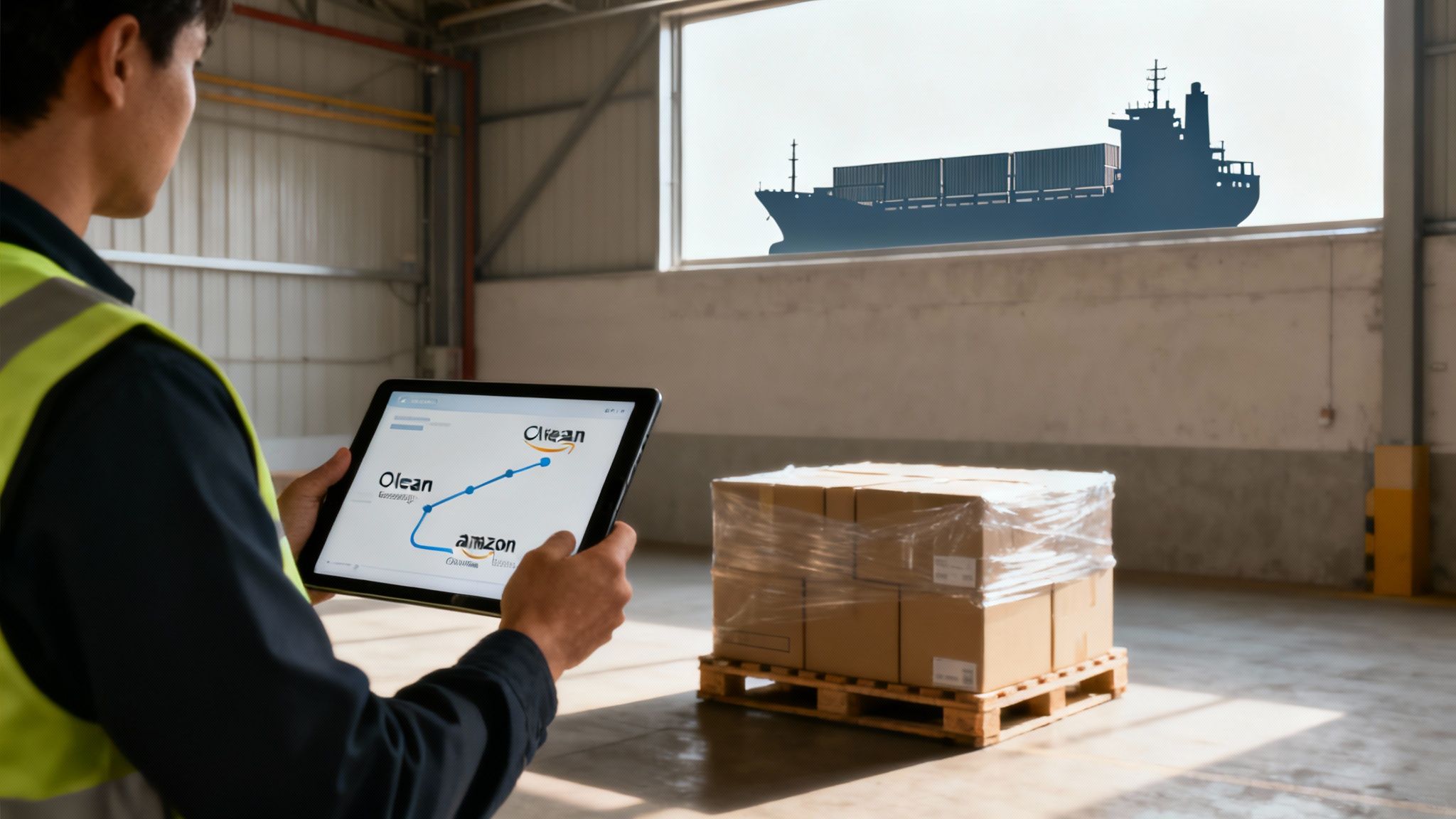
Next, look at their technology. In today's market, visibility is everything. A modern forwarder should provide a live portal to track your shipment from the factory floor to the FBA check-in queue. In fact, 82% of shippers now say real-time visibility is a top priority when choosing a logistics partner. This isn't just a "nice-to-have"; it's essential for managing inventory and making data-driven decisions.
A great partner provides a portal where you can track your shipment from the factory door to the FBA check-in queue. This level of transparency is no longer a luxury; it's a requirement for effective inventory management and integrating your online and offline sales channels.
Once you have a shortlist of potential partners, the conversation will shift to how you're going to move your products. The three main options—Full Container Load (FCL), Less than Container Load (LCL), and Air Freight—each serve a specific purpose. Understanding the trade-offs is where you start to optimize costs and improve efficiency.
Here’s a practical breakdown of how these shipping methods compare.
| Shipping Method | Best For | Typical Transit Time | Cost Per Unit | Key Consideration |
|---|---|---|---|---|
| FCL (Full Container Load) | Large shipments (over 15 CBM) | 30-45 days | Lowest | Most cost-effective for high volume; the backbone of a mature supply chain. |
| LCL (Less than Container Load) | Smaller shipments, test orders | 35-50 days | Medium | Flexible for lower volume, but higher risk of delays due to consolidation at the port. |
| Air Freight | Urgent restocks, lightweight items | 5-10 days | Highest | The fastest way to avoid a stockout on a best-seller and protect sales velocity. |
The right choice depends on your inventory needs, cash flow, and sales velocity. Many successful brands use a hybrid approach: sea freight for routine replenishment and air freight for emergencies or new product launches.
Many of the same principles for vetting logistics providers apply whether you're looking for a forwarder or a warehouse. For more on this, check out this guide on choosing the right 3PL partner.
A freight quote is just the starting point. To truly understand a potential partner, you need to dig deeper with questions that reveal their operational capabilities and how they handle inevitable challenges.
Here are the questions we recommend asking:
Choosing your freight forwarder is a critical business decision. Take your time, focus on FBA expertise and communication, and build a reliable supply chain that can truly support your brand's growth.
International shipping runs on paperwork. While it isn't the most exciting part of growing an eCommerce brand, getting your documentation right is an absolute pillar of a successful supply chain. A single mistake doesn't just create a small headache—it can lead to thousands in fines, weeks of delays, and completely derail a product launch.
Think of customs paperwork as your product’s passport. Without the right documents, filled out perfectly, your inventory isn't going anywhere. While your freight forwarder handles the execution, understanding the key documents lets you manage the process and spot red flags before they become expensive problems.
This is a critical part of building a solid ‘Foundation’ for your FBA business. A smooth, compliant customs process keeps your inventory flowing predictably, which is essential for staying in stock and protecting your sales velocity on Amazon.
Every international shipment depends on a few essential documents. Your forwarder will likely prepare most of these using the information you provide, but you are ultimately responsible for their accuracy. Familiarizing yourself with them is non-negotiable.
A small error on any of these forms can have a huge ripple effect. For instance, undervaluing goods on a commercial invoice to save on duties can lead to a customs exam, steep penalties, and long, painful delays.
Beyond the core documents, certain shipments have extra, time-sensitive requirements that often trip up sellers. For sea freight entering the US, the two most important are Harmonized System (HS) codes and the Importer Security Filing (ISF).
An HS Code is a universal system for classifying traded products. Customs authorities worldwide use these numeric codes to identify products and apply the correct duties and taxes. Using the wrong HS code is a common and costly mistake, often resulting in overpayment of duties or compliance penalties.
The Importer Security Filing (ISF), sometimes called "10+2," is a US Customs and Border Protection (CBP) regulation. It requires importers to electronically file advance shipment information with CBP at least 24 hours before the goods are loaded onto a vessel heading for the U.S.
Missing the ISF filing deadline is not an option. The penalty is a staggering $5,000 per violation, and CBP is notoriously strict. A good freight forwarder will make this a top priority to shield you from this massive, yet easily avoidable, cost.
This is where a forwarder with deep Amazon FBA experience truly proves their worth. They don’t just know general rules; they understand how to navigate the specifics of getting goods into Amazon's network, which is rapidly expanding its own logistics capabilities. Amazon has invested billions into its end-to-end logistics network, with an estimated spend of $95.8 billion on shipping in 2024 alone. Through services like Amazon Global Logistics (AGL), they aim to cut lead times and lower costs. It's worth exploring the details on Amazon's growing logistics powerhouse to understand where the industry is heading.
Getting your products safely into the destination country is a huge milestone, but the journey isn't over. The final, critical test is meeting Amazon's strict inbound requirements. This isn't just about following rules; it's the key to how Amazon’s massive fulfillment network operates with such incredible speed.
Every rule, from label placement to pallet wrapping, is designed to let their automated systems receive your inventory quickly. When your shipment is compliant, it flies through the system, and your products become available for sale faster. If it’s not, you’re looking at rejected shipments, unexpected prep fees, and painful delays that can halt sales.
This is where you can Optimize your process. Nailing your prep and packaging is one of the most direct ways to protect your margins and ensure a smooth handoff to Amazon.
The FBA compliance process starts with getting your labels right—at every level. Your units, cartons, and pallets each have specific labeling rules that must be followed perfectly.
If you're shipping enough inventory to use pallets, the rules get even more specific. Amazon's fulfillment centers are built for efficiency, and a non-compliant pallet can bring the receiving line to a grinding halt.
A well-built pallet is essential. It's vital to ensure your FBA shipments have excellent load stability and are protected from the elements. For brands wanting to maximize pallet integrity, looking into modern solutions like stretch hood for superior load stability and weather protection can provide a significant advantage.
Amazon's receiving process is a high-speed, automated system. They don't have time to re-stack a wobbly pallet or guess what's in an unlabeled box. Your compliance enables their efficiency, which in turn gets your products checked in and available for sale faster.
The stakes are high. With over 9.7 million sellers worldwide and 82% of them using FBA, the network’s efficiency is paramount. For these sellers, using FBA can lead to a 19% reduction in out-of-stock rates and a 12% improvement in inventory turnover—data that underscores why compliance is so critical to unlocking this operational power.
Even experienced sellers can make mistakes. Here are a few of the most common compliance issues that cause inbound delays:
Getting FBA compliance right from the start directly impacts your bottom line. It saves you from extra fees, speeds up receiving times, and reduces the risk of lost inventory. For a deeper look into managing your stock levels effectively, see our guide to Amazon FBA inventory management and avoiding out-of-stock scenarios.
Your shipment has cleared customs, and the paperwork is sorted. It feels like the home stretch, but this last leg—the "final mile" from the port to Amazon's warehouse—is where small mistakes can become large, expensive problems. The coordination required here is intense and is a make-or-break moment for your shipment.
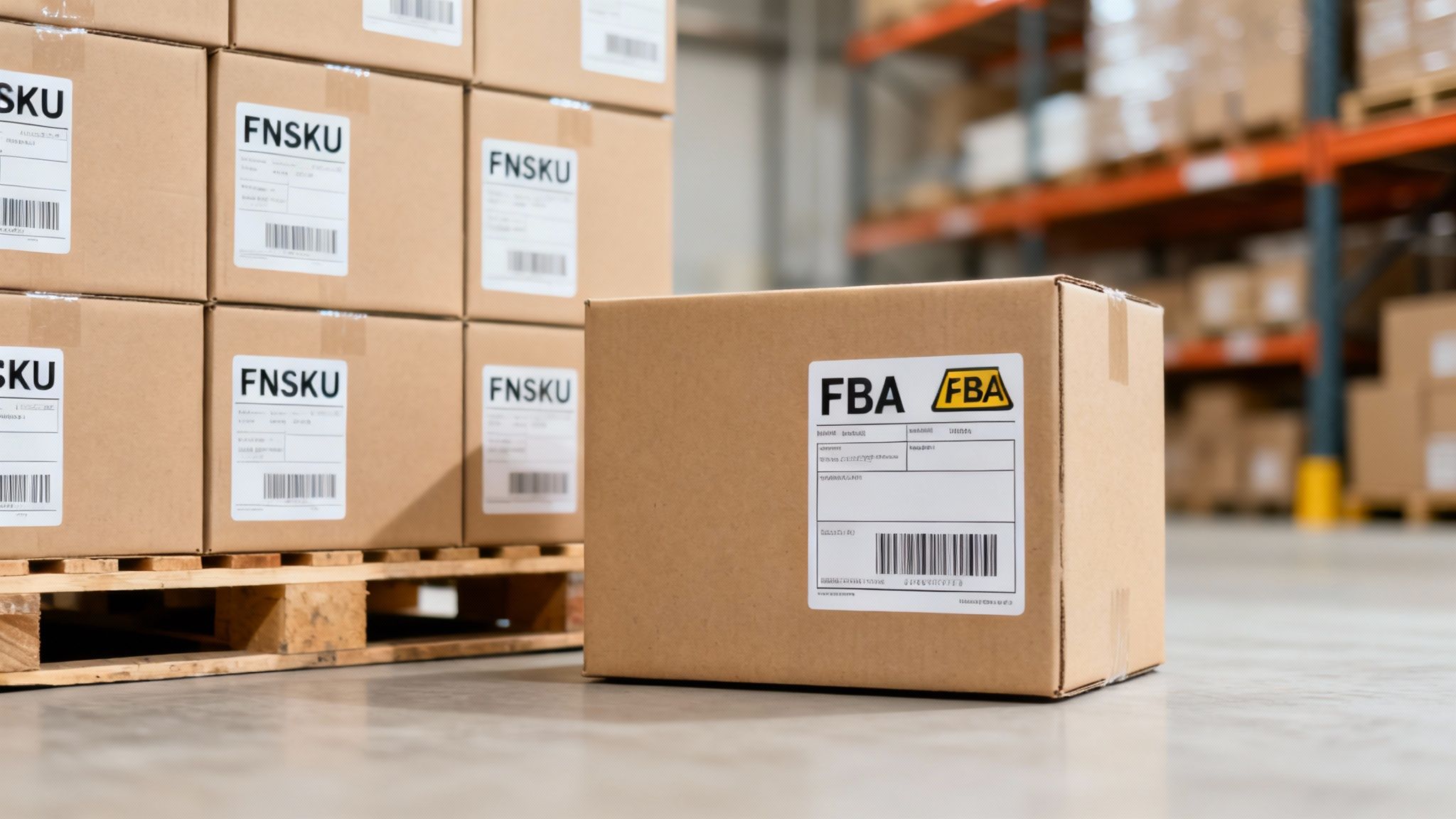
This stage is where your preparation pays off. The vetting, compliance checks, and careful shipment prep all culminate here. A smooth final mile gets your products checked in and ready to sell without a hitch. A clumsy one can undo all your hard work.
Here’s the reality of shipping to Amazon: you can't just show up. Every single delivery must have a pre-scheduled appointment booked through the Carrier Central portal. This is a non-negotiable rule.
An experienced freight forwarder for Amazon FBA knows this process inside and out. They partner with carriers who are experts at navigating Amazon's strict procedures and know exactly how to secure a delivery slot. This appointment system is how Amazon manages the immense volume of inventory arriving at its fulfillment centers every day.
The consequences of a mishandled final mile are swift and costly. If a truck misses its scheduled appointment, Amazon will turn them away—no exceptions.
When that happens, a domino effect of problems begins:
Imagine a driver arriving unannounced. They will be turned away, and your shipment will be sent to the back of the line. It could be days—or even weeks during peak season—before another appointment is available.
Think of a savvy freight forwarder as your air traffic controller for the final mile. They confirm the delivery appointment, relay every detail to the trucking partner, and have contingency plans for common issues like port congestion or traffic.
The handoff from your forwarder to the final-mile carrier is where clear communication is paramount. A top-tier forwarder manages this entire sequence to ensure nothing falls through the cracks.
Here's what that smooth coordination looks like:
This seamless flow is the hallmark of a logistics partner who specializes in FBA. Their expertise prevents the small logistical hiccups that can quickly derail an entire shipment. For a complete overview, our guide on how to ship from China to Amazon FBA breaks down the entire end-to-end process.
Getting FBA logistics right means learning to sidestep common pitfalls that quietly erode profits and disrupt your supply chain. With smart planning, you can transform shipping from a frustrating cost center into a competitive advantage that fuels brand growth.
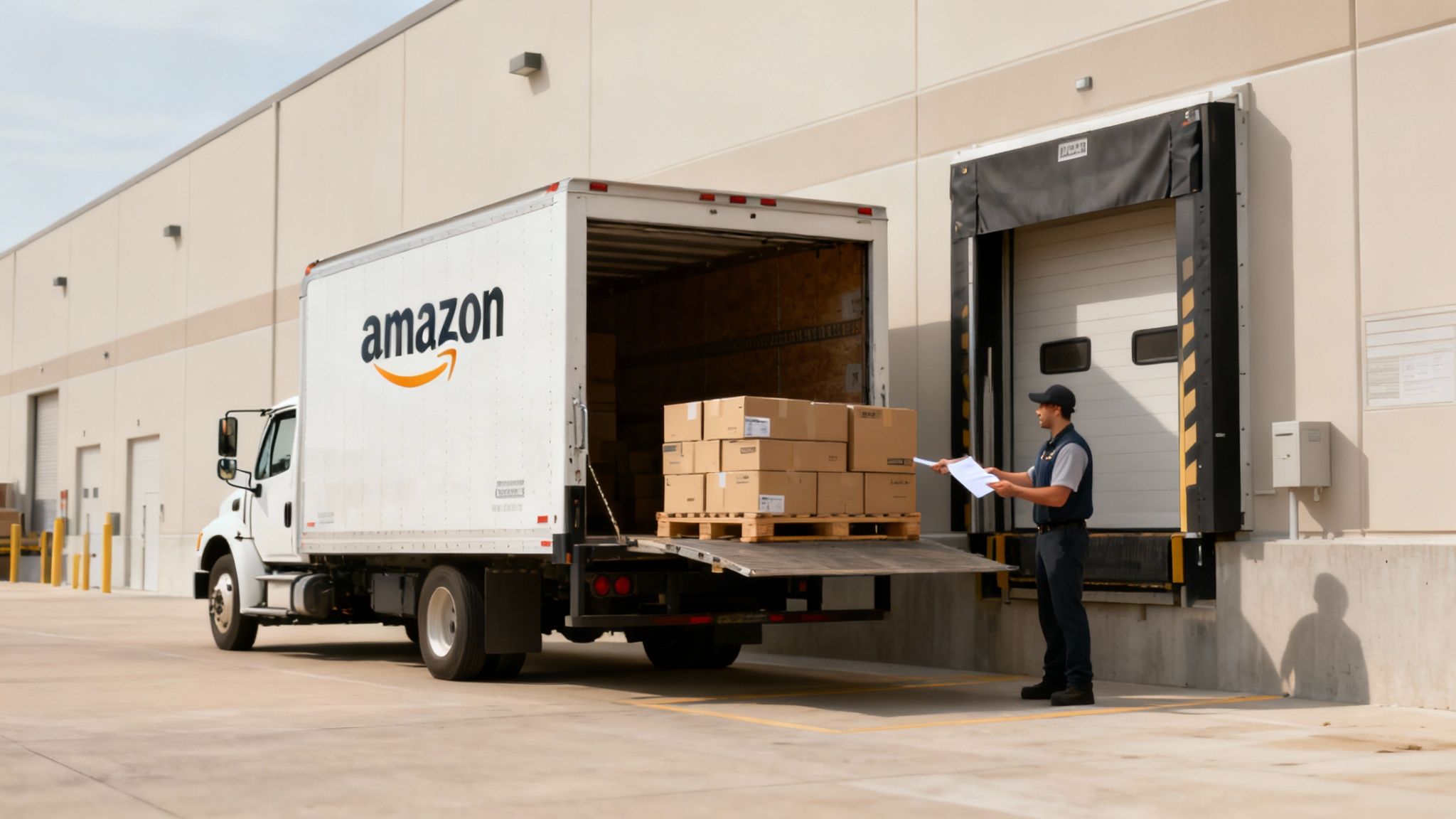
Too many sellers get burned by choosing a forwarder based on the lowest quote, only to face hidden fees and crippling delays. Others underestimate peak season transit times and end up with costly stockouts when sales should be booming. Another classic mistake is forgetting to factor duties and taxes into product margins, which can instantly turn a profitable product into a loss-leader.
The key is to shift from a reactive to a proactive mindset. Stop putting out fires and start anticipating them with smart strategies that protect your bottom line and keep your inventory flowing.
Here are a few pro-level tactics we implement with our clients to keep their logistics lean and effective:
The goal isn't just to build an efficient supply chain, but a resilient one. When you plan ahead and understand all the costs involved, logistics stops being a headache and starts becoming a powerful tool for growth and profitability.
Making these foundational adjustments will turn your supply chain from a constant vulnerability into a real strategic asset.
If you're new to FBA logistics, you likely have questions. Here are clear answers to some of the most common ones we hear from sellers.
It’s easy to confuse these two, but they play distinct roles. A freight forwarder is the general contractor for your entire shipment, while the customs broker is the specialized inspector who gets it legally across the border.
While you can hire them separately, using a forwarder with integrated customs brokerage streamlines the process and reduces the chance of communication errors.
This is a key milestone for any growing Amazon brand. Moving from air to sea is a strategic trade-off: you exchange speed for significantly better profit margins.
The turning point is when your sales forecasting is solid enough to plan inventory at least 90 days out. This buffer allows you to leverage the massive cost savings of ocean freight without risking a stockout and losing sales momentum.
Continue using air freight for new product launches to test the market quickly or for emergency restocks. But as soon as a product demonstrates steady sales, transition it to ocean freight. Your bottom line will thank you.
This is simple: You are. Never assume your freight forwarder or the carrier has you fully covered. Their standard liability is minimal and won't come close to the actual value of your inventory if something goes wrong.
Most carriers offer basic coverage that might pay out a tiny fraction of your cost of goods—a risk not worth taking. Always purchase separate cargo insurance, either through your forwarder or a third-party provider. Consider it a non-negotiable cost of doing business; it's the only way to protect your investment.
Your supply chain is the foundation of your brand's growth. If you're ready to build a resilient, cost-effective logistics strategy, the team at RedDog Group is here to help you scale. Let’s Talk Growth.
Leave a comment: