
Published: March 2020 | Last Updated:November 2025
© Copyright 2026, Reddog Consulting Group.

Over 60 percent of american retailers say that understanding where their customers spend time online is their biggest marketing challenge. In a fast-moving digital world, clarity on business goals and smart channel choices can make all the difference between flat sales and real retail growth. This guide reveals proven steps for building a winning strategy, from targeting the right platforms to tracking performance for stronger results.
| Key Point | Explanation |
|---|---|
| 1. Define clear business goals | Establish SMART objectives tailored to your retail strategy for more effective digital marketing planning. |
| 2. Select appropriate digital channels | Identify the online platforms where your target customers are active to optimize marketing efforts and focus your resources. |
| 3. Develop a comprehensive content strategy | Plan content that aligns with customer journeys, using various types that engage and convert potential buyers effectively. |
| 4. Integrate essential marketing tools | Use CRM, analytics, and social media tools to streamline efforts and track performance across all marketing channels. |
| 5. Monitor and optimize regularly | Continuously assess campaign performance with analytics to adjust strategies and improve overall marketing effectiveness. |
Establishing clear business goals and identifying the right digital marketing channels are foundational to creating a successful retail growth strategy. According to research from Monash University, developing SMART (Specific, Measurable, Achievable, Relevant, Time-bound) goals is critical for effective digital marketing planning.
Start by conducting a comprehensive assessment of your current business objectives. Are you looking to increase online sales, expand market reach, improve brand awareness, or drive customer engagement? Each goal requires a different strategic approach. Dspace Research emphasizes the importance of integrating digital marketing strategies that align directly with your specific business goals and customer understanding.
To select the most appropriate target channels, map out where your ideal customers spend their time online. This might include social media platforms, search engines, industry forums, email networks, or marketplace sites. Consider factors like customer demographics, purchasing behaviors, and channel engagement rates. By strategically choosing channels that match your business goals and customer preferences, you can maximize your marketing efficiency and potential for growth. A guide to multichannel retailing success can provide additional insights into developing a robust channel strategy.
Pro tip: Avoid spreading your resources too thin across multiple channels. Focus on 2 3 platforms where you can consistently deliver high quality content and engagement, rather than attempting to be everywhere at once.
Developing a robust content and campaign strategy is critical for driving retail growth and engaging your target audience. Monash University emphasizes the importance of creating content plans that align closely with both audience interests and specific business goals, recommending the use of comprehensive content calendars and SEO best practices.
Start by mapping out a detailed content strategy that addresses different stages of the customer journey. This means creating content that attracts, educates, and converts potential customers. According to Francis Press Research, successful digital marketing hinges on data analysis that allows brands to evaluate campaign effectiveness and adjust strategies based on consumer behavior insights. Consider developing content types that resonate with your audience such as blog posts, product tutorials, customer testimonials, behind the scenes videos, and interactive social media content.
To maximize your campaign effectiveness, implement a data driven approach to content creation and distribution. Track key performance indicators like engagement rates, conversion metrics, and audience reach across different channels. A comprehensive content strategy guide can help you refine your approach.
Pro tip: Create a flexible content calendar that allows for real time adjustments based on performance data and emerging market trends. This approach ensures your marketing remains responsive and targeted.

Monash University emphasizes the critical importance of auditing existing digital assets and selecting appropriate marketing frameworks to organize your digital efforts effectively. Setting up and integrating essential marketing tools requires a strategic approach that aligns with your specific business goals and technological capabilities.
Begin by identifying key marketing tools that will support your digital strategy across different channels. According to Francis Press Research, successful retail marketing requires comprehensive integration of digital platforms to meet customer experience requirements. Essential tools typically include customer relationship management (CRM) systems, email marketing platforms, social media management tools, analytics software, and content management systems. Look for solutions that offer seamless integration capabilities and can communicate across multiple marketing channels.
Prioritize tools that provide robust data tracking and reporting features. This will help you monitor campaign performance, understand customer behavior, and make data driven decisions. An omnichannel marketing integration guide can provide additional insights into selecting the right technological ecosystem for your business.
Pro tip: Always test tool integrations thoroughly and create a backup system for critical data to prevent potential disruptions in your marketing workflow.
StackAdapt highlights innovative strategies for executing digital marketing campaigns, emphasizing the importance of advanced targeting techniques that connect with customers across multiple platforms. Executing successful digital campaigns requires a sophisticated approach that blends creativity with data driven precision.
According to Francis Press Research, multi channel marketing strategies play a critical role in influencing consumer purchase decisions. Begin by developing a comprehensive campaign strategy that leverages different digital platforms such as social media, search engine marketing, email marketing, and programmatic advertising. Use dynamic retargeting to reconnect with potential customers who have previously interacted with your brand. Customize your messaging and creative assets to match the specific characteristics of each platform while maintaining a consistent brand voice.
Implement advanced tracking and analytics to monitor campaign performance in real time. This allows you to make quick adjustments and optimize your marketing efforts across different channels. An Amazon advertising management guide can provide additional insights into platform specific strategies.
Pro tip: Create platform specific content variations that respect each channel unique audience expectations while maintaining your core brand message. Avoid using a one size fits all approach that can dilute your marketing effectiveness.
Monash University emphasizes the critical importance of implementing robust analytics tools to track key performance indicators and generate data driven insights for continuous marketing improvement. Monitoring and optimizing campaign performance is not just about collecting data it is about transforming raw information into actionable strategic decisions.
According to StackAdapt, advanced performance measurement goes beyond traditional digital metrics. Implement comprehensive tracking strategies that include brand lift studies and footfall attribution to understand the complete impact of your digital campaigns. Focus on analyzing metrics such as conversion rates, customer acquisition costs, engagement levels, return on ad spend, and customer lifetime value. Use these insights to make precise adjustments to your marketing strategies, reallocating resources to the most effective channels and tactics.
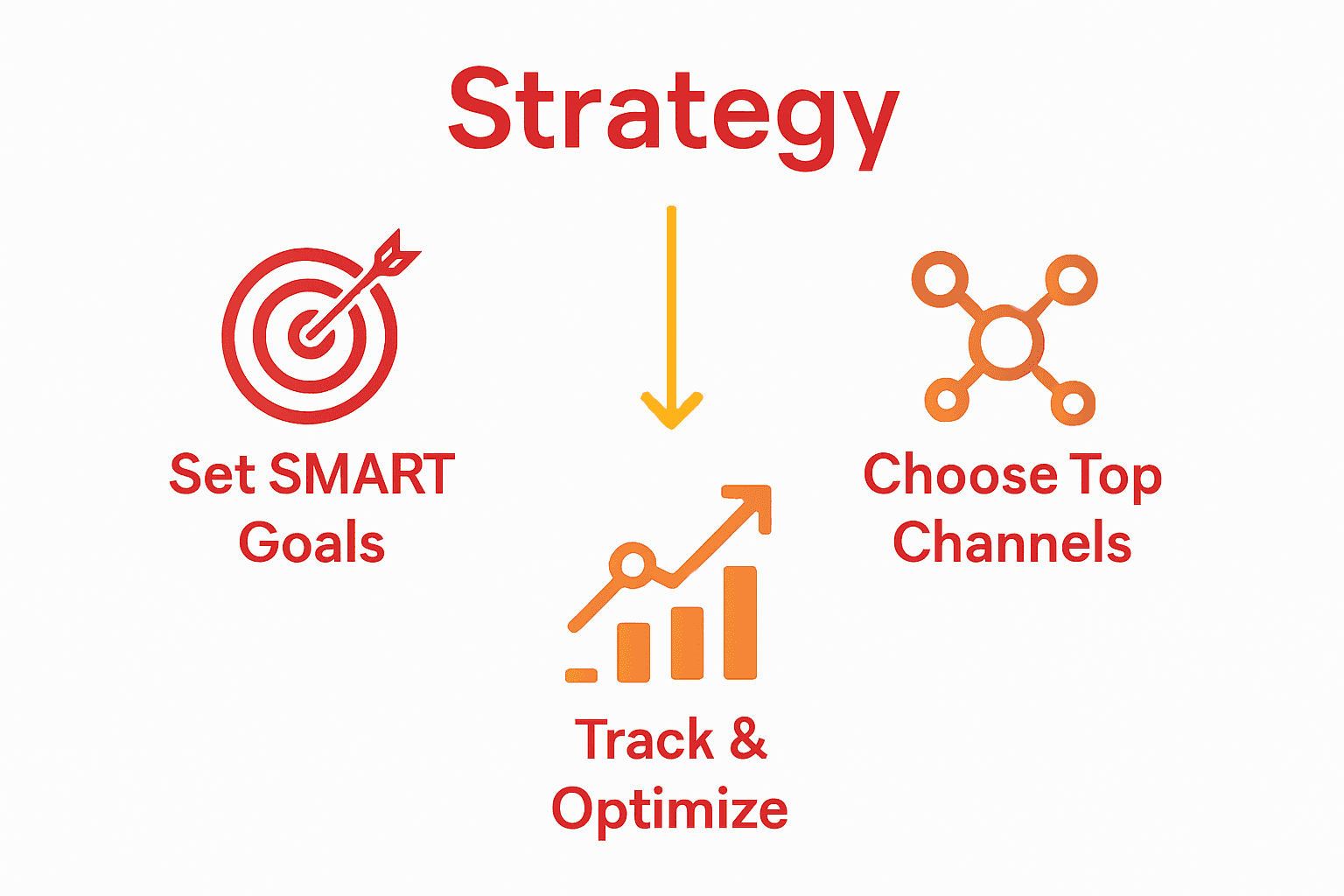
Establish a systematic review process where you evaluate campaign performance weekly or monthly. This allows you to quickly identify trends, respond to changes in customer behavior, and optimize your marketing approach in real time. A data driven marketing strategies guide can provide additional frameworks for performance analysis.
Pro tip: Create a performance dashboard that consolidates key metrics from across your digital platforms, enabling quick visual assessment of your marketing effectiveness and highlighting areas requiring immediate attention.
If you find defining clear business goals and selecting the right digital channels overwhelming the path laid out in the article highlights the importance of focused strategies that combine goal setting with efficient content and campaign execution for retail success. Many retailers struggle with integrating tools and tracking performance in real time which can stall growth and limit customer engagement. You deserve a trusted partner who understands the challenges of multichannel retailing and can deliver measurable growth through proven omnichannel marketing expertise.
Reddog Group specializes in crafting tailored digital marketing workflows designed exactly for small to medium retail businesses aiming to expand their market reach and increase sales across platforms like Amazon FBA and DTC channels. With experience managing over 30 000 SKUs and more than 50 brands we bring robust solutions in campaign management product listings and inventory optimization to the table. Visit our Digital & Business Consulting Services by Reddog Consulting page to discover how our data driven approach can transform your digital marketing into a scalable growth engine.
Take control of your retail growth today. Get expert guidance to align your marketing tools campaign execution and analytics for maximum impact. Explore real success stories and start your journey with Reddog Group at https://reddog.group. Ready to make your digital marketing workflow work for you Visit our Home page now and see how we make growth sustainable and measurable.
To start, define your business goals and identify the right digital marketing channels. Assess areas like online sales, brand awareness, or customer engagement, and choose 2-3 channels where your audience is most active.
Create a detailed content plan that addresses each stage of the customer journey, focusing on content types that attract and convert customers. Consider implementing a flexible content calendar to adjust your strategy based on performance data.
Identify essential marketing tools that support your digital strategy, such as CRM systems and analytics software. Prioritize tools with robust data tracking features that allow seamless integration across multiple channels to enhance your efficiency.
Develop a comprehensive strategy that utilizes various digital platforms like social media and email marketing. Customize content for each platform while ensuring a consistent brand voice to enhance engagement and effectiveness.
Focus on tracking performance indicators such as conversion rates, customer engagement levels, and return on ad spend. Regularly review these metrics to make data-driven adjustments and improve marketing effectiveness over time.
Establish a systematic review process to evaluate campaign performance weekly or monthly. This practice helps you quickly identify trends and optimize your marketing approach in real-time.
Leave a comment: