
Published: March 2020 | Last Updated:December 2025
© Copyright 2026, Reddog Consulting Group.

Over 90 percent of American ecommerce leaders rely on analytics to shape their strategies and stay ahead in the market. In such a fast-paced business environment, understanding what drives customer choices and sales trends is essential for long-term success. Whether you are aiming to outpace competitors or improve your bottom line, this guide will help you harness data-driven tools and insights to meet your goals.
| Point | Details |
|---|---|
| Ecommerce Analytics Enhance Decision-Making | Leveraging ecommerce analytics allows businesses to transform raw data into actionable insights, driving precise, data-driven strategies for growth. |
| Comprehensive Tool Utilization is Essential | Utilizing a variety of ecommerce analytics tools helps businesses gain insights into customer behavior, optimize marketing efforts, and enhance financial performance. |
| Metrics Drive Sales Optimization | Key performance metrics such as conversion rates and customer lifetime value are crucial for understanding and improving sales dynamics. |
| Ignoring Data Insights Poses Risks | Neglecting ecommerce data analytics can lead to missed opportunities, increased operational vulnerabilities, and potential financial losses in a competitive market. |
Ecommerce analytics represent a sophisticated data management approach that transforms raw digital transaction information into actionable strategic insights. By systematically collecting, analyzing, and interpreting online sales data, businesses can uncover critical patterns in customer behavior, purchasing trends, and operational performance. Understanding how digital analytics drive business performance enables companies to make precise, data-driven decisions that directly impact growth and profitability.
Web analytics provide a comprehensive view of digital operations by tracking multiple key metrics across online sales channels. These metrics typically include website traffic, conversion rates, customer acquisition costs, average order value, cart abandonment rates, and customer lifetime value. By examining these interconnected data points, businesses can identify both opportunities for optimization and potential barriers in their sales funnel. Leveraging real-time data analysis enhances customer insights and enables more responsive, targeted marketing strategies.
The core benefits of ecommerce analytics extend far beyond basic number tracking. Businesses can gain profound strategic advantages through detailed performance assessment:
Pro Tip - Data Strategy: Develop a systematic approach to analytics by establishing clear key performance indicators (KPIs) and creating a standardized reporting framework that allows consistent, meaningful performance tracking across all digital sales channels.
By integrating robust ecommerce analytics, businesses transform raw data into a strategic asset that drives intelligent decision-making and sustainable growth.
Ecommerce analytics tools represent sophisticated software solutions designed to capture, process, and visualize complex digital sales data across multiple platforms and channels. These powerful tools enable businesses to transform raw transactional information into strategic intelligence that drives informed decision-making. Developing advanced on-premises analytics solutions requires sophisticated frameworks that can integrate web analytics with comprehensive application logging and tracking mechanisms.
The core types of ecommerce analytics tools can be categorized into several critical domains, each serving unique strategic purposes:
These tools provide granular insights into different aspects of online business performance, ranging from website traffic patterns to detailed customer interaction mapping. Understanding the role of omnichannel analytics helps businesses create integrated strategies that leverage data across multiple digital touchpoints.

Pro Tip - Tool Selection: Prioritize analytics tools that offer seamless integration capabilities, customizable reporting, and real-time data processing to ensure comprehensive and actionable business intelligence.
Successful implementation of these analytics tools requires a strategic approach that aligns technological capabilities with specific business objectives, transforming raw digital data into meaningful competitive advantages.
Here’s a quick comparison of key ecommerce analytics tool categories and their primary business value:
| Tool Category | Main Focus Area | Typical Use Case | Business Impact |
|---|---|---|---|
| Web Analytics Tools | Website performance | Track and analyze site visitor data | Informs user experience design |
| Conversion Optimization Tools | Improving conversion rates | Test changes, optimize landing pages | Boosts sales and revenue |
| Customer Behavior Tools | User interactions | Map journeys, analyze session activity | Enables personalization |
| Sales & Revenue Tools | Financial performance | Monitor sales, revenue, trends | Supports data-driven decisions |
Sales optimization metrics serve as the critical diagnostic tools that enable businesses to understand, predict, and enhance their digital performance. Business analytics in e-commerce provides powerful insights by measuring market trends and uncovering deep patterns in consumer behavior that drive strategic decision-making. These metrics transform raw data into actionable intelligence, allowing companies to make precision-targeted improvements across their sales ecosystem.
Key performance indicators for ecommerce sales optimization can be categorized into several fundamental groups:
Conversion-Focused Metrics
Customer Engagement Metrics
Revenue Performance Metrics
Advanced analytics techniques using machine learning enable businesses to identify intricate patterns in transactional data, optimizing product placement and developing sophisticated cross-selling strategies. By analyzing these metrics comprehensively, companies can create predictive models that anticipate customer needs and proactively adjust their sales approaches.
Pro Tip - Metric Tracking: Establish a consistent monthly dashboard that tracks your most critical sales metrics, comparing current performance against historical baselines and industry benchmarks to maintain continuous improvement.
Successful sales optimization requires a holistic approach that goes beyond simple number tracking, transforming data into a strategic roadmap for sustainable business growth.
Cross-channel customer behavior analysis represents a sophisticated approach to understanding complex consumer interactions in the digital marketplace. Advanced machine learning frameworks can process session-level interaction records to predict nuanced user behaviors and purchase patterns, enabling businesses to develop more targeted and personalized marketing strategies.
Effective cross-channel analysis requires examining multiple dimensions of customer engagement:
Digital Touchpoint Tracking
Behavioral Segmentation Strategies
Key Analysis Techniques
Visual analytics systems for retrospective performance analysis enable businesses to align performance features and feedback across multiple channels, providing comprehensive insights into customer interaction dynamics. By understanding these intricate behavioral patterns, companies can create more responsive and personalized customer experiences.
Pro Tip - Behavioral Tracking: Implement a unified customer data platform that consolidates interactions from multiple channels, creating a holistic view of individual customer journeys and preferences.
Successful cross-channel analysis transforms disconnected data points into a strategic narrative that reveals the complex motivations and preferences driving customer decisions.
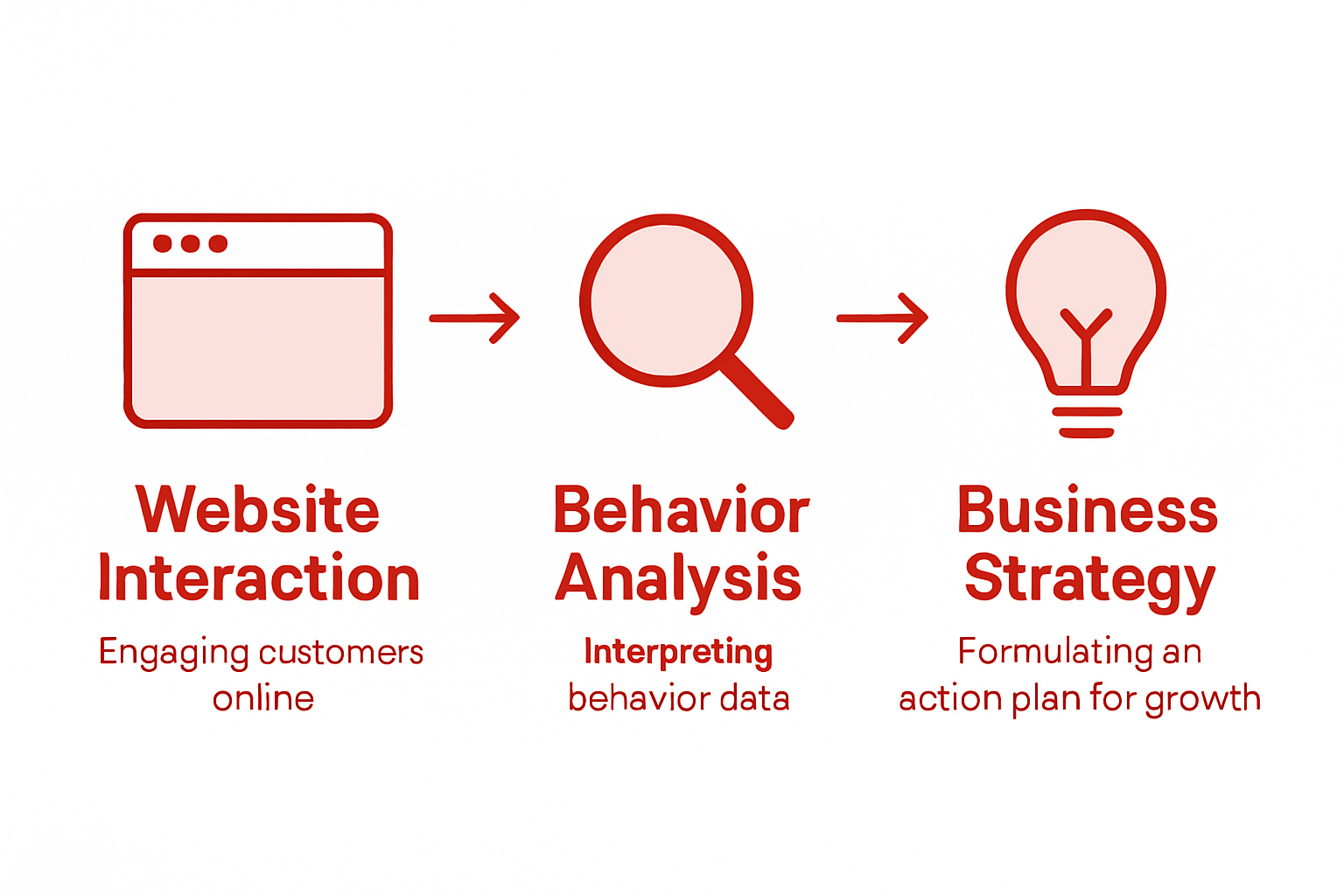
Neglecting ecommerce data insights exposes businesses to significant strategic vulnerabilities in an increasingly competitive digital marketplace. Data-driven e-commerce techniques are crucial for addressing modern business challenges, particularly as technological landscapes continue to evolve rapidly. Companies that fail to leverage comprehensive analytics risk falling behind competitors who can make more informed, precise strategic decisions.
The specific risks of overlooking data insights manifest across multiple critical business dimensions:
Strategic Performance Risks
Operational Vulnerability Areas
Financial Potential Losses
Emerging e-commerce analytics tools highlight the significance of adapting to technological transformations by identifying precise customer segments and tailoring strategic approaches. Businesses that ignore these insights effectively operate in the dark, making decisions based on intuition rather than empirical evidence.
Pro Tip - Risk Mitigation: Implement a quarterly data insights audit that comprehensively reviews your current analytics infrastructure, identifying potential blind spots and opportunities for enhanced strategic intelligence.
Successful businesses recognize that data insights are not optional luxuries but essential survival mechanisms in the modern digital economy.
The table below outlines common risks of neglecting ecommerce analytics and their potential consequences:
| Risk Area | Example Consequence | Long-term Effect |
|---|---|---|
| Marketing Inefficiency | Higher ad costs, poor targeting | Wasted budget, slow growth |
| Inventory Challenges | Frequent stockouts or overstocking | Loss of sales, excess waste |
| Missed Opportunities | Failure to identify sales trends | Reduced competitiveness |
| Customer Disengagement | Inaccurate segmentation, poor offers | Lower retention, churn rises |
If you recognize the challenge of turning complex ecommerce data into clear, strategic decisions you are not alone. This article highlights how critical ecommerce analytics are for understanding customer behavior, optimizing marketing efforts, and improving inventory management. Without the right insights, businesses risk missed opportunities and inefficient resource use. Your goal is to harness these powerful metrics and tools to foster sustainable growth and outperform competitors.
At Reddog Group, we specialize in transforming your ecommerce data into actionable strategies through our Digital & Business Consulting Services by Reddog Consulting. Whether you need help mastering omnichannel retailing or optimizing your marketplace presence we bring proven methods and experience managing thousands of SKUs to elevate your brand performance.
Take the next step toward boosting your sales and improving decision making with tailored ecommerce analytics solutions and expert strategic guidance. Visit https://reddog.group now to discover how our consulting services can help you convert data into real business growth. Explore the possibilities with our Home page and start your path to measurable success today.
Ecommerce analytics is the process of collecting, analyzing, and interpreting online sales data to gain actionable insights about customer behavior, purchasing trends, and operational performance. This helps businesses make data-driven decisions that enhance growth and profitability.
Ecommerce analytics can help your business optimize marketing strategies, improve customer segmentation, enhance inventory management, and provide predictive insights for future trends. This leads to more informed decision-making and sustainable business growth.
Key metrics include conversion rates, average order value, cart abandonment rates, customer lifetime value, and traffic sources. These metrics help assess and improve sales performance and customer engagement.
There are various types of ecommerce analytics tools, including web analytics tools (like Google Analytics), conversion rate optimization tools (like Optimizely), customer behavior tracking tools (like Kissmetrics), and sales and revenue analytics tools (like Tableau). Each serves unique purposes for analyzing different aspects of online performance.
Leave a comment: