
Published: March 2020 | Last Updated:December 2025
© Copyright 2026, Reddog Consulting Group.

Every American business faces mounting pressure to justify every advertising dollar spent. With over 60 percent of marketers reporting wasted budget due to poor ad allocation, optimizing ad spend has never been more urgent. Navigating this challenge goes far beyond simply cutting costs. Discover how a smarter, data-driven approach can transform your ad strategy, deliver measurable returns, and give your brand a competitive edge in crowded digital markets.
| Point | Details |
|---|---|
| Ad Spend Optimization | Focus on maximizing marketing investments through strategic allocation and data analysis to achieve higher returns. |
| Digital vs. Traditional Advertising | Utilize a multichannel strategy that leverages the benefits of both digital and traditional advertising for optimal reach and effectiveness. |
| Continuous Analysis | Implement regular performance reviews and real-time adjustments to adapt to changing consumer behaviors and enhance campaign outcomes. |
| Risks of Budget Mismanagement | Poorly managed budgets can lead to wasted resources and reduced ROI, necessitating strict monitoring and data-driven decision making. |
Optimizing advertising spend represents a strategic approach to maximizing marketing investment by intelligently allocating resources across digital channels. At its core, ad spend optimization means analyzing performance data to distribute budget where it generates the highest return. This isn’t about spending less - it’s about spending smarter.
The science behind ad spend optimization has become increasingly sophisticated. Research demonstrates that precise bid management can significantly enhance marketing outcomes. Specifically, identifying concavity changes in click prediction curves allows marketers to recommend bids at precise points where advertising investments transition from incremental growth to diminishing returns. By understanding these nuanced inflection points, businesses can dramatically improve their return on investment.
Marketers now leverage advanced statistical frameworks to evaluate advertising effectiveness. Randomized paired geo experiments offer robust methods for assessing the causal impact of advertising strategies, providing distribution-free estimators that measure incremental return on ad spend. These techniques enable brands to move beyond traditional metrics and understand the genuine financial impact of their marketing investments. Modern ad spend optimization integrates multiple data points - including conversion rates, customer acquisition costs, and channel-specific performance - to create a comprehensive strategy.
Pro Marketing Insight: Develop a systematic approach to tracking ad performance by establishing clear key performance indicators (KPIs) before launching any campaign, ensuring you can measure and optimize spending in real time.
Furthermore, Amazon Advertising Management strategies can provide additional context for brands looking to refine their digital advertising approach. By combining data-driven insights with strategic allocation, businesses can transform their ad spend from a cost center into a powerful growth engine.
Advertising expenditures span a diverse ecosystem of channels, each offering unique opportunities for brands to connect with potential customers. Digital advertising has emerged as a dominant force, transforming how businesses allocate marketing budgets across multiple platforms and mediums. From social media to search engine marketing, the digital landscape provides unprecedented targeting capabilities and measurable outcomes.
Traditional channels continue to play a significant role in comprehensive marketing strategies. Comprehensive advertising expenditure reports reveal intricate spending patterns across various media platforms, including digital, television, radio, print, and out-of-home (OOH) advertising. These channels demonstrate remarkable variations in budget allocation depending on industry, target audience, and marketing objectives. For instance, television advertisement expenditures demonstrate substantial variations across different countries, influenced by cultural and economic factors.
Modern ad spend strategies require a nuanced, multichannel approach. Social media advertising strategies represent a critical component of digital marketing, offering granular targeting and real-time performance tracking. Successful marketers now integrate multiple channels - combining search, social, display, and programmatic advertising to create comprehensive campaigns that maximize reach and engagement.
Key advertising channels include:
Pro Marketing Insight: Develop a cross-channel attribution model that tracks customer interactions across multiple touchpoints, enabling more accurate measurement of each channel’s genuine contribution to your marketing objectives.
Ultimately, effective ad spend management requires continuous analysis, experimentation, and adaptation to evolving market dynamics and consumer behaviors.
Here’s a comparison of digital and traditional ad spend strategies to help identify where each excels:
| Aspect | Digital Ad Spend | Traditional Ad Spend |
|---|---|---|
| Targeting Precision | High (behavior, interests, demographics) | Moderate (broad, less personalized) |
| Measurement Accuracy | Real-time, trackable metrics | Delayed, less granular reporting |
| Budget Flexibility | Easily adjustable in real time | Generally fixed during campaigns |
| Channel Examples | Search, social, programmatic, streaming | TV, radio, print, out-of-home |
Return on investment (ROI) represents the critical metric that transforms advertising from an expense into a strategic growth mechanism. Ad spend optimization directly impacts financial performance by ensuring every marketing dollar generates maximum value, creating a systematic approach to turning marketing investments into measurable business growth.
Sophisticated budget allocation strategies demonstrate how precise advertising investments can dramatically enhance returns, particularly when utilizing advanced techniques like ‘bang-bang’ strategies that concentrate marketing efforts in strategic waves. These approaches allow businesses to maximize impact by strategically timing and concentrating advertising resources where they generate the most significant consumer response and engagement.
The framework for optimizing digital advertising spend requires a multifaceted approach. Precise targeting and personalized messaging play crucial roles in aligning advertising investments with specific ROI benchmarks, enabling businesses to create more efficient and effective marketing campaigns. Marketplace optimization strategies further enhance this process by integrating cross-channel insights and data-driven decision making.
Key components of ROI-focused ad spend optimization include:
Pro Marketing Insight: Implement a robust analytics framework that tracks customer acquisition cost, lifetime value, and incremental revenue to create a comprehensive view of your advertising investments’ true financial impact.
Ultimately, successful ad spend optimization transforms marketing from a cost center into a strategic growth engine, enabling businesses to achieve unprecedented levels of efficiency and financial performance.
Poorly managed advertising budgets represent a significant financial threat that can rapidly erode business profitability and market potential. Budget mismanagement transforms marketing from a strategic investment into a dangerous financial liability, potentially consuming resources without generating meaningful returns or business growth.
Inefficient bid recommendations can create substantial risks in advertising spend, particularly when businesses fail to identify optimal spending points. These miscalculations can lead to wasted resources, where marketing dollars are dispersed without clear strategic intent, resulting in diminished campaign effectiveness and reduced overall return on investment. The consequences extend beyond immediate financial losses, potentially damaging long-term brand positioning and market competitiveness.

Challenges in accurately evaluating incremental return on ad spend can result in systematically misallocated marketing resources, creating a cascade of strategic inefficiencies. Finding a strategic Amazon PPC agency becomes critical in mitigating these risks, as professional management can help navigate complex advertising landscapes and prevent potential budgetary pitfalls.
Key risks of poorly managed advertising budgets include:
Pro Marketing Insight: Implement a rigorous monthly review process that critically evaluates advertising performance metrics, immediately reallocating resources from underperforming channels to high-conversion platforms.
Ultimately, successful advertising budget management requires continuous monitoring, strategic flexibility, and a commitment to data-driven optimization that aligns marketing investments with precise business objectives.
Use this quick reference to understand common risks of poor ad budget management and actionable prevention steps:
| Risk Factor | Business Impact | Preventive Measure |
|---|---|---|
| Untracked Spending | Wasted marketing dollars | Implement budget monitoring |
| Poor Audience Segmentation | Reduced campaign effectiveness | Use advanced segmentation tools |
| Data Ignorance | Inaccurate decision making | Rely on analytics and reporting |
| Inflexible Budgets | Missed optimization opportunities | Reallocate monthly as needed |
Sustainable advertising performance requires a strategic, data-driven approach that goes beyond traditional marketing tactics. Ad performance optimization is a dynamic process that demands continuous refinement, adaptability, and precise targeting to maintain effectiveness across rapidly changing digital landscapes.
Optimal budget allocation involves a nuanced strategy of spreading initial efforts, then strategically targeting specific market segments through carefully timed advertising waves. This approach allows businesses to maximize impact by understanding and responding to evolving consumer behaviors and market dynamics. Successful campaigns require a flexible framework that can quickly adjust to performance data and emerging opportunities.
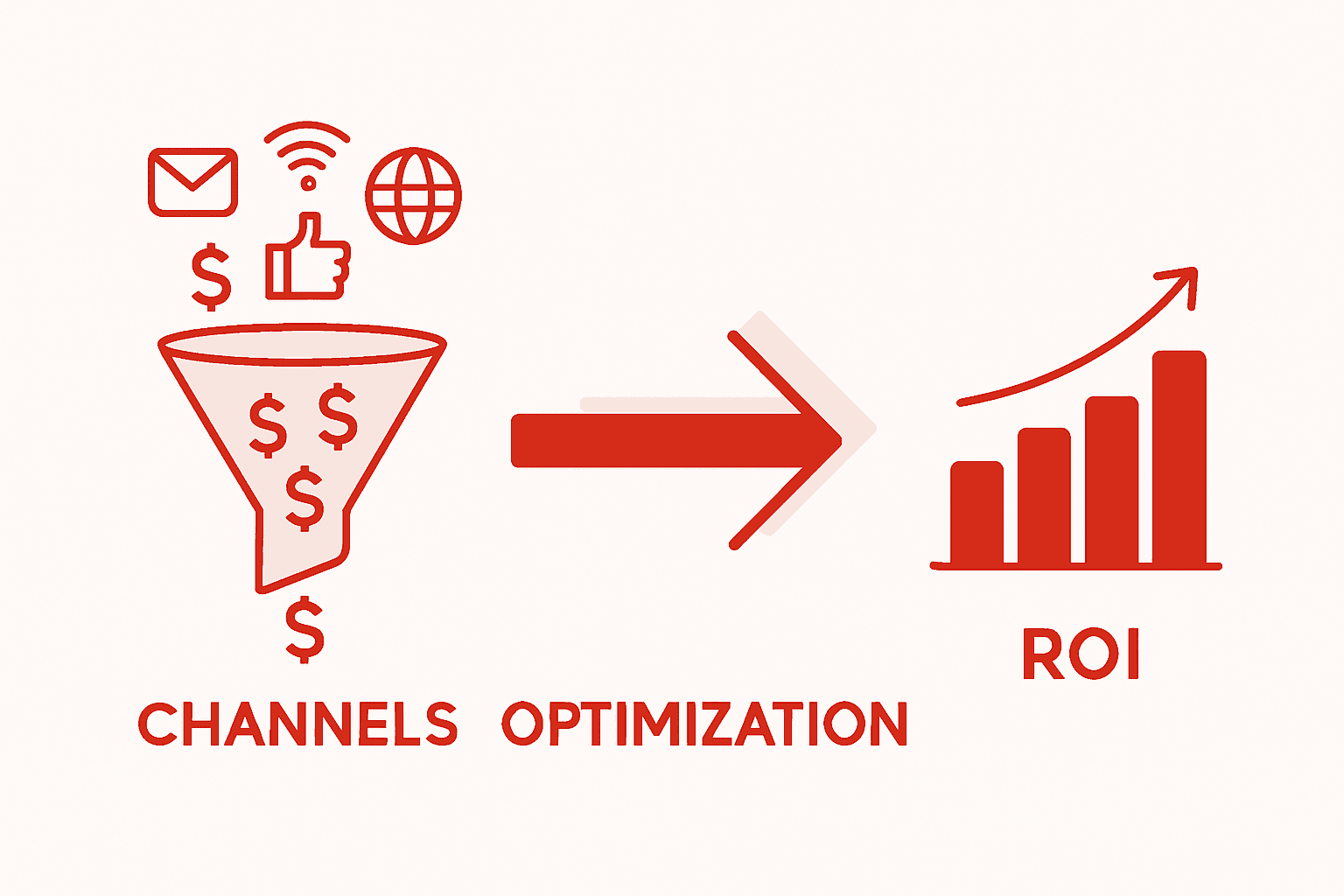
Achieving sustainable ad performance hinges on precise targeting, personalized messaging, and efficient media allocation strategies, particularly in competitive niche markets. Social media advertising strategies play a critical role in implementing these sophisticated marketing approaches, enabling brands to create more resonant and effective advertising experiences.
Key best practices for sustainable ad performance include:
Pro Marketing Insight: Establish a weekly performance review process that critically assesses campaign metrics, allowing for rapid optimization and resource reallocation based on real-time insights.
Ultimately, sustainable ad performance requires a holistic approach that balances strategic planning, technological sophistication, and agile response to market dynamics.
Every business faces the challenge of ensuring that every advertising dollar delivers maximum return. This article highlights key pain points such as inefficient budget allocation and the need for precise ad spend optimization to avoid wasted resources and boost ROI. With concepts like dynamic budget reallocation, granular performance tracking, and marketplace optimization, it is clear that thoughtful strategy transforms ad spend from a cost center into a reliable engine for growth. If you want to overcome risks like uncontrolled spending and ineffective targeting, tackling these challenges is critical.
At Reddog Group, we specialize in helping small and medium-sized businesses master these exact challenges through our Digital & Business Consulting Services by Reddog Consulting. Our expertise in omnichannel retail and marketplace management ensures your advertising budget is strategically allocated and continuously optimized. From tailored marketing campaigns to inventory management and integrated online-offline sales strategies, we provide the tools and guidance you need to sustain profitable growth.
Take control of your advertising investments today. Visit our Home page and discover how Reddog Group can help you convert your ad spend into measurable business success. Don’t let poor ad management hold you back. Learn how to maximize ROI and build a thriving brand by partnering with experts who understand the complexities of omnichannel marketing at https://reddog.group.
Ad spend optimization is a strategic approach to maximize marketing investment by intelligently allocating resources across various digital channels, ensuring that advertising budgets generate the highest possible return on investment.
By optimizing ad spend, businesses ensure that their marketing dollars are allocated to channels and strategies that yield the best performance, leading to higher customer acquisition, increased engagement, and ultimately greater revenue growth.
Data analytics allows marketers to evaluate advertising effectiveness precisely, enabling them to understand the true financial impact of their investments and make data-driven decisions that enhance campaign performance and ROI.
Poorly managed advertising budgets can lead to uncontrolled spending, ineffective audience targeting, and a decrease in campaign effectiveness, all of which can result in reduced marketing ROI and potential damage to brand reputation.
Leave a comment: