
Published: March 2020 | Last Updated:November 2025
© Copyright 2026, Reddog Consulting Group.

More than 95 percent of american consumers turn to the internet before deciding where to spend their money. Building a strong digital presence is no longer optional, it shapes how people find, trust, and choose your brand every day. With so many channels and evolving expectations, understanding what makes digital presence effective can set your business apart and lay the groundwork for lasting connections that drive real results.
| Point | Details |
|---|---|
| Digital Presence Overview | Digital presence is a comprehensive online identity made up of owned, paid, and earned media, representing a company’s visibility across various platforms. |
| Strategic Management | Proactive digital presence management involves controlling privacy settings and crafting a reputation that impacts real-world opportunities. |
| Core Components | Key elements include consistent brand messaging, active social media management, engaging website content, and strong SEO practices. |
| Risks and Pitfalls | Common digital presence pitfalls include inconsistent messaging, neglecting cybersecurity, and failing to analyze performance metrics for continuous improvement. |
Your digital presence represents your comprehensive online identity across multiple digital platforms and channels. According to research from scitepress, digital presence encompasses a company’s total internet exposure, spanning controlled channels like websites and applications, as well as consumer-driven spaces like social networks and blogs.
This multifaceted online representation is strategically categorized into three critical media types: owned, paid, and earned.
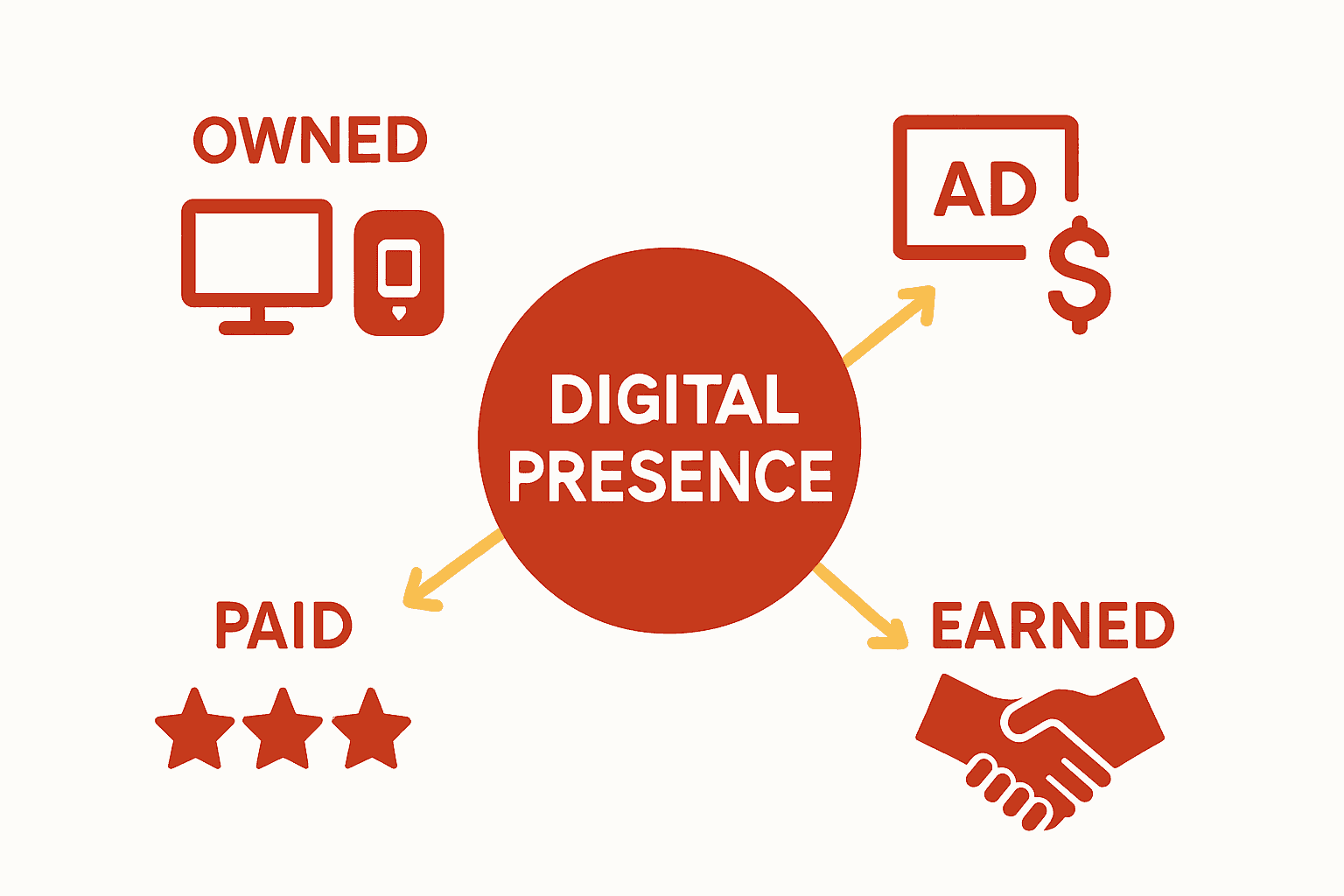 Owned media includes platforms directly controlled by your business, such as websites and mobile applications. Paid media involves advertising and sponsored content across digital channels, while earned media represents organic mentions, reviews, and social sharing that demonstrate your brand’s credibility and reach.
Proactively managing your digital presence goes beyond mere visibility. As insights from bentley reveal, successful digital presence management involves strategic privacy control, utilizing security settings, and intentionally crafting an online reputation that can significantly influence both digital and offline opportunities. Smart businesses recognize that their digital footprint is not just a marketing tool, but a comprehensive representation of their brand’s values, capabilities, and customer relationships.
Key components of a robust digital presence include:
Building a robust digital presence requires a strategic approach that goes beyond simple online visibility. According to research from digital, effective content is the cornerstone of a strong digital strategy, demanding regular publication of current and relevant material across diverse channels such as press releases, blogs, and social media platforms.
Insights from webboombaa highlight several critical components for creating a comprehensive digital presence. Consumer persona development stands as a fundamental first step, allowing businesses to precisely target and understand their audience. This involves creating detailed profiles that capture demographic information, behavioral patterns, and specific needs of potential customers.
Website optimization emerges as another crucial element in establishing a powerful digital footprint. This encompasses not just aesthetic design, but a holistic approach to user experience, search engine optimization (SEO), and responsive functionality. Businesses must ensure their digital platforms are:
The final pillar of a robust digital presence involves integrated marketing communications. This means maintaining consistent messaging and brand voice across all digital channels - from social media platforms and websites to email marketing and online advertising. By creating a unified narrative, businesses can reinforce their brand identity, build trust with their audience, and create a memorable digital experience that distinguishes them from competitors.

Establishing a comprehensive digital presence requires strategically leveraging multiple online channels, each serving a unique purpose in connecting with potential customers. According to research from splendourgroup, maintaining an active presence across different platforms collectively builds credibility and expands opportunities for customer engagement.
Websites serve as the cornerstone of digital presence, functioning as a brand’s primary digital storefront. These platforms provide businesses complete control over messaging, design, and user experience. By creating responsive, user-friendly websites that clearly communicate brand value, companies can establish a professional online identity that builds immediate trust with potential customers.
Marketplaces offer another critical channel for digital expansion. These platforms, such as Amazon, eBay, and industry-specific online markets, provide businesses access to massive existing customer bases. Complete Guide to Marketplaces for SMEs highlights the strategic advantages of marketplace selling, including reduced marketing costs, built-in traffic, and simplified logistics.
Social media channels represent the most dynamic digital presence opportunity. As insights from wiveteranschamber suggest, integrating social proof through reviews, testimonials, and interactive elements can significantly enhance user engagement. Key social media strategies include:
Building a robust digital presence directly influences how consumers perceive and interact with a brand. According to research from blogs, enhancing brand visibility requires strategic techniques such as understanding target audiences, optimizing websites for search engines, and maintaining active social media profiles.
Consumer trust emerges as a critical outcome of a well-managed digital presence. As insights from clrn highlight, a meticulously curated online footprint positively influences reputation and professional credibility. Modern consumers extensively research brands online before making purchasing decisions, making digital transparency and consistency paramount.
The visibility factor extends beyond mere online existence. Businesses must craft a narrative that resonates with their target audience, demonstrating expertise, reliability, and authentic engagement. This involves creating high-quality content, responding promptly to customer interactions, and maintaining a consistent brand voice across all digital platforms.
Key strategies for building brand visibility and consumer trust include:
To truly differentiate in the digital marketplace, 7 Advantages of Digital Branding for Growing Retail Brands underscores the importance of going beyond surface-level marketing to create meaningful connections with potential customers.
Investing in digital presence requires a strategic approach that balances potential returns with inherent risks. While the financial benefits can be substantial, businesses must carefully evaluate their digital transformation investments to maximize value and minimize potential setbacks.
Return on Investment (ROI) in digital presence is multifaceted, extending beyond direct revenue generation. Successful digital strategies can lead to increased brand visibility, improved customer engagement, and more efficient marketing channels. Companies typically see measurable returns through reduced customer acquisition costs, expanded market reach, and enhanced operational efficiency.
According to research from socialmediamagazine, building a robust digital infrastructure demands strategic investments in workforce training and external support. This approach mitigates risks by creating an organizational culture that’s adaptable to technological innovations and prepared to handle digital transformation challenges.
Common pitfalls in digital presence development include:
Risk mitigation strategies involve continuous learning, regular performance audits, and maintaining flexibility in digital strategy implementation. Businesses should approach digital presence as an ongoing investment, allocating resources for consistent improvement and adaptation to rapidly evolving digital landscapes.
The journey to building a powerful digital presence can feel overwhelming with challenges like inconsistent brand messaging and the need for seamless omnichannel integration. This article highlights key goals such as developing consumer personas, optimizing websites for user experience, and enhancing visibility to foster consumer trust. At Reddog Group, we understand these pain points and specialize in tailored solutions that help small and medium businesses master marketplace management, Amazon FBA, and DTC channels for measurable growth.
Let us guide you through overcoming common pitfalls by implementing strategic marketing campaigns and optimizing your product listings. Our proven track record managing over 50 brands demonstrates how personalized digital and business consulting leads to increased sales and sustainable brand credibility.
Digital & Business Consulting Services by Reddog Consulting offer the expert support you need.
Take the first step to transform your digital presence today. Visit our Home page or explore comprehensive solutions at Reddog Group to start building a robust online identity that drives growth and builds lasting trust.
Digital presence represents your comprehensive online identity across multiple platforms, including owned media like websites, paid media such as advertisements, and earned media like organic mentions and reviews.
Investing in digital presence enhances brand visibility, builds consumer trust, and creates meaningful connections with potential customers, ultimately leading to increased engagement and improved ROI.
Key components include consistent brand messaging, engaging website content, active social media management, effective search engine optimization (SEO), and professional online reputation management.
Businesses can optimize their digital presence by ensuring website usability, creating high-quality and relevant content, maintaining active social media profiles, and utilizing integrated marketing communications for a unified brand narrative.
Leave a comment: