
Published: March 2020 | Last Updated:December 2025
© Copyright 2026, Reddog Consulting Group.

Over 85 percent of American shoppers start their product searches online before even entering a store. For brands competing in this fast-changing retail environment, understanding and shaping the digital shelf is no longer optional. The way your products appear online directly impacts sales and customer loyalty. This guide breaks down essential strategies and vital digital elements that help retail brands stand out and thrive across every channel.
| Point | Details |
|---|---|
| Understanding the Digital Shelf | The digital shelf is where consumers discover and evaluate products online, requiring brands to concentrate on their digital presence across various platforms. |
| Importance of Omnichannel Strategies | Implementing an omnichannel approach allows brands to synchronize customer interactions, ensuring consistent engagement across all sales channels. |
| Common Pitfalls in Digital Transformation | Retailers often face challenges like disconnected inventory systems and outdated UX design, which can severely impact performance and customer trust. |
| Best Practices for Success | Successful retail brands optimize their digital strategies by investing in technology, leveraging data analytics, and creating personalized customer experiences. |
The digital shelf represents the virtual marketplace where consumers discover, evaluate, and purchase products online. Unlike traditional physical retail spaces, this digital environment requires strategic brand positioning across multiple e-commerce platforms. The Digital Shelf Institute defines this realm as an evolving collaboration between brand manufacturers, retailers, and digital experts to optimize product availability and presentation in digital commerce.
At its core, the digital shelf encompasses more than just product listings. It includes critical elements like product images, descriptions, pricing, customer reviews, search rankings, and availability across various online channels. Brands must now think beyond physical store displays and consider how their products appear, perform, and compete in digital spaces where consumers make rapid purchasing decisions.
Technological innovations are transforming how brands manage digital shelf presence. Electronic shelf label systems demonstrate how digital technologies are bridging physical and online retail experiences, enabling real-time pricing updates and dynamic product information displays. Modern retail brands must leverage these technologies to create seamless, engaging online shopping experiences that capture consumer attention and drive conversions.
Here’s a comparison of digital shelf and physical shelf elements to clarify their business impacts:
| Aspect | Digital Shelf Example | Physical Shelf Example | Business Impact |
|---|---|---|---|
| Product Visibility | Search ranking on e-commerce | Eye-level store placement | Determines discoverability |
| Content Control | Dynamic product descriptions | Printed packaging | Affects consumer decision-making |
| Pricing Management | Automated price adjustments | Manual label updates | Improves competitiveness |
| Customer Feedback | Online reviews and ratings | In-person comments | Enhances reputation management |
| Availability | Real-time online stock updates | Physical inventory display | Reduces out-of-stock issues |
Pro tip: Regularly audit your digital shelf performance by analyzing product visibility, search rankings, and customer engagement metrics to continuously optimize your online retail strategy.
Digital presence for retail brands encompasses several interconnected components that collectively define a company’s online effectiveness. The UNCTAD Digital Economy Report highlights the critical infrastructure and strategic elements that shape successful digital engagement, emphasizing the need for comprehensive digital strategy development.

Key core elements driving digital presence include robust technological infrastructure, strategic content management, and adaptive consumer engagement platforms. Brands must invest in high-quality digital assets such as professional product photography, compelling descriptions, responsive design, and seamless user experience across multiple devices and platforms. Search engine optimization, targeted digital marketing, and consistent brand messaging play crucial roles in establishing a compelling online identity.
Technology and accessibility form the backbone of digital presence. The World Bank’s Digital Transformation program underscores the importance of fast, reliable, and affordable internet access as fundamental to enabling businesses to effectively participate in digital marketplaces. Retail brands must prioritize mobile responsiveness, intuitive navigation, secure payment systems, and real-time customer support to create meaningful digital interactions that convert interest into sales.
Pro tip: Conduct a quarterly digital presence audit to identify performance gaps, analyze user engagement metrics, and systematically optimize your online brand strategy.
Omnichannel strategies have transformed how retail brands approach customer engagement and market expansion. The New Retail Revolution concept integrates offline, online, and logistics operations to create seamless shopping experiences, enabling brands to meet consumer expectations across multiple touchpoints. This holistic approach breaks down traditional barriers between digital and physical retail environments, allowing for more dynamic and responsive brand interactions.
Modern retail brands must develop sophisticated strategies that synchronize digital platforms, physical stores, mobile applications, and customer service channels. By creating a unified brand experience, companies can track customer journeys more effectively, personalize marketing efforts, and respond quickly to changing consumer preferences. Data-driven insights from these integrated channels help brands optimize inventory management, improve customer targeting, and create more meaningful engagement strategies.
Post-pandemic retail emphasizes omnichannel approaches that convert shifting consumer behaviors into growth opportunities, particularly in the United States market. Successful brands recognize that customers expect consistent, high-quality interactions regardless of whether they are shopping online, through mobile platforms, or in physical stores. This requires investment in technological infrastructure, staff training, and adaptive marketing strategies that can seamlessly transition between different retail environments.
Pro tip: Implement a centralized customer data platform that integrates insights from all sales channels to create a comprehensive view of customer behavior and preferences.
Digital transformation in retail is fraught with potential missteps that can dramatically undermine brand growth. The Retail Domain Task Force highlights critical pitfalls in digital infrastructure, including lack of standardization and integration challenges, which can create significant operational inefficiencies and lost opportunities for retail brands.
Many retailers make fundamental errors in their digital strategy by failing to understand the complexity of omnichannel integration. Common mistakes include inconsistent pricing across platforms, disconnected inventory management systems, poor user experience design, and inadequate data analytics capabilities. These shortcomings can lead to customer frustration, reduced brand loyalty, and decreased sales performance. Successful brands must invest in robust technological infrastructure that enables real-time synchronization across all sales channels.
The National Bureau of Economic Research documents the disruptive impact of e-commerce on traditional retail, revealing how incumbent brands often underestimate the pace of digital transformation. Costly mistakes include resisting technological adaptation, maintaining siloed organizational structures, and failing to develop agile marketing strategies that can quickly respond to changing consumer behaviors. Brands that do not proactively invest in digital capabilities risk becoming obsolete in an increasingly competitive marketplace.
The table below summarizes major pitfalls faced during retail digital transformation:
| Pitfall | Underlying Cause | Negative Outcome |
|---|---|---|
| Disconnected inventory systems | Poor tech integration | Overselling or lost sales |
| Inconsistent pricing | Lack of platform coordination | Consumer trust erosion |
| Siloed organizational structure | Resistance to change | Slow strategic response |
| Outdated UX design | Neglecting user experience | Higher abandonment rates |
| Weak analytics capability | Limited data infrastructure | Poor strategic decisions |
Pro tip: Conduct a comprehensive digital readiness audit annually to identify technological gaps, assess integration challenges, and develop strategic roadmaps for continuous digital innovation.
The Digital Shelf Institute highlights critical best practices for U.S. retail brands, emphasizing the importance of strategic digital transformation. Successful retailers must develop comprehensive approaches that integrate advanced technological capabilities, data-driven decision making, and customer-centric design to remain competitive in an increasingly complex retail landscape.
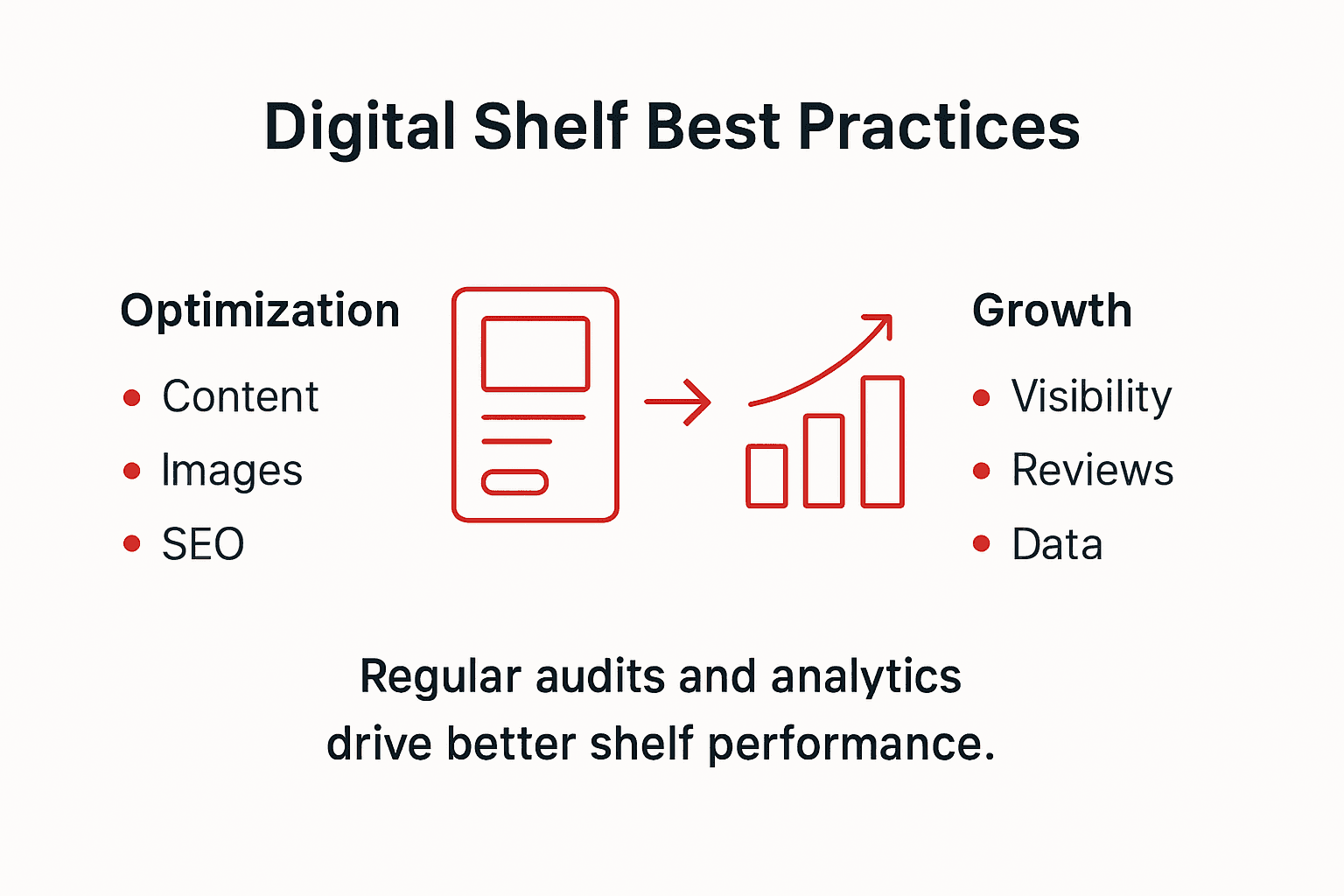
Key best practices involve multiple strategic dimensions. This includes optimizing product content accuracy, ensuring real-time inventory management, leveraging sophisticated shopper data analytics, and creating personalized online experiences. Retailers must invest in technological infrastructure that enables seamless omnichannel integration, allowing customers to transition effortlessly between digital and physical shopping environments. Consistent brand messaging, responsive customer service, and adaptive marketing strategies are crucial for maintaining customer engagement and loyalty.
Leading U.S. retail brands implement advanced data analytics for precise demand forecasting and strategic planning, recognizing that information is the cornerstone of modern retail success. This approach involves developing robust technological ecosystems that can quickly interpret consumer behavior, predict market trends, and enable rapid strategic pivots. Brands must continuously upskill their teams, embrace technological innovation, and maintain a flexible organizational structure that can respond to rapidly changing market dynamics.
Pro tip: Develop a cross-functional digital strategy team that meets quarterly to assess technological capabilities, review performance metrics, and identify emerging opportunities for digital shelf optimization.
The article highlights the major challenge many retail brands face today: managing and optimizing their digital shelf presence for maximum visibility, seamless omnichannel integration, and real-time inventory control. If you struggle with inconsistent pricing, disconnected inventory systems, or weak digital strategies that hinder your brand’s online growth, you are not alone. These pain points impact customer trust, reduce discoverability, and ultimately stall your revenue growth.
At Reddog Group, we specialize in exactly these challenges—helping small and medium-sized retail brands conquer digital shelf complexities through expert marketplace management, Amazon FBA, and comprehensive omnichannel solutions. We deliver data-driven product listing optimization, inventory synchronization, and targeted marketing campaigns designed to boost your search rankings and create a consistent, engaging customer journey across every channel. Discover how we have helped over 50 brands and managed 30,000 SKUs to achieve significant year-over-year growth and marketplace mastery.
Want to transform your digital shelf from a hidden liability into your strongest growth driver now

Explore our proven solutions and learn how to conquer digital transformation challenges today by visiting Reddog Group. Take control of your brand’s omnichannel future by partnering with experts who understand retail digital ecosystems—start your journey to measurable revenue growth right now with Reddog Group’s comprehensive consulting services. See why so many brands trust us to optimize their digital shelf strategy and increase sales across every online and offline touchpoint.
The digital shelf refers to the virtual marketplace where consumers discover, evaluate, and purchase products online. It involves optimizing product availability and presentation across various e-commerce platforms.
Retail brands can optimize their digital shelf presence by focusing on high-quality product images, compelling descriptions, effective pricing strategies, and engaging customer reviews to enhance visibility and appeal in digital marketplaces.
Successful digital presence includes robust technological infrastructure, strategic content management, SEO, responsive design, and seamless user experience across devices, ensuring consistent brand messaging and strong consumer engagement.
Common pitfalls include disconnected inventory systems, inconsistent pricing, siloed organizational structures, and outdated UX design, all of which can significantly hinder a brand’s ability to effectively compete in the digital landscape.
Leave a comment: