
Published: March 2020 | Last Updated:February 2026
© Copyright 2026, Reddog Consulting Group.

Standing out in the crowded Texas CPG market means more than selling products—it requires building genuine emotional connections. Brand storytelling transforms your business from a product provider into a meaningful entity, helping consumers identify with your values and mission. By mastering strategies rooted in authenticity and emotional appeal, founders can craft compelling narratives that drive loyalty and profitable growth across every retail channel.
| Point | Details |
|---|---|
| Strategic Brand Storytelling | CPG brands should focus on crafting authentic narratives that build emotional connections with consumers, differentiating themselves in crowded markets. |
| Narrative Archetypes | Utilize different storytelling archetypes, such as Serial and Epic narratives, to enhance consumer engagement and create memorable brand experiences. |
| Holistic Approach | Brands must adopt a comprehensive storytelling strategy that aligns their messaging across all platforms and reflects their core values for consistency. |
| Avoid Common Pitfalls | CPG brands should steer clear of mistakes like overemphasizing sales pitches and creating inauthentic narratives, ensuring a genuine connection with their audience. |
Brand storytelling represents a strategic approach for Consumer Packaged Goods (CPG) brands to communicate their unique identity beyond traditional product marketing. By crafting compelling narratives, brands transform from mere product sellers into meaningful entities with distinct personalities and values.
At its core, brand storytelling involves creating a cohesive narrative that connects consumers emotionally with a brand’s mission, origins, and purpose. Strategic brand storytelling enables CPG companies to differentiate themselves in crowded marketplaces by generating deeper consumer connections.
Key components of effective brand storytelling for CPG brands include:
Successful brand stories typically incorporate several critical elements that transform product communication into engaging experiences. These narratives go beyond functional product benefits to explore deeper emotional landscapes, helping consumers understand what makes a particular brand unique.
Pro tip: Develop your brand story by mapping the authentic journey of your product’s creation, focusing on human connections and genuine motivations that resonate with your target audience.
CPG brands have evolved sophisticated storytelling approaches that transcend traditional marketing techniques, developing strategic narrative frameworks that engage consumers across multiple retail channels. These narrative strategies are carefully designed to create emotional connections and differentiate brands in competitive marketplaces.
Retail brand narratives can be categorized into four primary archetypes:
Each narrative type serves a distinct strategic purpose, leveraging different emotional triggers and communication techniques. The most effective brand stories integrate multiple narrative approaches, creating a rich, multidimensional brand experience that resonates with consumers beyond simple transactional interactions.
Here’s a quick comparison of the four primary brand narrative archetypes in retail channels:
| Narrative Archetype | Main Focus | Consumer Engagement | Typical Outcome |
|---|---|---|---|
| Serial | Facilitates purchases | Guides buying decisions | Increased conversion rate |
| Tale | Entertains and surprises | Memorable interactions | Enhanced brand recall |
| Epic | Challenges perceptions | Immersive experiences | Stronger emotional impact |
| Legend | Builds community ties | Connects consumers and vendors | Greater brand advocacy |
Successful CPG brands understand that storytelling is not just about communication, but about creating meaningful connections that transform product perception. By carefully crafting narratives that reflect authentic brand values and consumer aspirations, companies can develop powerful emotional bonds that drive long-term loyalty and engagement.
Pro tip: Develop a narrative strategy that combines multiple storytelling approaches, ensuring your brand’s story remains dynamic, authentic, and deeply connected to your target audience’s lived experiences.
Building a compelling brand story requires more than just crafting a narrative; it demands a strategic approach that deeply connects with consumer experiences. Successful CPG brands understand that storytelling is an intricate process of creating emotional resonance and building trust through carefully constructed messaging.
The core elements of an effective brand story include:
Successful brand stories transcend traditional marketing by transforming product communication into meaningful conversations. They go beyond simple product descriptions, instead creating immersive experiences that allow consumers to see themselves within the brand’s journey.

Effective storytelling requires brands to understand the psychological mechanisms of narrative engagement. By leveraging emotional triggers and creating stories that resonate on a personal level, CPG brands can move beyond transactional relationships and build long-term consumer loyalty.
Pro tip: Map your brand’s authentic journey by identifying the human experiences and genuine motivations that define your product’s origin and mission.
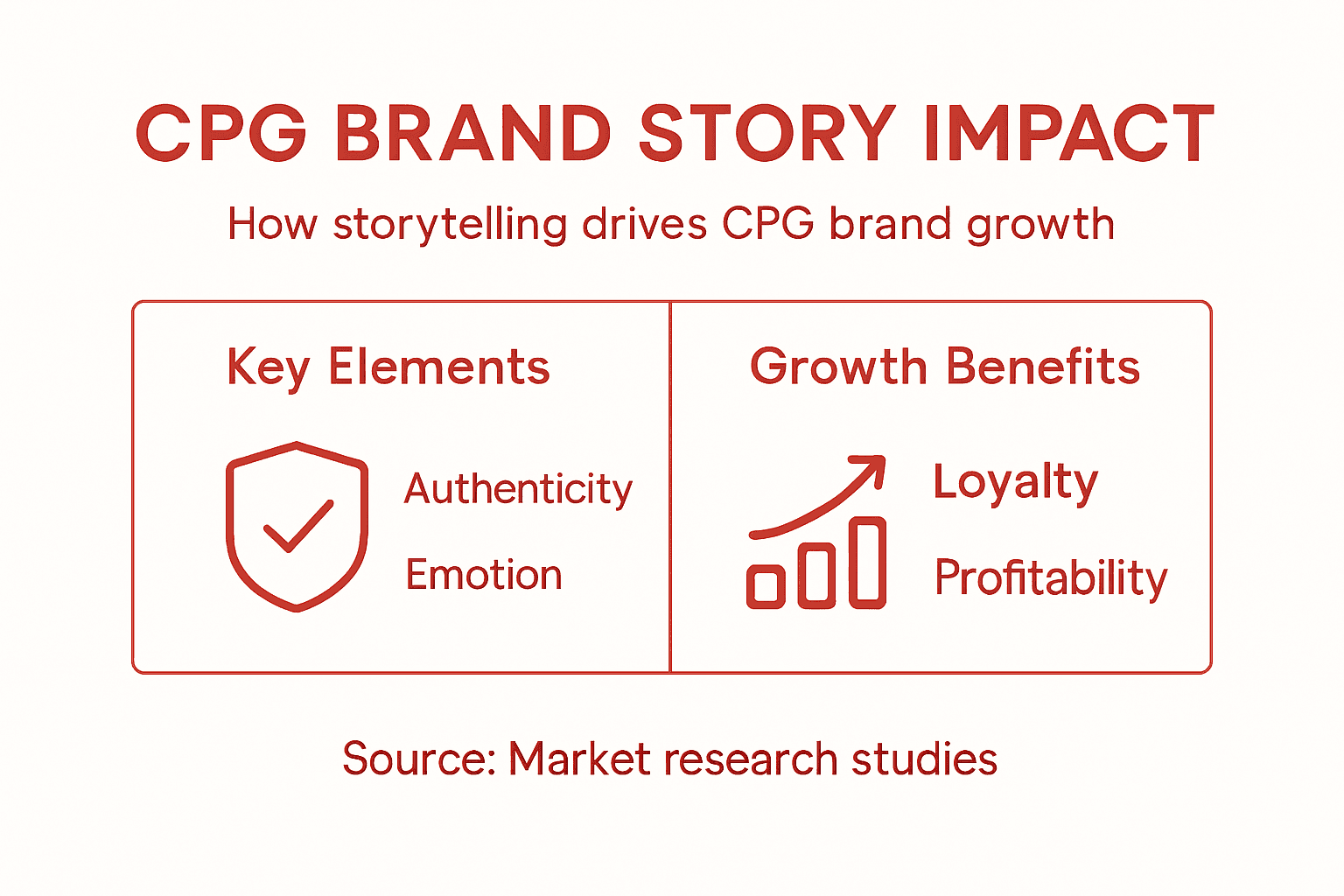
Brand storytelling has emerged as a powerful strategy for driving customer loyalty and enhancing long-term profitability in competitive markets. By creating deep emotional connections, CPG brands can transform transactional relationships into meaningful, sustainable consumer engagements that directly impact financial performance.
The critical mechanisms of storytelling’s impact on loyalty include:
Research consistently demonstrates that brands investing in authentic storytelling experience significant advantages. These narratives create psychological pathways that transform consumers from passive buyers into active brand supporters, generating deeper market commitment and more predictable revenue streams.
Digital platforms have amplified storytelling’s potential, enabling brands to create immersive experiences that extend beyond traditional marketing boundaries. By leveraging interactive content and consistent messaging, CPG brands can build comprehensive narratives that connect across multiple touchpoints, reinforcing customer loyalty and driving sustainable growth.
The following table summarizes the business benefits of effective brand storytelling for CPG brands:
| Benefit | Description | Impact on Brand |
|---|---|---|
| Customer Loyalty | Fosters deeper connections | Higher retention rates |
| Profitability | Drives sustainable growth | Stable revenue streams |
| Trust | Builds authentic relationships | Enhanced brand reputation |
| Advocacy | Encourages repeat purchases | Increased word-of-mouth referrals |
Pro tip: Develop a storytelling framework that maps your brand’s unique journey, focusing on genuine experiences that create emotional resonance with your target audience.
Brand storytelling requires strategic nuance, and CPG companies frequently encounter pitfalls that undermine their narrative effectiveness. Common storytelling mistakes can significantly compromise brand authenticity, creating disconnects between brand intentions and consumer perceptions.
Key mistakes CPG brands often make include:
Successful brand storytelling demands a holistic approach that transcends traditional marketing boundaries. Brands must develop comprehensive narratives that resonate emotionally, create genuine connections, and reflect their core values consistently across all consumer touchpoints.
Digital platforms have amplified the complexity of brand storytelling, requiring more sophisticated, nuanced approaches. CPG brands must adapt their storytelling strategies to create immersive, multi-dimensional narratives that engage consumers beyond simple transactional interactions.
Pro tip: Create a cross-functional storytelling framework that involves team members from multiple departments, ensuring your brand narrative remains authentic and dynamically aligned with evolving consumer expectations.
Building an authentic brand story is essential to connect emotionally with consumers and stand out in competitive retail channels. The article highlights how emotional resonance, consistent messaging, and a human-centered approach drive customer loyalty and long-term profitability. Yet many CPG brands face challenges navigating complex marketplace economics, margin compression, and channel-specific hurdles that dilute storytelling impact.
At RedDog Group, we specialize in helping emerging and growth-stage CPG brands turn compelling narratives into measurable profit. Our Houston-based consultancy focuses on contribution-margin-first strategies tailored for Amazon, Walmart, DTC, wholesale, and distribution channels. We identify margin leaks and optimize retail expansion so your authentic brand story attracts loyal customers while maximizing financial performance.
Boost your brand’s growth with a partner who understands the realities of retail complexity and the power of strategic storytelling. Explore how we combine marketplace expertise with physical retail know-how to scale your brand profitably.
Take the next step toward aligning your brand’s compelling story with scalable, margin-focused growth by visiting our CPG Retail Growth Offer. Discover actionable strategies to drive customer loyalty and sustained profitability now.
Brand storytelling is important for CPG brands because it helps create emotional connections with consumers, differentiates the brand in a crowded marketplace, and builds trust and loyalty, leading to sustained profitability.
The key components of effective brand storytelling include authenticity, emotional resonance, consistent messaging, and a human-centered approach that highlights real experiences and connections behind the brand.
CPG brands can avoid common storytelling mistakes by ensuring consistent messaging across all channels, focusing on emotional connections rather than just sales pitches, and involving employees in the storytelling process to maintain authenticity.
Brand storytelling impacts customer loyalty by fostering deeper emotional connections, driving repeat purchase intentions, and encouraging brand advocacy, ultimately leading to higher retention rates and increased word-of-mouth referrals.
Leave a comment: