
Published: March 2020 | Last Updated:October 2026
© Copyright 2026, Reddog Consulting Group.

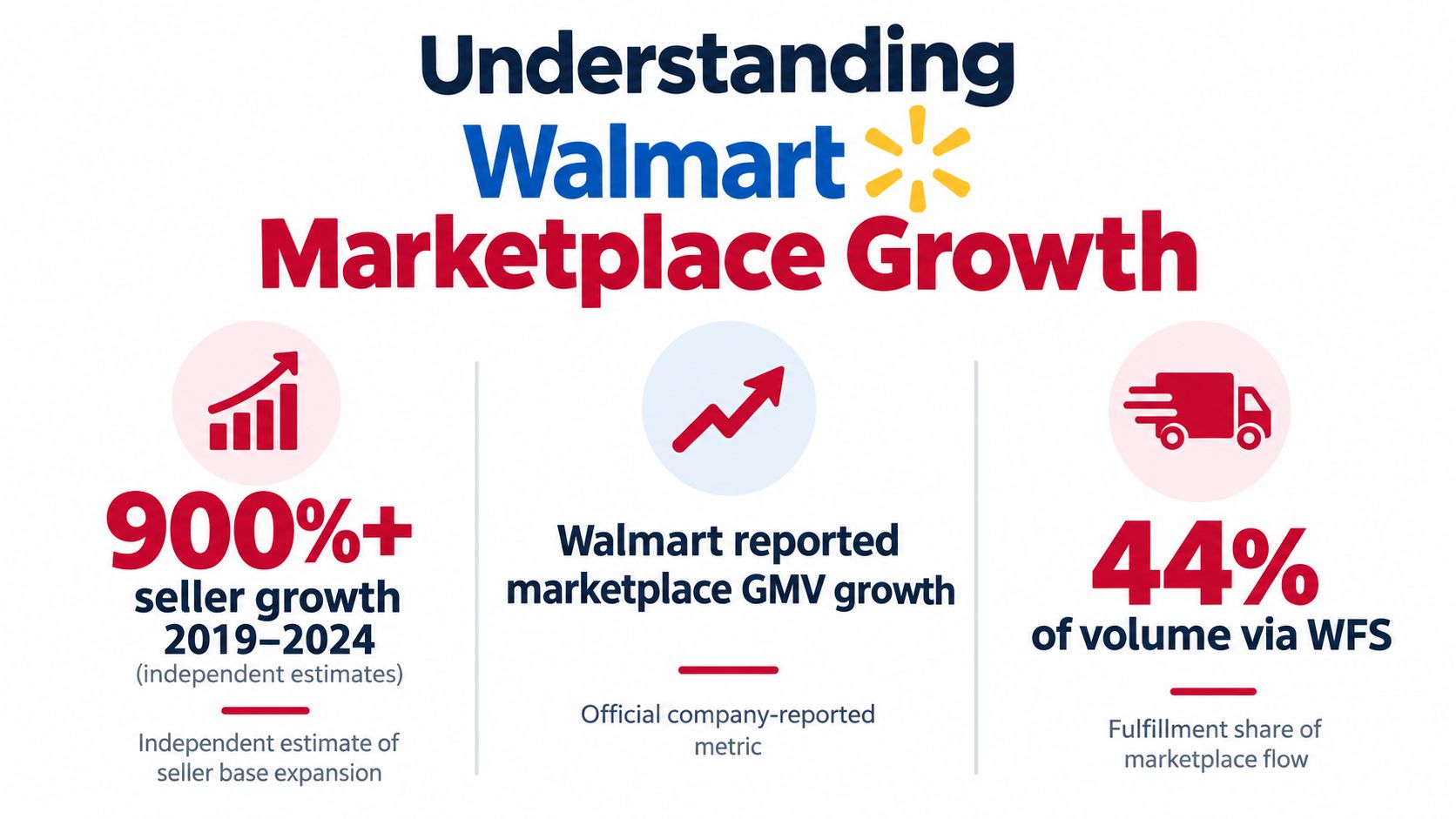
Independent estimates show Walmart's seller base grew more than 900% between 2019 and 2024, but scale without margin discipline is expensive. Walmart Marketplace growth is now large enough to matter, yet profitable participation depends on what remains after fulfillment, advertising, storage, pricing pressure, and inventory risk.
The counterintuitive part is that faster sales don't automatically produce better economics. A brand can add volume while losing contribution margin if it sends too much inventory into WFS, bids into rising media costs, or treats every new SKU as progress. The operator's job is to turn Walmart's expanding demand surface into controlled, repeatable profit.
The headline is hard to ignore. Independent estimates cited by CNBC's reporting on Walmart Marketplace indicate that the number of sellers grew more than 900% between 2019 and 2024. Walmart reported that its U.S. Marketplace grew 34% in the last quarter of FY25, while U.S. eCommerce sales rose 20% in Q4, marking the retailer's eleventh consecutive quarter of double-digit growth, according to the same coverage. Reporting based on Marketplace Pulse data estimated roughly 200,000 active sellers by mid-2026, although that figure is an outside estimate rather than a Walmart-reported count.
That changes the operating question. Walmart Marketplace isn't an experimental add-on for brands testing a few leftover listings. It has become a major sales surface with a broader assortment, a denser seller base, and a closer connection between marketplace demand, Walmart's logistics network, and paid discovery.
Walmart said its Marketplace sales grew more than 30% in each of the four quarters reported in 2024, then reported growth of more than 50% in both the first and second quarters of FY26, with one quarter cited at 52%, as described in Walmart's marketplace growth update. Those figures describe channel momentum, not the profit available to every seller.
The distinction matters for CPG operators. More sellers create more selection, but they also create more competition for search visibility, conversion, inventory placement, and advertising efficiency. A listing that once earned organic attention may now need stronger content, sharper pricing, faster delivery, or paid support to maintain its position.
Operator's rule: Treat Walmart growth as a systems opportunity, not a catalog-upload opportunity.
The brands that benefit won't just publish more products. They'll decide which SKUs have enough demand, margin, pack architecture, and replenishment reliability to justify investment. They'll also compare Walmart's role with Amazon, DTC, wholesale, and distributor commitments instead of allowing marketplace growth to consume inventory needed elsewhere. For a useful broader perspective on channel planning, find e-commerce growth strategies for 2026 offers context on how brands can evaluate growth beyond a single marketplace.
A practical comparison of the two major marketplace environments is available in Walmart Marketplace vs. Amazon. The important conclusion is straightforward: Walmart's growth is real, but the winning question is whether your operating model can convert that growth into contribution margin.
Walmart's marketplace expansion accelerated when third-party selling became connected to fulfillment quality and paid media. Assortment brings shoppers into the ecosystem, but service levels help convert them, and advertising helps shoppers find the items that are ready to buy.
Walmart reported that sellers using Walmart Fulfillment Services saw about 50% average GMV growth for items carrying the Fulfilled by Walmart tag and two-day delivery promises, according to Walmart's new-seller savings announcement. The same source says sellers advertising with Walmart Connect during fiscal 2025 generated 7x the sales of sellers that didn't advertise. Those figures describe reported seller-group comparisons, not a guarantee for an individual SKU.
The mechanism is more useful than the headline. Fast delivery can improve the shopper's willingness to purchase, while advertising increases the number of qualified shoppers reaching the offer. When the inventory is in stock, competitively priced, and operationally healthy, the two levers reinforce each other.
| Lever | Reported impact |
|---|---|
| WFS tag and two-day delivery promise | About 50% average GMV growth for participating items, as reported by Walmart Marketplace |
| Walmart Connect advertising | Advertisers generated 7x the sales of non-advertising sellers during fiscal 2025, according to Walmart Marketplace |
| WFS conversion performance | WFS items showed conversion rates more than 50% higher than non-WFS items, as reported in Walmart's marketplace growth coverage |
| WFS seller costs | Sellers using WFS saw 15% lower costs, according to the same marketplace growth coverage |
| WFS plus advertising | Some combinations produced as much as 5x GMV growth, according to the same source |
The table should guide testing, not replace it. A high-converting WFS item can still be unprofitable if its landed cost, referral expense, fulfillment expense, media spend, returns, and storage exposure exceed the contribution available per order.
Advertising should follow inventory readiness. If a product has weak content, inconsistent availability, or an uncompetitive price, paid traffic only exposes those problems faster. Before increasing bids, check whether the item has enough gross profit per order to support the target advertising cost of sale, then verify that replenishment can sustain the resulting demand.
Brands building a Walmart Connect plan should also understand campaign structure, placement logic, and measurement through Walmart Connect advertising guidance. The practical goal isn't maximum traffic. It's profitable demand capture on SKUs that can stay buyable.
WFS can improve the customer proposition and simplify operations, but the economics depend on velocity. Walmart says its multichannel solution costs 15% less on average than competitors, and WFS items show 50% higher conversion rates than non-WFS items, according to Walmart's multichannel solutions information. Those advantages matter only when the inventory moves quickly enough to avoid storage drag.
The storage schedule exposes the risk. Walmart lists a base rate of $0.75 per cubic foot per month from January through September. During peak season, items stored 30 days or less remain at $0.75, while items stored longer than 30 days receive an added $1.50 charge. Inventory aged 366 to 450 days is charged $2.25 per cubic foot per month, and inventory over 450 days is charged $7.50 per cubic foot per month, according to Walmart's WFS pricing page.
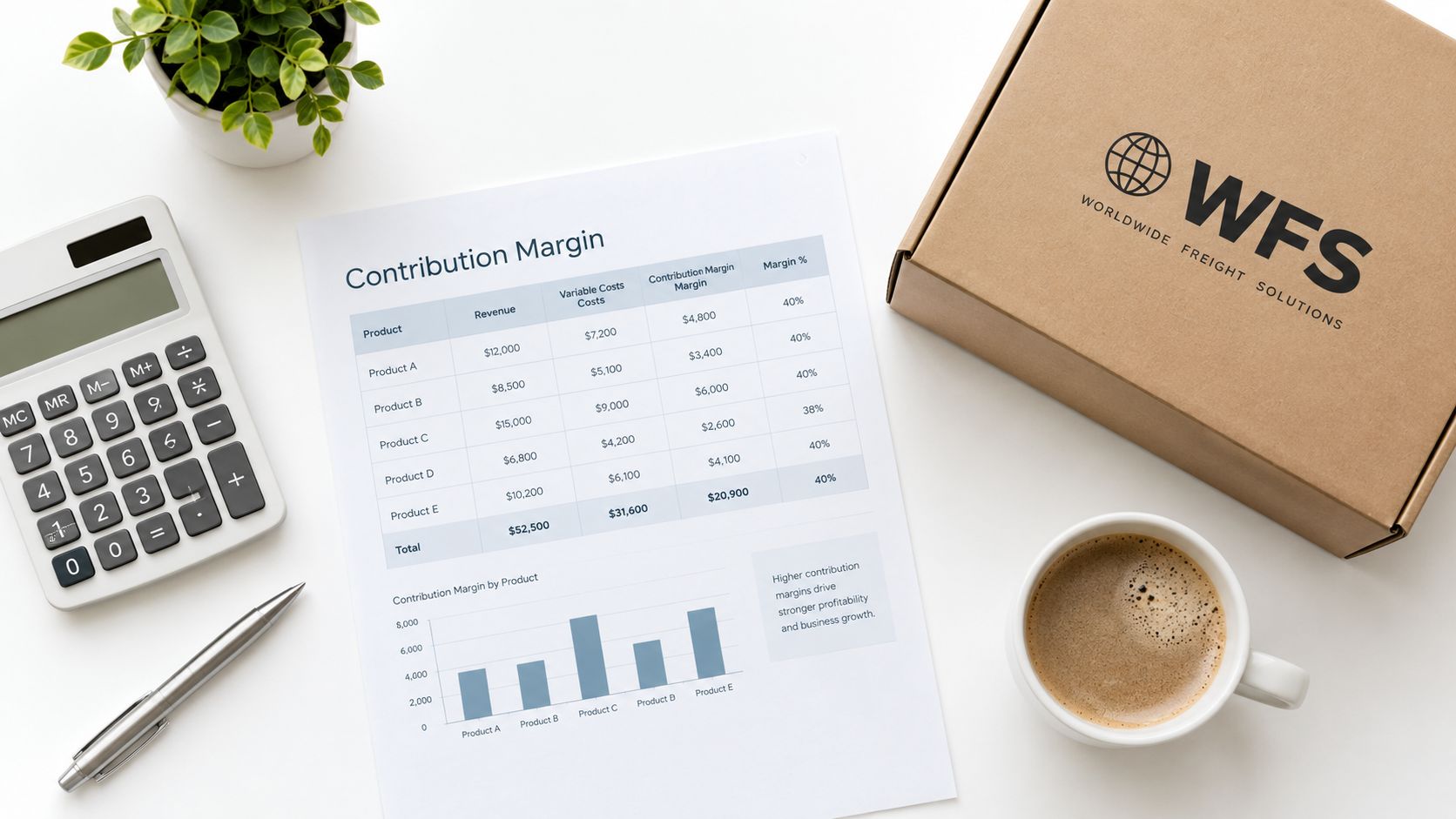
A useful WFS model starts with contribution margin per shipped unit:
The remaining amount is what can fund overhead and profit. To calculate break-even velocity, divide the inventory value exposed to storage and aging risk by the contribution generated per unit, then compare the result with a conservative demand forecast. If the item needs an optimistic sales rate to clear before punitive storage tiers, WFS isn't automatically the right answer.
Practical rule: A fulfillment badge improves the offer, but it doesn't repair a slow SKU.
CPG brands should also compare WFS with self-fulfillment or a 3PL by item size, order profile, replenishment cadence, and customer promise. A bulky seasonal item may need a different path from a compact replenishment product. For brands using social content to support demand generation, resources that help find local micro-creators can be useful, but creator demand should still be tested against inventory capacity and contribution margin.
The broader operating model is covered in omnichannel fulfillment strategy. The best fulfillment choice is the one that protects service levels without creating an inventory liability.
RedDog's Foundation, Optimization, Amplification framework works on Walmart because it forces sequencing. Brands get into trouble when they amplify demand before they know which listings, prices, fulfillment methods, and inventory positions can support profitable volume.
Start with a focused SKU set, not the full catalog. Prioritize products with reliable supply, understandable pack economics, repeat demand, and enough gross margin to absorb marketplace and fulfillment costs.
Foundation work includes:
The output is not just a live listing. It's a baseline showing what each item must achieve to earn more investment.
Once the core listings are stable, optimize the variables that affect conversion and margin together. Test content and pricing, but don't judge a change only by revenue. Track units, net sales, contribution dollars, advertising cost of sale, stock coverage, and inventory age.
Set a break-even advertising threshold from the product's contribution before advertising. If a SKU generates limited contribution before media, its allowable ad cost is limited too. Use inventory velocity as a spending gate. A product with thin stock should not receive aggressive demand generation unless replenishment is certain.
For broader retention and demand planning, lifecycle flows for consistent revenue provides a useful framework for connecting acquisition with repeat behavior. Walmart still requires marketplace-specific economics, so don't transfer DTC assumptions directly into the channel.
Amplification means increasing Walmart Connect spend, adding adjacent SKUs, extending fulfillment coverage, or expanding assortment. Each move should have a reason tied to observed contribution, not a desire to make the account look larger.
A brand may consolidate variations if demand is fragmented and inventory turns slowly. It may add a complementary pack when the anchor SKU has proven repeatability and the new item shares operational infrastructure. It may keep selected items self-fulfilled when WFS storage risk outweighs the conversion benefit. Reddog Consulting Group is one option for brands that need support across listing optimization, advertising strategy, inventory velocity modeling, and marketplace planning.
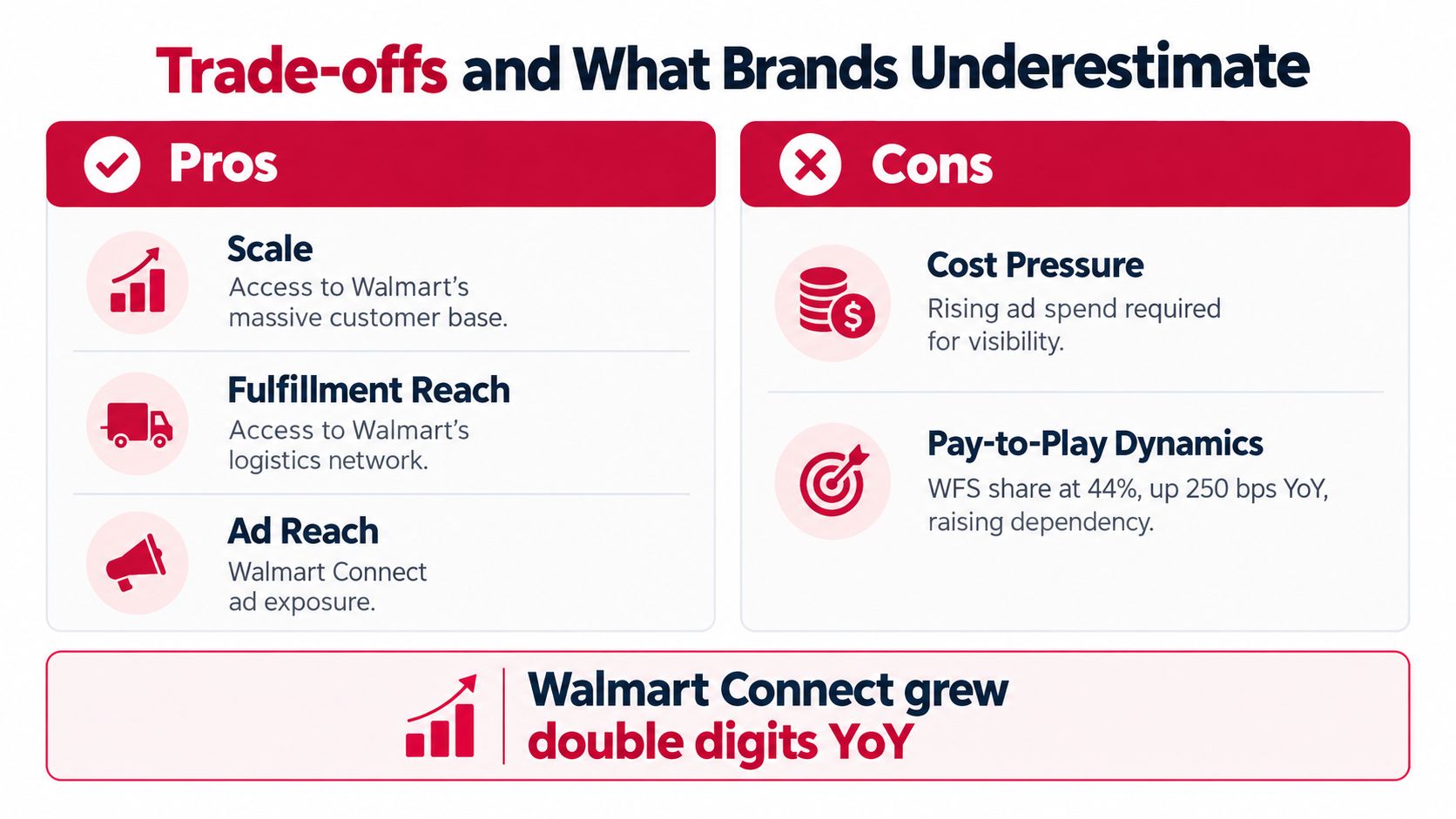
The easy Walmart story is that more shoppers and more marketplace volume create a rising tide. The harder reality is that visibility increasingly costs money, and fulfillment participation can increase dependency on Walmart's network.
Walmart reported that about 44% of marketplace volume flowed through WFS, up 250 basis points year over year, while Walmart Connect grew 44% excluding VIZIO and third-party ad spend rose more than 50%, according to Walmart's FY25 marketplace growth update. Those figures point to a denser commercial environment. Sellers aren't just competing on product quality. They're competing for paid attention while managing the cost of getting products to customers.
Mid-sized CPG brands often underestimate three pressures.
First, media inflation changes the break-even point. A campaign that worked at launch may become marginal as more sellers bid for the same shopper. The correct response isn't automatically to accept lower margin. Recalculate allowable spend by SKU and shift budget toward items with stronger conversion and healthier contribution.
Second, WFS isn't a universal cost advantage. Walmart's reported cost and conversion benefits apply within a broader operating system. A slow-moving product can accumulate storage exposure, while a bulky or seasonal product can create a different cost profile from a compact, replenishable item.
Third, channel allocation affects total business profit. Walmart sales can pull demand from DTC, Amazon, wholesale, or distributor orders. That isn't necessarily bad, but the brand needs to compare net contribution, payment timing, promotional obligations, customer ownership, and inventory priority across channels.
Margin discipline matters most when the account is growing quickly.
The operator should review contribution by SKU and channel, not just marketplace GMV. Track media as a variable cost, monitor inventory age, and decide whether Walmart's incremental demand is genuinely incremental. If the brand uses one inventory pool, set allocation rules before a Walmart promotion or ad increase creates shortages elsewhere.
A household consumables brand launched a broad WFS assortment because the fulfillment promise improved the customer offer. Sales rose, but the team measured success using GMV rather than inventory velocity. Several low-volume variations stayed in storage through peak season, then moved into higher-cost aging tiers. The brand had to discount units to clear space, and the apparent growth masked weaker contribution.
The correction was operational rather than cosmetic. The team separated core replenishment SKUs from seasonal and experimental items, reduced inbound depth on uncertain products, and used demand signals to decide which listings deserved continued WFS placement. It also assigned storage and markdown exposure to each SKU before approving additional inventory.
A second brand took the opposite route. It launched a narrow group of proven products, cleaned up content, set pricing guardrails, and measured contribution before increasing media. Only after the listings showed reliable conversion and manageable stock coverage did the team add WFS and Walmart Connect in stages.
That sequence protected the budget. Advertising supported items that could convert, fulfillment supported items that could move, and assortment expansion followed evidence rather than enthusiasm.
A third brand carried products with very different physical and demand profiles. Compact, repeat-purchase items went through WFS because speed and operational simplicity supported the offer. Bulky seasonal items stayed in self-fulfillment because storage exposure and uneven velocity made the economics less attractive.
The decision wasn't based on a universal preference for WFS. It came from comparing service requirements, cube, replenishment cadence, expected contribution, and inventory risk by category.
The operational flow should be reviewed regularly as demand changes. This walkthrough provides a useful visual reference for the warehouse and inventory decisions that sit behind marketplace execution.
These scenarios share one principle. Profitable Walmart Marketplace growth comes from matching demand generation with inventory capacity and unit economics. A brand that scales only the top line eventually pays for the mismatch through storage, markdowns, stockouts, or inefficient advertising.
Start with a SKU-level contribution audit. For each Walmart item, calculate net selling price, product cost, marketplace expense, fulfillment, advertising, returns, storage allocation, and contribution dollars. Then compare that result with the item's role in Amazon, DTC, wholesale, and distributor sales.
Next, review WFS inventory age and expected velocity. Separate products that replenish reliably from items that depend on seasonal demand or uncertain search volume. Set an inbound rule that reflects the cost of being wrong, not just the benefit of avoiding a stockout.
Set advertising thresholds before expanding spend. Define the break-even advertising cost of sale from contribution margin, then establish a target range that leaves room for overhead and profit. Don't increase bids on products with unresolved content, price, availability, or fulfillment problems.
Finally, map the account through the three operating phases:
That approach treats Walmart marketplace growth as a profit system. It gives the team a clear reason to invest, a reason to pause, and a way to distinguish incremental demand from expensive volume.
Reddog Consulting Group helps qualified CPG founders and operators review Walmart contribution margin, fulfillment exposure, advertising thresholds, and marketplace growth plans. Book a free 30-minute strategy call with Reddog Consulting Group for a working session focused on your numbers and next operating decisions, not a sales pitch.
Leave a comment: