
Published: March 2020 | Last Updated:February 2026
© Copyright 2026, Reddog Consulting Group.

Navigating online sales can feel like a constant battle against friction and costly mistakes. For CPG brand founders in Texas, digital storefronts serve as both the first impression and the primary sales channel. Understanding how strategic web design directly shapes customer behavior and conversion rates empowers you to stop margin leaks and capture more profitable transactions. This guide breaks down research-backed design tactics that transform websites into drivers of sales and long-term marketplace success.
| Point | Details |
|---|---|
| Web Design is a Strategic Tool | Effective web design is crucial for influencing customer behavior and driving sales. It must create intuitive experiences and optimize user engagement. |
| Psychological Triggers Matter | Understanding and leveraging psychological triggers like scarcity and urgency can significantly improve conversion rates through enhanced user engagement. |
| Design Types Impact Performance | Utilizing various web design types, such as responsive and interactive designs, can enhance user experiences and facilitate higher conversion potential. |
| Continuous Improvement is Key | Regular user experience audits and A/B testing are essential for identifying conversion barriers and refining web design strategies for better sales outcomes. |
Web design is far more than aesthetic decoration—it’s a strategic sales instrument that directly influences consumer behavior and conversion rates. By carefully crafting digital experiences, businesses can systematically guide potential customers through purchasing journeys that optimize engagement and revenue generation.
The fundamental elements of impactful web design that drive sales performance include:
Research from the Bureau of Labor Statistics demonstrates that web developers play a critical role in creating digital experiences that convert visitors into customers. Their technical expertise directly translates into improved site performance, user engagement, and ultimately, sales potential.

Modern web design goes beyond mere aesthetics—it’s about creating intelligent digital environments that anticipate and smoothly guide user behaviors. By understanding psychological triggers, user experience principles, and technical performance requirements, businesses can transform their websites from digital brochures into powerful sales engines.
Pro tip: Conduct monthly user experience audits to identify and eliminate potential conversion barriers in your web design strategy.
Web design is a nuanced discipline with multiple approaches that directly impact sales performance. Understanding the various design types allows businesses to strategically select interfaces that maximize user engagement and conversion potential.
Web Design Categories that significantly influence conversion rates include:
Web developers create design approaches that systematically guide user interactions and optimize digital sales channels. Modern web design transcends visual aesthetics, functioning as a strategic conversion mechanism.
Beyond basic categorization, sophisticated web design types emerge with unique conversion characteristics:
Successful web design requires understanding psychological triggers, technical performance, and user experience principles. By intelligently combining design approaches, businesses can transform websites from mere digital brochures into powerful sales conversion platforms.
Here’s a comparison of web design types and their influence on conversion strategy:
| Design Type | Key Advantage | Ideal Use Case | Potential Drawback |
|---|---|---|---|
| Responsive | Consistent cross-device UX | E-commerce, service sites | May increase development time |
| Minimalistic | Enhanced focus, clarity | Landing pages, portfolios | Might lack engagement cues |
| Interactive | Higher user engagement | Apps, gaming, education | Can slow page performance |
| Immersive | Memorable experiences | Branding campaigns | Requires advanced tech skills |
| Adaptive | Personalized user journeys | Subscription platforms | Needs data and segmentation |
Pro tip: Implement A/B testing across different web design approaches to systematically identify the most effective conversion strategies.
Understanding the psychological mechanisms that influence online purchasing behavior is critical for creating effective web design strategies that drive sales. Modern digital interfaces must go beyond mere visual appeal to strategically engage potential customers and convert browsing into meaningful transactions.
Key Psychological Triggers that fundamentally drive buyer decisions include:
Psychological triggers in online shopping reveal complex decision-making processes that extend far beyond rational product evaluation. Consumers are deeply influenced by emotional and contextual factors that shape their purchasing intentions.
Successful web design integrates multiple strategic elements to optimize buyer engagement:
Beyond technical implementation, effective web design requires continuous refinement through user feedback, behavioral analysis, and iterative testing. By understanding and anticipating user needs, businesses can create digital experiences that not only attract but actively convert potential customers.
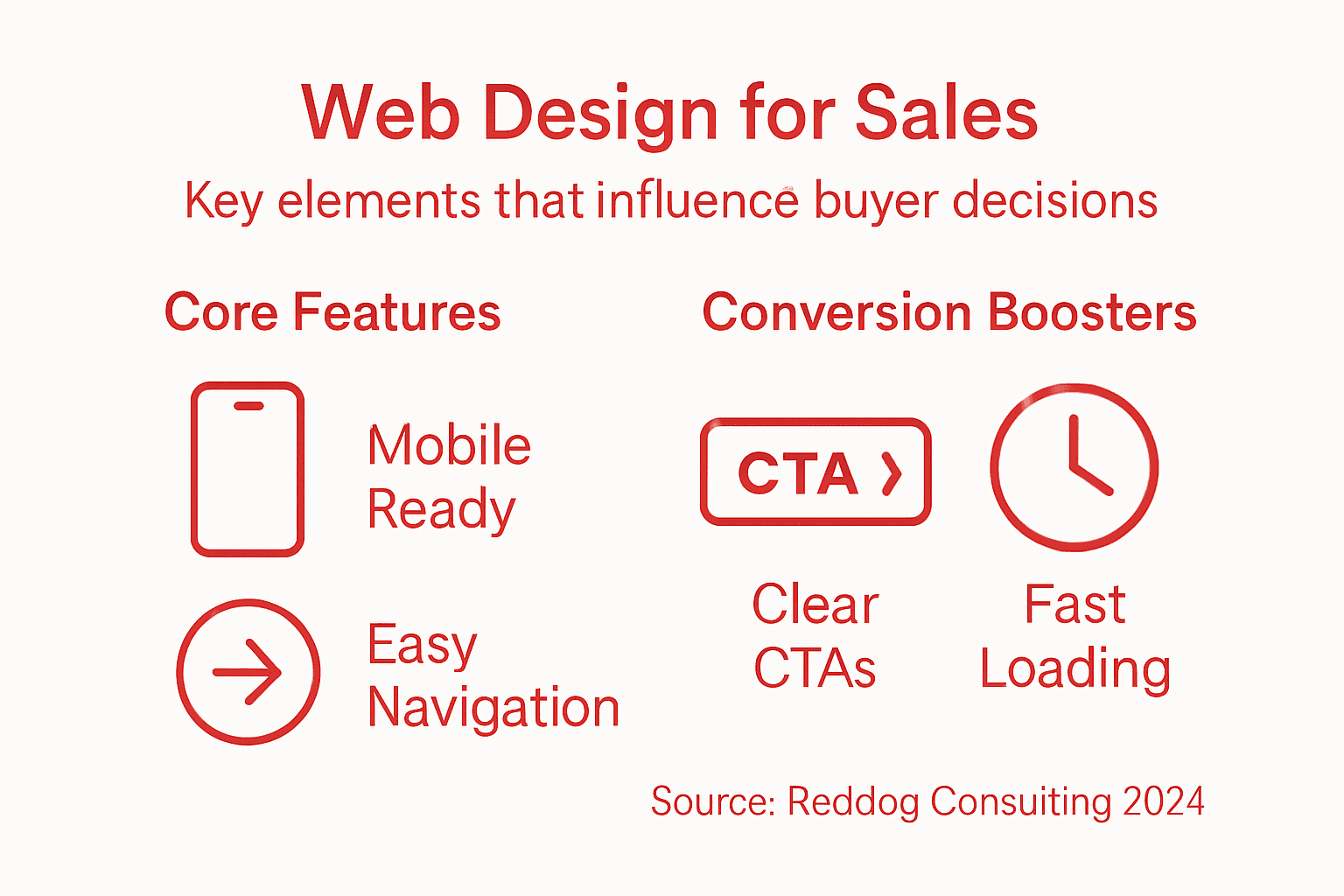
The table below summarizes how web design elements directly impact buyer decisions:
| Element | Buyer Impact | Business Benefit |
|---|---|---|
| Clear navigation | Reduces user confusion | Higher conversion rates |
| Transparent pricing | Promotes trust | Lowers cart abandonment |
| Visual storytelling | Boosts emotional connection | Improves brand loyalty |
| Mobile responsiveness | Supports on-the-go buying | Expands user base |
| Credibility indicators | Increases user confidence | Grows long-term revenue |
Pro tip: Conduct quarterly user experience audits to systematically identify and eliminate potential conversion barriers in your web design strategy.
Marketplace profitability hinges on understanding and mitigating complex revenue erosion mechanisms that silently undermine business performance. Web design plays a critical strategic role in preventing margin leaks by creating transparent, efficient digital sales environments that maximize revenue potential.
Key Margin Leak Sources in digital marketplaces include:
Margin analysis in retail channels reveals intricate pathways where profitability can be systematically compromised. Successful digital strategies demand forensic attention to every potential revenue drainage point.
Comprehensive margin protection requires strategic interventions across multiple dimensions:
Effective web design transforms from a visual medium to a precision instrument for financial performance. By integrating advanced analytics, intuitive interfaces, and seamless user experiences, businesses can systematically close margin leaks and enhance marketplace profitability.
Pro tip: Conduct monthly margin forensics to identify and systematically eliminate hidden revenue drainage points in your digital sales strategy.
CPG brands face significant digital marketplace challenges where seemingly minor web design mistakes can dramatically erode sales performance and consumer trust. Understanding these critical design pitfalls is essential for maintaining competitive market positioning and preventing revenue loss.
Critical Web Design Failure Points that directly impact sales include:
E-commerce sales forecasts reveal how design inefficiencies can systematically undermine digital sales potential. Small friction points in user experience can translate into substantial revenue erosion for CPG brands operating in competitive digital marketplaces.
Specific design vulnerabilities that compromise CPG brand performance comprise:
Successful digital strategies demand continuous web design optimization, focusing on creating intuitive, frictionless user experiences that anticipate and resolve potential consumer engagement barriers. By proactively addressing these design challenges, brands can transform their digital presence from a potential sales deterrent to a powerful revenue generation mechanism.
Pro tip: Implement quarterly comprehensive user experience audits to systematically identify and eliminate potential conversion-blocking design elements.
Web design is more than just creating beautiful websites. It directly affects how customers engage, make decisions, and convert into buyers. If you are facing challenges like confusing navigation, slow loading times, or margin leaks that quietly erode your profitability, it is time to rethink your approach. At RedDog Group, we understand the critical role of web design in sales growth strategies for emerging and growth-stage CPG brands. By combining cutting-edge digital design principles with deep expertise in marketplace economics, pricing strategy, and distribution, we help you build a seamless buyer journey that maximizes contribution margin—not just top-line revenue.
Our Digital & Business Consulting Services by Reddog Consulting focus on creating frictionless customer experiences, optimizing conversion elements, and plugging your margin leaks. We know how to navigate the complexities of Amazon, Walmart, DTC, wholesale, and more.
Ready to transform your website from a basic storefront into a powerful sales engine that drives profit and operational clarity? Visit our CPG Retail Growth Offer now. Discover how structured growth planning, marketplace optimization, and scalable retail expansion strategies can elevate your brand’s digital impact. Take the next step with RedDog Group and start closing the gap between great design and real sales results today.
Web design serves as a strategic instrument that influences consumer behavior and conversion rates by creating engaging and intuitive digital experiences that guide users through their purchasing journeys.
Essential design elements such as clear navigation, compelling visual storytelling, transparent pricing, and mobile responsiveness enhance user engagement and ultimately lead to higher conversion rates.
Common pitfalls include slow loading speeds, non-responsive designs, confusing navigation, inadequate product information, and complex checkout processes, which can erode customer trust and reduce sales.
Businesses can measure effectiveness through user experience audits, A/B testing, and analyzing conversion rate data to identify friction points and optimize the design for better performance.
Leave a comment: