
Published: March 2020 | Last Updated:January 2026
© Copyright 2026, Reddog Consulting Group.

Most American ecommerce managers face stiff competition on every major marketplace, making effective SEO a must for standing out. Research shows that more than 80 percent of all purchases now start with an online search, highlighting how visibility drives sales for small and medium brands. This overview delivers practical techniques to sharpen your omnichannel strategy, position listings for real discovery, and avoid SEO mistakes that drain growth opportunities.
| Point | Details |
|---|---|
| Importance of SEO in Ecommerce | SEO enhances online visibility, directly impacting market reach and economic growth for small to medium businesses. |
| Balanced SEO Approach | Successful SEO integrates both on-page and off-page techniques to improve search rankings and attract qualified traffic. |
| Marketplace Listing Optimization | Crafting compelling product listings through high-quality visuals and detailed descriptions is crucial for conversion success. |
| Avoiding Common SEO Mistakes | Regular audits and focus on unique content, technical soundness, and effective keyword strategies prevent costly errors in SEO. |
Search Engine Optimization (SEO) represents a strategic digital marketing approach specifically designed to enhance a business’s online visibility and discoverability. In the context of ecommerce, SEO is fundamentally about positioning your online store to appear prominently when potential customers search for products or services related to your brand. Digital economy research demonstrates that effective SEO directly contributes to increased market reach and economic growth for small and medium businesses.
For ecommerce operations, SEO goes beyond simple keyword placement. It involves a comprehensive strategy that includes optimizing website structure, creating high-quality content, improving site speed, ensuring mobile responsiveness, and building credible backlink networks. The goal is not just to rank higher in search results, but to attract genuinely interested customers who are more likely to convert into sales. Search engine optimization processes help businesses get discovered by customers precisely when they are searching online, making it a critical component of digital marketing strategy.
Successful ecommerce SEO requires understanding both technical website elements and user experience factors. This means creating content that answers customer questions, using structured data to help search engines understand your products, and developing a site architecture that allows easy navigation. Businesses must also focus on local SEO techniques, especially for small to medium enterprises targeting specific geographic markets. By implementing a robust SEO strategy, ecommerce brands can increase organic traffic, reduce customer acquisition costs, and establish long-term digital marketing sustainability.
Pro tip: Regularly audit your website’s SEO performance using free tools like Google Search Console to identify and quickly address potential optimization opportunities.
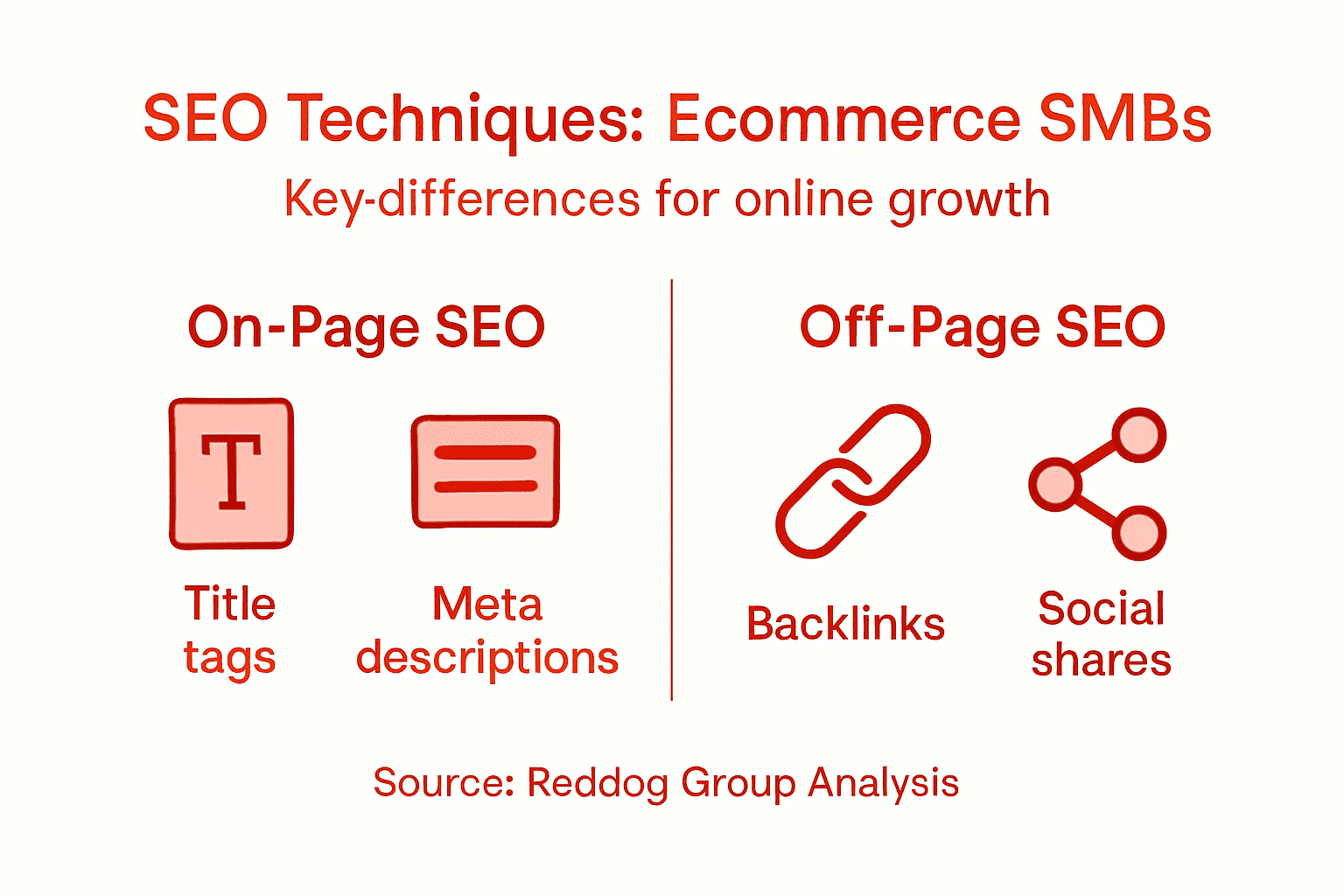
On-page SEO and off-page SEO represent two fundamental pillars of a comprehensive search engine optimization strategy, each playing a critical role in improving a website’s visibility and search engine rankings. On-page SEO techniques focus specifically on optimizations made directly within the website itself, encompassing elements that directly impact user experience and search engine understanding.
On-page SEO involves a range of technical and content-related strategies. This includes optimizing individual webpage elements such as title tags, meta descriptions, header structures, content quality, keyword placement, and internal linking. Businesses must ensure their website content is not only keyword-rich but also provides genuine value to users. Technical aspects like site speed, mobile responsiveness, secure HTTPS connections, and clear URL structures are equally important. Off-page SEO strategies complement these efforts by building external credibility through quality backlinks, social media engagement, and brand mentions that signal the website’s authority to search engines.
Successful ecommerce SEO requires a balanced approach that integrates both on-page and off-page techniques. While on-page optimization ensures search engines can effectively crawl and understand website content, off-page strategies help establish domain authority and trustworthiness. Small to medium businesses should focus on creating high-quality, relevant content, maintaining a technically sound website, and simultaneously developing a robust network of reputable external references and social signals. This holistic approach helps improve search rankings, attract qualified traffic, and ultimately drive conversions.
Pro tip: Create a comprehensive SEO audit checklist that covers both on-page and off-page elements to systematically improve your website’s search engine performance.
Here’s how on-page and off-page SEO techniques differ for ecommerce businesses:
| Aspect | On-Page SEO Focus | Off-Page SEO Focus |
|---|---|---|
| Direct Control | Managed within your website | Influenced by external sources |
| Strategic Goal | Improve site structure & content | Build credibility & authority |
| Impact on Rankings | Makes website easy to index | Boosts trust and relevance |
| Key Activities | Optimize titles, URLs, images | Gain backlinks, brand mentions |
Successful marketplace selling requires a strategic approach to product listing optimization, which goes far beyond simply uploading product information. Small to medium businesses must craft compelling listings that not only describe their products accurately but also strategically position them to attract and convert potential customers. This involves a meticulous process of understanding marketplace algorithms, consumer search behaviors, and competitive dynamics.
Effective product listing optimization encompasses multiple critical elements. High-quality visual content is paramount, including professional product images that showcase items from multiple angles and in contextual settings. Equally important are detailed, keyword-rich product descriptions that address potential customer questions and highlight unique product benefits. Ecommerce platform optimization requires businesses to understand and leverage platform-specific search algorithms, which means carefully selecting relevant keywords, maintaining accurate product attributes, and regularly updating listing information to reflect current market trends and consumer preferences.

Beyond basic description and imagery, marketplace success demands a nuanced understanding of competitive positioning. This means analyzing competitor listings, identifying gaps in market offerings, and continuously refining product presentations to stand out. Businesses should focus on creating comprehensive, transparent listings that build consumer trust through detailed specifications, clear shipping information, and authentic customer reviews. Technical optimization also includes ensuring mobile responsiveness, maintaining consistent branding across listings, and developing a strategic approach to pricing and promotional activities that align with marketplace guidelines and consumer expectations.
Pro tip: Create a standardized listing optimization template that includes mandatory fields for product descriptions, keywords, image requirements, and technical specifications to ensure consistency across all marketplace platforms.
Omnichannel SEO represents a holistic approach to digital marketing that transcends traditional search engine optimization by creating a unified, consistent brand presence across multiple platforms and touchpoints. Omnichannel marketing integration demands a sophisticated strategy that synchronizes digital and physical channels to deliver a seamless customer experience, ensuring brand messaging remains coherent and compelling regardless of where customers interact with the business.
Successful omnichannel SEO requires businesses to develop a comprehensive approach that optimizes every digital interaction. This means creating consistent keyword strategies across websites, social media platforms, email marketing, and even offline channels. SEO in omnichannel marketing involves more than just ranking high in search results—it’s about creating a unified narrative that guides customers through their entire journey. Small to medium businesses must focus on developing content that works harmoniously across different platforms, ensuring that each touchpoint reinforces the brand’s core message and provides value to potential customers.
Implementing an effective omnichannel SEO strategy involves deep understanding of customer behavior and technological integration. Businesses need to leverage data analytics to track customer interactions across different channels, using insights to refine their SEO approach. This includes developing responsive website designs, creating platform-specific content, and ensuring technical SEO elements like metadata, structured data, and mobile optimization are consistent across all digital properties. The goal is to create a fluid, interconnected digital ecosystem that makes it easy for customers to discover, engage with, and purchase from the brand, regardless of the platform they choose.
Pro tip: Create a centralized content and SEO management system that allows real-time tracking and optimization of your brand’s performance across multiple digital channels.
Search engine optimization can be a minefield of potential errors for small to medium businesses, with seemingly minor mistakes potentially derailing entire digital marketing strategies. Ecommerce SEO best practices demand vigilance and strategic planning to prevent common pitfalls that can significantly impact online visibility and sales performance. Understanding these potential mistakes is crucial for businesses looking to maximize their digital marketing investments and maintain competitive edge in increasingly crowded online marketplaces.
One of the most critical areas where businesses stumble involves keyword strategy and content development. Many organizations make the fundamental error of keyword stuffing, which not only damages search engine rankings but also creates a poor user experience. Effective SEO requires nuanced keyword integration that feels natural and provides genuine value to readers. Businesses must also avoid duplicate content, which can trigger search engine penalties and dilute page authority. This means creating unique, high-quality content for each product page, blog post, and landing page, ensuring that every piece of digital content serves a distinct purpose and provides meaningful information to potential customers.
Technical SEO represents another complex landscape where small businesses frequently encounter challenges. Common mistakes include neglecting mobile optimization, having slow page load speeds, improper site structure, and failing to implement structured data markup. Search engines increasingly prioritize websites that offer seamless mobile experiences, fast loading times, and clear, logical site architectures. Small businesses must invest in responsive design, optimize image sizes, leverage browser caching, and ensure their websites are technically sound. Additionally, maintaining accurate metadata, creating comprehensive XML sitemaps, and regularly conducting technical SEO audits can help identify and address potential issues before they significantly impact search rankings.
Below is a summary of common SEO pitfalls and their consequences for small ecommerce businesses:
| SEO Mistake | Immediate Consequence | Long-Term Impact |
|---|---|---|
| Keyword stuffing | Lower search rankings | Reduced user trust |
| Duplicate content | Search engine penalties | Lost ranking opportunities |
| Slow load speed | Higher bounce rates | Fewer conversions |
| Poor mobile design | Limited mobile traffic | Loss of competitive advantage |
Pro tip: Implement a quarterly comprehensive SEO audit that systematically reviews technical performance, content quality, and keyword strategies to proactively identify and address potential optimization challenges.
Small and medium businesses face critical challenges mastering SEO strategies that truly drive ecommerce success. From balancing on-page and off-page SEO to optimizing product listings and executing an omnichannel approach, navigating this complex landscape demands expert guidance. Key pain points include reducing costly SEO mistakes, enhancing marketplace visibility, and building cohesive brand growth across multiple channels. Concepts like keyword strategy, site structure, and integrated marketing are essential but often overwhelming without specialized support.
Reddog Group understands these challenges and offers tailored Digital & Business Consulting Services by Reddog Consulting built for SMBs eager to boost their online presence and revenue. With proven experience managing over 30,000 SKUs and delivering measurable year-over-year growth, our agency creates lasting value by optimizing listings, streamlining marketplace management, and implementing robust omnichannel SEO strategies. We invite you to explore these solutions and more on our Home page.
Experience the difference expert SEO and marketplace consulting can make in your ecommerce journey. Visit https://reddog.group to get started on transforming your digital marketing results today.
Search Engine Optimization (SEO) is a digital marketing strategy that enhances an online store’s visibility in search engines. For ecommerce, effective SEO increases market reach, attracts interested customers, and ultimately drives sales.
On-page SEO techniques focus on optimizing elements within your website, such as title tags, meta descriptions, and content quality. By ensuring that your site is user-friendly and provides valuable information, you can improve search engine rankings and user engagement.
Common pitfalls in ecommerce SEO include keyword stuffing, duplicate content, slow load speeds, and poor mobile design. Addressing these issues is crucial to maintain good search rankings, enhance user experience, and increase conversions.
To optimize product listings, use high-quality images, create detailed and keyword-rich descriptions, and understand the marketplace algorithms. Regularly update listings to reflect market trends and focus on competitive positioning to attract potential customers.
Leave a comment: