
Published: March 2020 | Last Updated:December 2025
© Copyright 2026, Reddog Consulting Group.

More than half of American online retailers now target international customers, reflecting massive shifts in how business crosses borders in the digital era. As global ecommerce hurdles traditional boundaries, even small retailers find rapid new growth by selling abroad. Understanding cross-border ecommerce is now vital for any American business hoping to capture international opportunity, manage digital risks, and turn complexity into sustainable success in a rapidly changing world.
| Point | Details |
|---|---|
| Cross-Border Ecommerce Growth | Businesses can expand their reach by engaging in cross-border ecommerce, overcoming traditional geographical limitations. |
| Technological Integration | Successful cross-border strategies rely on robust technological infrastructure for logistics, payments, and customer service. |
| Compliance Management | Navigating diverse regulatory landscapes is crucial for international sales; agile compliance strategies help mitigate risks. |
| Risk Mitigation | Understanding and planning for potential market entry challenges can turn risks into strategic opportunities for growth. |
Cross-border ecommerce represents the dynamic online trading of goods and services between businesses and consumers across international boundaries. This global digital marketplace enables retailers to expand their reach far beyond traditional geographic limitations, transforming how companies engage with customers worldwide. Cross-border trading strategies have become increasingly critical for businesses seeking sustainable growth in an interconnected digital economy.
At its core, cross-border ecommerce involves online transactions that traverse national borders, requiring sophisticated digital infrastructure and strategic planning. According to international trade research, this emerging commercial model presents unique challenges and opportunities. Online platforms must navigate complex logistics, payment systems, customs regulations, and consumer expectations across diverse markets. These transactions differ significantly from domestic ecommerce, demanding robust technological capabilities and deep understanding of international market nuances.
The relevance of cross-border ecommerce extends far beyond simple international sales. It represents a fundamental shift in global retail dynamics, enabling small and medium-sized businesses to compete on a worldwide stage. Retailers can now reach consumers in emerging markets, diversify revenue streams, and mitigate risks associated with single-market dependence. Successful cross-border strategies require comprehensive approach considerations:
By embracing cross-border ecommerce, businesses unlock unprecedented growth potential, transforming geographic boundaries from limitations into strategic opportunities for expansion and innovation.
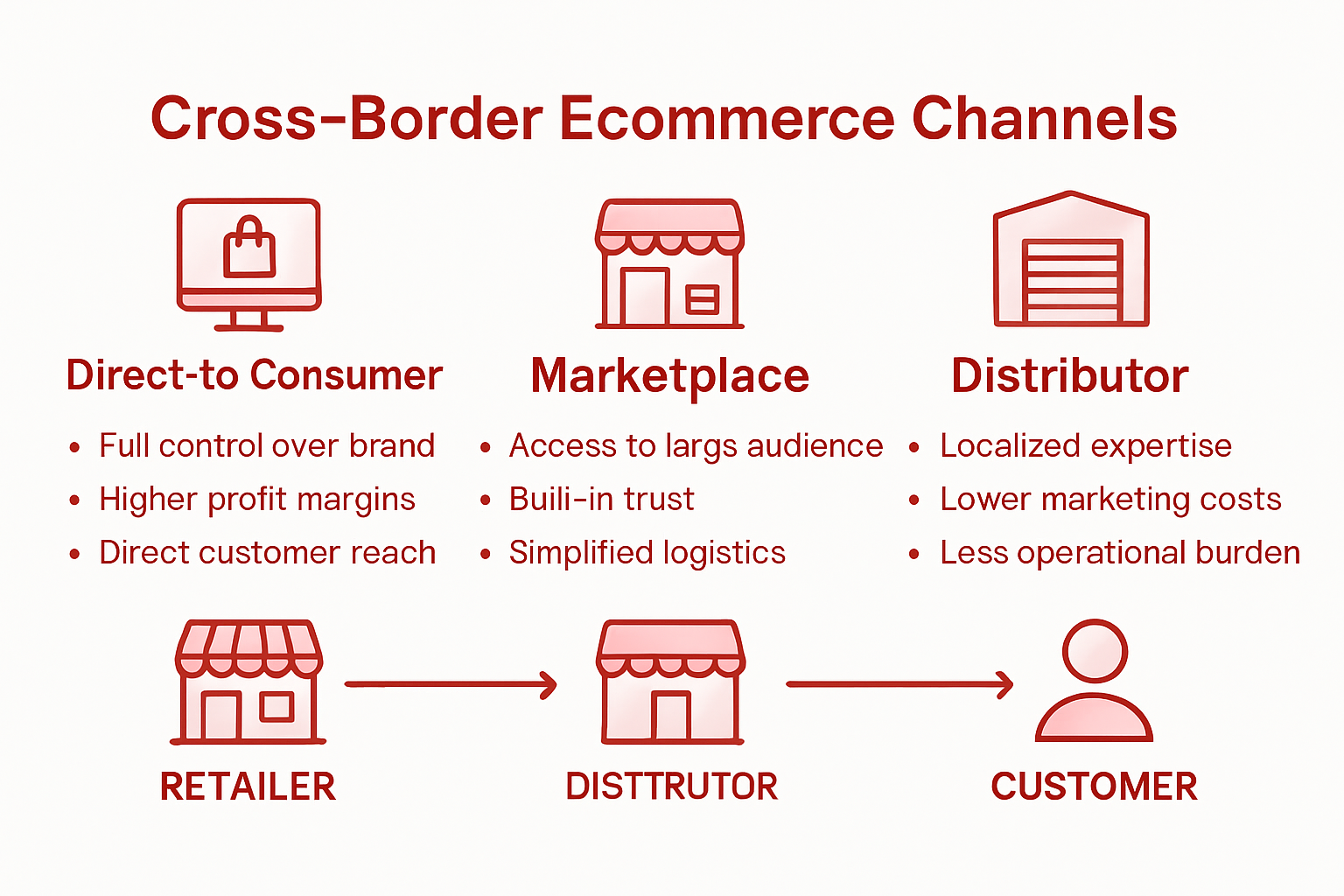
Cross-border ecommerce has evolved dramatically, presenting retailers with diverse models and channels for international sales expansion. Multichannel retailing strategies have become increasingly sophisticated, enabling businesses to leverage multiple digital platforms and reach global markets more effectively than ever before.
According to recent research, innovative business models are transforming international sales channels through advanced digital technologies. Emerging technological approaches demonstrate how big data, virtual reality, augmented reality, and blockchain are reshaping cross-border commerce strategies. These technologies enable businesses to create more personalized, efficient, and transparent international sales experiences, breaking down traditional barriers to global market entry.
Key international sales models in cross-border ecommerce include:
Successful cross-border sales strategies require deep understanding of technological capabilities, regulatory environments, and cultural nuances. Businesses must develop flexible, adaptive approaches that can navigate the complex landscape of international digital commerce, transforming geographical limitations into opportunities for unprecedented global growth.
Cross-border ecommerce success hinges critically on seamless logistics, payment systems, and technological infrastructure. Inventory management solutions play a pivotal role in creating robust international sales ecosystems that can navigate complex global supply chains and consumer expectations.
Technological integration represents the backbone of effective cross-border operations. Comprehensive service quality research demonstrates that sophisticated technology platforms directly impact consumer loyalty and perceived value in international transactions. Advanced systems must simultaneously manage multiple critical components:
The most successful cross-border ecommerce strategies prioritize integrated technological ecosystems that can seamlessly connect logistics, payments, and customer experience. This requires sophisticated platforms capable of handling complex international transaction requirements, including compliance with diverse regulatory frameworks, managing multicurrency transactions, and providing transparent, trackable shipping processes. Businesses must invest in flexible technological solutions that can adapt rapidly to evolving global market dynamics, transforming potential logistical challenges into competitive advantages.

Cross-border ecommerce demands sophisticated navigation of complex regulatory landscapes that vary dramatically across international markets. Retail compliance strategies have become increasingly critical for businesses seeking sustainable global expansion.
Regulatory complexities represent significant barriers to international sales. Comprehensive research on cross-border trade reveals multiple critical compliance dimensions that businesses must carefully manage, including:
Successful international retailers must develop agile compliance strategies that anticipate and adapt to rapidly evolving regulatory environments. This requires robust technological infrastructure capable of dynamically updating product listings, pricing, and shipping protocols to align with local legal requirements. Organizations must invest in comprehensive compliance management systems that provide real-time regulatory intelligence, enabling them to mitigate risks and maintain smooth international operations while protecting both consumer interests and business investments.
Cross-border ecommerce presents significant challenges that can derail international expansion strategies if not carefully managed. Understanding market entry complexities is crucial for businesses seeking sustainable global growth.
Market disruption risks represent a critical consideration for international retailers. Comprehensive research on cross-border trade dynamics reveals multiple potential challenges that can significantly impact business performance:
Small and medium-sized enterprises face particularly nuanced challenges when entering international markets. Successful cross-border strategies demand meticulous planning, robust technological infrastructure, and a willingness to adapt rapidly to dynamic global economic environments. Organizations must develop comprehensive risk mitigation frameworks that anticipate potential financial and operational obstacles, creating flexible approaches that transform potential pitfalls into strategic opportunities for sustainable international growth.
Expanding into international markets introduces challenges like complex regulations, logistics hurdles, and payment system integration. This article highlights critical pain points such as navigating regulatory compliance, managing inventory across borders, and adapting to diverse consumer preferences. At Reddog Group, we specialize in transforming these obstacles into growth opportunities with proven strategies focused on omnichannel retailing, marketplace management, and direct-to-consumer channels.
Our tailored Digital & Business Consulting Services by Reddog Consulting provide the expertise and technological integration necessary to succeed in cross-border ecommerce. 
Take the first step toward sustainable international retail growth today. Visit reddog.group to explore how our data-driven marketing campaigns, inventory optimization, and strategic guidance can amplify your global reach and increase sales across multiple channels. Don’t let geographic borders limit your brand’s success. Connect with Reddog’s experts now and unlock the full potential of cross-border ecommerce.
Cross-border ecommerce refers to the buying and selling of goods and services across international borders through online platforms, allowing businesses to broaden their market reach.
Challenges include navigating complex logistics, understanding local customs regulations, integrating payment systems, and ensuring compliance with varying international laws.
Technology can enhance operations by providing real-time inventory management, secure cross-border payment gateways, automated customs processing, and multilingual customer support.
Retailers should focus on creating a seamless multilingual experience, localizing payment methods, offering transparent shipping options, and adapting marketing messages to fit local cultures.
Leave a comment: