
Published: March 2020 | Last Updated:November 2025
© Copyright 2026, Reddog Consulting Group.
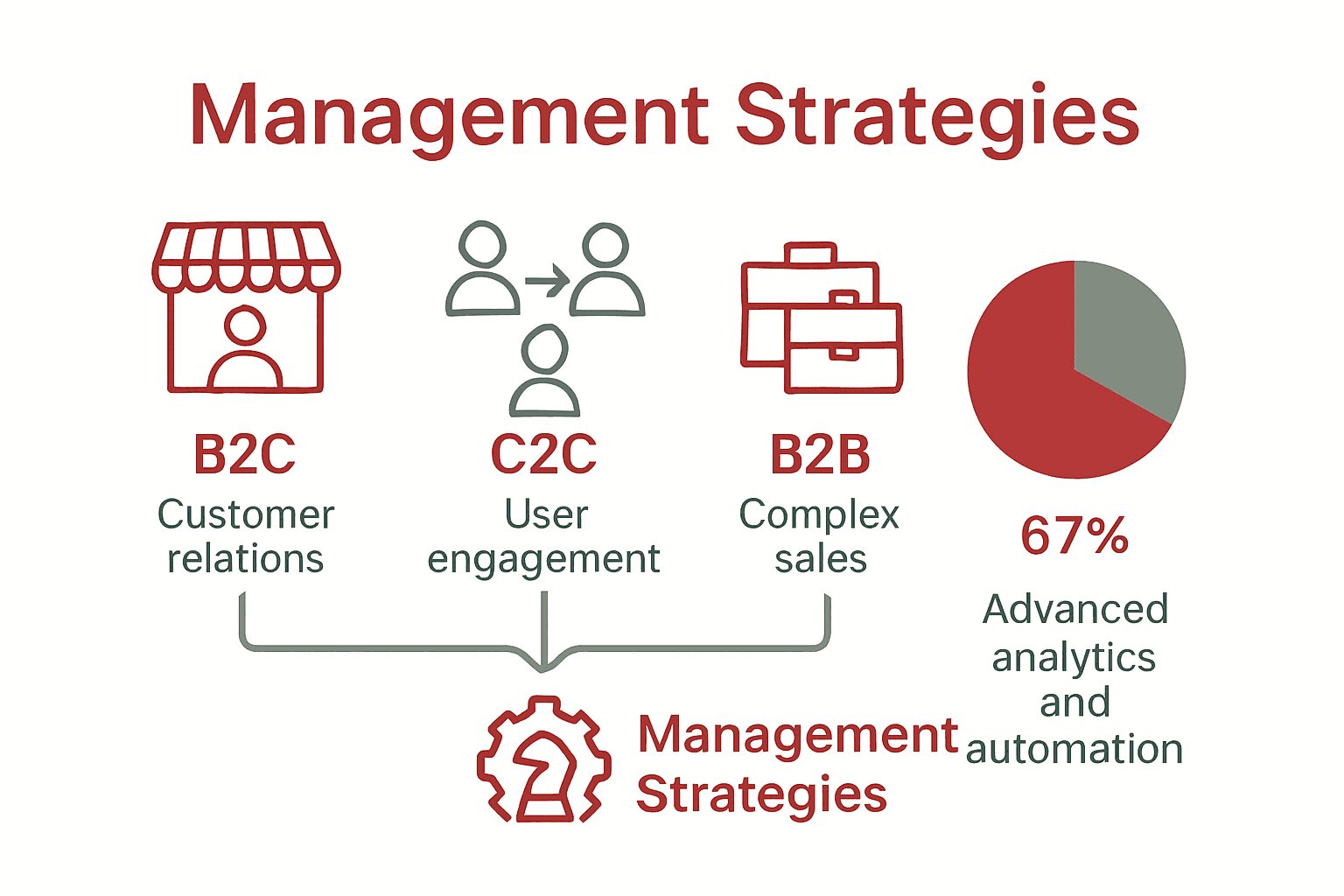
Most marketplaces now operate far beyond simple buy and sell exchanges. Platforms today are sophisticated, multi-sided ecosystems where every move counts. Over 80 percent of leading marketplaces rely on advanced analytics and automation to manage complex supply chains and pricing. Staying competitive means understanding how technology, user experience, and strategy work together to create value for everyone involved. If you want to compete in this fast-paced space, understanding the latest marketplace management tactics is more important than ever.
| Point | Details |
|---|---|
| Marketplace Evolution | Modern marketplaces have shifted from simple transactions to complex ecosystems requiring multifaceted management strategies. |
| Technological Infrastructure | Effective marketplace management relies on robust technology for integration, scalability, and enhanced consumer experiences. |
| Data-Driven Decisions | Utilizing data analytics and dynamic pricing strategies is key to optimizing marketplace performance and user engagement. |
| Risk Management | Understanding potential risks, such as data security and operational complexity, is essential for developing adaptive marketplace strategies. |
Marketplace management has dramatically transformed from simple transactional platforms to sophisticated multi-sided ecosystem networks. According to the Platform Canvas, modern marketplace management requires understanding complex value creation mechanisms that connect multiple stakeholders simultaneously. Businesses now must strategically design platforms that generate network effects, balancing the needs of sellers, buyers, and intermediary service providers.
At its core, contemporary marketplace management involves several critical components. These include:
Pricing represents a particularly nuanced aspect of marketplace management. As Robert L. Phillips, an expert in marketplace economics, suggests, effective revenue optimization requires sophisticated algorithmic approaches that adapt to real-time market conditions. Successful managers now leverage data analytics, machine learning, and predictive modeling to create responsive pricing frameworks.
The technological backbone of modern marketplace management demands robust, scalable solutions that can integrate multiple sales channels. Digital platforms must seamlessly connect inventory systems, payment gateways, logistics networks, and customer relationship management tools. Smart marketplace managers understand that technology is not just a support function but the fundamental infrastructure enabling sophisticated omnichannel retail experiences. Learn more in our comprehensive guide to marketplaces for SMEs, which provides deeper insights into building effective digital strategies.
Marketplace models have evolved significantly, offering diverse structures that cater to different business needs and consumer interactions. According to Marketplacer, modern marketplaces can be categorized into several distinct business model types, each with unique management approaches and strategic considerations.
The primary marketplace models include:
As RentAllScript explains, each marketplace model demands specialized management strategies tailored to its unique ecosystem. Successful platforms must develop sophisticated governance frameworks that balance seller capabilities, buyer expectations, and platform sustainability.
Modern marketplace management transcends traditional transactional models. The most effective platforms now integrate advanced technologies like artificial intelligence, machine learning, and predictive analytics to optimize user experiences, pricing strategies, and operational efficiency. Discover more in our comprehensive guide to marketplace expansion, which provides deeper insights into selecting and managing the right marketplace model for your business.
Effective marketplace management requires a sophisticated approach to orchestrating complex digital ecosystems. ArXiv research highlights the critical importance of implementing multi-agent systems that enable seamless collaboration across different marketplace participants, transforming traditional transactional platforms into intelligent, adaptive networks.
The core functions of successful marketplace management can be distilled into several key strategic components:
Technological Infrastructure plays a pivotal role in modern marketplace strategies. According to blockchain research from ArXiv, emerging technologies like distributed ledger systems can provide unprecedented levels of security, transparency, and efficiency in marketplace operations.
 These advanced frameworks enable real-time tracking, automated compliance, and enhanced trust between platform participants.
Successful marketplace strategies must also focus on creating value beyond simple transactions. This involves developing sophisticated recommendation algorithms, providing comprehensive support systems, and continuously optimizing user experiences. Learn more about retail strategy best practices in our comprehensive guide, which offers deeper insights into building resilient and adaptive marketplace ecosystems.
Omnichannel sales integration represents a sophisticated approach to modern retail strategy, transforming how businesses connect with customers across multiple platforms. According to research from CSE, the eMarketplace model provides a comprehensive architecture for collaborative commerce, emphasizing the critical importance of seamless interoperability across diverse sales channels.
Successful omnichannel integration requires several strategic approaches:
The technological backbone of omnichannel sales demands advanced digital infrastructure that enables real-time communication between different sales platforms. This means creating systems that can instantly update inventory, pricing, and customer interactions across marketplaces, physical stores, social media channels, and direct-to-consumer websites. Such integration allows businesses to provide a frictionless shopping experience, where customers can effortlessly move between different purchasing touchpoints.
Implementing an effective omnichannel strategy goes beyond technical integration. It requires a holistic approach that considers customer preferences, technological capabilities, and organizational agility. Learn more about omnichannel marketing integration strategies for retail growth, which can provide deeper insights into creating a cohesive and responsive sales ecosystem.
Marketplace management involves navigating a complex landscape of potential pitfalls that can significantly impact business performance. According to Industrial Marketing Management, understanding these risks is crucial for developing robust strategic approaches that mitigate potential operational challenges.
The most critical risks and challenges in marketplace management include:
Connecting with external expertise can provide valuable insights into risk mitigation. Expert networks offer strategic perspectives that help businesses anticipate and address potential marketplace challenges before they escalate. This approach enables companies to develop more adaptive and resilient management strategies.
Preventing common mistakes requires continuous learning and proactive management. Successful marketplace operators must remain agile, continuously monitoring performance metrics, and quickly adapting to changing market conditions. Discover strategies for retail growth and risk management in our comprehensive guide, which provides actionable insights for navigating marketplace complexities.
Marketplace management today presents a complex challenge. You know that balancing dynamic pricing, seller performance, and seamless omnichannel integration can feel overwhelming. The need to optimize technology infrastructure while ensuring operational transparency and customer trust adds even more pressure. If you are seeking to turn these challenges into clear growth opportunities, expert guidance is key.
Digital & Business Consulting Services by Reddog Consulting offers tailored solutions designed specifically for small and medium-sized businesses navigating these exact hurdles. From marketplace strategy and inventory management to advanced omnichannel retailing, our proven expertise managing over 50 brands and 30,000 SKUs means you get results you can trust.
Take the next step towards marketplace success today. Visit the Home page and explore how Reddog Group can help you unlock higher revenue, better operational efficiency, and seamless sales integration across channels. Don’t wait to transform your marketplace strategy into measurable growth with reddog.group.
Modern marketplace management involves several critical components, including dynamic pricing strategies, seller performance monitoring, customer experience optimization, platform governance and compliance, and technology infrastructure management.
Advanced technologies such as artificial intelligence, machine learning, and predictive analytics enable marketplace managers to optimize user experiences, pricing strategies, and operational efficiency, ultimately creating more responsive and adaptive digital ecosystems.
The primary types of marketplace business models include Business-to-Consumer (B2C), Consumer-to-Consumer (C2C), and Business-to-Business (B2B) marketplaces, each requiring unique management approaches and governance frameworks.
Effective omnichannel integration requires unified inventory management, consistent brand messaging, synchronized pricing strategies, integrated customer data platforms, and seamless cross-channel customer experiences to provide a frictionless shopping experience.
Leave a comment: