
Published: March 2020 | Last Updated:January 2026
© Copyright 2026, Reddog Consulting Group.

Finding the right customers often feels like searching for a needle in a haystack, especially for American retail brands competing online. With budgets and time always in short supply, targeting the wrong prospects can drain resources without results. By focusing on your Ideal Customer Profile and using data-driven lead generation tactics, you gain the clarity needed to connect with buyers who actually convert and stay loyal to your brand.
| Key Point | Explanation |
|---|---|
| 1. Focus on Ideal Customer Profiles | Identify and target customers who align with your business’s strengths for better conversion rates. |
| 2. Tailor Landing Pages Effectively | Create landing pages that specifically address the pain points of your ideal customers to enhance conversions. |
| 3. Utilize Omnichannel Marketing | Engage customers through multiple channels to increase visibility and conversion opportunities across platforms. |
| 4. Optimize Conversion Paths | Analyze and streamline the customer journey to reduce friction and improve the conversion rate from traffic to sales. |
| 5. Validate and Refine Strategies | Regularly measure and adjust your lead generation tactics to ensure sustained effectiveness and growth. |
You’re about to zero in on exactly which customers will drive real revenue for your business. This step separates ecommerce brands that waste marketing dollars from those that convert consistently. An Ideal Customer Profile focuses your sales and marketing efforts on entities that align with your value proposition, considering factors like industry relevance, organization size, operational pain points, and lifetime value potential. Instead of casting a wide net and hoping for conversions, you’ll identify and pursue prospects most likely to become loyal, profitable customers.
Start by analyzing your top performing customers. Pull data on who actually generates the most revenue and stays with you longest. Look at their company size, industry, location, and the specific problems your product solves for them. What did these customers have in common before you ever pitched them? Maybe they’re small retailers struggling with inventory management, or mid-sized brands trying to expand into new marketplaces. Document these patterns because they’re your blueprint. Next, layer in demographic and behavioral data. Understanding customer segmentation and market trends within your target market helps you refine who you pursue. If you’re selling to American ecommerce brands, analyze which types (fashion retailers, electronics sellers, DTC brands) respond best to your offering. Consider geographic location, annual revenue ranges, current technology stack, and growth stage. A bootstrapped startup has different needs than a venture-backed company, so segment accordingly. Then assess psychographic factors. What keeps these ideal customers up at night? Are they worried about losing sales to Amazon? Struggling with shipping costs? Need better product descriptions? The brands that resonate most with your solution typically share these specific pain points. This is where your approach to customer lifetime value becomes critical because you want profiles of customers who will expand with you over time, not one-time buyers.
Create a written description of your ideal customer profile that goes beyond job titles and demographics. Include their goals, challenges, budget constraints, and decision-making process. Who influences their buying decisions? How long is their sales cycle? What objections typically arise? The more specific you are, the better your targeting becomes. This isn’t theoretical—your marketing team uses these profiles to craft messages, your sales team uses them to qualify leads, and your product team uses them to understand which features matter most. Store this document somewhere accessible because you’ll reference it constantly as you build campaigns and review lead quality.
Pro tip: Run a quick audit of your last 20 customer wins versus your last 20 lost deals. The patterns that emerge reveal whether your current targeting is too broad or misaligned with who actually buys from you.
Here’s a summary of key attributes in an Ideal Customer Profile for effective targeting:
| Attribute | Why It Matters | Example Insight | Business Impact |
|---|---|---|---|
| Industry Relevance | Focuses efforts on best-fit sectors | Fashion retail vs. electronics | Higher conversion likelihood |
| Organization Size | Shapes product suitability | Small retailer, mid-sized DTC | Tailored messaging |
| Pain Points | Clarifies urgent needs for solution | Inventory issues, shipping | Drives prioritized outreach |
| Lifetime Value | Highlights growth potential | Recurring buyers | Maximizes revenue projection |
| Decision Influencers | Reveals sales process complexity | Operations manager, CEO | Adjusts sales approach |
Your landing page is where interested prospects convert into leads. This is where you prove that your offering solves their specific problems and convince them to hand over their email address or contact information. The goal is straightforward: create a page that attracts your ideal customer, clearly communicates value, and removes friction from the conversion process. This step determines whether your targeting efforts actually result in captured leads or just wasted traffic.

Start by designing a landing page that speaks directly to your ideal customer profile. Your headline should address a specific pain point they experience. Instead of “Inventory Management Software,” try “Stop Losing Sales Because of Stock Outs.” Your page needs a single, clear call to action that tells visitors exactly what happens next. Make it obvious and easy to find. Use straightforward language that avoids jargon unless your audience specifically uses those terms. Then layer in your lead magnet. This is the incentive that makes visitors want to convert. Lead magnets can take many forms: a free checklist for optimizing product listings, a template for calculating shipping costs, a guide on expanding to new marketplaces, or exclusive access to a resource list. The best lead magnets solve a problem that’s one step before the sale. If you sell marketplace management services, offer a free audit template or channel comparison guide. If you help with Amazon optimization, provide specific tactics through a downloadable product listing guide. The lead magnet must feel genuinely valuable, not like a thin pretext to grab an email. Your form itself should only ask for information you actually need. Requesting too many fields kills conversions. Start with name and email, then maybe company size or industry if those are critical to your follow-up strategy. Make the form submission instant and visible—no long processing delays that leave visitors wondering if anything happened.
Design your page for distraction-free conversion. Remove navigation menus, external links, and anything that tempts visitors to leave before converting. Use white space strategically to guide attention toward your call to action. Include social proof if you have it. A testimonial from another small ecommerce brand or a statistic about results builds credibility. Your page speed matters too. People abandon slow loading pages quickly, especially on mobile devices where many of your prospects browse. Test your page on phones and tablets because at least half your traffic probably arrives that way. After launch, collect data on what works. Lead scoring helps identify highest-quality prospects, so track which offers convert, where your best-converting traffic originates, and what information your sales team actually needs from new leads. Use this data to refine your page, test different headlines and offers, and gradually improve your conversion rate.
Pro tip: Create multiple landing pages targeting different customer segments from your ICP, each with a lead magnet that addresses their specific pain point. A page for fashion retailers needs different messaging than one for electronics sellers, and your conversion rates will reflect that precision.
Below is a comparison of common lead magnet types and their typical conversion use cases:
| Lead Magnet Type | Ideal For | Example Incentive | Expected Outcome |
|---|---|---|---|
| Checklist | Addressing quick-win tasks | Product listing optimization tips | Rapid form submissions |
| Template | Solving operational problems | Shipping cost calculation spreadsheet | Qualified lead attraction |
| Guide or Ebook | Educating decision makers | Marketplace expansion insights | More engaged leads |
| Free Audit Tool | Driving initial consultations | Channel performance audit template | High-value lead capture |
Now that you’ve identified your ideal customers and built landing pages to capture them, it’s time to reach them across every channel where they spend time. A single marketing channel rarely generates enough quality leads for sustainable growth. Your customers might discover you through social media, receive an email from a colleague’s recommendation, see a search result, or encounter your ad on a marketplace. Your job is to show up consistently across all these touchpoints with a unified message. This is omnichannel marketing, and it’s what separates successful ecommerce brands from those that plateau.
Start by mapping out which channels your ideal customers actually use. Are they scrolling Instagram looking for product inspiration? Checking Facebook for community recommendations? Reading industry newsletters? Searching Google for solutions? Browsing Amazon for alternatives? Most ecommerce audiences use multiple channels, so your campaign needs presence everywhere they look. Your messaging should be consistent across these channels, but tailored to each platform’s format and culture. A LinkedIn post differs from a TikTok video, but both should communicate the same core value proposition. When creating marketing campaigns for omnichannel brands, focus on sending the right message to the right person at the right time on their preferred platform. If you’re targeting small retailers, they might respond better to educational content on LinkedIn and direct outreach via email. If you’re targeting DTC brands, Instagram and YouTube probably deliver better results. Build your campaign calendar with specific touchpoints planned for each channel over the next 30 to 90 days. Email sequences nurture leads after they convert from your landing page. Social media content keeps your brand visible and builds credibility. Paid advertising from Google or Facebook drives traffic to your landing pages. Marketplace listings maintain visibility where customers already shop. Content marketing through blog posts positions you as an expert your audience trusts.
The critical element is setting measurable goals and tracking results across every channel so you know what’s actually working. Don’t run blind. Set up tracking on your landing pages to see which channels deliver the highest quality leads. Measure conversion rates, cost per lead, and lead quality for each channel. A channel might drive hundreds of visitors but generate poor quality leads that never convert to customers. Another channel might drive fewer visitors but consistently deliver prospects who actually buy. Your budget should follow the data, not your assumptions. Start small on each channel to test messaging and audience targeting, then gradually increase spending on the channels that deliver. Expect to adjust your approach as you learn what resonates with your audience. Campaign performance varies seasonally too, so what works in January might flop in July. Track it all, stay flexible, and let the data guide your decisions.
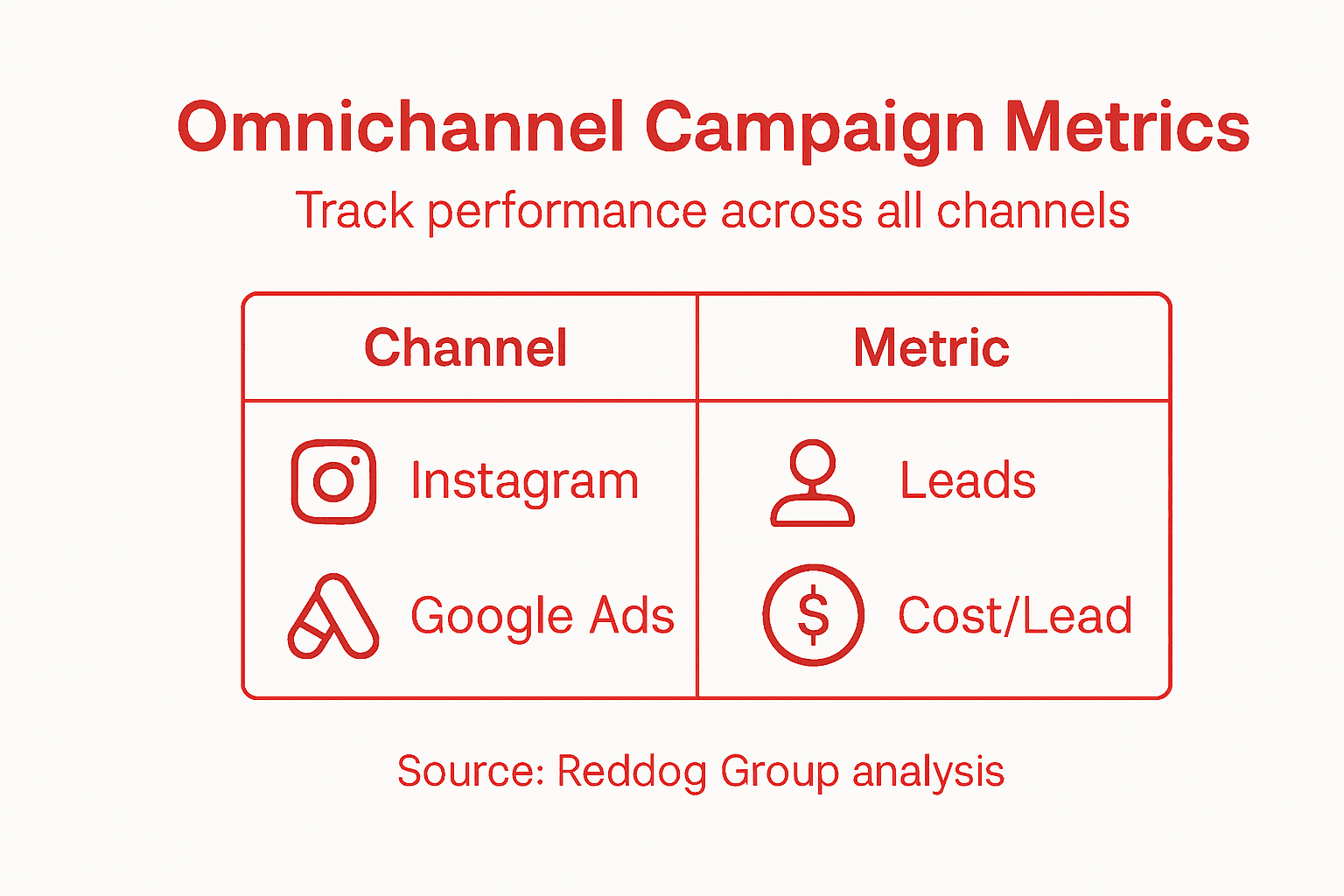
Pro tip: Create a simple spreadsheet tracking each channel’s metrics: visitors sent, leads generated, cost per lead, and conversion rate to customer. Review it weekly and shift budget toward top performers within 30 days. Speed in optimization beats perfection every time.
You’ve launched campaigns across multiple channels and traffic is flowing in from various sources. Now comes the reality check: not all traffic converts equally, and many prospects abandon your process somewhere between discovery and purchase. Your job is to identify where friction exists in the customer journey and systematically remove it. This step determines whether your lead generation efforts result in actual sales or just expensive visitor statistics.
Start by mapping the complete customer journey from first touch to final conversion. A prospect might encounter your brand through a Google search, click through to your landing page, enter their email for your lead magnet, receive nurture emails, visit your website multiple times, and finally make a purchase weeks later. Another prospect might find you on Instagram, immediately request a demo, and convert within days. Each path is different, but you need to understand all of them. Track where dropoff occurs. Are people leaving your landing page without converting? Do they convert but never engage with follow-up emails? Do they request demos but never show up? Once you identify the leak, you can fix it. Maybe your landing page headlines aren’t resonating with traffic from a particular source. Maybe your email sequence doesn’t address objections. Maybe your product pages lack sufficient detail. Seamless customer journeys across multiple channels require consistent messaging and minimal friction, so audit every touchpoint where a prospect interacts with your brand.
Test and optimize systematically. Start with your highest traffic channels first because improving conversion there creates the biggest impact. If Google delivers 100 visitors monthly and converts at 5 percent, that’s five leads. If you improve that rate to 10 percent, you’ve doubled your output from that channel. Test one element at a time. Change your landing page headline, measure the impact, then move on. Change your email subject line, measure the impact. Small improvements compound quickly. Selecting appropriate sales channels and managing buyer relationships means understanding which channels attract which type of prospect and tailoring your approach accordingly. Email might deliver higher quality leads than social media for your business, so your nurture process for email subscribers could be more aggressive while your social media strategy focuses on awareness and trust building. Work backwards from your best customers. What channels brought them in? What content convinced them? What objections did they have? What finally pushed them to buy? Replicate that path for similar prospects coming from similar channels. Create different conversion paths for different segments. A prospect coming from an industry-specific Facebook group has different knowledge and trust levels than one finding you through organic search. Tailor their journey accordingly.
Pro tip: Install UTM parameters on all your campaign links so you can accurately track which channel, campaign, and source sends each visitor and lead. Without this, you’re making optimization decisions blind, wasting time and budget on channels that look good but actually underperform.
You’ve built your system, launched campaigns, and optimized conversion paths. Now you need to determine what’s actually working and what needs adjustment. Without honest validation, you’ll keep repeating mistakes and missing opportunities for growth. This step transforms your lead generation from a guessing game into a data-driven operation that continuously improves.
Start by establishing clear metrics for success. What defines a good lead? Is it anyone who enters their email, or do you have stricter criteria like qualified leads who match your ideal customer profile? Do they need to have a certain company size, budget range, or industry? Do they need to engage with follow-up emails within a certain timeframe? Your sales team can tell you this immediately. Ask them which leads actually convert to customers and which ones waste their time. Once you define a quality lead, measure your performance against that standard. You might be generating hundreds of leads monthly, but if only 2 percent convert to customers, your cost per customer is high and unsustainable. Measure multiple metrics: total leads generated, cost per lead, quality lead percentage, conversion rate to customer, and customer lifetime value. These numbers tell you whether your lead generation strategy is profitable or just expensive traffic. Data-driven marketing approaches reveal which channels, offers, and messaging genuinely drive quality results versus which ones look good on paper.
Create a testing and refinement cycle. Systematic analysis and iterative improvement of your lead generation process ensures you’re constantly getting better. Run one experiment per week. Test a new landing page headline, a different email subject line, a fresh lead magnet offer, or a new audience segment on your paid ads. Measure the results for at least two weeks before declaring a winner, then implement what works and move to the next test. Document everything. What did you test? What was the result? What did you learn? Over time, these small wins compound into dramatically improved performance. Most teams skip this step because they’re busy executing campaigns, but this is where the real growth happens. Review your data monthly and assess whether you’re on track toward your customer acquisition goals. If you’re behind, identify which part of your funnel is underperforming and attack it. Is lead generation the problem or conversion? Are campaigns driving traffic but landing pages not converting? Are leads being generated but your sales team not following up properly? The data points you to the real bottleneck. Quarterly, conduct a deeper review. What’s changed in your market? Are your ideal customer profiles still accurate? Has competitor activity shifted? Are new channels emerging? Use these insights to adjust your strategy for the next quarter.
Pro tip: Create a simple monthly dashboard tracking your three most important metrics: leads generated, cost per lead, and conversion rate to customer. Share it with your team every month. Nothing drives focus and accountability like visible, transparent metrics everyone understands.
Struggling to turn online visitors into loyal customers is a common challenge for ecommerce businesses today. This article highlights the critical need to define your Ideal Customer Profile precisely, create compelling landing pages with valuable lead magnets, and execute omnichannel marketing strategies that deliver measurable results. If you find yourself overwhelmed by inconsistent lead quality or uncertain which channels truly drive sales, Reddog Group specializes in bridging those exact gaps. We understand your pain points around customer targeting, conversion optimization, and campaign tracking.
With deep expertise in marketplace management, Amazon FBA, and DTC sales, our Digital & Business Consulting Services by Reddog Consulting empower brands to expand seamlessly across platforms. Our proven strategies focus on identifying the right prospects, crafting tailored marketing campaigns, and refining every conversion touchpoint to maximize customer lifetime value. Don’t let missed opportunities slow your momentum. Act now to transform your lead generation into a dependable engine of growth.
Ready to stop wasting traffic and start acquiring high-value customers? Visit Reddog Group today and explore how our expertise can accelerate your ecommerce success. Discover practical, data-driven solutions tailored to your brand at our Home page. Take the next step and turn prospects into profitable customers.
Start by analyzing your top-performing customers to find common traits, such as industry, company size, and pain points. Document these patterns to create a detailed profile that will guide your marketing and sales strategies.
Offer valuable resources like checklists, templates, or guides that address specific problems your ideal customers face. For instance, a checklist for optimizing product listings can entice prospects to share their contact information.
Design a landing page that speaks directly to your ideal customer by addressing their specific pain points with a clear headline and a single call to action. Remove distractions like navigation menus, and ensure the form is simple, asking only for essential information.
Util channels where your ideal customers are most active, such as social media, email, and search engines. Create a campaign calendar to ensure consistent messaging across these platforms, adapting your content for each channel’s specific audience.
Map the entire customer journey from first touch to conversion and track where prospects abandon the process. Focus on optimizing your highest traffic channels first by testing one element at a time, like landing page headlines or email subject lines.
Establish metrics such as total leads generated, cost per lead, conversion rate to customer, and customer lifetime value. Review these metrics regularly and adjust your strategies to ensure continued improvement in your lead generation performance.
Leave a comment: