
Published: March 2020 | Last Updated:December 2025
© Copyright 2026, Reddog Consulting Group.

Most American eCommerce brands miss out on nearly 30 percent of potential online sales by lacking a strategic omnichannel approach. If you manage a small or medium-sized brand in the United States, you know how losing customers across disconnected channels quickly impacts growth. This guide breaks down actionable steps for defining campaign objectives, selecting platforms, crafting messaging, and measuring performance so you can capture more sales and build loyal audiences.
| Key Insight | Explanation |
|---|---|
| 1. Define Clear Objectives | Establish specific campaign goals to enhance brand engagement and customer loyalty, tailoring strategies accordingly. |
| 2. Segment Target Audiences | Analyze demographics and behaviors to create detailed buyer personas that guide personalized marketing messages across channels. |
| 3. Select Integrated Platforms | Choose omnichannel platforms that support seamless customer experiences, data synchronization, and offer advanced analytics for deeper insights. |
| 4. Consistent Messaging is Key | Craft unified, yet tailored messages that resonate emotionally with target audiences, highlighting value propositions and benefits. |
| 5. Measure and Optimize Performance | Continuously track campaign effectiveness using KPIs to refine strategies, reallocating resources as necessary to improve results. |
Crafting successful omnichannel marketing campaigns requires strategic planning centered on precise objectives and audience understanding. The American Marketing Association emphasizes creating a unified consumer experience by setting clear campaign goals that drive customer loyalty and brand engagement.
To define meaningful campaign objectives, start by identifying your specific business outcomes. Are you seeking to increase brand awareness, generate sales, expand market reach, or improve customer retention? Each objective demands a unique approach. For instance, a brand awareness campaign will look dramatically different from a direct sales conversion strategy. Segment your target audience by carefully analyzing demographic data, purchasing behaviors, online interactions, and potential customer pain points. This granular understanding allows you to create personalized messaging that resonates across multiple marketing channels.
Break down your audience targeting into specific personas with detailed characteristics. Consider factors like age, income, lifestyle, shopping preferences, and digital consumption habits. By mapping these attributes, you can design campaign strategies that speak directly to each segment’s motivations and needs.
Pro tip: Develop a detailed audience persona document that includes not just demographic information, but also emotional triggers and potential objections to help craft more compelling marketing messages.
Below is a summary of buyer persona attributes and their influence on omnichannel strategies:
| Persona Attribute | Influence on Campaign Strategy |
|---|---|
| Age group | Channel selection and ad formats |
| Digital habits | Messaging timing and platform choice |
| Purchasing behavior | Offer personalization and incentives |
| Emotional triggers | Creative angle and storytelling approach |
Here’s how common omnichannel campaign objectives align with business impacts and typical KPIs:
| Objective | Business Impact | Key Performance Indicator |
|---|---|---|
| Increase brand awareness | Expanded market visibility | Website traffic growth |
| Drive direct sales | Revenue and profit increase | Conversion rate |
| Improve customer retention | Higher customer lifetime value | Repeat purchase rate |
| Expand market reach | New customer acquisition | Audience growth rate |
Successful omnichannel marketing requires strategic platform selection that enables seamless customer interactions across multiple channels. Research examining omnichannel integration strategies highlights the critical importance of choosing platforms that support advanced models like Buy-Online-and-Pick-up-in-Store (BOPS) and comprehensive return mechanisms.

When selecting your omnichannel platforms, focus on technologies that provide unified customer data management, real-time inventory tracking, and consistent brand experience. Look for solutions that integrate e-commerce websites, mobile applications, social media channels, physical retail point-of-sale systems, and customer relationship management tools. Prioritize platforms offering robust analytics capabilities that allow you to track customer journeys across different touchpoints, enabling more personalized and responsive marketing strategies.
Evaluate potential platforms based on their ability to synchronize customer interactions, support multichannel communication, and provide scalable infrastructure. Consider factors such as ease of integration, cost-effectiveness, user experience, and compatibility with your existing technology ecosystem. Some key features to assess include centralized customer data platforms, automated marketing tools, cross-channel communication capabilities, and advanced segmentation features.
Pro tip: Select platforms that offer comprehensive API integrations and demonstrate proven flexibility in adapting to emerging digital marketing technologies and consumer behavior trends.
Crafting impactful marketing messages requires a strategic approach that resonates deeply with your target audience. Key message development strategies emphasize creating concise, targeted communications that speak directly to customer motivations and needs.
Start by developing a clear value proposition that differentiates your brand from competitors. Your messaging should address specific customer pain points and highlight unique benefits that solve their problems. Create multiple message variations tailored to different audience segments, ensuring each communication feels personal and relevant. Focus on creating offers that provide tangible value such as exclusive discounts, limited-time promotions, or bundled product packages that incentivize immediate action.
Design your campaign messaging to be consistent across all channels while allowing subtle customization for each platform. This means maintaining a unified brand voice whether you are communicating through social media, email, mobile apps, or physical store experiences. Use compelling storytelling techniques that connect emotionally with your audience, transforming simple promotional messages into narratives that inspire engagement and build brand loyalty.
Pro tip: Develop a messaging matrix that maps different customer personas to specific communication styles and offers to ensure maximum relevance and impact.
Successful omnichannel promotional campaigns require precision and strategic coordination across multiple platforms. Research on omnichannel strategy execution reveals that effective launches depend on integrated channel models that balance pricing, logistics, and customer experience.
Begin by creating a comprehensive launch timeline that synchronizes promotional activities across all channels. This includes coordinating messaging on social media, email marketing, mobile apps, physical stores, and online marketplaces to ensure a unified brand experience. Implement flexible pricing strategies that allow for real-time adjustments based on channel performance, customer response, and inventory levels. Develop clear protocols for tracking promotion performance, including metrics like conversion rates, customer engagement, and revenue generated across different platforms.
Optimize your execution by establishing robust backend systems that enable seamless inventory management, rapid customer service, and consistent brand messaging. Monitor your campaign in real-time, using advanced analytics to make quick adjustments and maximize promotional impact. Create contingency plans that allow for rapid pivoting if certain channels or messaging strategies underperform, ensuring your omnichannel approach remains agile and responsive to customer behavior.
Pro tip: Develop a centralized dashboard that provides real-time performance tracking across all promotional channels, enabling immediate strategic adjustments.
Effective omnichannel marketing requires comprehensive performance tracking that goes beyond surface-level metrics. Omnichannel analytics provide critical insights into channel integration quality by evaluating consumer engagement and campaign effectiveness across multiple platforms.
Develop a robust measurement framework that captures key performance indicators from each channel. This includes tracking conversion rates, customer acquisition costs, average order value, customer lifetime value, and engagement metrics specific to each platform. Use advanced analytics tools to create a holistic view of your campaign performance, identifying strengths and weaknesses across social media, email marketing, mobile apps, physical stores, and online marketplaces. Pay special attention to cross-channel interactions, understanding how customers move between different touchpoints and how each channel contributes to the overall customer journey.
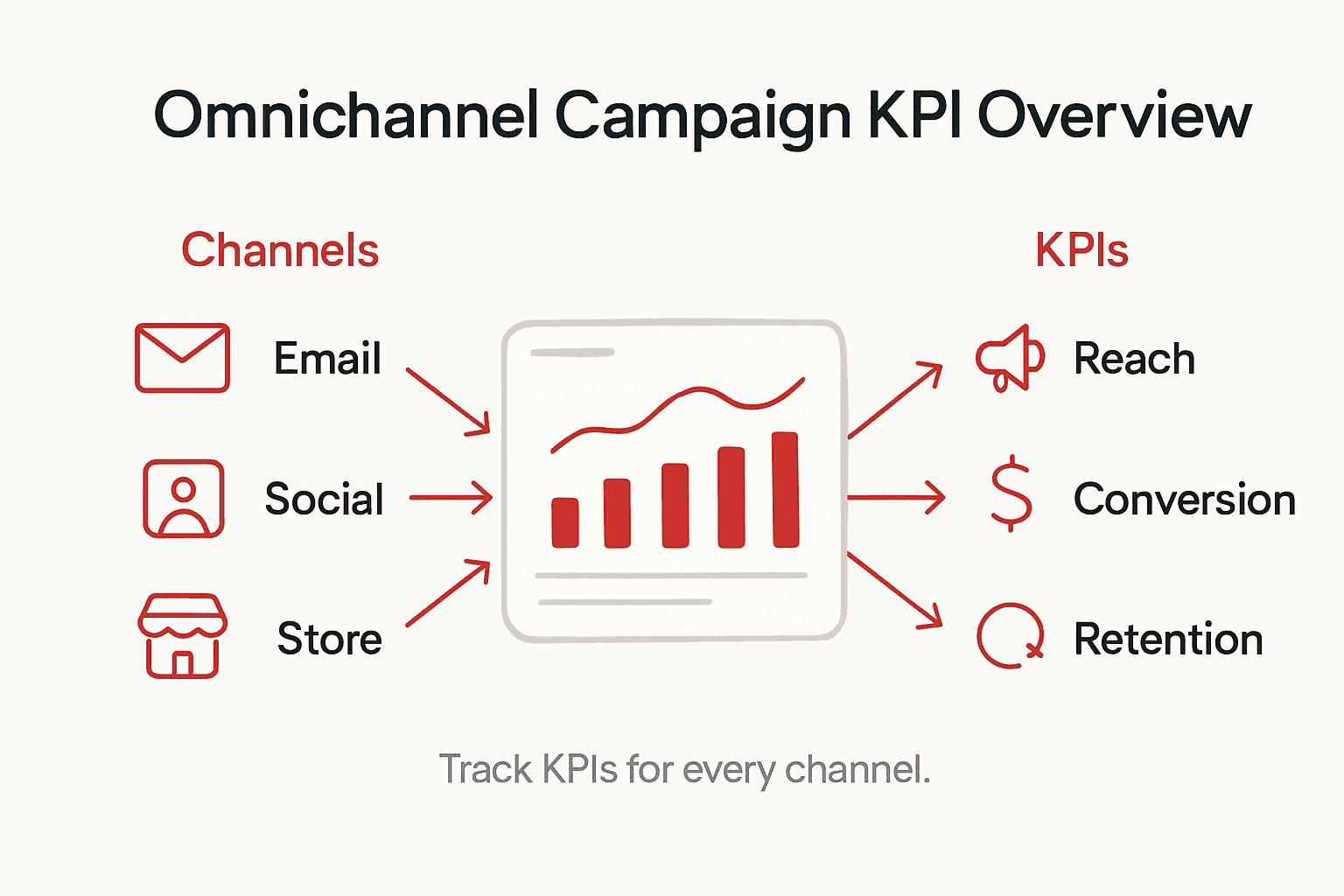
Implement a continuous improvement process that allows for rapid strategic refinement. Conduct regular performance reviews that compare actual results against initial campaign objectives. Utilize both quantitative data and qualitative feedback to make informed decisions about campaign adjustments. This might involve reallocating marketing budgets, modifying messaging, adjusting targeting parameters, or completely redesigning strategies for underperforming channels.
Pro tip: Create a dynamic performance dashboard that provides real-time insights and allows for immediate strategic pivots based on emerging data trends.
Navigating the complexities of omnichannel marketing campaigns can feel overwhelming when you face challenges like integrating platforms, personalizing messaging, and tracking customer journeys effectively. This article highlights key pain points such as aligning precise campaign objectives, selecting seamless platform solutions, and optimizing execution to unlock real growth. If you want to overcome these hurdles and transform your brand’s omnichannel strategy Reddog Group offers expert guidance tailored for brands ready to expand market reach and boost sales across all channels.
Our Digital & Business Consulting Services by Reddog Consulting specialize in delivering strategic solutions that unify e-commerce websites, mobile apps, physical stores, and marketplace presence. 
Act now to elevate your omnichannel marketing campaigns with proven strategies and data-driven execution. Visit Reddog Group to discover how we can help you build unified customer experiences that drive meaningful engagement and measurable growth. Start your journey toward omnichannel mastery today by exploring our comprehensive Home page to see our process and client success stories.
To define objectives for your omnichannel marketing campaign, identify specific business outcomes such as increasing brand awareness, generating sales, or improving customer retention. Break down each objective into measurable actions and target specific metrics, like aiming for a 15% increase in website traffic within three months.
When selecting omnichannel platforms, focus on their ability to integrate your customer data management, real-time inventory tracking, and support for consistent brand experiences. Evaluate potential platforms based on ease of use, cost-effectiveness, and their features, such as centralized data management capabilities, to ensure seamless interactions.
Create effective messaging by developing a clear value proposition that speaks directly to your target audience’s needs and pain points. Tailor your messages for different audience segments, ensuring consistency across channels while allowing for localized customization to enhance relevance.
Optimize the execution of your omnichannel promotions by creating a detailed launch timeline that coordinates messaging and activities across all channels. Implement real-time tracking of promotion performance, and be ready to adjust pricing strategies or messaging based on customer response and channel performance metrics.
To measure the performance of your omnichannel marketing campaigns, develop a framework to track key performance indicators such as conversion rates, customer acquisition costs, and engagement metrics from each channel. Regularly review this data to identify strengths and weaknesses, allowing for data-driven adjustments to your strategy.
Leave a comment: