
Published: March 2020 | Last Updated:January 2026
© Copyright 2026, Reddog Consulting Group.

Most american eCommerce brands are sitting on a goldmine of customer data yet struggle to put it into actionable use. While over 80 percent of organizations claim data is critical to their marketing decisions, few turn those insights into multichannel strategies that consistently drive revenue. For american marketing directors aiming to stay ahead, understanding the power of data-driven optimization can transform scattered touchpoints into an integrated growth machine fueled by real consumer behavior.
| Point | Details |
|---|---|
| Data-Driven Focus | Embrace a data-driven marketing approach by integrating diverse data sources to enhance customer understanding and engagement. |
| Utilize Predictive Analytics | Leverage predictive analytics for personalized customer interactions and strategic forecasting to stay ahead of market trends. |
| Ensure Compliance | Understand and adhere to data privacy regulations to protect consumer data and build trust with customers. |
| Avoid Pitfalls | Be cautious of vanity metrics and excessive data analysis, focusing instead on actionable insights that align with core business objectives. |
Marketing has undergone a significant transformation from traditional intuition-based approaches to a more scientific, data-driven methodology. Advanced analytics frameworks now enable businesses to make strategic decisions based on empirical consumer insights rather than gut feelings. This shift represents a fundamental reimagining of how companies understand, target, and engage with their customers.
At its core, data-driven marketing involves systematically collecting, analyzing, and applying consumer data to create more personalized, effective marketing strategies. This approach goes beyond simple demographic segmentation, leveraging sophisticated technologies to track customer behaviors, preferences, and interactions across multiple channels. The goal is to develop a comprehensive understanding of individual customer journeys, enabling hyper-targeted marketing campaigns that resonate on a more personal level.
The primary components of a robust data-driven marketing strategy include comprehensive data collection, advanced analytics, continuous performance measurement, and adaptive optimization. Marketers must integrate data from diverse sources - including website interactions, social media engagement, purchase histories, and customer service touchpoints - to build a holistic view of consumer behavior. Marketing decision-making frameworks now emphasize using these multidimensional insights to create more responsive, customer-centric approaches that can quickly adapt to changing market dynamics.
Pro tip: Start small by identifying 2-3 key performance indicators (KPIs) and systematically collect data around those metrics to build your initial data-driven marketing foundation.
Retail businesses today leverage multiple data types to create comprehensive insights into consumer behavior and market dynamics. Real-time data analytics technologies have revolutionized how companies collect and interpret information across various touchpoints. These diverse data sources enable retailers to develop more nuanced, targeted strategies that enhance customer experience and operational efficiency.
Transactional data represents the foundational layer of retail analytics, capturing critical details about customer purchases including product types, transaction values, timing, and frequency. Beyond basic sales information, this data helps businesses understand purchasing patterns, identify high-performing product lines, and develop personalized marketing approaches. Behavioral data takes this analysis deeper by tracking customer interactions across digital and physical channels - website browsing patterns, mobile app engagement, in-store movement, and interaction histories provide rich insights into consumer preferences and decision-making processes.

Moreover, retailers are increasingly integrating advanced data types like predictive analytics and customer sentiment data. These sophisticated information streams allow businesses to anticipate market trends, predict future purchasing behaviors, and understand emotional responses to products and brand experiences. Retail analytics strategies now incorporate machine learning algorithms that can process complex, multidimensional data sets, transforming raw information into actionable strategic intelligence that drives competitive advantage.
Pro tip: Implement a centralized data management platform that can integrate multiple data sources and provide real-time analytics to break down traditional information silos and enhance strategic decision-making.
Here is a summary of key data types used in retail and their strategic impact:
| Data Type | Description | Business Impact |
|---|---|---|
| Transactional Data | Tracks purchases, amounts, and timing | Identifies sales trends and patterns |
| Behavioral Data | Monitors shopper interactions across channels | Reveals preferences and motivations |
| Predictive Analytics | Forecasts future customer actions | Enables proactive marketing |
| Customer Sentiment Data | Measures emotional responses to products/brands | Fine-tunes messaging and positioning |
Successful omnichannel marketing requires seamless data integration across multiple customer touchpoints, transforming fragmented interactions into a cohesive, intelligent ecosystem. Digital technology-enabled integration strategies have become critical for businesses seeking to create unified customer experiences that transcend individual channels and platforms.
The core challenge lies in breaking down traditional data silos that prevent comprehensive customer understanding. Data integration involves collecting, standardizing, and synchronizing information from diverse sources such as eCommerce platforms, mobile applications, physical stores, customer support systems, and social media channels. This holistic approach enables businesses to develop a 360-degree customer profile that captures nuanced behaviors, preferences, and engagement patterns across different interaction points. Advanced technologies like customer data platforms (CDPs) and machine learning algorithms play a pivotal role in aggregating and interpreting these complex, multidimensional data streams.
Retailers must implement robust technological infrastructures that support real-time data synchronization and intelligent analysis. Omnichannel intelligence solutions now enable companies to track customer journeys across digital and physical environments, providing unprecedented insights into purchasing decisions and interaction dynamics. By creating interconnected data ecosystems, businesses can develop personalized marketing strategies, optimize inventory management, and deliver consistent brand experiences that adapt dynamically to individual customer needs.
Pro tip: Invest in a centralized customer data platform that can normalize and integrate data from multiple sources, ensuring consistent and actionable insights across your entire organization.
Predictive analytics has revolutionized marketing by transforming raw customer data into actionable intelligence that drives personalized experiences. Predictive models leveraging big data enable businesses to anticipate customer needs, optimize engagement strategies, and deliver hyper-targeted interactions across multiple channels.
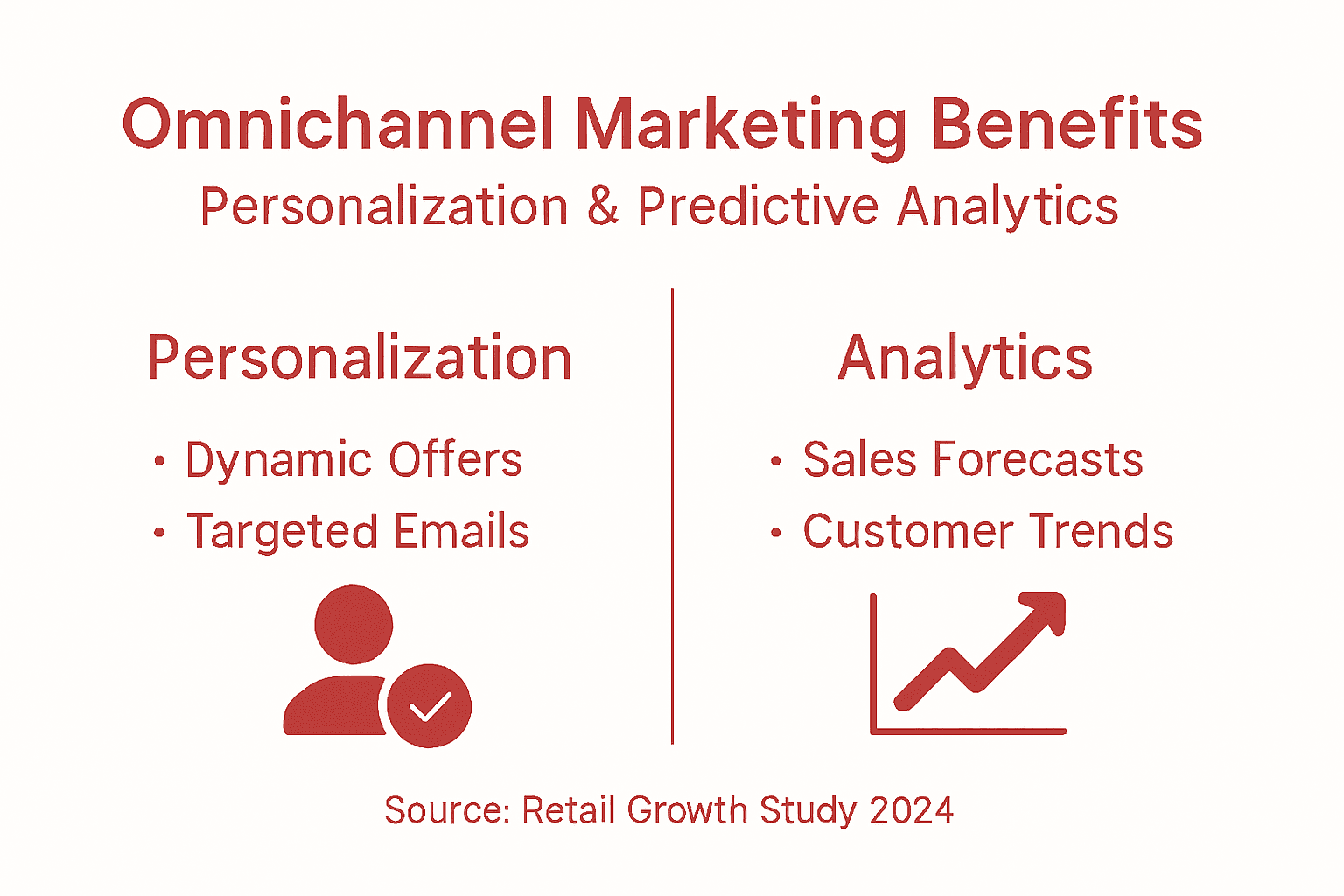
The core benefit of predictive personalization lies in its ability to create dynamic, adaptive customer experiences that feel uniquely tailored to individual preferences. Advanced machine learning algorithms analyze historical behavioral patterns, purchase histories, browsing interactions, and demographic data to generate sophisticated customer segments. These intelligent systems can predict potential purchasing behaviors, recommend products with remarkable accuracy, and even forecast potential customer churn before it occurs. By understanding each customer’s unique journey, businesses can craft marketing messages, product recommendations, and engagement strategies that resonate on an incredibly personal level.
Moreover, predictive analytics extends far beyond marketing communications, touching critical aspects of business operations. AI-driven personalization techniques now enable real-time inventory management, dynamic pricing strategies, and intelligent customer service interventions. Retailers can optimize stock levels based on predicted demand, create personalized pricing models that maximize conversion potential, and deploy intelligent chatbots that understand and anticipate customer inquiries. The result is a seamless, intelligent ecosystem that continuously learns and adapts to evolving customer expectations.
Pro tip: Start small by implementing predictive analytics on one specific customer journey or product line, measuring results, and gradually expanding your personalization strategy across other business areas.
Small and medium-sized businesses navigating data-driven marketing must carefully understand the complex legal landscape surrounding consumer data protection. Data privacy regulations for SMBs have become increasingly intricate, with multiple state-level laws creating a challenging compliance environment that requires proactive strategic planning.
The legal framework for data management involves understanding key regulations like the California Consumer Privacy Act (CCPA), Virginia’s Consumer Data Protection Act (CDPA), and potential federal guidelines. These laws mandate specific requirements around data collection, storage, user consent, and transparency. Small businesses must implement robust mechanisms to obtain explicit customer consent, provide clear opt-out options, and maintain secure data management practices. Critical responsibilities include developing comprehensive privacy policies, creating secure data storage systems, and establishing transparent communication channels that inform customers about how their personal information will be utilized.
Technical and organizational safeguards are equally important in maintaining legal compliance. Comprehensive data protection strategies require businesses to conduct regular data mapping exercises, implement strong cybersecurity protocols, and train employees on proper data handling procedures. This involves creating internal workflows that prioritize data minimization, ensuring collected information is strictly necessary for business operations, and maintaining rigorous documentation of data processing activities. Potential risks include significant financial penalties, reputational damage, and loss of customer trust if compliance standards are not meticulously maintained.
Pro tip: Consult with a legal professional specializing in data privacy to develop a customized compliance roadmap that addresses your specific business model and customer interaction channels.
Here’s a comparison of risks and requirements for SMBs regarding data privacy compliance:
| Compliance Aspect | SMB Risk | Key Requirement |
|---|---|---|
| User Consent | Fines for unauthorized data use | Obtain explicit permission |
| Data Storage Security | Potential data breaches | Implement strong encryption |
| Transparency | Loss of customer trust | Clear privacy policies |
| Documentation | Regulatory penalties | Maintain processing records |
Data-driven marketing offers powerful opportunities, but businesses frequently encounter critical pitfalls that can undermine their strategic efforts. Data monitoring and execution challenges reveal systemic issues that can dramatically reduce campaign effectiveness and waste valuable marketing resources.
One of the most significant strategic errors involves relying on vanity metrics that look impressive but provide minimal actionable insights. Marketing teams often become entranced by surface-level numbers like page views or social media likes, neglecting deeper metrics that truly reflect customer engagement and conversion potential. These superficial indicators create a false sense of progress while masking underlying performance issues. Advanced marketers understand the importance of connecting data points to genuine business outcomes, focusing on metrics that demonstrate tangible revenue impact, customer lifetime value, and meaningful behavioral shifts.
Moreover, data-driven marketing strategies frequently suffer from analysis paralysis and excessive complexity. Businesses can become so focused on gathering and analyzing data that they lose sight of their core marketing objectives. This over-analysis leads to delayed decision-making, missed market opportunities, and unnecessarily complicated campaign structures. Successful marketers strike a delicate balance between data-informed insights and agile, responsive strategy development, recognizing that customer behavior is inherently dynamic and imperfect.
Pro tip: Implement a monthly review process that critically evaluates your marketing metrics, focusing on eliminating data points that do not directly contribute to your primary business goals.
Navigating the complexities of data-driven marketing in omnichannel retail can feel overwhelming. You understand the challenge of integrating fragmented data sources and translating analytics into personalized customer experiences. At Reddog Group, we specialize in turning these challenges into growth opportunities for small and medium-sized businesses. With proven expertise in marketplace management, Amazon FBA, DTC channels, and seamless online-offline strategies, we help you harness predictive analytics and real-time data integration to drive measurable revenue growth.
Take advantage of our tailored services that optimize your product listings, streamline inventory management, and elevate your marketing campaigns into intelligent, data-powered actions. Don’t let compliance complexities or strategic pitfalls slow your progress. Explore how our deep experience managing over 50 brands and 30,000 SKUs can become your competitive advantage. Visit Reddog Group today and start transforming your data into sustainable omnichannel sales success.
Data-driven marketing involves systematically collecting, analyzing, and applying consumer data to create personalized and effective marketing strategies. It allows businesses to make strategic decisions based on empirical insights rather than intuition.
Predictive analytics uses historical data to anticipate customer needs and behaviors. By understanding purchasing patterns and preferences, it enables businesses to deliver personalized experiences and optimize marketing efforts across various channels.
Retail data types include transactional data, which tracks purchases; behavioral data that monitors interactions; predictive analytics for forecasting future actions; and customer sentiment data that measures emotional responses to products or brands, all contributing to informed marketing strategies.
Small businesses should understand key data privacy regulations and implement clear user consent processes, secure data storage systems, and transparent privacy policies. Regular training and adherence to compliance practices are essential for protecting customer data.
Leave a comment: