
Published: March 2020 | Last Updated:December 2025
© Copyright 2026, Reddog Consulting Group.

Most American eCommerce brands miss out on nearly 33 percent more sales opportunities by relying only on single-channel campaigns. As customer journeys grow more complex, marketing managers face real pressure to create seamless interactions across email, social media, websites, and in-store visits. This guide helps ambitious American marketing teams understand what makes cross-channel marketing different and reveals the strategies top brands use to deliver messages customers actually remember.
| Point | Details |
|---|---|
| Unified Customer Journey | Cross-channel marketing ensures a seamless experience by integrating customer interactions across various platforms. |
| Data Integration is Crucial | Effective strategies rely on centralized data to create comprehensive customer profiles for personalized marketing. |
| Real-Time Optimization | Marketers should adjust strategies based on live data to enhance customer engagement and responsiveness. |
| Avoid Organizational Silos | Breaking down departmental barriers is essential for cohesive messaging and understanding the full customer journey. |
Cross-channel marketing represents a sophisticated strategic approach where businesses intentionally engage customers across multiple digital and physical platforms to create a seamless, integrated experience. This method goes beyond traditional single-channel marketing by recognizing that modern consumers interact with brands through diverse touchpoints like social media, websites, email, mobile apps, and physical stores.
At its core, cross-channel marketing is about creating a unified customer journey that provides consistent messaging and personalized interactions. Businesses coordinate their marketing efforts to ensure customers receive coherent communication regardless of which channel they use. This approach allows companies to track customer interactions across different platforms, understanding their preferences and behaviors more comprehensively.

Successful cross-channel marketing strategies require deep data integration and sophisticated technological infrastructure. Marketers must collect and analyze customer data from multiple sources, creating comprehensive profiles that enable personalized communication. This might involve tracking a customer’s browsing history on an ecommerce website, their engagement with social media ads, and their in-store purchase behaviors to develop a holistic understanding of their purchasing journey.
Pro tip: Start by mapping out all existing customer touchpoints and identify potential areas where communication can be more consistent and personalized across channels.
Cross-channel marketing encompasses a diverse range of digital and physical platforms, each serving unique purposes in the customer engagement ecosystem. The key channels include email, web platforms, mobile applications, SMS messaging, call centers, and in-store interactions, with each medium offering distinct opportunities for customer communication and brand interaction.
The fundamental distinction between cross-channel and traditional multichannel marketing lies in strategic integration. While multichannel approaches simply use multiple platforms independently, cross-channel marketing creates a synchronized, interconnected experience. Channel spillover effects become critical, where marketing actions in one channel directly influence customer responses and behaviors across other platforms. This means a social media advertisement might drive website traffic, or an email campaign could prompt in-store purchases.
Understanding these channel differences requires sophisticated data analysis and technological infrastructure. Marketers must track customer interactions across platforms, creating comprehensive profiles that reveal complex engagement patterns. For instance, a customer might first encounter a product through a social media ad, research it on the company website, and ultimately complete the purchase through a mobile app or in-store experience. The goal is to create a seamless, personalized journey that feels intuitive and responsive to individual customer preferences.
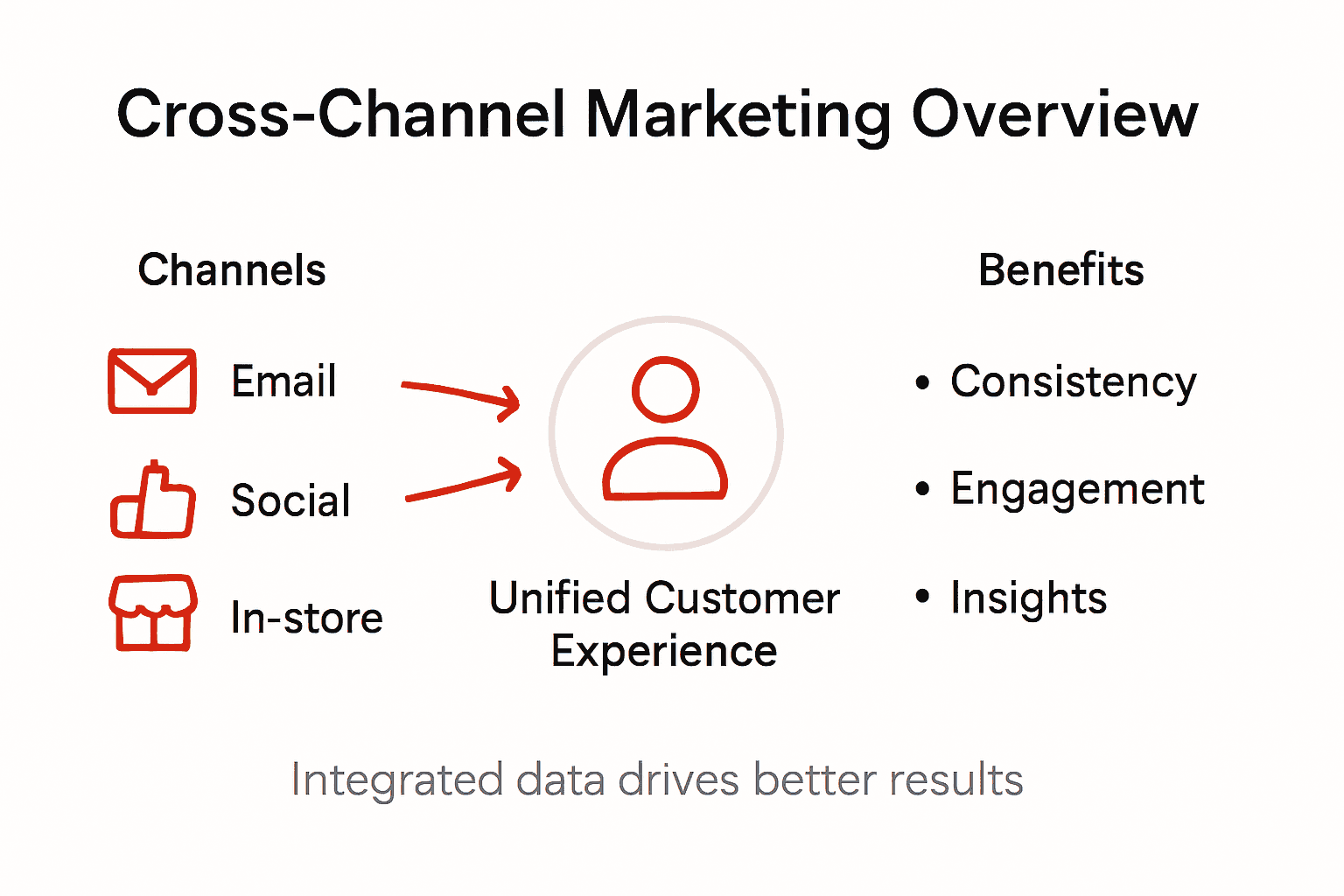
Here’s a quick comparison between cross-channel and traditional multichannel marketing strategies:
| Aspect | Cross-Channel Marketing | Multichannel Marketing |
|---|---|---|
| Integration Level | Highly integrated, unified experience | Channels operate independently |
| Data Usage | Centralized, holistic customer profiles | Fragmented, channel-specific data |
| Customer Journey | Seamless, personalized across touchpoints | Disjointed, disconnected experiences |
| Impact on Engagement | Higher loyalty and conversion rates | Lower engagement, inconsistent messaging |
Pro tip: Invest in robust analytics tools that can track and integrate customer data across multiple channels to understand true interaction patterns and optimize your cross-channel strategy.
Integrated cross-channel marketing campaigns represent a sophisticated approach to customer engagement that transforms traditional marketing strategies. By connecting customer touchpoints and sharing data across multiple platforms, businesses can create a more responsive and personalized communication experience that resonates deeply with individual consumer preferences.
The core mechanism of driving engagement through integrated campaigns involves sophisticated behavioral data mapping. When marketing teams synchronize insights from different channels, they can craft messages that feel uniquely tailored to each customer’s journey. For instance, a potential customer might first encounter a brand through a social media advertisement, receive a personalized email follow-up, and then experience a consistent narrative when visiting the company’s website or mobile application.
Successful integrated campaigns leverage advanced technological infrastructure to track and respond to customer interactions in real time. This dynamic approach allows marketers to create fluid, adaptive experiences that adjust messaging and content based on individual customer behaviors. The result is a more intuitive and meaningful interaction that feels less like a marketing effort and more like a personalized conversation, ultimately increasing customer loyalty and conversion rates.
Pro tip: Develop a comprehensive customer data platform that can integrate insights from multiple channels, enabling more precise and responsive marketing strategies.
Breaking down organizational silos and unifying customer data are fundamental to creating truly seamless cross-channel marketing experiences. Successful strategies require marketing teams to develop a holistic view of customer interactions, moving beyond traditional departmental boundaries and fragmented communication approaches that historically prevented comprehensive understanding.
The core of building seamless experiences lies in behavioral data mapping and sophisticated technological integration. Modern marketers must prioritize contextual insights over demographic generalities, tracking customer journeys across multiple touchpoints with precision. This means developing advanced data platforms that can capture real-time interactions, enabling brands to respond dynamically to individual customer behaviors and preferences, creating experiences that feel personalized and intuitive.
Effective cross-channel strategies demand continuous testing and optimization. Marketers should implement multi-touch attribution models that track how different channels interact and influence customer decisions. By measuring the impact of each touchpoint and understanding complex interaction patterns, brands can refine their approach, ensuring that messaging remains consistent, relevant, and engaging across social media, email, mobile applications, websites, and physical retail environments.
Pro tip: Invest in a robust customer data platform that enables real-time data integration and provides comprehensive journey mapping across all marketing channels.
Below is a summary of key best practices for effective cross-channel marketing:
| Practice | Description | Expected Benefit |
|---|---|---|
| Data Integration | Merge customer data from all channels | Enables precise personalization |
| Behavioral Journey Mapping | Analyze and map customer touchpoints | Increases relevance of interactions |
| Multi-Touch Attribution | Track influence of each channel | Optimizes campaign effectiveness |
| Real-Time Optimization | Adjust strategies based on live data | Delivers responsive customer experience |
Cross-channel marketing strategies frequently encounter critical challenges that can derail even the most well-intentioned campaigns, primarily stemming from organizational complexity and communication barriers. The most fundamental issues arise when marketing teams operate in isolated silos, preventing the comprehensive data sharing and strategic alignment necessary for truly integrated customer experiences.
One of the most significant strategic vulnerabilities involves inconsistent messaging and communication frequency across different channels. Brands often struggle to maintain a cohesive narrative when marketing teams lack centralized coordination, resulting in customer confusion and diluted brand messaging. This fragmentation can occur when different departments manage individual channels without understanding the holistic customer journey, leading to repetitive or contradictory interactions that undermine customer trust and engagement.
Technological infrastructure plays a crucial role in mitigating these risks. Successful cross-channel marketing demands robust data integration platforms that can aggregate customer interactions across multiple touchpoints, providing a unified view of customer behavior. Marketing teams must invest in advanced analytics tools that enable real-time tracking and responsive adjustment of messaging strategies, ensuring that communication remains personalized, relevant, and synchronized across social media, email, mobile applications, websites, and physical retail environments.
Pro tip: Conduct quarterly cross-departmental workshops to align messaging strategies and ensure all teams understand the comprehensive customer journey across different marketing channels.
The article highlights the complexities and crucial need for integrated, data-driven cross-channel marketing strategies that connect your customer touchpoints smoothly. If you are struggling with fragmented customer data, inconsistent messaging, or want to boost engagement through personalized journeys, you are addressing key challenges faced by many businesses today.
At Reddog Group, we specialize in omnichannel retailing and digital marketing solutions designed to solve these exact problems. With proven expertise managing thousands of SKUs and over 50 brands, we help small and medium-sized businesses unify their customer data and optimize campaigns across marketplaces and DTC channels. Our tailored services like marketplace management, product listing optimization, and real-time inventory management empower you to deliver consistent brand experiences and accelerate revenue growth.
Ready to transform your marketing and achieve measurable growth through true cross-channel integration Reach out now to learn how Reddog Group can help you build a seamless, personalized customer journey. Explore our proven approach to omnichannel mastery on our homepage and take the first step toward elevating your brand’s reach and sales performance today.
Cross-channel marketing is a strategic approach that engages customers across multiple platforms, creating a seamless and integrated experience. It focuses on ensuring consistent messaging and personalized interactions regardless of the channel used by the customer.
Cross-channel marketing is highly integrated, providing a unified experience across platforms, while multichannel marketing operates channels independently without synchronization. This integration enhances customer journey continuity and makes interactions more coherent.
Successful cross-channel marketing requires deep data integration, robust technological infrastructure, and the ability to track customer interactions across various platforms. This helps marketers create holistic customer profiles for personalized communication.
Common challenges include inconsistent messaging across different channels and operational silos within marketing teams. These issues can lead to customer confusion and diluted brand messaging, making technology and centralized coordination crucial to mitigate risks.
Leave a comment: