
Published: March 2020 | Last Updated:February 2026
© Copyright 2026, Reddog Consulting Group.

Managing content marketing for a Texas CPG brand can feel like juggling priorities on a busy day in Houston. As your business grows across channels, a scattered approach loses impact fast. Clarifying your content marketing objectives is the foundation that connects every blog post, video, or campaign back to real business results. Start here to gain a strategic edge and shape every marketing effort into a tool for measurable growth and engagement.
| Important Insight | Detailed Explanation |
|---|---|
| 1. Define Clear Objectives | Establish SMART objectives to guide content efforts and align with business goals for better engagement. |
| 2. Map Channel Requirements | Understand each platform’s specifics to tailor content effectively and enhance audience interaction. |
| 3. Create Robust Workflows | Develop structured content creation and review processes to ensure quality and brand alignment. |
| 4. Schedule Content Strategically | Create a unified content calendar to synchronize messaging across channels for optimal timing and reach. |
| 5. Track and Optimize Performance | Implement KPIs and analytics to measure effectiveness, allowing for continuous improvement of content strategies. |
Defining clear content marketing objectives transforms scattered efforts into a strategic roadmap for your CPG brand. This critical first step ensures every piece of content serves a precise business purpose and drives meaningful consumer engagement.
Research indicates that successful content marketing begins with sharply defined objectives tied directly to business results. According to the American Marketing Association’s research on marketing goals, your objectives should address different customer journey stages and align with specific outcomes like brand awareness, lead generation, and customer engagement.
To craft effective content marketing objectives, focus on these key strategies:
Your objectives might include specific targets such as:
According to academic research, content marketing activities must embed strategic clarity and commitment within your organization’s specific context. Regular performance measurement and data-driven improvements will help optimize your content effectiveness.
Pro tip: Document your objectives with specific, measurable, achievable, relevant, and time-bound (SMART) criteria to ensure accountability and clear direction.
Pro tip: Review and refine your content marketing objectives quarterly to maintain alignment with evolving business goals and market dynamics.
Mapping channel-specific content requirements is crucial for creating a targeted and effective content marketing strategy across different platforms. This step helps you understand the unique characteristics and audience expectations of each marketing channel.
Digital content planning requires careful consideration of channel-specific technical constraints, accessibility, and user experience. Each marketing platform demands a tailored approach to content management and optimization.
Key considerations for mapping channel requirements include:
Breakdown of channel-specific mapping strategies:
Social Media Channels
Email Marketing
Website and Blog Content
According to Coursera’s content strategy research, successful channel mapping involves understanding the unique content format and technical constraints of each platform to maximize audience engagement.
Effective channel mapping requires continuous adaptation and understanding of evolving platform dynamics and audience preferences.
Pro tip: Create a detailed content matrix documenting specific requirements, audience behaviors, and performance metrics for each marketing channel to streamline your content optimization process.
Building a robust content creation and review system transforms your content marketing from random efforts to a strategic, consistent approach. This critical infrastructure ensures your brand produces high-quality, aligned content across all marketing channels.

Effective content workflows require specialized roles and structured processes that maintain brand objectives and quality standards throughout content production.
Key components of a successful content creation and review system include:
Detailed workflow stages:
Content Ideation
Content Creation
Editorial Review
Final Approval
According to Coursera’s digital content management research, successful systems support ongoing content governance and maintain alignment with business goals.
A well-structured content creation system transforms content from a tactical task into a strategic business asset.
Pro tip: Develop a centralized content management platform that tracks each piece of content through its entire lifecycle, from initial concept to final publication and performance review.
Scheduling multichannel content deployment is a strategic process that ensures your brand delivers the right message to the right audience at the perfect moment across different marketing platforms. This critical step transforms content from isolated pieces into a coordinated, impactful marketing strategy.
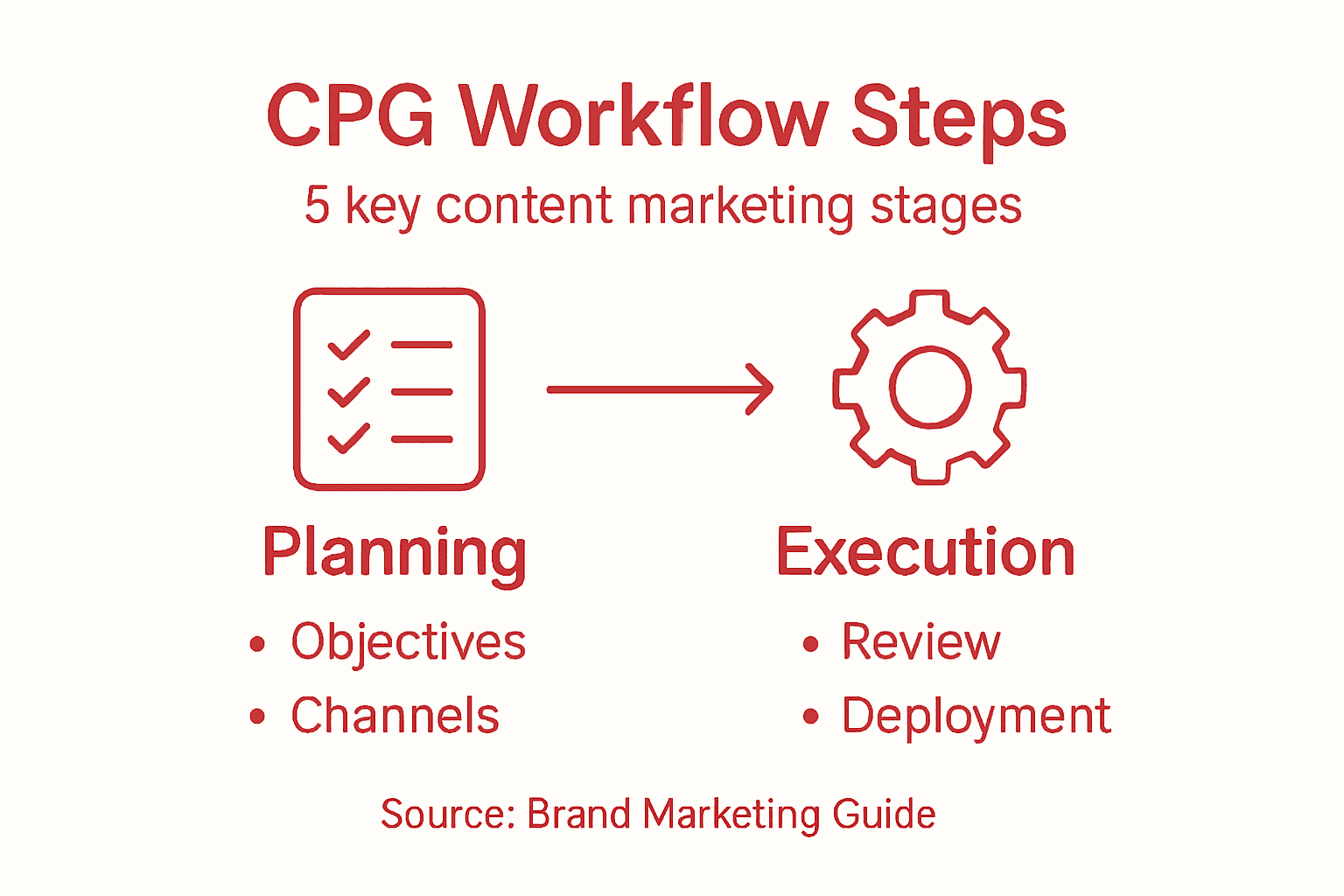
Digital content planning requires detailed attention to timing, audience segmentation, and channel-specific publishing requirements to maximize engagement and reach.
Key strategies for effective multichannel content scheduling include:
Detailed content scheduling approach:
Audience Segmentation
Channel Optimization
Performance Tracking
According to research on marketing integration, successful deployment requires coordinating online and offline marketing efforts to maximize market coverage.
Strategic content scheduling transforms random marketing efforts into a synchronized, high-impact communication system.
Pro tip: Invest in a robust content management platform that provides real-time analytics and allows flexible scheduling across multiple channels, enabling dynamic and responsive content deployment.
Tracking performance and optimizing your content marketing workflow is the critical final stage that transforms data into actionable insights for continuous improvement. This process ensures your content strategy remains dynamic, responsive, and aligned with your brand’s evolving goals.
Marketing analytics provides powerful tools to measure, manage, and analyze marketing performance through advanced techniques like regression analysis and customer lifetime value assessments.
Key performance tracking strategies include:
Detailed performance tracking approach:
Metric Identification
Data Collection
Workflow Optimization
Research shows that regular content marketing measurement enables organizations to continuously improve content relevance, production efficiency, and audience engagement.
Performance tracking transforms your content marketing from a guessing game into a precision-driven strategic initiative.
Pro tip: Develop a quarterly review process that critically examines your content performance metrics, allowing for agile adjustments to your marketing workflow and strategic approach.
Verifying content quality and workflow effectiveness transforms your content marketing from a random process into a strategic, measurable system. This critical evaluation stage ensures your content meets the highest standards of relevance, accuracy, and audience engagement.
Quality assessment tools help organizations evaluate the internal validity and reliability of content creation processes, identifying potential improvements and ensuring consistent performance.
Key strategies for content quality verification include:
Detailed content quality verification approach:
Content Accuracy Assessment
Workflow Effectiveness Evaluation
Performance Impact Review
According to systematic assessment frameworks, effective content verification requires structured methodologies that ensure adherence to defined quality standards.
Quality verification is not a one-time event but a continuous process of refinement and improvement.
Pro tip: Develop a cross-functional review team with diverse perspectives to provide comprehensive content quality assessment and identify improvement opportunities.
The table below compares proactive vs. reactive approaches to content quality control:
| Approach | Timing | Main Benefit | Primary Risk |
|---|---|---|---|
| Proactive Control | Before publishing | Prevents major content errors | Slower content output |
| Reactive Control | After publishing | Fast production process | Possible brand mistakes |
Here is a summary of each content marketing workflow stage and its main deliverable:
| Workflow Stage | Primary Deliverable | Key Outcome |
|---|---|---|
| Objective Setting | Defined SMART objectives | Strategic content direction |
| Channel Mapping | Channel requirement matrix | Tailored audience targeting |
| Content Creation | Brand-aligned content drafts | Consistent brand messaging |
| Scheduling | Integrated content calendar | Synchronized deployment |
| Performance Tracking | Analytics reports and insights | Continuous improvement |
| Quality Verification | Quality assurance checklist | Reliable brand reputation |
Struggling to turn your content marketing workflow into a powerful engine for profit and expansion? This article highlights challenges like defining clear objectives, mapping channel-specific content, and optimizing deployment schedules. At RedDog Group, we understand that content alone is not enough without tying it to operational clarity and margin-focused strategies that drive real growth across Amazon, Walmart, DTC, wholesale, and distribution channels.

Unlock a structured content marketing approach that integrates with your overall brand growth plan. Explore how our Digital & Business Consulting Services by RedDog Consulting deliver actionable insights tailored for emerging and growth-stage CPG brands. Take control of your marketing efforts with a margin-first mindset and make your content investments count. Visit us now at RedDog CPG Retail Growth Offer to start transforming your strategy and scaling profitably today. Learn more about our holistic approach on our Home page.
Defining clear objectives starts by understanding your audience’s needs and aligning them with specific business outcomes. Set measurable targets, such as increasing brand awareness by 30% within six months, to create a focused roadmap for your content efforts.
Mapping channel-specific requirements involves understanding the unique characteristics of each platform, including audience behavior and content format. Create a content matrix that outlines optimal posting times, ideal content formats, and technical specifications for each channel to enhance engagement.
An effective system begins by defining clear roles for content creators and editors, and establishing structured processes for content ideation and approval. Document each step, from drafting articles to final approvals, to ensure high-quality and consistent content production.
For effective multichannel scheduling, analyze peak engagement times for each platform and create a unified content calendar. Plan distribution windows carefully, ensuring that your messaging reaches the right audience at the right time for maximum impact.
Tracking performance involves defining key performance indicators (KPIs) that align with your business objectives and using analytics tools to gather data. Establish a regular review process to adjust your workflow based on engagement metrics and refine your content strategy as needed.
Leave a comment: