
Published: March 2020 | Last Updated:January 2026
© Copyright 2026, Reddog Consulting Group.

More than 60 percent of American retailers cite unexpected operational issues as their top obstacle to consistent sales growth. For any American e-commerce manager, hidden inefficiencies can quickly erode profits and slow business momentum. Pinpointing what works and what hinders your business starts with a clear understanding of business audits, opening the door to smarter sales strategies and smoother day-to-day operations.
| Point | Details |
|---|---|
| Comprehensive Business Audits | A structured business audit helps retailers assess financial accuracy, operational efficiency, and compliance with regulations, allowing for targeted improvements. |
| Types of Audits for E-Commerce | E-commerce businesses should leverage process, product, and system audits to enhance workflow, ensure quality, and validate governance. |
| Strategic Audit Processes | Implement a systematic five-phase audit methodology to effectively uncover insights, from planning through follow-up, supporting sustained organizational growth. |
| Compliance and Risk Management | Regular risk assessments and compliance monitoring are essential to navigate regulatory landscapes and strengthen governance frameworks for business resilience. |
A business audit provides systematic evaluation of a retail organization’s operations, processes, and performance. Retailers need strategic assessments that dive deep into financial records, operational workflows, and strategic alignment. Internal auditing is an independent, objective assurance service designed to improve organizational operations by systematically analyzing governance, risk management, and control processes.
Retail business audits typically encompass multiple critical dimensions: financial review, operational efficiency, compliance verification, and strategic performance assessment. These comprehensive examinations help organizations identify potential risks, uncover performance gaps, and develop targeted improvement strategies. Auditing serves as an on-site verification activity that inspects processes and quality systems to ensure compliance with established requirements, which is particularly crucial in the fast-evolving retail landscape.
The core objectives of a retail business audit include:
Pro tip: Schedule quarterly mini-audits to catch potential issues early and maintain continuous organizational health.
E-commerce businesses require comprehensive audit strategies to ensure operational excellence and risk management. Information technology audits examine management controls within IT infrastructure and business applications, helping organizations safeguard digital assets and maintain system integrity in complex online environments.
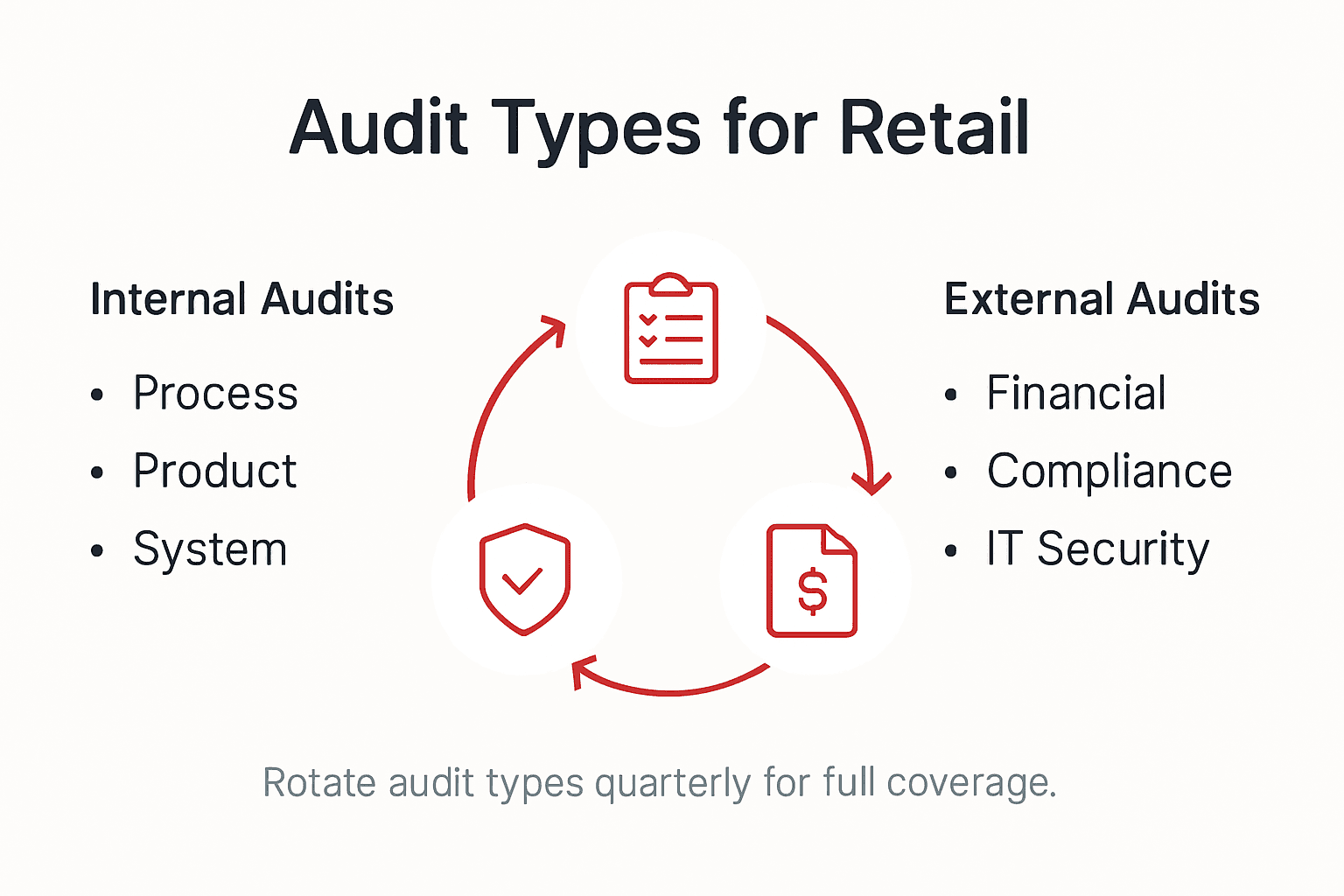
Three primary types of business audits are critical for e-commerce success: process audits, product audits, and system audits. These audits verify operational processes, evaluate product conformance, and assess management system effectiveness, providing a holistic approach to organizational performance evaluation. Process audits focus on workflow efficiency, product audits ensure quality standards, and system audits validate overall operational governance.
Key characteristics of each audit type include:
Pro tip: Rotate audit types quarterly to maintain comprehensive organizational visibility and continuously improve business performance.
Here’s how common business audit types impact e-commerce organizations:
| Audit Type | Primary Focus | Business Impact |
|---|---|---|
| Process Audit | Workflow and efficiency | Streamlines operations and reduces errors |
| Product Audit | Quality and standards | Enhances customer satisfaction |
| System Audit | Controls and governance | Strengthens risk management |
Business audits demand a structured and strategic approach to uncover organizational insights and drive performance improvements. Internal audit processes typically follow a systematic five-phase methodology that ensures comprehensive and objective evaluation of business operations.
According to ISO 19011:2018 guidelines for auditing management systems, the key steps in conducting an effective business audit include rigorous planning, systematic evidence collection, and thorough analysis. The audit process breaks down into five critical stages:
Pro tip: Create a standardized audit checklist to ensure consistency and comprehensive coverage across different audit types and organizational departments.
This table summarizes main audit phases and their organizational value:
| Audit Phase | Key Objective | Value for Business |
|---|---|---|
| Selection | Define audit priorities | Focuses resources effectively |
| Planning | Strategy and preparation | Sets clear goals and timelines |
| Fieldwork | Evidence collection and testing | Uncovers operational insights |
| Reporting | Document findings and feedback | Drives actionable improvements |
| Follow-up | Ensure action implementation | Supports sustained growth |
Modern businesses must develop robust strategies to navigate complex regulatory landscapes and mitigate potential risks. A risk-based internal audit plan enables organizations to align audit activities with their most significant risks, ensuring efficient resource allocation and comprehensive organizational protection.

Compliance audits are essential for evaluating an organization’s adherence to laws, regulations, policies, and contractual requirements. These systematic assessments help businesses identify potential vulnerabilities, strengthen governance frameworks, and proactively manage operational risks.
Key components of effective compliance and risk management include:
Pro tip: Conduct quarterly risk assessments and maintain a dynamic compliance tracking system to stay ahead of emerging regulatory challenges.
Business audits represent more than just compliance checks for small businesses. High-quality audits contribute significantly to strong organizational governance and financial market confidence, offering strategic insights that can transform operational performance.
For small businesses, audits provide critical advantages that extend far beyond traditional financial reporting. By systematically examining internal processes, these comprehensive reviews help identify hidden inefficiencies, optimize resource allocation, and create pathways for sustainable growth. The insights generated enable business owners to make data-driven decisions, strengthen internal controls, and build greater stakeholder trust.
Key practical benefits for small business growth include:
Pro tip: Treat business audits as strategic investments, not just compliance requirements, and leverage their insights to drive continuous improvement.
Navigating the complexities of retail business audits can be overwhelming when you face challenges like identifying operational inefficiencies, managing compliance risks, or optimizing omnichannel performance. This article highlights critical audit concepts such as process audits, compliance monitoring, and risk management essentials that are vital for sustainable retail growth. For small and medium-sized retailers looking to turn these audit insights into measurable business success, expert support is key.
At Reddog Group, we specialize in transforming audit findings into actionable strategies focused on omnichannel retailing and digital marketing that drive significant year-over-year revenue. Whether you need help with marketplace management, Amazon FBA optimization, or DTC channel growth, our extensive experience managing over 50 brands and 30,000 SKUs ensures your business gains operational clarity and strategic advantage. Discover how integrating business audit insights with our tailored consulting services can help streamline workflows, strengthen risk controls, and amplify your market reach.
Elevate your retail business today by exploring our comprehensive marketing campaigns and product listing optimization services designed to convert audit action plans into real growth.
Take control of your retail destiny now
Ready to leverage audit insights for unmatched retail success Visit Reddog Group and connect with our experts to start your journey toward operational excellence and sustainable growth.
A business audit is a systematic evaluation of a retail organization’s operations, processes, and performance. It is crucial for retail growth as it helps identify potential risks, uncovers performance gaps, validates financial accuracy, and recommends strategic improvements to enhance overall operational effectiveness.
E-commerce businesses typically utilize three primary types of audits: process audits, product audits, and system audits. Process audits focus on workflow efficiency, product audits assess product quality, and system audits evaluate management controls and compliance with regulations, ensuring comprehensive oversight of business performance.
Businesses should consider scheduling audits quarterly, including mini-audits, to catch potential issues early. This regular cadence helps maintain continuous organizational health and provides insights for ongoing improvement in operations and strategic alignment.
The key steps in an effective business audit include: selecting audit priorities, planning the audit objectives and strategy, conducting fieldwork for evidence collection, reporting key findings and recommendations, and following up on corrective actions to ensure long-term improvements.
Leave a comment: