
Published: March 2020 | Last Updated:January 2026
© Copyright 2026, Reddog Consulting Group.

Over 80 percent of American retail decision makers say data-driven experiments are key to their digital growth. For small and medium-sized businesses, finding what truly resonates with customers can feel like a guessing game. A/B testing brings science to the process, helping retailers compare strategies, sharpen campaigns, and make confident decisions that fuel sales across every channel. This guide shows how targeted experiments reveal exactly what drives real business impact.
| Point | Details |
|---|---|
| A/B Testing Methodology | Retailers can leverage A/B testing to make data-driven decisions by systematically comparing different design elements and strategies. |
| Types of A/B Testing | Understanding the distinctions between Classic A/B testing, Multivariate testing, and Sequential testing helps optimize customer experiences effectively. |
| Omnichannel Integration | A/B testing should be integrated across various channels to create a comprehensive understanding of consumer interactions and preferences. |
| Common Pitfalls | Retailers should avoid inadequate data preprocessing and acting on insignificant data to ensure reliable and actionable insights from tests. |
A/B testing represents a powerful experimental approach enabling retailers to systematically evaluate different strategies and design choices through controlled comparisons. At its core, this method allows businesses to compare two variations simultaneously and determine which performs more effectively by randomly exposing user segments to distinct versions.
In retail environments, A/B testing goes far beyond simple guesswork. Retailers can test critical elements like product page layouts, buy button placements, email campaign messaging, promotional offers, and visual designs. By applying rigorous statistical analysis, businesses can make data-driven decisions that directly impact customer engagement and sales performance. The key is creating controlled experiments where only one variable changes between Version A and Version B.
The practical implementation involves dividing audience segments into two random groups and exposing each to a different version of a specific element. For instance, one group might see a red “Buy Now” button while another sees a green button. By tracking metrics like click-through rates, conversion rates, and total sales, retailers can statistically determine which version generates superior outcomes. User experience research methods provide a scientific framework for these evaluations, transforming subjective design choices into quantifiable insights.
Pro tip: Always establish clear hypotheses and success metrics before launching an A/B test to ensure meaningful, actionable results.
Retail A/B testing encompasses a diverse range of experimental approaches designed to optimize various aspects of the customer experience and marketing strategies. Multivariate testing methods allow retailers to explore complex interactions between different design elements, moving beyond simple two-variant comparisons to more nuanced performance evaluations.
The primary types of A/B testing in retail environments include classic A/B testing, multivariate testing, and sequential testing. Classic A/B testing involves directly comparing two versions of a single element, such as a product page headline, email subject line, or promotional banner. Multivariate testing takes this a step further by simultaneously examining multiple variables - for example, testing different combinations of button colors, placement, and text to understand their collective impact on customer behavior.
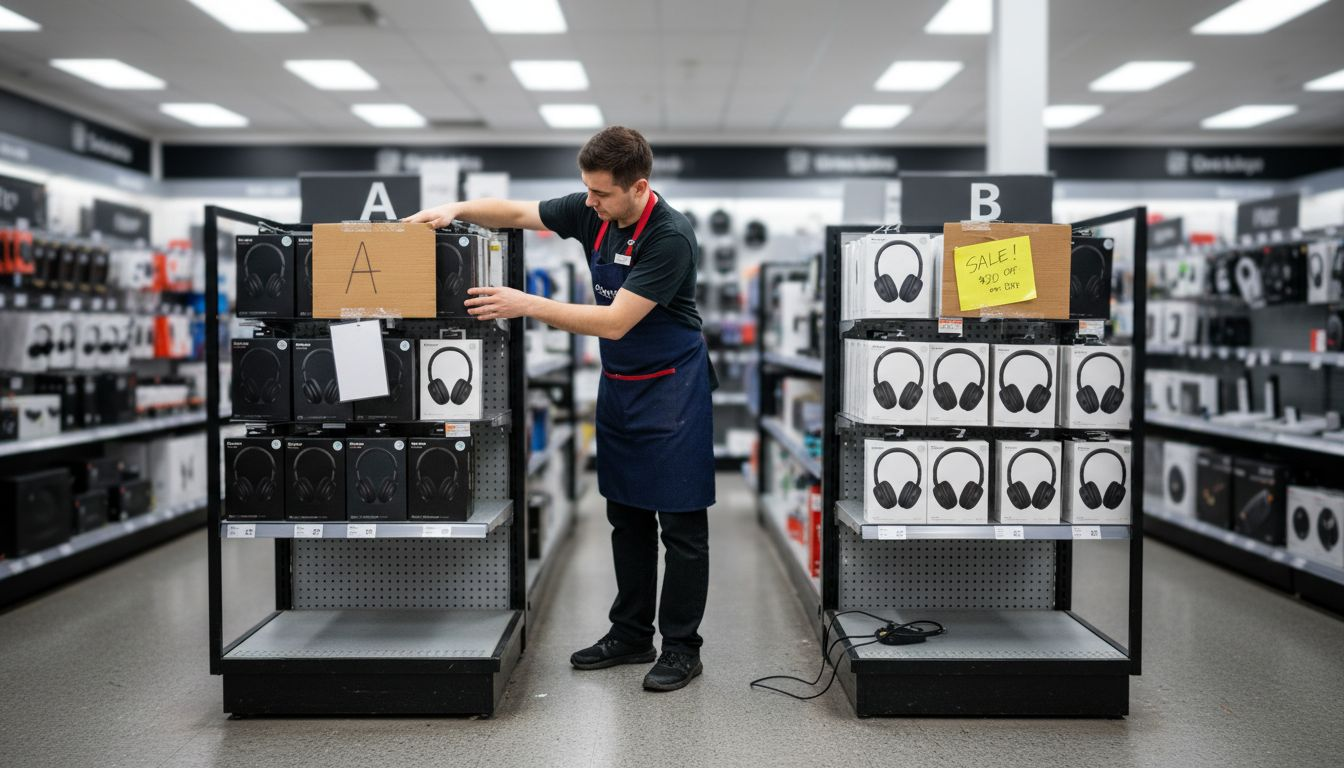
Specific applications of A/B testing in retail are remarkably diverse. Retailers can systematically test critical components like product page layouts, pricing strategies, promotional offers, email marketing messages, and call-to-action button designs. Detailed testing frameworks enable businesses to identify friction points in the customer journey, optimize conversion rates, and make data-driven decisions about design and marketing strategies. These tests might explore nuanced variations like discount messaging, image selections, or even subtle changes in product descriptions that can significantly influence purchasing decisions.
Pro tip: Prioritize testing one variable at a time to ensure clear, actionable insights about what truly drives customer engagement and sales.
Here is a comparison of major A/B testing types used in retail environments:
| Testing Type | Number of Variables | Typical Use Case | Analytical Complexity |
|---|---|---|---|
| Classic A/B Testing | One | Single web element or message variant | Basic statistical analysis |
| Multivariate | Multiple | Combined effects of design changes | Moderate to advanced |
| Sequential | One at a time | Minimizing time and risk for new changes | Requires sequential analysis |
Successful omnichannel retailers recognize that modern customer experiences transcend individual platforms, requiring sophisticated testing strategies across multiple channels. This approach demands a holistic view of customer interactions, where experimental insights from digital and physical touchpoints are synthesized to create a comprehensive understanding of consumer behavior and preferences.
Integrating A/B testing into omnichannel strategies involves creating synchronized experiments that maintain consistent branding and user experience across diverse platforms. Retailers must carefully design tests that can translate insights between online and offline environments, such as comparing a website’s product page design against in-store display aesthetics or evaluating how digital promotional messages influence physical store traffic. Omnichannel testing frameworks enable businesses to understand complex customer journey dynamics by tracking how variations in one channel impact engagement and conversion rates in another.
The technical complexity of omnichannel A/B testing lies in managing heterogeneous data sources and establishing robust tracking mechanisms. Retailers need advanced analytics platforms that can correlate customer interactions across websites, mobile apps, social media channels, and physical stores. This requires developing sophisticated data integration techniques that can map customer behaviors, track experimental variants, and provide actionable insights that drive strategic decision-making across all retail touchpoints.
Pro tip: Develop a centralized data management system that allows seamless tracking and analysis of customer interactions across all channels to maximize the effectiveness of your omnichannel A/B testing efforts.
A/B testing provides retailers with a powerful mechanism for driving sales through strategic experimentation. By systematically testing different elements of the customer experience, businesses can uncover precise insights that directly translate into increased revenue and improved customer engagement. This approach allows retailers to move beyond intuition, using data-driven evidence to optimize every touchpoint in the customer journey.
The strategic power of A/B testing lies in its ability to reveal nuanced consumer preferences with remarkable precision. Retailers can test critical elements like product page layouts, call-to-action button designs, pricing strategies, and promotional messaging to understand exactly what drives customer decision-making. For instance, a simple change in button color, placement, or wording can dramatically impact conversion rates, providing actionable intelligence that directly contributes to sales growth. Experimental approaches reduce rollout risks by allowing businesses to validate changes with minimal exposure before full implementation.
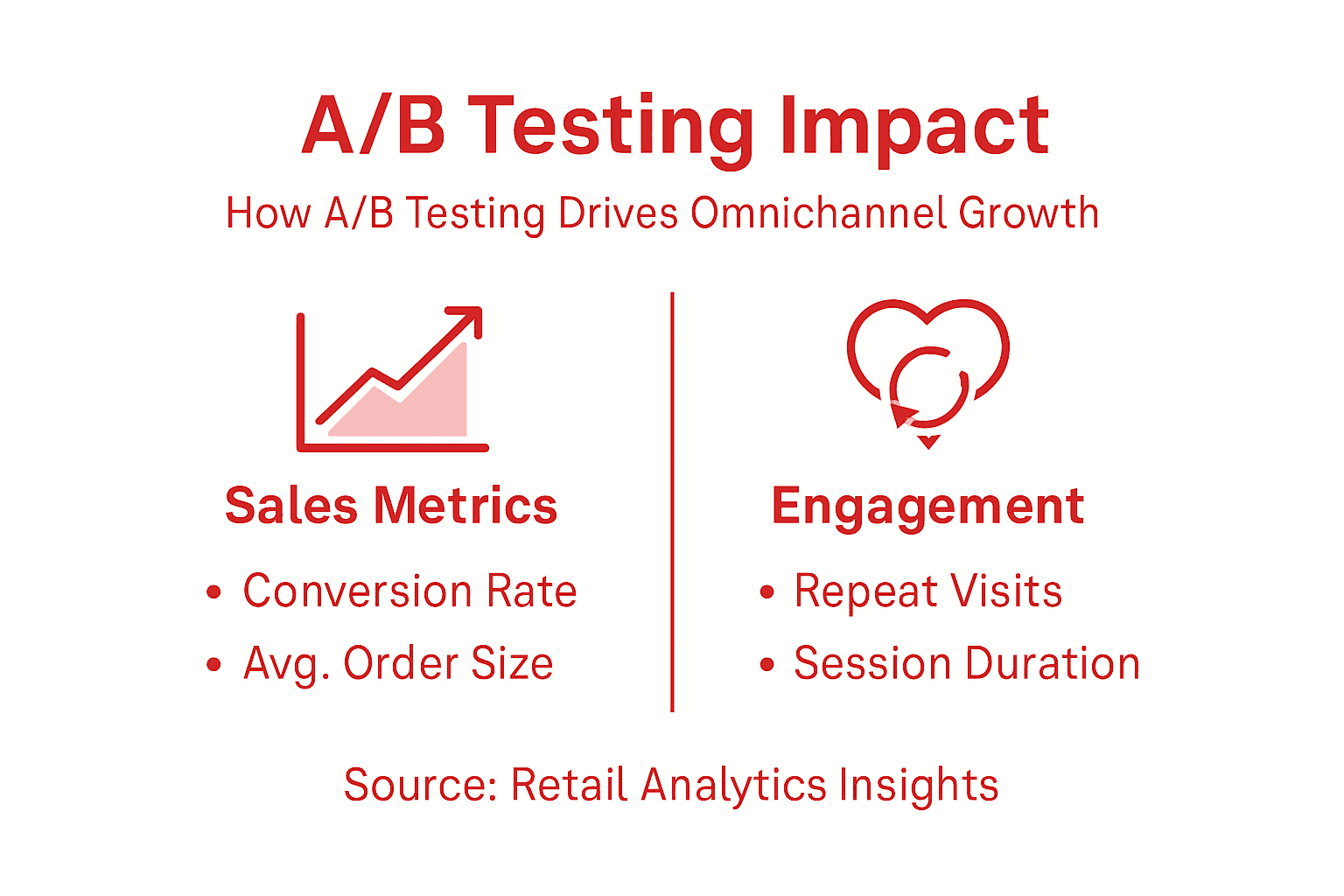
Moreover, A/B testing goes beyond immediate sales metrics, offering deeper insights into customer behavior and long-term engagement strategies. By tracking how different variations impact not just conversion rates but also customer retention, average order value, and lifetime customer value, retailers can develop a more sophisticated understanding of their audience. The granular data generated through these experiments enables businesses to create increasingly personalized and effective marketing strategies that resonate with specific customer segments.
Pro tip: Always establish clear, measurable hypotheses before conducting A/B tests and ensure you have sufficient sample sizes to generate statistically significant results.
Retail A/B testing is fraught with potential mistakes that can undermine the entire experimental process. Inadequate data preprocessing techniques represent one of the most significant challenges, where inconsistent data handling can distort experimental results and lead to misguided business decisions. Retailers must develop rigorous data cleaning and standardization protocols to ensure the integrity of their testing methodology.
One critical pitfall involves misinterpreting aggregate data without understanding nuanced customer segment behaviors. Complex customer interaction patterns mean that average results can mask significant variations across different customer groups. Successful A/B testing requires deep segmentation analysis, recognizing that what works for one customer demographic might completely fail for another. This means developing sophisticated testing frameworks that account for variables like age, purchasing history, geographic location, and previous engagement patterns.
Another common mistake is rushing to implement changes based on limited or statistically insignificant data. Retailers must establish clear statistical thresholds, ensuring sufficient sample sizes and controlling for potential confounding variables. This requires patience and a disciplined approach to experimental design, where preliminary results are carefully validated before any widespread implementation. Additionally, businesses should be wary of potential data leakage, where information not available during the actual testing period inadvertently influences experimental outcomes.
Pro tip: Develop a comprehensive testing checklist that includes sample size requirements, segmentation criteria, and strict data validation protocols before launching any A/B test.
Use this summary to avoid common A/B testing pitfalls and improve test reliability:
| Pitfall | Impact on Results | Prevention Strategy |
|---|---|---|
| Inadequate data cleaning | Skewed or inaccurate conclusions | Standardize and preprocess all data |
| Ignoring segment behavior | Missed insights for key groups | Apply thorough customer segmentation |
| Acting on insignificant data | Poor business decisions | Wait for statistically valid samples |
| Allowing data leakage | Confounded experiment outcomes | Ensure strict experiment data control |
Successful A/B testing in retail demands a structured approach that begins with precise experimental design principles. Retailers must establish clear, measurable goals that define exactly what success looks like before launching any test. This means identifying specific metrics such as conversion rates, average order value, or customer engagement that will serve as benchmarks for evaluating experimental variations.
The core of effective A/B testing lies in maintaining experimental rigor through methodical implementation. This requires testing only one variable at a time to ensure clean, unambiguous results. For example, if investigating a product page, retailers should isolate changes to a single element like button color, placement, or call-to-action text. Systematic testing frameworks emphasize the importance of statistically significant sample sizes and controlled experimental conditions that eliminate potential confounding factors.
Advanced retailers develop comprehensive testing strategies that go beyond simple binary comparisons. This involves creating robust segmentation approaches that account for different customer groups, understanding how variations might impact specific demographics differently. Continuous iteration is crucial, with each test building upon previous insights and progressively refining the understanding of customer preferences. Successful implementation requires cross-functional collaboration, bringing together marketing, design, and data analytics teams to develop holistic testing approaches that drive meaningful business improvements.
Pro tip: Implement a structured testing calendar that schedules experiments systematically, ensuring consistent data collection and allowing sufficient time to draw statistically meaningful conclusions.
Are you ready to turn A/B testing insights into real sales growth across every retail channel? This article highlights the challenges retailers face in managing complex experiments, analyzing cross-channel data, and avoiding common pitfalls. If your goal is to master omnichannel strategies that optimize digital and physical interactions, reduce rollout risks, and increase conversion rates, then you need a strategic partner who understands these hurdles.
Reddog Group specializes in delivering tailored Digital & Business Consulting Services designed to integrate A/B testing seamlessly into your omnichannel retail operations. With deep expertise in marketplace management, Amazon FBA, and DTC channels, we help brands like yours navigate data complexities and implement structured testing frameworks to drive measurable growth. Don’t let fragmented data and unclear test results hold you back. Visit our Home page to explore how we can elevate your brand with proven strategies. Take the first step today by connecting with us at https://reddog.group and start transforming your A/B testing efforts into sustained revenue gains.
A/B testing in retail is an experimental approach that allows retailers to compare two variations of a specific element, such as a product page or email marketing message, to determine which version performs more effectively based on customer engagement and sales metrics.
A/B testing helps drive sales by systematically analyzing different elements of the customer experience to uncover insights that lead to increased conversion rates, improved customer retention, and optimized marketing strategies, ultimately enhancing revenue.
Retailers can test a variety of elements, including product page layouts, call-to-action button designs, pricing strategies, promotional messages, and visual designs, among others, to identify the most effective versions that encourage customer purchases.
Common pitfalls include inadequate data cleaning, ignoring segment behaviors, making decisions based on insignificant data, and allowing data leakage. It’s crucial to establish strict data validation protocols and have well-defined sample size requirements for meaningful results.
Leave a comment: