
Why Optimize for Mobile Commerce: Complete Guide
Posted on
More than 80 percent of american shoppers now use their smartphones to research or make retail purchases. Mobile commerce is no longer just a trend, it has become the new standard shaping how consumers explore and buy products every day. With digital doors open around the clock, retailers that prioritize mobile experiences tap into greater customer convenience, faster transactions, and higher engagement, driving measurable results in the evolving american retail landscape.
Table of Contents
- Defining Mobile Commerce In Retail Today
- Shifting Consumer Habits And Mobile Trends
- Key Elements Of Effective Mobile Optimization
- Benefits For Sales Growth And Engagement
- Common Pitfalls And Costly Optimization Mistakes
Key Takeaways
| Point | Details |
|---|---|
| Mobile Commerce Expansion | Mobile commerce encompasses transactions via mobile devices and involves an ecosystem beyond traditional eCommerce, including banking and product information access. |
| Consumer Expectations | Modern consumers demand seamless, personalized shopping experiences that integrate across various digital channels, emphasizing convenience and real-time accessibility. |
| Effective Mobile Optimization | Successful mobile platforms require user-friendly designs, fast loading times, and personalized experiences that anticipate consumer needs and behaviors. |
| Strategic Benefits | Robust mobile strategies enhance sales and customer loyalty through real-time communication, tailored recommendations, and frictionless purchasing processes. |
Defining Mobile Commerce in Retail Today
Mobile commerce represents a transformative shift in how consumers interact with retail environments, fundamentally redefining purchasing behaviors through smartphone and tablet technologies. Digital retail strategies increasingly depend on seamless mobile experiences that connect consumers directly with products and services.
Mobile commerce, or m-commerce, encompasses far more than simple online shopping. Based on research from scholarly sources, it involves conducting transactions via mobile devices over digital networks, including purchasing goods, accessing banking services, and retrieving critical product information. Researchers have identified m-commerce as a comprehensive ecosystem where monetary transactions occur through mobile telecommunications infrastructure, representing a significant evolution beyond traditional eCommerce models.
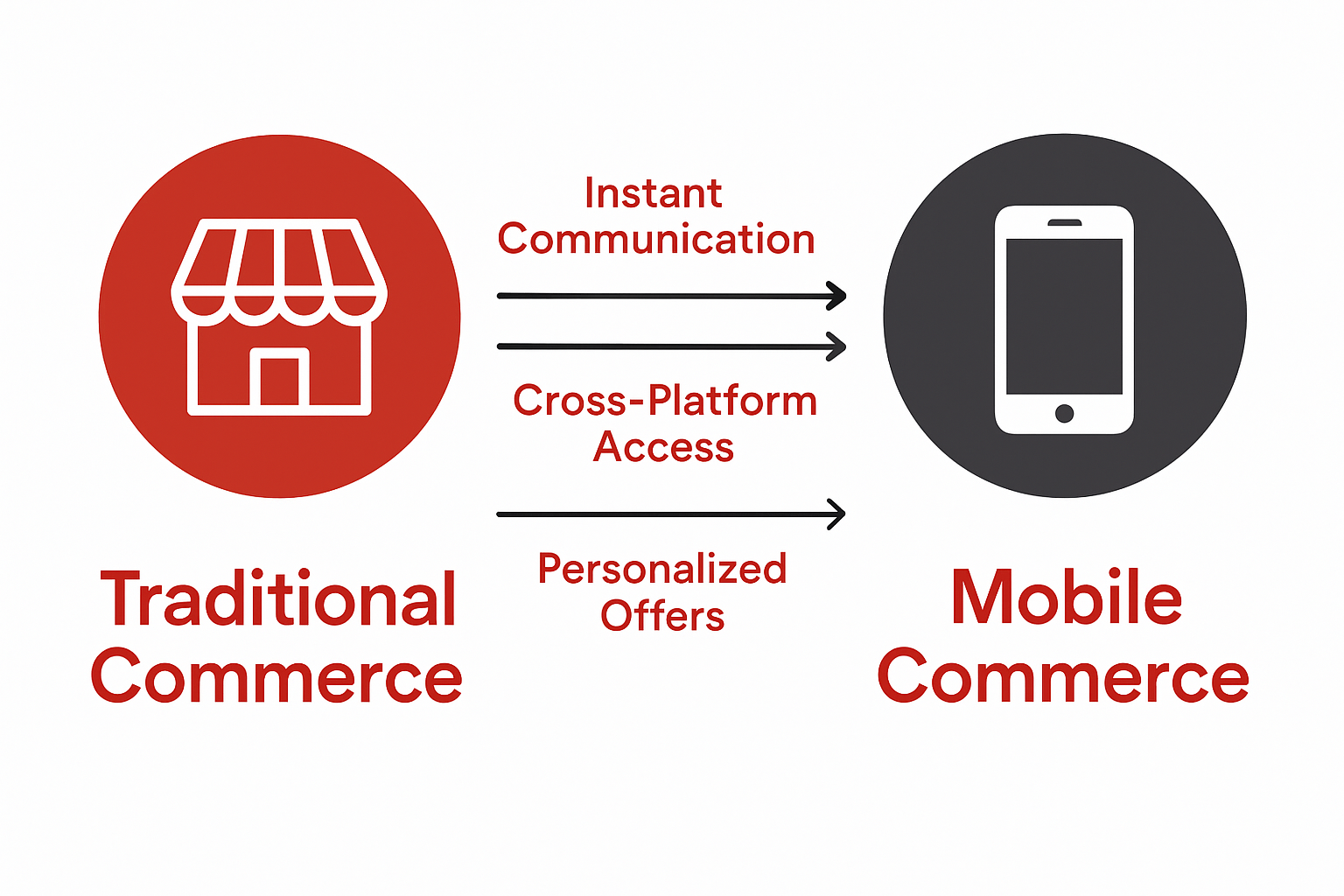
The core characteristics of mobile commerce include instantaneous connectivity, personalized shopping experiences, and unprecedented consumer convenience. Modern retail environments leverage mobile platforms to deliver real-time product recommendations, location-based promotions, and streamlined payment processes. Consumers can now research, compare, and purchase products with just a few smartphone taps, transforming how businesses approach customer engagement and sales strategies.
Shifting Consumer Habits and Mobile Trends
Retail is experiencing a profound transformation driven by mobile technology, with consumers increasingly embracing digital shopping experiences that prioritize convenience, personalization, and instant access. Omnichannel retail trends are fundamentally reshaping how shoppers interact with brands across multiple platforms and touchpoints.
Mobile shopping behaviors have dramatically evolved, with smartphones becoming the primary gateway for consumer research, comparison, and purchasing decisions. Recent studies highlight that modern consumers expect seamless integration across digital channels, demanding consistent experiences whether they are browsing online, using mobile apps, or visiting physical stores. The rise of mobile commerce reflects a broader shift towards digital engagement, where convenience and personalized interactions trump traditional shopping methodologies.
Technology has empowered consumers with unprecedented control over their shopping journeys. Smartphones now serve as sophisticated shopping companions, enabling real-time price comparisons, instant product reviews, and personalized recommendations. Retailers who understand and adapt to these changing mobile consumption patterns can create more engaging, responsive experiences that meet the increasingly sophisticated expectations of digital-first consumers.
Key Elements of Effective Mobile Optimization
Mobile optimization requires a holistic approach that transforms digital experiences into seamless, intuitive interactions for consumers. Ecommerce conversion strategies play a critical role in designing mobile platforms that engage and convert users effectively.
Designing mobile-first experiences demands careful consideration of multiple technical and user experience elements. Successful mobile optimization involves creating user-friendly interfaces that prioritize accessibility, security, and personalization. Research indicates that effective mobile commerce platforms must integrate location-specific services, time-sensitive features, and secure payment options that meet sophisticated consumer expectations. These platforms transform smartphones from simple communication devices into sophisticated shopping companions capable of delivering personalized, immediate value.
Key technical considerations include responsive design, fast loading speeds, simplified navigation, and intuitive checkout processes. Modern mobile optimization goes beyond aesthetic appeal, focusing on creating frictionless experiences that anticipate and address user needs. Retailers must invest in technologies that enable real-time personalization, seamless cross-device interactions, and adaptive interfaces that adjust dynamically to individual user preferences and behaviors.

Benefits for Sales Growth and Engagement
Mobile commerce presents transformative opportunities for businesses seeking to expand their sales and deepen customer relationships. Business growth strategies increasingly recognize mobile platforms as critical channels for driving revenue and engagement.
The strategic advantages of mobile commerce extend far beyond simple transactional capabilities. Research demonstrates that implementing robust mobile strategies can dramatically enhance customer interactions, with businesses experiencing significant improvements in sales performance and brand loyalty. By offering personalized shopping experiences, integrated inventory management, and convenient access to promotions, companies can create more interactive and responsive consumer environments that directly translate to increased revenue.
Key engagement benefits include real-time customer communication, seamless cross-platform experiences, and data-driven personalization that anticipates consumer needs. Modern mobile commerce platforms enable businesses to transform traditional sales approaches by providing instant product information, tailored recommendations, and frictionless purchasing processes. This approach not only increases immediate sales potential but also builds long-term customer trust and brand affinity through consistently responsive and intelligent digital interactions.
Common Pitfalls and Costly Optimization Mistakes
Mobile commerce optimization requires strategic precision to avoid costly errors that can undermine business performance. Ecommerce SEO best practices play a critical role in identifying and mitigating potential optimization challenges before they impact sales.
Researchers have identified several critical optimization pitfalls that can dramatically reduce mobile commerce effectiveness. Neglecting user experience design represents a fundamental mistake, with businesses often failing to create intuitive interfaces that adapt seamlessly across different devices and screen sizes. Inadequate personalization strategies can lead to significant user disengagement, as consumers increasingly expect tailored shopping experiences that anticipate their specific needs and preferences.
Technical integration challenges pose another significant risk for mobile commerce platforms. Businesses must ensure robust wireless technology connectivity, smooth transaction processes, and location-specific services that create value for mobile users. Failing to implement comprehensive mobile strategies can result in decreased user engagement, lower conversion rates, and missed opportunities for building long-term customer relationships. Successful mobile optimization requires a holistic approach that balances technical performance, user experience, and strategic personalization.
Unlock the Full Potential of Mobile Commerce for Your Brand
Mobile commerce optimization is no longer optional for retailers seeking growth. The article highlights critical challenges like creating seamless mobile-first experiences, avoiding costly UX mistakes, and delivering personalized shopper journeys that drive engagement and conversion. If you feel overwhelmed by the technical demands and shifting consumer expectations, you are not alone. Understanding how to integrate secure payments, real-time personalization, and cross-platform consistency is key to winning in today’s omnichannel retail landscape.
At Reddog Group, we specialize in guiding small and medium businesses through these exact hurdles with our Digital & Business Consulting Services by Reddog Consulting.

Don’t let common pitfalls hold back your mobile commerce success. Partner with us to build optimized, data-driven strategies that convert visitors into loyal customers and accelerate your revenue growth. Explore how our expertise managing over 30,000 SKUs and crafting integrated online-offline sales approaches can transform your business today at https://reddog.group. Begin your journey toward mobile mastery now.
Frequently Asked Questions
What is mobile commerce?
Mobile commerce, or m-commerce, refers to conducting transactions via mobile devices, including buying goods, accessing banking services, and retrieving product information through mobile networks. It represents an evolution beyond traditional eCommerce models.
Why is mobile optimization important for retail businesses?
Mobile optimization is crucial for retail businesses because it enhances user experience, improves engagement, and increases conversion rates. A well-optimized mobile platform creates seamless interactions that meet consumer expectations for speed, accessibility, and personalization.
What are key elements of effective mobile optimization?
Key elements of effective mobile optimization include responsive design, fast loading speeds, simplified navigation, intuitive checkout processes, and personalized experiences that cater to users’ preferences and behaviors.
How can businesses avoid common pitfalls in mobile commerce optimization?
Businesses can avoid common pitfalls by focusing on user experience design, implementing adequate personalization strategies, ensuring technical integration for smooth transactions, and creating a holistic approach that balances technical performance and user needs.
Recommended
- How to Improve Ecommerce Conversion Rates: A Guide to Measurable Growth | Reddog Consulting Group
- Mastering Your Sales Conversion Rate: A Practical Guide | Reddog Consulting Group
- Mastering Your Sales Conversion Rate: A Practical Guide | Reddog Consulting Group
- 10 Ecommerce SEO Best Practices for Measurable Growth | Reddog Consulting Group
Leave a comment: