
Published: March 2020 | Last Updated:January 2026
© Copyright 2026, Reddog Consulting Group.

Over half of American e-commerce brands say sudden traffic spikes or platform slowdowns have stalled their growth ambitions. For small and mid-sized businesses trying to scale, this issue is more than a technical headache—it can mean missed revenue and frustrated customers. Understanding what true ecommerce scalability looks like gives American brands a pathway to handle bigger sales volumes, integrate new channels, and keep the customer experience smooth even during high-demand periods.
| Point | Details |
|---|---|
| Ecommerce Scalability Defined | Ecommerce scalability is the ability of a brand to expand digital sales while maintaining performance and customer experience. Invest in flexible technology platforms to support growth. |
| Internal vs. External Scalability | Internal scalability focuses on optimizing existing infrastructure, while external scalability aims to expand market reach and seller networks. Regular assessments are essential to maintain a balance between both approaches. |
| Core Criteria for Success | A scalable ecommerce operation requires visionary leadership and a robust infrastructure capable of adapting to market dynamics and maintaining operational efficiency through advanced technology and analytics. |
| Addressing Scalability Challenges | Common challenges include performance bottlenecks and misaligned strategies. Implementing regular performance audits and optimizing digital infrastructure can mitigate these issues. |
Ecommerce scalability represents a brand’s technological and operational capacity to expand digital sales without compromising performance or customer experience. At its core, scalability enables online businesses to manage increasing transaction volumes, customer interactions, and site traffic seamlessly.
For modern brands, scalability goes beyond simple growth mechanics. It involves creating a robust digital infrastructure that can dynamically adapt to changing market demands. This means developing systems that can handle sudden traffic spikes, integrate new sales channels, and maintain consistent site performance during peak periods. Technical scalability involves supporting more users, concurrent sessions, and transaction throughput without degrading user experience or operational efficiency.
Successful ecommerce scalability requires strategic planning across multiple dimensions. Brands must invest in flexible technology platforms, optimize backend systems, implement cloud-based solutions, and design agile inventory management processes. This holistic approach ensures that as customer demand increases, the business can expand its digital capabilities without encountering technical limitations or performance bottlenecks.
Pro tip: Conduct quarterly infrastructure audits to identify potential scalability constraints before they become critical performance issues.
Internal scalability and external scalability represent two critical strategic approaches for ecommerce brands seeking sustainable growth. Performance optimization strategies vary depending on whether a brand focuses on enhancing existing systems or expanding market reach.
Internal scalability concentrates on improving operational efficiency within existing infrastructure. This approach involves optimizing backend systems, enhancing database performance, streamlining technology platforms, and maximizing resource utilization. Brands pursuing internal growth typically invest in more efficient servers, advanced data processing algorithms, and refined technological architectures that can handle increased transaction volumes without adding significant infrastructure costs.
External scalability, by contrast, involves expanding the broader marketplace ecosystem and seller network. This strategy focuses on broadening market reach, adding new sales channels, onboarding additional sellers, and increasing overall transaction potential. External growth requires a more comprehensive approach that considers not just technological capabilities, but also market dynamics, seller incentives, and platform expansion strategies.
Pro tip: Conduct a quarterly assessment of both internal system performance metrics and external market expansion opportunities to maintain balanced, sustainable growth.
Here’s a concise comparison of internal and external ecommerce scalability approaches:
| Approach | Focus Area | Benefits | Challenges |
|---|---|---|---|
| Internal Scalability | Infrastructure efficiency | Lower costs, faster response | Requires continual optimization |
| External Scalability | Market and platform reach | Greater sales potential | Complex channel integration |
Visionary leadership and strategic planning form the foundation of a truly scalable ecommerce operation. Successful brands must develop comprehensive frameworks that enable rapid adaptation, data-driven decision-making, and continuous organizational learning.
Operational scalability demands robust digital infrastructure capable of managing complex sales dynamics. Ecommerce businesses must demonstrate sophisticated capabilities in logistics, customer interaction management, and supply chain optimization. This requires investing in technology platforms that can seamlessly handle increasing transaction volumes, integrate multiple sales channels, and maintain consistent performance under variable market conditions.

Key performance criteria for scalable ecommerce operations include technological flexibility, data integration, customer experience consistency, and strategic resource allocation. Brands need adaptive systems that can quickly respond to market shifts, scale marketing efforts dynamically, and maintain compliance with evolving regulatory standards. This means developing agile technological architectures, implementing advanced analytics tools, and creating flexible operational workflows that can expand or contract based on market demands.
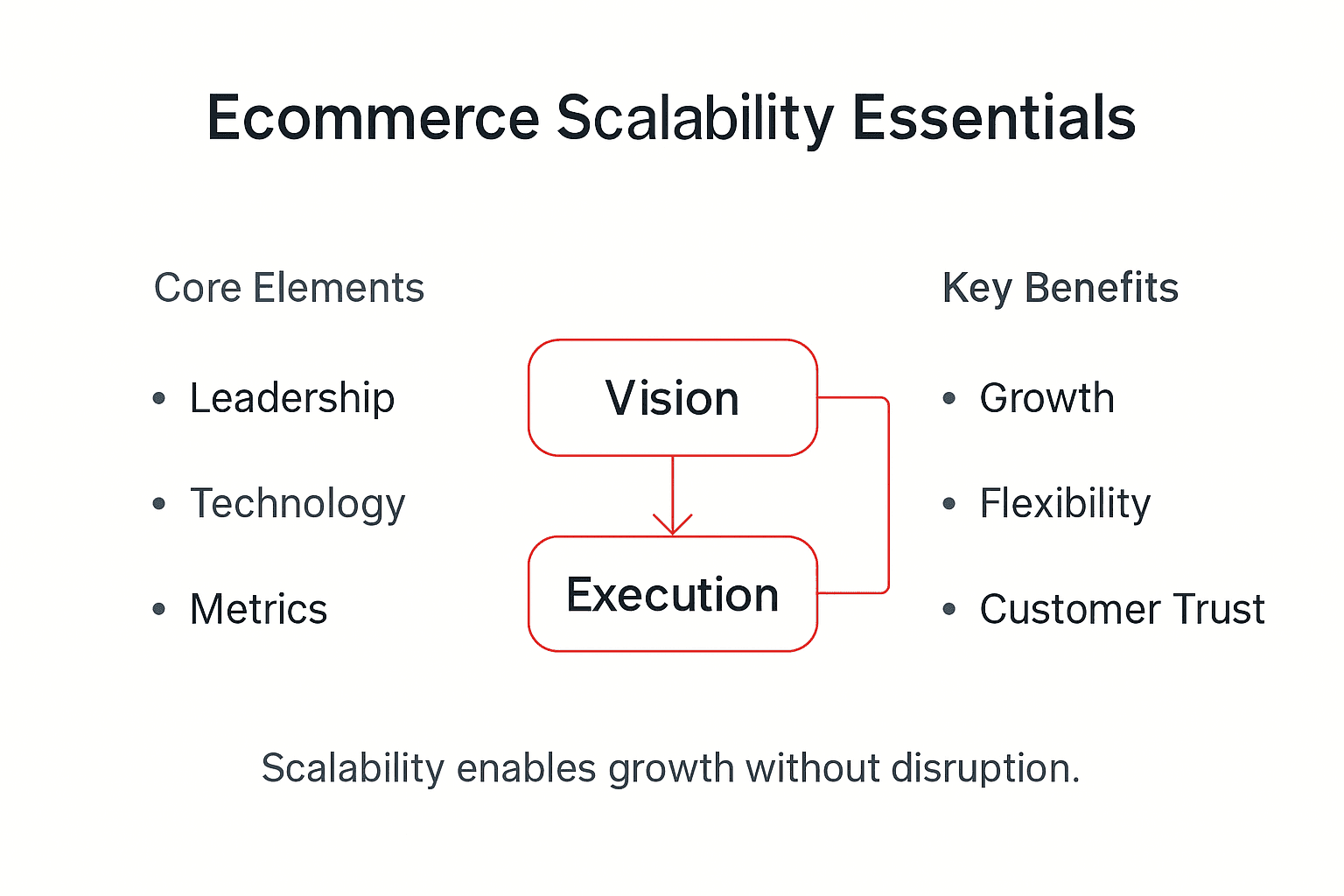
Pro tip: Develop a comprehensive quarterly performance dashboard that tracks key scalability metrics across technological, operational, and market expansion dimensions.
Technology platforms form the critical infrastructure supporting scalable ecommerce growth, enabling businesses to expand operations efficiently and securely. Modern ecommerce brands require sophisticated digital solutions that can dynamically adapt to changing market demands and customer expectations.
Cloud computing and microservice architectures represent pivotal technological approaches for sustainable expansion. Advanced technologies like privacy-preserving federated learning and modular system designs provide businesses with flexible frameworks that balance performance, security, and scalability. These solutions allow companies to independently scale functional components, enhance deployment agility, and maintain robust cybersecurity protocols.
Successful technology solutions for ecommerce scalability typically incorporate several key elements: automated inventory management systems, integrated multichannel sales platforms, advanced data analytics tools, adaptive cybersecurity frameworks, and seamless payment integration technologies. By implementing these interconnected systems, brands can create resilient digital infrastructures that support rapid growth while maintaining operational efficiency and customer trust.
Pro tip: Conduct a comprehensive technology audit every six months to identify potential scalability bottlenecks and emerging integration opportunities.
Below is a summary of key technology solutions supporting scalable ecommerce growth:
| Solution Type | Main Function | Business Impact |
|---|---|---|
| Cloud Computing | Flexible resource allocation | Enables rapid scaling |
| Microservice Architecture | Independent component management | Reduces downtime, boosts agility |
| Advanced Analytics | Data-driven insights | Improves decision-making |
| Integrated Payments | Seamless transaction processing | Enhances user trust |
Performance bottlenecks and infrastructure limitations represent critical challenges that can derail ecommerce growth strategies. Online businesses frequently encounter unexpected obstacles that can dramatically impact their ability to expand operations and maintain customer satisfaction.
The most prevalent scalability challenges stem from technical and organizational constraints. Many ecommerce operations struggle with misaligned market strategies, subjective decision-making, and inadequate performance measurement frameworks. These issues manifest through slow page loads, inconsistent user experiences, and an inability to handle sudden increases in website traffic or transaction volumes.
Addressing scalability challenges requires a comprehensive approach that combines technological infrastructure, strategic planning, and data-driven decision-making. Successful brands must develop robust performance modeling techniques, implement advanced monitoring systems, design flexible architectural frameworks, and continuously optimize their digital platforms. This means investing in cloud-based technologies, creating modular system designs, establishing clear performance metrics, and maintaining organizational agility to respond quickly to market changes.
Pro tip: Implement monthly performance audits that systematically evaluate your digital infrastructure’s capacity to handle projected growth and identify potential scalability bottlenecks before they impact customer experience.
Facing challenges like performance bottlenecks or the complexities of internal and external scalability can feel overwhelming. This article outlined how crucial it is to build a flexible digital infrastructure, optimize operations, and expand market reach without sacrificing customer experience or efficiency. If your goal is to overcome these pain points, elevate your operational scalability, and strategically grow your brand across multiple channels, expert support is key.
Reddog Group specializes in helping small and medium-sized brands master omnichannel retailing with tailored solutions in marketplace management, Amazon FBA, and direct-to-consumer strategies. Our proven experience managing thousands of SKUs and driving year-over-year revenue growth means we understand the core criteria for sustainable ecommerce scalability inside and out.
Discover how our Digital & Business Consulting Services by Reddog Consulting can help you build a robust and scalable ecommerce operation that thrives under growing demand.
Take control of your ecommerce future now. Visit us at https://reddog.group to explore customized strategies that match your scalability goals. Start turning scalability challenges into opportunities with trusted guidance and measurable results. Learn more or get in touch through our Home page and begin your journey toward scalable growth today.
Ecommerce scalability refers to a brand’s ability to expand digital sales while maintaining optimal performance and customer experience. It involves the capacity to manage increased transaction volumes, customer interactions, and site traffic effectively.
Scalability is crucial for ecommerce businesses as it allows them to adapt quickly to changing market demands, handle traffic spikes, and maintain strong operational performance without compromising customer satisfaction as they grow.
Common challenges include performance bottlenecks, infrastructure limitations, misaligned market strategies, and inadequate performance measurement frameworks. These can lead to slow page loads and inconsistent user experiences during periods of increased demand.
Brands can improve scalability by investing in flexible technology platforms, optimizing backend systems, implementing cloud-based solutions, and designing agile inventory management processes to handle increased customer demand and adapt to market changes.
Leave a comment: