
Published: March 2020 | Last Updated:December 2025
© Copyright 2026, Reddog Consulting Group.

Over 80 percent of American shoppers now start their buying journey on the internet rather than in a store. The digital shelf shapes every step of that experience, from search to purchase. As brands battle for attention in crowded online spaces, understanding the digital shelf is essential for anyone aiming to thrive in modern commerce. This guide reveals how the digital shelf works and why mastering its strategies gives businesses a clear edge.
| Point | Details |
|---|---|
| Importance of Digital Shelf | The digital shelf is essential for brands to optimize product visibility and consumer engagement across multiple online platforms. |
| Core Components | Successful digital shelf strategies rely on Product Information Management (PIM) systems and advanced SEO techniques to maintain consistency and improve discoverability. |
| Platform Diversity | Various digital shelf platforms, such as e-commerce marketplaces and social commerce sites, require tailored strategies for effective brand presence. |
| Avoiding Pitfalls | Brands must prevent common issues like inconsistent data and lack of integration by utilizing comprehensive management systems and continuous monitoring. |
The digital shelf represents the virtual landscape where modern brands showcase and sell their products online. Unlike traditional retail spaces with physical shelves, the digital shelf spans multiple platforms including e-commerce websites, mobile applications, and social media channels where consumers discover, research, and purchase products. The digital shelf encompasses all online touchpoints where consumers interact with a brand’s products, transforming how businesses approach product visibility and customer engagement.
At its core, the digital shelf serves as the virtual equivalent of physical store displays, providing brands with a dynamic platform to present their offerings. This online marketplace represents the crucial intersection where product listings, consumer behavior, and digital marketing strategies converge, creating a complex ecosystem that directly impacts sales performance and brand perception. Modern consumers navigate these digital spaces with unprecedented speed and access, making the quality and optimization of product listings more critical than ever.
Key characteristics of an effective digital shelf strategy include:
Successful brands understand that the digital shelf is not merely a transactional space but a sophisticated marketing channel requiring continuous refinement and strategic investment. By treating online product presentations with the same care traditionally reserved for physical retail displays, businesses can create compelling digital experiences that drive consumer engagement and boost sales performance.
The digital shelf ecosystem comprises several interconnected elements that collectively determine a brand’s online success. Product Information Management (PIM) systems form the foundational infrastructure, enabling brands to manage and distribute accurate product data across multiple digital platforms. These systems ensure that product descriptions, specifications, images, and pricing remain consistent and up-to-date, which is crucial for maintaining consumer trust and facilitating seamless purchasing experiences.

Search engine optimization (SEO) represents another critical component of the digital shelf ecosystem. Brands must strategically optimize their product listings to improve visibility, using targeted keywords, compelling metadata, and structured content that helps potential customers discover their offerings quickly. By implementing sophisticated SEO techniques, businesses can enhance their digital shelf presence and outperform competitors in online marketplaces.
Key technological components of the digital shelf ecosystem include:
Customer interaction metrics like reviews, ratings, and engagement data play a significant role in shaping the digital shelf ecosystem. These social proof elements directly influence purchasing decisions, providing potential buyers with authentic insights into product quality and performance. Successful brands recognize that maintaining a robust, transparent digital presence requires continuous monitoring, active engagement with customer feedback, and agile adaptation to changing market dynamics.
Digital shelf platforms represent diverse online environments where brands can strategically showcase and sell their products, each offering unique advantages and consumer engagement opportunities. The primary categories include e-commerce marketplaces, brand-owned websites, mobile applications, and social commerce platforms, which collectively provide businesses with comprehensive channels to reach potential customers across multiple digital touchpoints.
E-commerce marketplaces like Amazon, eBay, and Walmart represent the most prominent digital shelf platforms, offering massive consumer reach and established infrastructure. These platforms enable brands to leverage existing customer bases and sophisticated marketing tools. Direct-to-consumer (DTC) websites provide brands with greater control over their digital presentation, allowing for more personalized customer experiences and direct relationship building. Social commerce platforms such as Instagram, Facebook, and Pinterest have emerged as powerful digital shelf ecosystems that blend social interaction with seamless purchasing capabilities.
Key characteristics of different digital shelf platforms include:
Successful brands recognize that each digital shelf platform requires a tailored strategy. Understanding the unique strengths and audience dynamics of different platforms allows businesses to create targeted approaches that maximize visibility, engagement, and sales performance across the complex digital retail landscape.
Centralized product data management forms the foundation of effective digital shelf strategies, enabling brands to create consistent and compelling online product presentations. Successful brands recognize that comprehensive Product Information Management (PIM) systems are crucial for maintaining accurate, up-to-date product information across multiple digital platforms. This approach ensures that potential customers receive uniform and precise details about products, regardless of where they encounter the brand online.
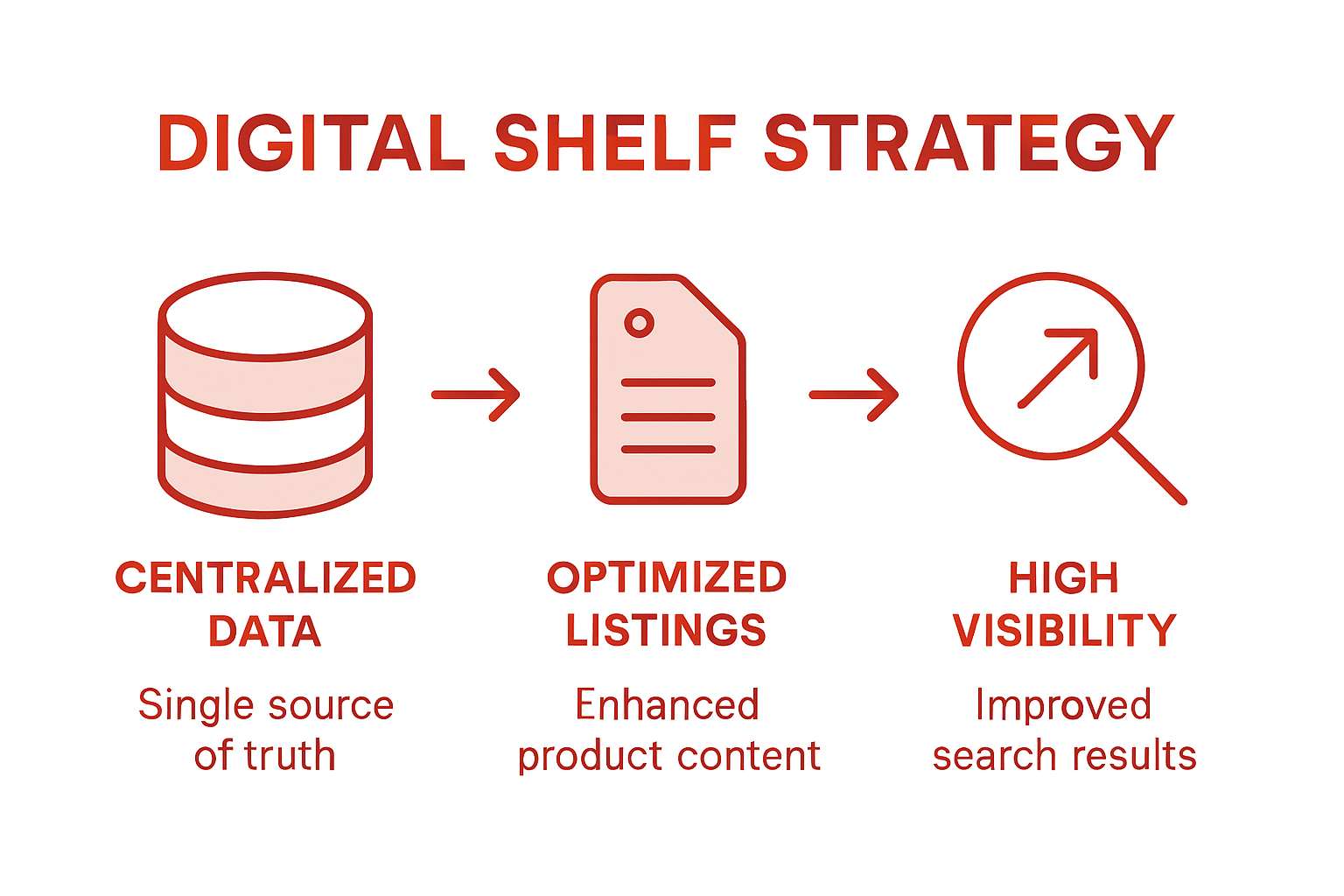
Optimizing product listings requires a multifaceted approach that goes beyond basic information presentation. Brands must develop sophisticated strategies that include high-quality visual content, compelling product descriptions, strategic keyword integration, and responsive design that adapts seamlessly to different digital platforms. Search engine optimization techniques play a critical role in improving product discoverability, helping brands stand out in increasingly crowded digital marketplaces.
Key digital shelf visibility strategies include:
Successful digital shelf strategies demand continuous refinement and proactive monitoring. Brands must leverage advanced analytics to track performance metrics, understand customer behavior, and quickly adapt their approach. By treating the digital shelf as a dynamic, ever-evolving ecosystem, businesses can create more engaging product experiences that drive customer interest, build trust, and ultimately increase conversion rates across multiple online platforms.
Digital shelf management presents numerous challenges that can significantly undermine a brand’s online performance, with the most critical pitfalls stemming from inconsistent data management and fragmented technological infrastructure. Brands frequently struggle with maintaining uniform product information across multiple platforms, which can lead to customer confusion, reduced trust, and diminished conversion rates. Successful digital shelf strategies require a holistic approach that addresses these systemic vulnerabilities through comprehensive integration and proactive management.
One of the most prevalent issues brands encounter is the lack of centralized product information management. Disconnected systems create data silos that prevent real-time updates, leading to outdated pricing, incorrect specifications, and inconsistent product representations across different digital platforms. This fragmentation not only damages brand credibility but also creates significant operational inefficiencies that can slow down market responsiveness and compromise competitive positioning.
Key digital shelf management pitfalls include:
Navigating these challenges requires brands to implement robust Product Information Management (PIM) systems, develop comprehensive digital content strategies, and maintain continuous monitoring and optimization processes. By treating the digital shelf as a dynamic ecosystem that demands constant attention and strategic refinement, businesses can transform potential pitfalls into opportunities for enhanced customer engagement and improved online performance.
Struggling to keep your product information consistent and your listings optimized across multiple channels The article highlights common challenges like fragmented data management and the need for advanced Product Information Management systems that impact brand visibility and sales growth. At Reddog Group, we specialize in solving these exact pain points by offering tailored solutions in marketplace management, Amazon FBA, and Direct-to-Consumer channels. Our expertise ensures your digital shelf strategy is cohesive, agile, and designed for measurable growth.

Ready to transform your online presence into a growth engine Act now to leverage Reddog Group’s proven strategies that enhance product discovery, streamline inventory tracking, and optimize marketing campaigns. Visit https://reddog.group to learn how we handle over 30,000 SKUs and generate significant revenue gains. Take control of your digital shelf and boost your brand visibility with our expert guidance. Discover more about our comprehensive approach at Reddog Group and start your journey toward omnichannel mastery today.
The digital shelf is the virtual space where brands display and sell their products online, encompassing e-commerce websites, mobile apps, and social media platforms.
A strong digital shelf strategy helps brands improve product visibility, enhance customer engagement, and ultimately boost sales performance by providing well-optimized and appealing online product presentations.
Brands can optimize their product listings through high-quality visual content, compelling product descriptions, strategic use of keywords, and ensuring responsive design that works across multiple devices.
SEO is crucial for improving product discoverability on the digital shelf. It involves optimizing product listings with targeted keywords, compelling metadata, and structured content to attract potential customers effectively.
Leave a comment: