
Published: March 2020 | Last Updated:December 2025
© Copyright 2026, Reddog Consulting Group.

Most American retailers discover that over 65 percent of their revenue comes from returning customers. In such a competitive marketplace, building long-term relationships means far more than just attracting shoppers with discounts. Lifecycle marketing helps brands respond to what customers actually need at every stage. Understanding this approach can be the difference between stagnant sales and real, sustainable growth for American retail businesses.
| Point | Details |
|---|---|
| Understanding Lifecycle Marketing | It tracks and optimizes customer relationships across stages, emphasizing personalized experiences that foster loyalty. |
| Key Stages of Customer Journey | Recognizing the five stages—awareness, consideration, purchase, retention, and advocacy—allows brands to tailor marketing strategies effectively. |
| Importance of Omnichannel Strategies | Creating seamless experiences across multiple channels enhances customer satisfaction and loyalty, leading to increased revenue. |
| Focus on Customer Retention | Retaining existing customers is more cost-effective than acquisition, making personalized engagement essential for sustainable growth. |
Lifecycle marketing represents a strategic approach that tracks and optimizes customer relationships across every interaction point from initial discovery to long-term loyalty. Unlike traditional marketing methods, this technique focuses on delivering personalized experiences that adapt to a customer’s evolving journey and specific needs. Retail marketing strategies must recognize that each customer progresses through distinct stages with unique engagement requirements.
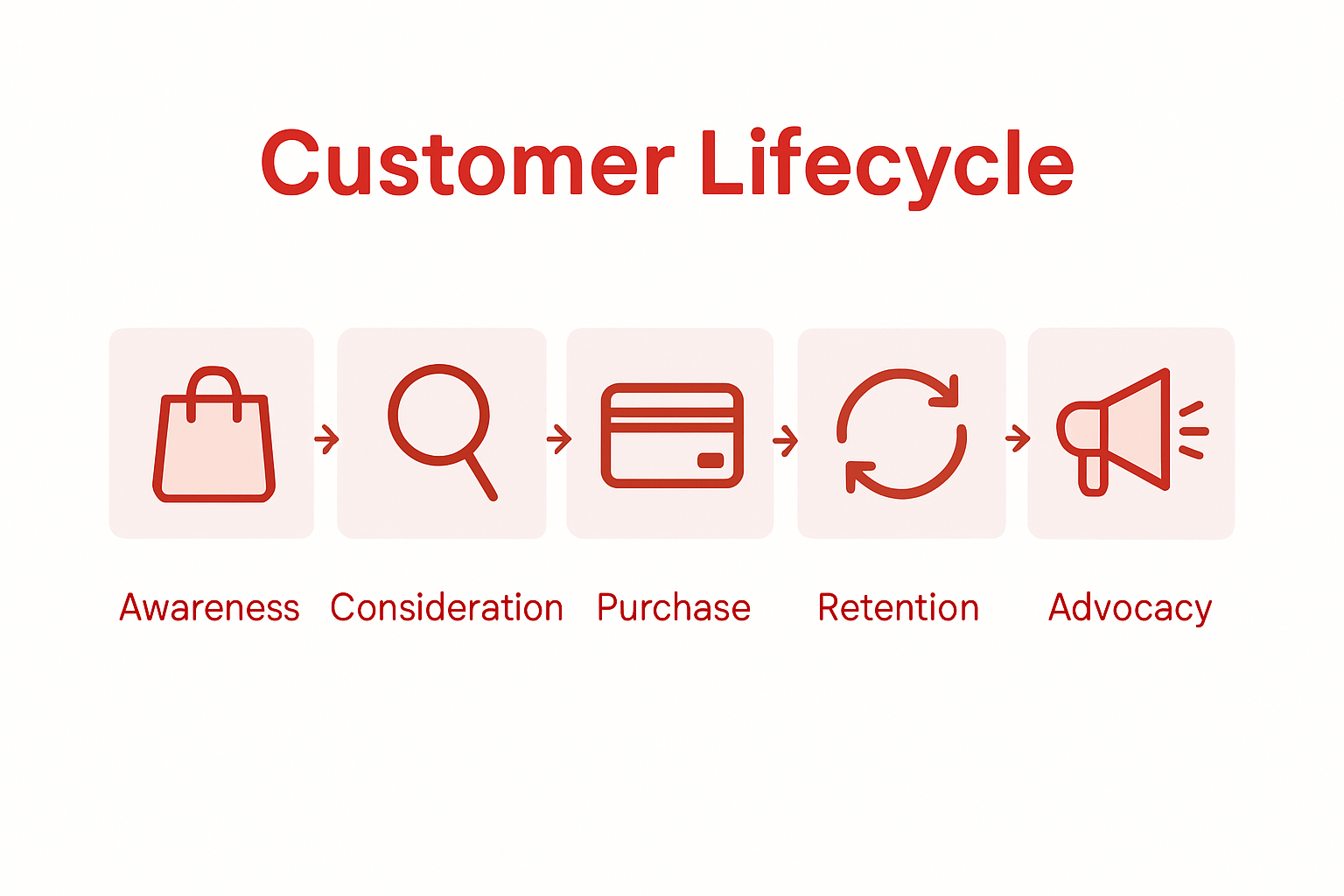
At its core, lifecycle marketing is about understanding and anticipating customer behaviors by mapping their progression through critical stages: awareness, consideration, purchase, retention, and advocacy. The goal is not just acquiring customers but nurturing meaningful relationships that drive sustainable growth. By analyzing customer interactions across multiple touchpoints, brands can create targeted communications that resonate with individual preferences and motivations.
Successful lifecycle marketing requires retailers to develop sophisticated data-driven strategies that track customer interactions, preferences, and purchasing patterns. Key elements include segmentation, personalization, timely communication, and continuous engagement. Retailers must leverage advanced analytics and customer relationship management tools to track metrics like customer lifetime value, purchase frequency, and retention rates. This approach transforms marketing from a transactional process into a dynamic, relationship-building experience that adapts to each customer’s unique journey and evolving needs.
The customer lifecycle represents a comprehensive journey that transforms potential prospects into loyal brand advocates through strategic interactions and personalized engagement. Customer lifetime value tracking reveals that understanding these distinct stages is crucial for developing targeted marketing approaches that maximize relationship potential. Research indicates the lifecycle typically encompasses five critical stages: prospects, responders, new customers, retained customers, and former customers.
Each stage demands unique marketing strategies and communication approaches. Awareness marks the initial contact point where potential customers first encounter a brand, typically through marketing channels like social media, advertising, or referrals. During the Consideration stage, consumers evaluate product offerings, compare alternatives, and assess potential value. The Acquisition stage represents the critical moment of purchase, where marketing efforts convert interest into tangible revenue. Retention focuses on creating positive post-purchase experiences that encourage repeat business, while the Advocacy stage transforms satisfied customers into active brand promoters.
Successful retailers recognize that progression through these stages requires continuous adaptation and personalized engagement. By implementing sophisticated tracking mechanisms and data-driven marketing strategies, brands can develop nuanced approaches that anticipate customer needs, address potential barriers, and create seamless transitions between lifecycle stages. Advanced analytics enable marketers to understand customer behaviors, predict potential churn, and design targeted interventions that maintain long-term relationships and maximize customer lifetime value.

Omnichannel strategies represent a sophisticated approach to creating seamless customer experiences across multiple interaction points. Omnichannel marketing integration enables retailers to develop consistent, personalized journeys that adapt to individual customer preferences and behaviors. By synchronizing interactions across digital and physical channels, brands can create a unified experience that meets customers exactly where they are in their purchasing journey.
The key components of effective omnichannel lifecycle marketing include integrated data systems, consistent messaging, and adaptive communication strategies. Retailers must develop robust technological infrastructure that allows real-time tracking of customer interactions across platforms like mobile apps, websites, social media, physical stores, and customer service channels. This approach ensures that whether a customer begins research online, continues on a mobile device, and completes a purchase in-store, their experience remains smooth and personalized.
Successful implementation requires advanced analytics and flexible technological ecosystems that can track and respond to customer behaviors instantaneously. Retailers must invest in technologies that enable comprehensive omnichannel sales strategies capable of providing seamless transitions between different engagement platforms. By understanding and anticipating customer needs across various touchpoints, brands can create more meaningful connections, increase customer satisfaction, and ultimately drive long-term loyalty and revenue growth.
Customer retention represents a critical strategic lever for driving sustainable business growth and profitability in retail. Increasing customer lifetime value demonstrates that retaining existing customers is dramatically more cost-effective than acquiring new ones. Studies indicate that repeat customers can generate significantly higher revenue with substantially lower acquisition costs, making retention a fundamental component of successful lifecycle marketing strategies.
The financial dynamics of customer retention are particularly compelling. Businesses that successfully maintain customer relationships can experience exponential revenue growth, as loyal customers tend to make more frequent purchases and spend more with each transaction. Retailers must develop sophisticated strategies that transform initial transactions into long-term relationships, focusing on creating personalized experiences that consistently deliver value and exceed customer expectations.
Advanced retention strategies go beyond traditional approaches, leveraging data analytics and predictive modeling to anticipate customer needs and proactively address potential churn risks. By implementing targeted engagement programs, personalized communication, and loyalty initiatives, retailers can create a comprehensive ecosystem that nurtures customer relationships. Sophisticated marketers recognize that each retained customer represents not just immediate revenue, but a potential brand advocate who can generate additional value through referrals and sustained long-term engagement.
Retail brands frequently encounter significant challenges when implementing lifecycle marketing strategies, with many falling into predictable traps that undermine their growth potential. Retail strategy best practices highlight the importance of understanding and mitigating common pitfalls that can derail customer engagement efforts. One fundamental mistake is failing to effectively qualify and segment potential customers, which leads to inefficient resource allocation and missed opportunities.
The most critical errors in lifecycle marketing typically emerge from inadequate data management and overly generic communication strategies. Retailers often struggle with creating truly personalized experiences, defaulting to broad-based marketing approaches that fail to resonate with individual customer needs. This lack of precision can result in decreased customer engagement, reduced retention rates, and ultimately diminished revenue potential. Successful brands must develop sophisticated segmentation techniques that allow for granular targeting and individualized communication strategies.
Implementing robust tracking and analysis mechanisms is essential for avoiding these common mistakes. By understanding omnichannel loyalty and developing comprehensive data collection strategies, retailers can create more nuanced and effective lifecycle marketing approaches. The most successful brands invest in advanced analytics tools that enable real-time tracking of customer behaviors, preferences, and potential churn risks, allowing for proactive and targeted interventions that meaningfully enhance customer relationships and drive sustainable growth.
Retail brands face the challenge of engaging customers at every lifecycle stage while delivering personalized, seamless experiences across channels. This article highlights critical pain points like inefficient segmentation, data management struggles, and the urgent need for omnichannel integration to boost retention and customer lifetime value. If you aim to transform these challenges into growth opportunities, building a data-driven, adaptive marketing strategy is essential.
At Reddog Group, we specialize in helping retail brands master omnichannel lifecycle marketing with proven solutions in marketplace management, Amazon FBA, and integrated online-offline sales strategies. Our client-focused approach ensures your marketing communications resonate personally and consistently across every touchpoint, maximizing retention and revenue impact.
Discover how our tailored services in digital marketing, inventory management, and strategic guidance can propel your brand to new heights.
Ready to accelerate your retail growth with expert support in lifecycle marketing and omnichannel mastery Visit Reddog Group today and explore how we turn customer data into lasting relationships and measurable sales success. Your next chapter in retail innovation starts here.
Lifecycle marketing is a strategic approach that focuses on optimizing customer relationships at every touchpoint, from initial discovery to long-term loyalty. It aims to deliver personalized experiences tailored to the customer’s evolving journey.
Retailers can successfully implement lifecycle marketing by developing data-driven strategies, segmenting their audience, personalizing communication, and ensuring timely engagement throughout the customer’s journey.
The key stages of the customer lifecycle include awareness, consideration, purchase, retention, and advocacy. Each stage requires distinct marketing strategies tailored to the customer’s needs and behaviors.
Customer retention is crucial for retail growth because retaining existing customers is more cost-effective than acquiring new ones. Loyal customers often make more frequent purchases and spend more over time, contributing significantly to a brand’s revenue.
Leave a comment: