
Published: March 2020 | Last Updated:January 2026
© Copyright 2026, Reddog Consulting Group.

Managing product stock across online marketplaces and physical stores can quickly become overwhelming for small and medium-sized retailers in the United States. Unified inventory systems offer a smarter way to keep inventory synchronized and accessible, empowering businesses to make quicker, well-informed decisions. By embracing real-time stock tracking and breaking down data silos, American retailers gain the clarity needed to reduce costly errors and confidently meet customer demand.
| Point | Details |
|---|---|
| Unified Inventory Benefits All Sizes | Both small and medium retailers can significantly benefit from unified inventory systems, contrary to the myth that they are only for large enterprises. |
| Real-Time Insights Enhance Decision Making | Real-time tracking and predictive analytics allow businesses to optimize inventory levels and make informed decisions quickly. |
| Automated Reordering Reduces Costs | Automated reordering functions minimize carrying costs and prevent stockouts by ensuring optimal inventory levels. |
| Phased Implementation is Crucial | A gradual, strategic approach to implementing unified systems is essential to ensure data accuracy and operational continuity. |
A unified inventory system represents a comprehensive approach to tracking product availability, stock levels, and sales channels across multiple platforms simultaneously. Unlike traditional inventory management methods, this strategy provides real time synchronization of stock information, enabling retailers to make faster, more accurate business decisions. Inventory tracking methodologies have evolved significantly, transforming how businesses perceive and manage their product resources.
Many retailers operate under several persistent myths about unified inventory systems. First, businesses often assume these systems are only suitable for large enterprises with complex supply chains. In reality, small and medium sized retailers can derive substantial benefits from implementing unified inventory solutions. Another common misconception is that such systems are prohibitively expensive or difficult to integrate. Modern cloud based platforms have democratized access, making unified inventory management accessible and affordable for businesses of all sizes.
The core components of a unified inventory system include real time stock tracking, multichannel synchronization, automated reordering, and predictive analytics. These features work together to provide a holistic view of product availability, helping businesses optimize their inventory levels, reduce carrying costs, and minimize stockout risks. By eliminating data silos and providing a centralized platform, unified inventory systems enable more strategic decision making and improve overall operational efficiency.
Pro Tip: Start by conducting a comprehensive audit of your current inventory tracking processes and identify key integration points before implementing a unified system.
Unified inventory systems represent a quantum leap in operational management, offering advanced tracking technologies that transform how businesses monitor and manage their product resources. These sophisticated platforms go far beyond traditional spreadsheet tracking, providing instantaneous insights into stock levels, sales performance, and potential inventory challenges across multiple channels and locations.
The core features of a robust unified inventory system include real-time synchronization, multichannel integration, and predictive analytics. Real-time synchronization ensures that every sale, return, or inventory adjustment is immediately reflected across all platforms, eliminating discrepancies and reducing the risk of overselling. Multichannel integration allows businesses to seamlessly track inventory across physical stores, online marketplaces, and internal sales channels, creating a comprehensive view of product availability and movement.
Predictive analytics stand out as a game changing component of modern unified inventory systems. By leveraging machine learning algorithms and historical sales data, these systems can forecast future inventory needs, identify potential stockout risks, and recommend optimal reordering strategies. Perpetual inventory systems enable businesses to make data driven decisions, minimizing carrying costs while ensuring product availability when and where customers need them.
The table below highlights key features of unified inventory systems and their business impact:
| Feature | Description | Business Impact |
|---|---|---|
| Real-Time Stock Tracking | Monitors inventory instantaneously | Prevents overselling, enables faster actions |
| Predictive Analytics | Forecasts inventory requirements | Reduces stockouts, optimizes ordering |
| Automated Reordering | Triggers orders based on thresholds | Lowers carrying costs, ensures availability |
| Multichannel Integration | Unifies data across platforms | Enhances visibility, simplifies reporting |
Pro Tip: Implement a pilot program with your unified inventory system across one sales channel before full deployment to identify and address potential integration challenges.
Traditional inventory management represents an outdated approach that relies heavily on manual processes and periodic inventory counts. Inventory management strategies have dramatically evolved, exposing significant limitations in traditional tracking methods. Businesses using traditional systems typically spend considerable time conducting physical counts, updating spreadsheets manually, and managing disparate record keeping systems that are prone to human error and significant time delays.
Unified inventory systems fundamentally transform how businesses track and manage product resources. Unlike traditional methods that update inventory levels at fixed intervals, unified systems provide continuous, real time tracking across all sales channels. Key differences include instantaneous synchronization, automated reporting, and comprehensive visibility into stock levels, sales trends, and potential inventory challenges. These systems eliminate the need for manual data entry, reducing human error and providing more accurate, up to the minute inventory information.

The performance gap between traditional and unified inventory systems is substantial. Traditional approaches often result in stock discrepancies, delayed decision making, and increased carrying costs. Unified inventory systems leverage advanced technologies like machine learning and predictive analytics to forecast demand, optimize stock levels, and provide actionable insights. Perpetual inventory control enables businesses to make data driven decisions quickly, minimizing wastage and maximizing operational efficiency across multiple sales platforms.
Here’s how unified inventory systems compare to traditional inventory management:
| Factor | Unified Inventory System | Traditional Inventory |
|---|---|---|
| Data Update Speed | Real-time synchronization | Periodic manual updates |
| Error Risk | Automated validation, lower risk | High due to manual entry |
| Multichannel Support | Tracks all sales channels | Often siloed per channel |
| Decision Making | Data-driven, proactive | Reactive, often delayed |
Pro Tip: Conduct a comprehensive cost benefit analysis comparing your current inventory management expenses with potential unified system investments to justify technological upgrades.
Retail brands across various sectors are experiencing transformative results by implementing unified inventory systems. Advanced inventory management strategies demonstrate significant operational improvements, enabling businesses to overcome traditional tracking limitations and create more responsive supply chains. Clothing retailers, for instance, can now synchronize stock levels across online platforms, physical stores, and warehouse locations, ensuring customers have accurate real-time product availability information.
Technology is revolutionizing inventory tracking methods, with innovative solutions like autonomous drones providing unprecedented inventory monitoring capabilities. Warehouse operations can now conduct rapid, precise stock counts in challenging environments, dramatically reducing manual labor and increasing accuracy. These technological advancements allow retailers to track product movements with unprecedented detail, minimizing loss and optimizing inventory allocation across multiple sales channels.
Successful implementations showcase how unified inventory systems drive tangible business outcomes. Fashion brands can now predict seasonal demand more accurately, sporting goods retailers can balance stock across online and physical stores, and electronics companies can manage complex multi-location inventories with minimal human intervention. Autonomous warehouse tracking represents a cutting edge approach to inventory management, enabling businesses to make data driven decisions that directly impact bottom line performance.
Pro Tip: Start with a pilot program implementing unified inventory systems in one product category to demonstrate value before full organizational rollout.
Unified inventory systems represent a strategic approach to managing procurement risks that fundamentally transforms operational efficiency. These systems dramatically reduce financial uncertainties by providing real-time visibility into inventory levels, preventing costly overstock and stockout scenarios. The direct financial benefits include reduced carrying costs, minimized waste, and optimized capital allocation across different product lines and sales channels.
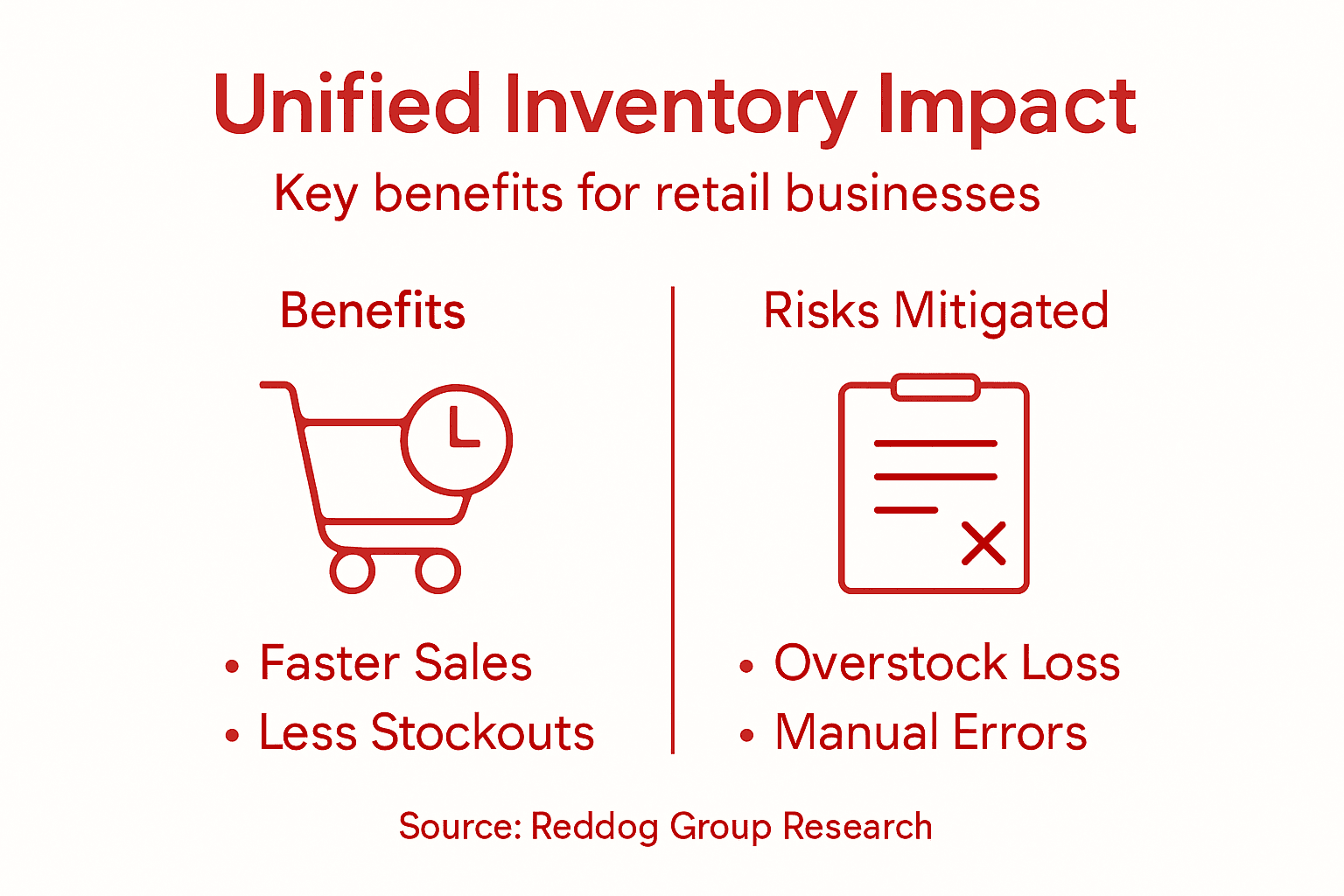
Risk mitigation emerges as a critical advantage of unified inventory management. Traditional inventory approaches expose businesses to significant operational vulnerabilities, including inaccurate stock tracking, delayed response times, and limited predictive capabilities. Unified systems counteract these risks by offering comprehensive monitoring, automated alerts for low stock levels, and sophisticated demand forecasting algorithms that enable proactive inventory planning and strategic decision making.
The operational impact extends beyond immediate financial metrics. Performance-based logistics strategies enable businesses to create more responsive, customer-centric supply chains. By integrating data across multiple platforms, retailers can achieve unprecedented levels of operational agility. This approach allows for rapid adjustments to market demands, more accurate pricing strategies, and improved customer satisfaction through consistent product availability and faster fulfillment processes.
Pro Tip: Develop a comprehensive cost benefit analysis that quantifies potential inventory management savings before implementing a unified system.
Businesses frequently encounter critical challenges when transitioning to unified inventory systems, with many failing to recognize the complexity of implementation. Inventory record verification represents a fundamental aspect that many organizations overlook, leading to potential data integrity and financial reporting issues. Common mistakes include assuming that automated systems eliminate all human error, neglecting comprehensive staff training, and failing to establish robust validation processes.
The most significant risks emerge from inadequate integration and insufficient change management strategies. Businesses must recognize that unified inventory systems require more than technological implementation they demand comprehensive organizational transformation. This involves creating cross functional alignment, establishing clear communication protocols, and developing adaptive workflows that leverage the new system’s capabilities. Rushed implementations often result in partial adoption, data inconsistencies, and reduced operational effectiveness.
Successful unified inventory adoption demands a strategic, phased approach. Automated tracking systems provide powerful tools for reducing human error, but they cannot replace strategic oversight. Companies should prioritize gradual implementation, starting with pilot programs in specific departments, conducting thorough staff training, and maintaining parallel tracking systems during transition periods to ensure data accuracy and operational continuity.
Pro Tip: Conduct a comprehensive organizational readiness assessment and develop a detailed change management plan before initiating your unified inventory system implementation.
The article highlights the critical challenge of managing inventory across multiple channels efficiently while avoiding costly errors like stockouts and overstock. It stresses the importance of real-time synchronization, predictive analytics, and multichannel integration to boost operational agility and sales success. If you are a retailer struggling with fragmented inventory data and manual processes, adopting a unified inventory system is no longer optional but essential for sustainable growth.
At Reddog Group, we understand these pain points deeply. With our experience managing over 30,000 SKUs and 50+ brands, we specialize in omnichannel retailing and inventory management strategies that cut through complexity. Our tailored solutions incorporate marketplace management, Amazon FBA, and DTC channels combined with integrated inventory insights to help you optimize stock levels, reduce carrying costs, and increase your revenue year over year.
Ready to transform your retail operations with a unified approach? Discover how Reddog Group can guide your brand to smarter inventory control and omnichannel mastery.
Boost your retail efficiency today by partnering with a team that delivers measurable results. Visit Reddog Group now to start your journey toward seamless inventory management and higher sales.
A unified inventory system is a comprehensive approach to tracking product availability and stock levels across multiple platforms simultaneously, providing real-time synchronization of stock information for faster and more accurate business decisions.
Contrary to common misconceptions, small and medium-sized retailers can significantly benefit from unified inventory solutions by improving efficiency, reducing carrying costs, and minimizing stockout risks, making them more competitive.
Key features include real-time stock tracking, multichannel integration, automated reordering, and predictive analytics, which collectively enhance visibility and decision-making for businesses.
Unified inventory systems provide real-time synchronization and automated reporting, eliminating manual processes and reducing human error, while traditional inventory management relies on periodic counts and manual updates, leading to delays and inaccuracies.
Leave a comment: