
Operational Excellence Explained: Strategies for Retail Success
Posted on
Nearly 90 percent of american retail leaders believe operational excellence is the key to long-term success. In a highly competitive market where customer expectations evolve overnight, delivering consistent value while staying efficient is more challenging than ever. Understanding what drives operational excellence helps retailers transform performance, boost profitability, and create a culture that can thrive through constant change.
Table of Contents
- Defining Operational Excellence in Retail
- Core Principles and Methodologies Used
- Benefits of Operational Excellence Programs
- Implementing Operational Excellence Tactics
- Common Challenges and How to Overcome Them
Key Takeaways
| Point | Details |
|---|---|
| Operational Excellence Defined | It is a strategic approach that enhances value delivery, optimizes performance, and creates competitive advantages through integrated systems and cultural transformation. |
| Core Principles | Empowering employees, aligning strategy with tactics, and fostering an action-oriented culture are critical for achieving operational excellence. |
| Benefits | Retailers can achieve cost reduction, improved customer satisfaction, and enhanced performance through streamlined operations and integrated systems. |
| Implementation Challenges | Retailers face obstacles such as inefficient processes and lack of digital literacy, which can be overcome with strategic planning and investment in skills development. |
Defining Operational Excellence in Retail
Operational Excellence represents a strategic approach that transforms how retail organizations consistently deliver value, optimize performance, and create sustainable competitive advantage. According to opexsociety.org, it is fundamentally “a state of readiness attained when efforts throughout the enterprise align to pursue its strategies, with a corporate culture committed to continuous and deliberate improvement of company performance”.
At its core, Operational Excellence goes beyond simple process improvements. It involves creating a systematic framework where every aspect of the retail business functions with precision, efficiency, and strategic alignment. This means seamlessly integrating multiple organizational elements: inventory management, customer experience, supply chain logistics, technology infrastructure, and workforce development. Retailers who successfully implement operational excellence can reduce waste, minimize errors, accelerate decision making, and ultimately drive higher profitability.
Key characteristics of operational excellence in retail include:
- Continuous performance measurement and improvement
- Data driven decision making
- Cross functional collaboration
- Customer centric process design
- Proactive problem solving
- Agile and adaptive organizational structures
Implementing operational excellence requires more than tactical adjustments. It demands a holistic cultural transformation where every team member understands their role in delivering exceptional performance. Retailers must invest in training, develop robust performance metrics, leverage advanced analytics, and foster a mindset of perpetual learning and optimization.
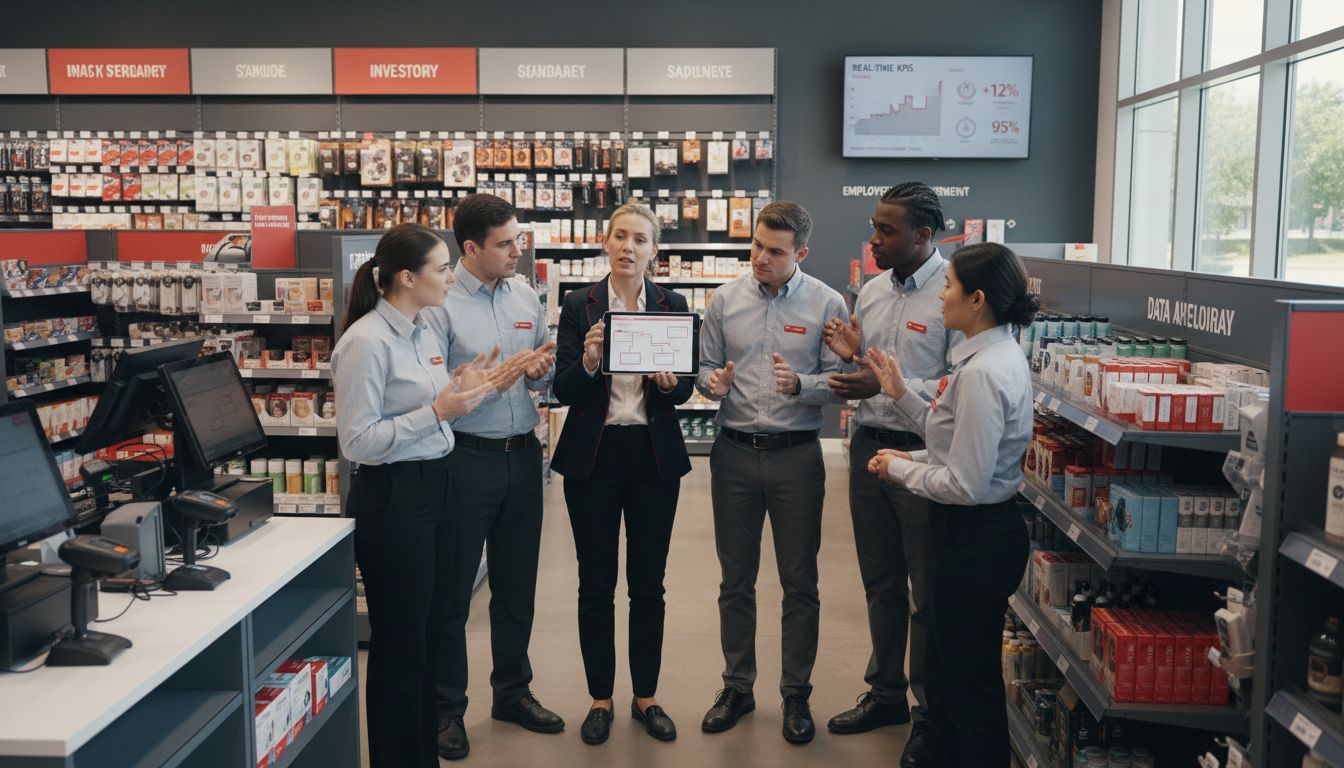 For those ready to embrace this approach, operational excellence becomes a powerful catalyst for sustainable growth and competitive differentiation. Check out our 7 Retail Strategy Best Practices for Growth and Success guide for deeper strategic insights.
Core Principles and Methodologies Used
Operational Excellence requires a comprehensive approach that transcends traditional management strategies. According to opexsociety.org, the core principles include “empowering employees to make customer-centric decisions, aligning strategy and tactics, optimizing speed, practically applying new ideas, and fostering an action-oriented culture that encourages productive failure”.
The methodological framework for operational excellence centers on several critical dimensions. These include systematic performance measurement, continuous improvement processes, and creating adaptive organizational structures. Retailers must develop robust systems that enable real time data analysis, predictive modeling, and agile response mechanisms.
This means implementing advanced technologies that support decision making, tracking key performance indicators, and creating feedback loops that drive incremental and breakthrough improvements.
Key methodological approaches in operational excellence include:
- Lean Management: Eliminating waste and maximizing efficiency
- Six Sigma: Reducing process variation and defects
- Continuous Improvement: Regular, incremental organizational enhancements
- Total Quality Management: Comprehensive quality focused strategies
- Process Mapping: Visualizing and optimizing organizational workflows
As anfponline.org highlights, achieving operational excellence also demands “fostering effective communication, creating a diverse work environment, practicing strong leadership, and maintaining customer loyalty through consistent service quality”. Successful implementation requires more than technical prowess - it demands a holistic cultural transformation where strategic vision, technological capability, and human potential converge. For retailers seeking deeper strategic insights, our Data Driven Marketing Strategies That Grow Your Brand article provides additional context on integrating data and strategy.
Benefits of Operational Excellence Programs
Operational excellence transforms retail organizations from reactive problem solvers to proactive strategic innovators. According to the-center.org, it “empowers corporate leadership to reach the apex of the enterprise through a data-driven methodology, encouraging proactive solutions that eliminate or minimize ‘firefighting’ and align corporate strategy with business execution”.
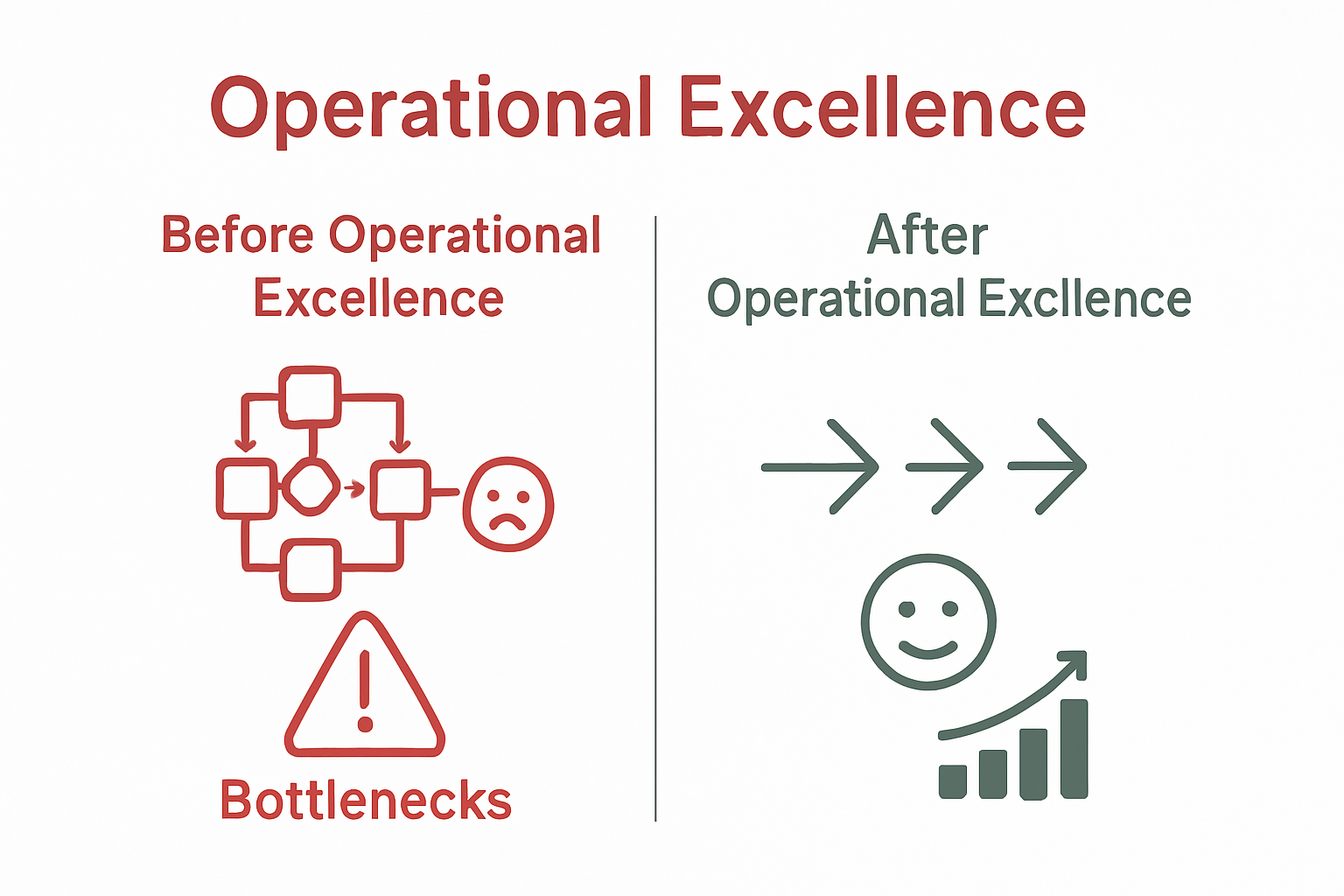
The strategic benefits of operational excellence extend far beyond traditional performance improvements. By creating integrated systems that optimize every organizational dimension, retailers can unlock unprecedented competitive advantages. This holistic approach enables businesses to streamline operations, reduce waste, enhance customer experiences, and create more predictable financial outcomes. Successful implementation means breaking down organizational silos, fostering cross-functional collaboration, and developing adaptive capabilities that respond quickly to market changes.
Specific benefits of operational excellence programs include:
- Cost Reduction: Minimizing inefficiencies and unnecessary expenses
- Performance Optimization: Improving productivity across all business units
- Risk Management: Identifying and mitigating potential operational vulnerabilities
- Customer Satisfaction: Delivering consistent, high-quality experiences
- Competitive Differentiation: Creating unique organizational capabilities
As sig-uk.org highlights, implementing these programs “leads to increased efficiency, continuous improvement, cost savings, and ensures products or services are of the highest quality and competitive cost”. For retailers looking to understand how technology can support these goals, our Why Automate Business Processes: Complete Guide provides deeper insights into strategic process optimization.
Implementing Operational Excellence Tactics
Operational excellence is not a destination but a continuous journey of strategic transformation. According to convenience.org, achieving this requires “inspiring employees through comprehensive training, fostering a culture of continuous improvement, and ensuring that mission, program execution, customer service, and brand expectations align effectively”.
Successful implementation demands a multifaceted approach that integrates technological infrastructure, human capital development, and strategic alignment. Retailers must create robust frameworks that enable data driven decision making, encourage cross functional collaboration, and develop adaptive organizational capabilities. This involves establishing clear performance metrics, implementing advanced analytics tools, and creating feedback mechanisms that support real time learning and improvement.
Key tactical approaches for implementing operational excellence include:
- Strategic Alignment: Connecting organizational goals with daily operations
- Performance Measurement: Developing comprehensive tracking systems
- Continuous Training: Investing in employee skill development
- Technology Integration: Leveraging advanced analytics and automation
- Cultural Transformation: Embedding improvement mindsets across all levels
As opexsociety.org emphasizes, transitioning effectively “requires a holistic view across the entire organization, integrating strategy development, process optimization, and employee engagement to drive sustainable continuous improvement”. Retailers seeking deeper insights into organizational transformation can explore our What is Business Transformation? Understanding its Impact article for comprehensive strategic guidance.
Common Challenges and How to Overcome Them
Operational excellence is a complex journey fraught with potential obstacles that can derail even the most well-intentioned strategies. According to incit.org, retailers frequently encounter “inefficient processes, lack of digital literacy, ineffective business planning, cash flow issues, and external factors like supply chain disruptions” that can significantly impede organizational performance.
Navigating these challenges requires a strategic, proactive approach that addresses both systemic and cultural barriers. Successful retailers develop robust risk mitigation strategies that anticipate potential disruptions, create flexible operational frameworks, and build organizational resilience. This means investing in continuous learning programs, developing agile technological infrastructures, maintaining diverse supply chain relationships, and creating adaptive decision making processes that can quickly respond to changing market conditions.
Key strategies for overcoming operational excellence challenges include:
- Digital Transformation: Upgrading technological capabilities
- Skills Development: Investing in comprehensive employee training
- Adaptive Planning: Creating flexible strategic frameworks
- Financial Management: Developing robust cash flow strategies
- Risk Mitigation: Building resilient supply chain networks
As lean.org emphasizes, organizations must “focus on process-oriented metrics and align them with strategic objectives” to drive meaningful improvement. Retailers seeking deeper insights into scaling their business can explore our Small Business Scaling Process for Multichannel Growth article for comprehensive strategic guidance.
Unlock Retail Success Through Operational Excellence with Reddog Group
The journey to operational excellence in retail is filled with challenges like inefficient processes, lack of digital literacy, and the need for agile, data-driven decision making. If your goal is to transform your retail operations through continuous improvement, cross-functional collaboration, and smart technology integration you need expert guidance tailored to your specific business needs. Reddog Group specializes in helping small and medium-sized retailers overcome these very challenges by delivering proven strategies in omnichannel retailing, inventory management, and digital marketing.
Take the next step toward sustainable growth and competitive advantage by partnering with an experienced team that has managed over 30,000 SKUs with measurable year-over-year revenue increases. Explore how our customized marketing campaigns, strategic insights, and optimized product listings can empower your brand to achieve true operational excellence. Visit Reddog Group today and start transforming your retail strategy with confidence.
Frequently Asked Questions
What is operational excellence in retail?
Operational excellence in retail is a strategic approach that transforms how organizations deliver value and optimize performance while creating a sustainable competitive advantage. It involves aligning efforts across the enterprise to improve company performance continuously.
What are the key characteristics of operational excellence?
Key characteristics include continuous performance measurement, data-driven decision-making, cross-functional collaboration, customer-centric process design, proactive problem solving, and agile organizational structures.
How can retailers implement operational excellence?
Retailers can implement operational excellence by aligning organizational goals with daily operations, developing performance measurement systems, investing in continuous training, integrating advanced technologies, and fostering a culture focused on improvement.
What are the benefits of operational excellence programs for retailers?
Benefits of operational excellence programs include cost reduction, performance optimization across all business units, better risk management, enhanced customer satisfaction, and a stronger competitive differentiation in the market.
Recommended
- What is Retail Strategy? Understanding Key Concepts | Reddog Consulting Group
- 7 Retail Strategy Best Practices for Growth and Success | Reddog Consulting Group
- 7 Types of Omnichannel Strategies for Retail Growth | Reddog Consulting Group
- 7 Essential Steps for a Retail Marketing Checklist Success | Reddog Consulting Group
Leave a comment: