
Published: March 2020 | Last Updated:December 2025
© Copyright 2026, Reddog Consulting Group.

Nearly 90 percent of American shoppers now expect to move seamlessly between online and physical stores when making purchases. This dramatic shift has forced retailers to rethink their strategies to keep up with changing consumer habits. Understanding the hybrid retail model is crucial for anyone wanting to grasp how American commerce is evolving and to see what new opportunities and challenges are reshaping the way people shop.
| Point | Details |
|---|---|
| Hybrid Retail Model | A transformative approach that integrates digital and physical shopping experiences, enhancing consumer interaction. |
| Types of Models | Retailers employ various hybrid models such as Webrooming and Click-and-Collect to optimize customer engagement. |
| Integration Strategies | Successful hybrid retail requires real-time inventory management and personalized customer experiences across all channels. |
| Benefits for Retailers | The model expands market reach, reduces operational costs, and enhances customer loyalty through consistent experiences. |
The hybrid retail model represents a transformative approach to commerce that seamlessly integrates digital and physical shopping experiences, fundamentally reshaping how businesses interact with consumers. By blurring traditional retail boundaries, this model creates a fluid ecosystem where online and offline channels complement each other strategically.
At its core, the hybrid retail model enables merchants to provide flexible purchasing options that meet evolving consumer expectations. The model incorporates advanced technologies and adaptive strategies like curbside pickup and sophisticated inventory management systems. These innovations allow retailers to optimize their operational efficiency while delivering personalized shopping experiences across multiple touchpoints.
Key characteristics of the hybrid retail model include:
Understanding this model requires recognizing that modern consumers demand convenience, speed, and personalization. By implementing strategic omnichannel approaches, businesses can create more responsive and customer-centric retail environments that adapt quickly to changing market dynamics.
Retail businesses have evolved to embrace multiple hybrid retail models that strategically blend digital and physical shopping experiences. Retailers now manage four distinct operational approaches that allow them to maximize customer engagement and operational efficiency.
These hybrid models include:
Each model offers unique advantages for businesses seeking to optimize their omnichannel retail strategies. The Click-and-Collect approach, for instance, allows retailers to leverage existing physical infrastructure while meeting consumer demands for convenience and flexibility.

Modern retail formats have expanded beyond traditional boundaries, incorporating innovative approaches that blend offline and online shopping experiences. By understanding and implementing these hybrid models, businesses can create more responsive, customer-centric retail environments that adapt quickly to changing market dynamics and consumer preferences.
Successful hybrid retail models require sophisticated strategic coordination between digital and physical retail channels. Businesses must develop comprehensive integration strategies that seamlessly connect online and offline experiences, ensuring consistent brand messaging and customer interaction across all platforms.
Key integration strategies include:
Technological innovations are driving these integration efforts. AI-powered tools now enable advanced personalization, such as smart shopping recommendations, personalized promotions, and intelligent inventory management. These technologies help businesses create more responsive and adaptive retail environments that meet evolving consumer expectations.
Strategic omnichannel approaches are crucial for businesses looking to implement effective hybrid retail models. By breaking down technological and operational barriers between online and offline channels, companies can create more integrated, customer-centric shopping experiences that drive engagement, loyalty, and ultimately, business growth.
The hybrid retail model offers transformative advantages for businesses seeking to optimize their market presence. E-commerce technologies are dramatically reducing consumer search costs, enabling retailers to reallocate market shares and create more efficient shopping experiences across multiple channels.
Key benefits include:
Hybrid shoppers demonstrate significantly higher engagement levels, particularly through subscription services that bridge online and offline interactions. These consumers represent a valuable segment that actively utilizes multiple purchasing channels, generating more consistent revenue streams for businesses.
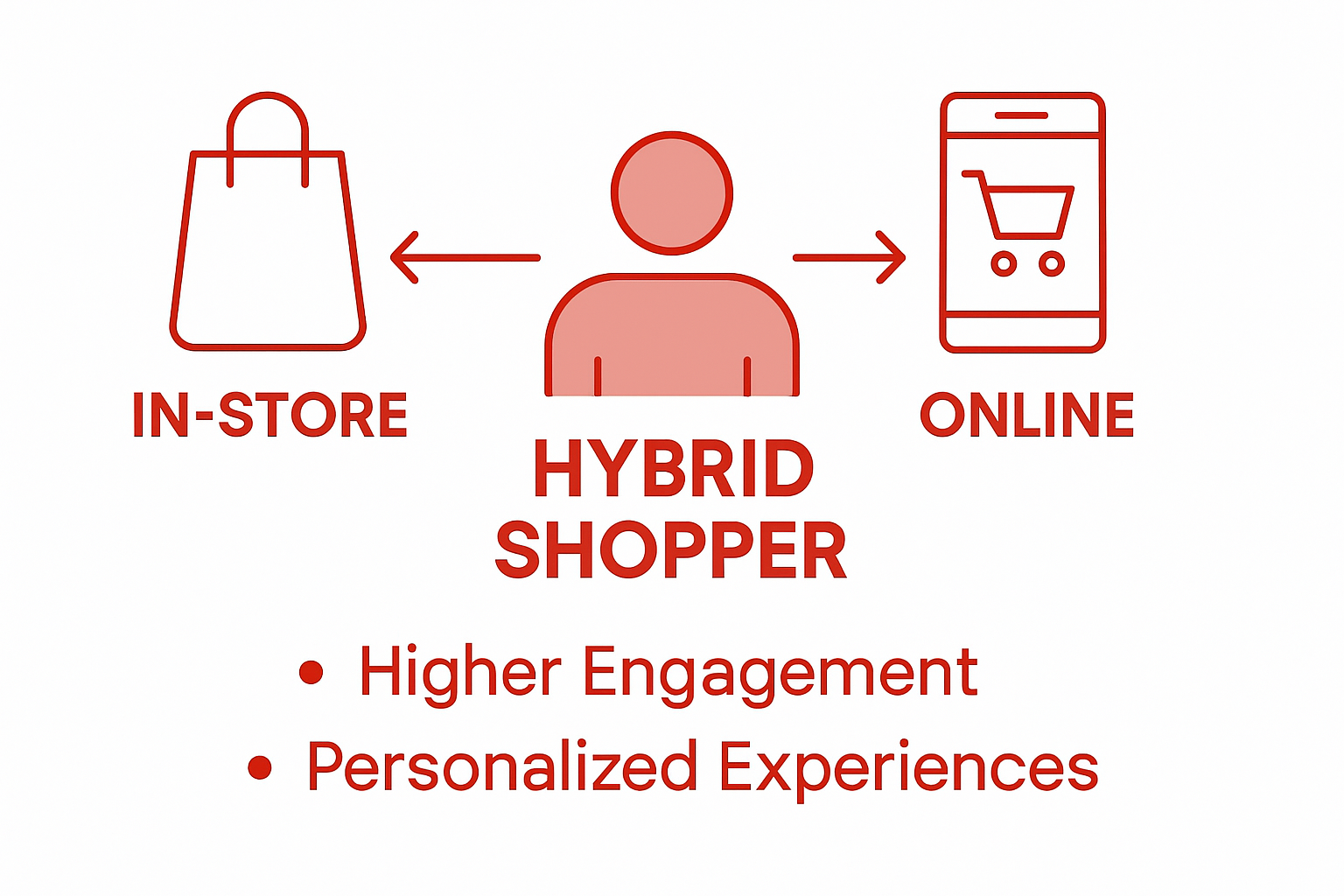
Effective digital branding strategies are crucial for maximizing the potential of hybrid retail models. By creating seamless, integrated experiences that leverage both digital and physical platforms, retailers can build stronger customer relationships, increase brand visibility, and drive sustainable business growth.
Retailers must proactively manage complex interactions between different retail models to prevent potential strategic missteps that could undermine their omnichannel success. Understanding these potential pitfalls is crucial for developing a resilient and adaptive hybrid retail strategy.
Common pitfalls include:
Excessive price competition between self-operated businesses and third-party sellers can create significant challenges for hybrid retail platforms. Such competition can lead to anti-competitive effects, potentially eroding profit margins and undermining the overall business strategy.
Effective digital transformation strategies are essential for mitigating these risks. By developing robust technological infrastructure, maintaining consistent brand messaging, and implementing comprehensive data management protocols, retailers can successfully navigate the complex landscape of hybrid retail adoption.
The hybrid retail model challenges businesses to seamlessly unify their digital and physical channels while avoiding pitfalls like inconsistent pricing and fragmented customer experiences. If your goal is to harness true omnichannel power by integrating inventory, personalization, and fulfillment strategies into one cohesive operation this is where expert guidance becomes vital. Key challenges such as real-time inventory management and customer data integration require proven solutions designed for small and medium-sized brands eager to grow sustainably.
Discover how Digital & Business Consulting Services by Reddog Consulting deliver tailored strategies built on managing tens of thousands of SKUs and driving year-over-year revenue growth.
Take control of your hybrid retail future today. Explore comprehensive consulting that aligns with your hybrid retail ambitions at Reddog Group. Visit our Home page to learn more about actionable steps that bridge physical and digital sales channels and propel your omnichannel success forward.
The hybrid retail model integrates digital and physical shopping experiences, creating a seamless ecosystem where online and offline channels complement each other, allowing businesses to meet evolving consumer expectations.
Key advantages include expanded market reach, reduced operational costs, enhanced customer insights, improved customer loyalty, and increased sales opportunities through multiple purchase and engagement touchpoints.
Technology enables advanced integration strategies such as unified inventory management, personalized customer experiences, flexible fulfillment options, and centralized customer data platforms, enhancing the overall shopping experience across channels.
Common pitfalls include inconsistent pricing strategies, poor inventory synchronization, fragmented customer experiences, inadequate technology integration, and neglecting data privacy, all of which can undermine the success of hybrid retail strategies.
Leave a comment: