
Published: March 2020 | Last Updated:February 2026
© Copyright 2026, Reddog Consulting Group.

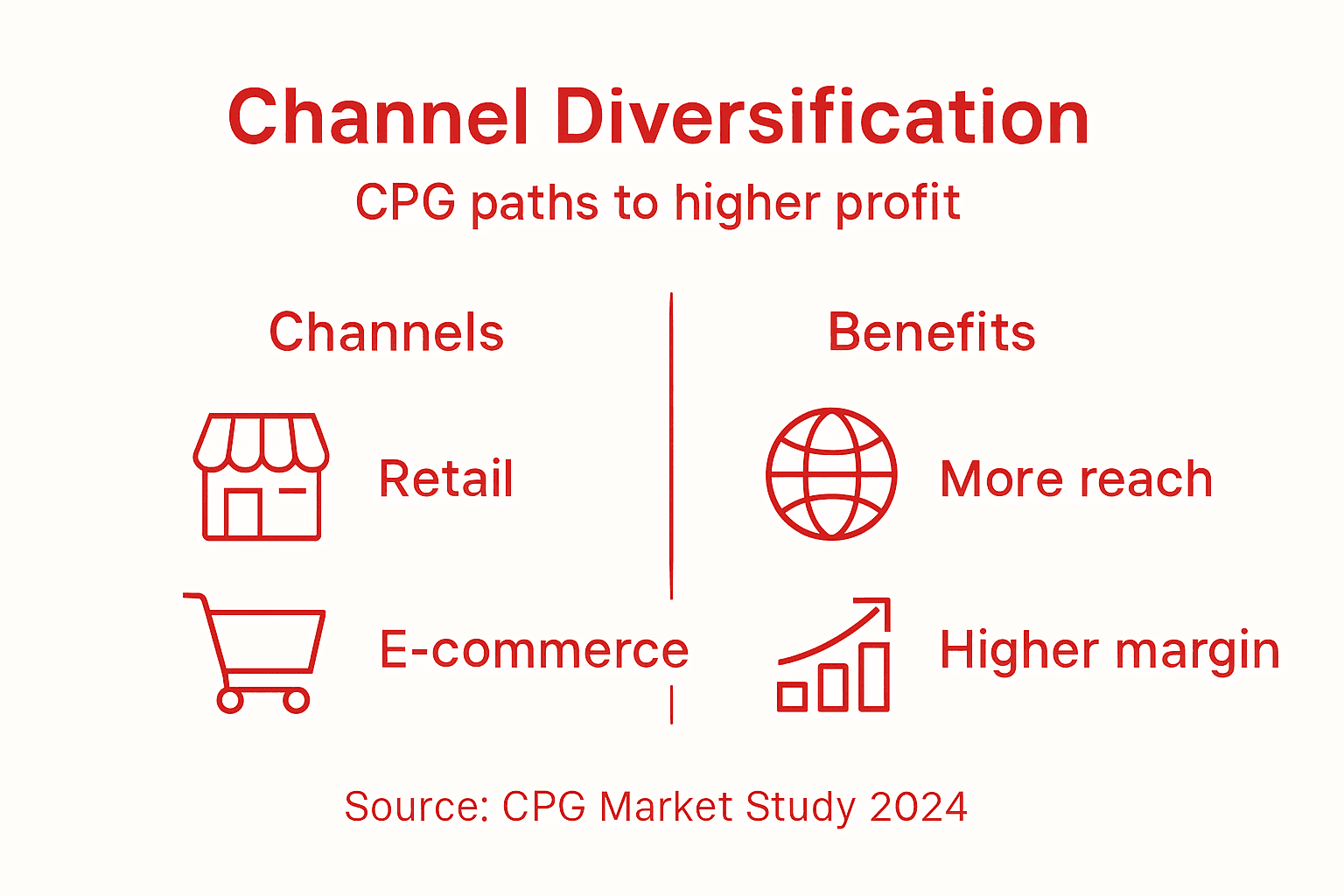
For Texas-based CPG founders, expanding into new retail channels often feels like a balancing act between growth and operational headaches. The push to diversify beyond traditional grocery shelves is driven by a need for resilience and greater access to consumers in a crowded market. By focusing on a comprehensive retail ecosystem, you gain the flexibility to respond to market swings while reducing your reliance on any single retailer. This guide breaks down what channel diversification really means for profitability and ongoing efficiency.
| Point | Details |
|---|---|
| Channel Diversification is Strategic | CPG brands should develop multiple revenue streams across diverse retail formats to enhance resilience and reduce risks associated with market volatility. |
| Understanding Channel Economics is Essential | Brands must assess profitability and inherent costs of each sales channel to ensure a positive contribution to overall business economics. |
| Robust Data Integration is Crucial | Implementing data-driven strategies for channel management helps in understanding performance and ensuring alignment across distribution platforms. |
| Mitigation of Margin Risks is Necessary | Brands should develop detailed analytics frameworks to identify potential margin leakage areas and create effective mitigation strategies. |
Channel diversification represents a strategic approach for consumer packaged goods (CPG) brands to expand their retail presence beyond traditional sales platforms. By intentionally developing multiple revenue streams, brands can reduce market volatility risks and create more resilient business models. Digital sales channels and physical retail strategies serve as complementary pathways for growth and consumer engagement.
At its core, channel diversification involves strategically positioning products across multiple retail environments. This might include:
The primary objective is creating a comprehensive retail ecosystem that maximizes brand visibility and consumer accessibility. By spreading risk across different sales channels, CPG brands can buffer against potential market disruptions and capitalize on diverse consumer purchasing behaviors.
Channel economics play a critical role in successful diversification strategies. Brands must carefully assess the profitability of each potential channel, considering factors like servicing costs, margin potential, and potential conflicts between distribution platforms. Emerging microchannels such as click-and-collect represent innovative opportunities for brands willing to experiment with non-traditional retail approaches.
Pro tip: Conduct a detailed margin analysis for each sales channel before expanding, ensuring each platform contributes positively to your overall business economics.
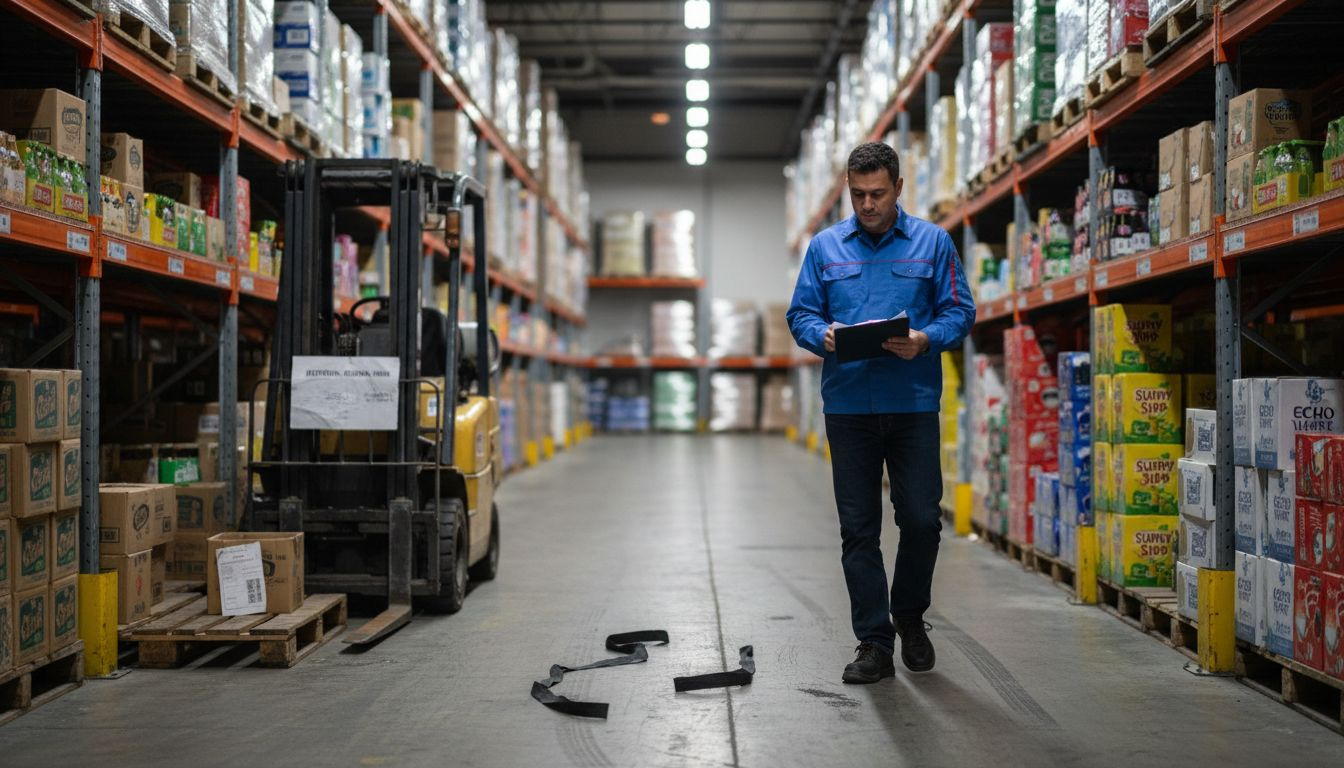
Consumer packaged goods (CPG) brands today leverage a sophisticated mix of retail channels to reach diverse customer segments and optimize their market penetration. Distribution networks encompass multiple channel types that enable brands to create comprehensive sales strategies beyond traditional retail approaches.
The primary channel types for CPG brands include:
Each channel presents unique opportunities and challenges for CPG brands. Digital transformation has dramatically expanded these options, allowing companies to create more nuanced and targeted distribution strategies that align with specific consumer purchasing behaviors.
Here’s a comparison of retail channel types and their distinct business impacts:
| Channel Type | Unique Advantage | Typical Challenge | Strategic Benefit |
|---|---|---|---|
| Traditional Retail | Broad market reach | High operational costs | Stable, trusted distribution |
| Digital Platforms | Global accessibility | Complex logistics | Direct consumer engagement |
| Specialized Outlets | Niche consumer targeting | Limited sales volume | Strong brand differentiation |
Emerging microchannels such as click-and-collect represent innovative approaches that complement traditional sales platforms. These hybrid models blend online convenience with physical retail experiences, enabling brands to meet increasingly complex consumer expectations for seamless shopping interactions.
Pro tip: Develop a comprehensive channel performance tracking system that measures profitability, customer acquisition costs, and inventory turnover for each sales platform.
Channel diversification represents a strategic approach for CPG brands to optimize growth and profitability by expanding revenue potential across multiple sales platforms. Omnichannel strategies enable nuanced consumer experiences that can translate into improved financial performance when executed strategically.
The financial implications of channel diversification are multifaceted:
Successful brands recognize that revenue growth management techniques are critical for maintaining profitability. Granular channel analysis helps companies understand the true economic contribution of each sales platform, preventing margin leakage and identifying the most efficient distribution strategies.
The complexity of channel economics requires CPG brands to develop sophisticated tracking mechanisms that measure not just top-line revenue, but the net contribution of each channel. This approach allows for precise investment allocation and helps brands avoid the common pitfall of pursuing growth at the expense of profitability.
Pro tip: Implement a detailed channel-specific profit and loss statement that breaks down revenue, direct costs, and overhead for each sales platform to understand true economic performance.
Channel diversification is far more complex than simply expanding sales platforms across multiple outlets. Strategic challenges require nuanced management of distribution networks that extend beyond surface-level growth strategies.
Common misconceptions about channel diversification include:
Channel collaboration platforms reveal that successful diversification demands sophisticated integration across sales, marketing, and supply chain functions. Unified operating models help brands maintain consistent messaging and optimize performance across diverse distribution pathways.
Navigating these challenges requires CPG brands to develop robust data integration strategies, maintain clear communication across functional teams, and continuously assess the economic contribution of each sales platform. Brands must move beyond simplistic expansion thinking and embrace a holistic, data-driven approach to channel management.
Pro tip: Create a quarterly cross-functional review process that evaluates channel performance using standardized metrics, ensuring strategic alignment and preventing siloed decision-making.
Channel diversification introduces complex financial challenges that can rapidly erode profitability if not managed strategically. Increased operating complexity creates significant margin risks for consumer packaged goods brands expanding across multiple sales platforms.
Primary risks and potential margin leakage areas include:
Modern revenue growth management practices recommend developing multi-metric scorecards and comprehensive analytics frameworks to identify and mitigate potential margin erosion. Granular cost-to-serve analysis becomes critical for understanding the true economic contribution of each distribution channel.
Successful CPG brands approach channel diversification with rigorous governance, implementing sophisticated tracking mechanisms that provide real-time visibility into channel performance. This requires cross-functional collaboration, advanced data integration, and a commitment to continuous optimization of distribution economics.
This summary highlights margin risks and mitigation strategies in channel diversification:
| Margin Risk | Potential Impact | Mitigation Strategy |
|---|---|---|
| Pricing inconsistency | Reduced profitability | Unified pricing policy |
| Untracked channel expenses | Margin erosion | Channel-specific cost analytics |
| Channel conflict | Diluted brand value | Cross-channel communication |
| Inventory mismanagement | Increased operating costs | Automated inventory tracking systems |
Pro tip: Develop a quarterly channel profitability review process that quantifies direct and indirect costs for each sales platform, ensuring transparent economic decision-making.
Navigating the complexities of channel diversification can feel overwhelming with so many moving parts like logistics costs, margin compression, and channel-specific pricing strategies. If your CPG brand is struggling to understand what each sales platform truly contributes to your bottom line or where margin leaks are hiding, you are not alone. Concepts like contribution-margin-first strategy and granular channel economics are essential to mastering your retail ecosystem and avoiding costly pitfalls.
At RedDog Group, we specialize in helping emerging and growth-stage CPG brands build profitable retail growth plans that span Amazon, Walmart, DTC, wholesale, and distribution networks. Our team combines marketplace insights with physical retail expertise to deliver operational clarity and measurable results. We know how to optimize your pricing, inventory velocity, and channel profitability so you can grow without sacrificing margins.
Take control of your channel diversification strategy today and ensure every revenue stream strengthens your business instead of draining it.
Explore how our Houston-based consultancy can help you decode channel economics and drive profitable growth on RedDog Group’s CPG Retail Growth Offer. Ready to unlock hidden margin opportunities and scale smarter? Contact us now to start your structured, data-driven retail expansion journey.
Channel diversification is a strategic approach for consumer packaged goods (CPG) brands to expand their retail presence beyond traditional sales platforms, allowing them to reduce market volatility and create more resilient business models.
Channel diversification helps optimize growth and profitability by expanding revenue potential across multiple sales platforms, leading to broader consumer access and reduced dependency on any single retail channel.
The major channel types for CPG brands include traditional retail channels (like grocery and convenience stores), digital channels (e-commerce and direct-to-consumer websites), and specialized distribution networks (such as wholesale and specialty retailers).
Common risks include operational complexity (like logistics coordination), financial vulnerabilities (such as inconsistent pricing strategies), and potential channel conflicts (which can dilute brand value).
Leave a comment: