
Published: March 2020 | Last Updated:November 2025
© Copyright 2026, Reddog Consulting Group.

More than 90 percent of american businesses struggle to build a brand that stands out across multiple channels. With so many options and shifting customer expectations, clarity and consistency have never mattered more. Shaping a strong brand today comes down to aligning your core values, understanding your audience, and delivering a unified presence everywhere your customers interact. Following a proven approach makes the journey to a memorable american brand much simpler and more effective.
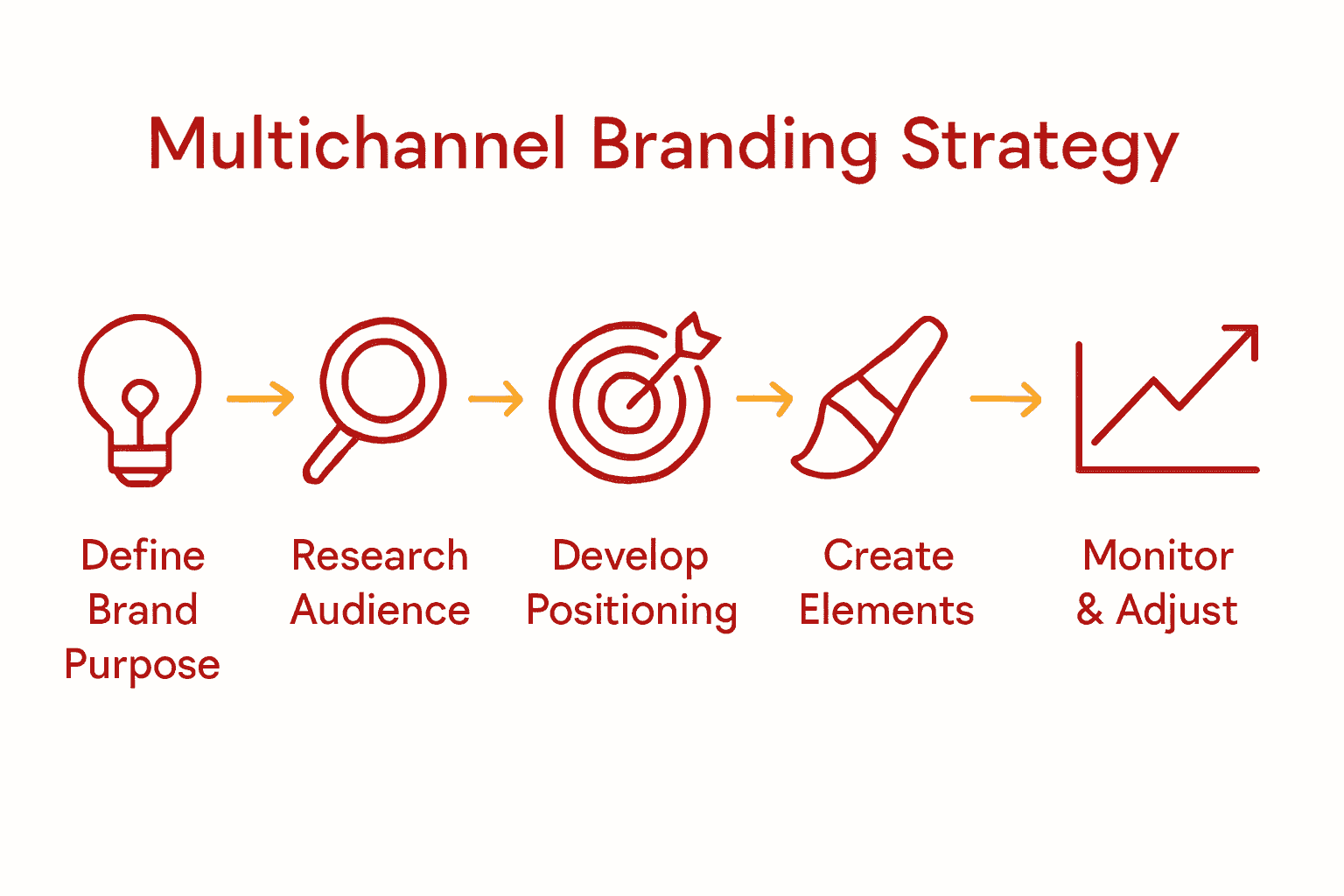
| Main Insight | Explanation |
|---|---|
| 1. Define your brand purpose clearly | Your brand purpose should go beyond profits and connect with consumer values to build trust and guide strategies. |
| 2. Understand your target audience deeply | Develop customer personas that explore motivations and emotional triggers, using qualitative and quantitative methods for insights. |
| 3. Create a unique brand positioning | Identify your brand’s unique strengths and develop a clear positioning statement that resonates emotionally with your audience. |
| 4. Ensure consistent branding elements | Develop a comprehensive style guide for logos, colors, and messaging to maintain a uniform brand identity across all channels. |
| 5. Monitor performance and make adjustments | Regularly assess your brand’s performance through KPIs and customer feedback, staying agile to adapt to changing market dynamics. |
Defining your brand purpose and core values establishes the foundational identity that will guide your multichannel growth strategy. According to research from Wharton, a brand’s purpose should transcend mere financial goals and connect deeply with consumer values to build lasting trust.
To craft a meaningful brand purpose, start by reflecting on why your business truly exists beyond making money. Ask yourself fundamental questions: What problem are you solving? How do you improve customers’ lives? What unique value do you bring to your market? Your purpose needs to be authentic and actionable a genuine commitment that resonates with both your team and your target audience.
Successful brand purposes typically blend aspirational goals with practical impact. As insights from HStalks reveal, a well-defined purpose acts as a unifying force that aligns internal teams and external stakeholders. This means your brand purpose should be clear enough to guide decision making yet flexible enough to adapt as your business grows.
When articulating your core values, focus on 3-5 fundamental principles that represent your brand’s character. These values should be specific, memorable, and genuinely reflective of your organization’s authentic identity. They will serve as a north star for your multichannel strategy, helping you maintain consistency across different platforms and customer touchpoints.
Warning: Avoid generic or trendy values that sound good but lack genuine meaning. Your values must truly represent your brand’s unique personality and operational philosophy. The most powerful brand purposes emerge from honest self reflection and a commitment to making a meaningful difference.
Understanding your target audience and market landscape is crucial for developing an effective multichannel branding strategy. Research from arXiv highlights the importance of clustering consumer preferences by analyzing personality and socio demographic variables to identify precise market segments and brand positioning opportunities.
Begin your market research by developing comprehensive customer personas that go beyond basic demographics. Dive deep into psychographic factors such as motivations, pain points, lifestyle preferences, and purchasing behaviors. Use a mix of qualitative methods like interviews and surveys and quantitative approaches including data analysis and market segmentation tools. Pay special attention to understanding the emotional triggers and aspirational needs of your potential customers.
According to insights from Academic, consumers develop profound spiritual and emotional connections with brands. This means your research should not just collect data but explore the deeper psychological landscape of how customers perceive value and form brand relationships. Map out the entire customer journey across different touchpoints and identify where your brand can create meaningful interactions.
Compile your research findings into a structured document that captures key insights about your target market.
 Include detailed profiles of ideal customer segments, their purchasing behaviors, preferred communication channels, and potential barriers to engagement. This comprehensive research will serve as a strategic foundation for developing targeted marketing approaches across multiple channels.
Warning: Avoid relying solely on surface level data. Truly understanding your audience requires continuous learning and a willingness to challenge your initial assumptions. Market dynamics evolve rapidly so your research should be an ongoing process of discovery and adaptation.
Developing a unique brand positioning is crucial for standing out in a crowded marketplace. Research from SCIRP emphasizes that core brand values are fundamental in differentiating your brand and offering consumers distinct benefits that set you apart from competitors.
Start by conducting a thorough competitive analysis to identify gaps in the market and opportunities for differentiation. Map out what your competitors are doing and pinpoint areas where you can offer something truly unique. According to insights from ACFA, brand values function similarly to human values and play a critical role in predicting consumer choices across different cultural contexts. This means your positioning should go beyond surface level attributes and tap into deeper emotional and psychological connections.
To craft your unique positioning, focus on developing a compelling brand narrative that highlights your distinctive strengths. Consider what makes your brand exceptional does it solve a problem in a novel way? Do you have a unique approach or philosophy? Identify 3 to 5 key differentiators that truly set you apart from others in your market. These could be related to your product quality, customer service, innovative approach, or underlying mission.
Your brand positioning statement should be clear, concise, and memorable. It needs to answer three critical questions: Who are you? What do you do? Why does it matter? This statement will serve as a strategic anchor for all your marketing efforts and help maintain consistency across multiple channels.
Warning: Avoid generic positioning that could apply to any brand in your industry. Your unique positioning must be specific, authentic, and genuinely reflective of your brand’s core identity. For deeper insights into crafting a powerful brand strategy, check out our guide on brand positioning explained.
Creating consistent branding elements is fundamental to building a recognizable and professional brand identity across multiple channels. Research from DRPress highlights key components of brand identity including logo, color scheme, typography, and messaging that work together to create a cohesive visual and communication strategy.
Start by developing a comprehensive brand style guide that serves as a blueprint for all your marketing materials. This guide should include specific details about your brand visual elements such as primary and secondary color palettes, precise logo usage guidelines, typography specifications, and tone of voice guidelines. According to insights from IJARSCT, maintaining uniform branding elements has a significant impact on consumer behavior and brand recognition.
Ensure your branding elements are adaptable across different platforms while maintaining core consistency. This means your logo should look crisp and clear whether it appears on a small mobile screen, a large billboard, or printed marketing materials. Create multiple versions of your logo for different contexts horizontal, vertical, monochrome, and full color versions that maintain your brand essence.
Develop a robust color palette that goes beyond just visual appeal. Choose colors that emotionally resonate with your target audience and reflect your brand personality. Create clear rules about color proportions, acceptable color combinations, and how these colors should be used across different mediums such as digital platforms, print materials, packaging, and advertisements.
Warning: Avoid inconsistent branding that can confuse your audience. Every touchpoint from your website to social media profiles, email signatures to product packaging should reflect a unified brand identity. For additional strategies on building a strong brand presence, check out our guide on essential branding tips for startups.
Implementing a cohesive brand strategy across multiple channels requires a sophisticated and nuanced approach. According to insights from the Journal of Marketing, successful multichannel brand deployment involves creating a unified narrative that resonates consistently across different platforms and customer touchpoints.
Begin by mapping out all potential channels where your brand will interact with customers. This includes digital platforms like social media, websites, and email marketing as well as offline channels such as physical stores, print advertising, and customer service interactions. Each channel should reflect your core brand identity while being strategically adapted to its unique communication context. Research from the Journal of Marketing Research emphasizes the importance of maintaining a seamless brand experience that feels intentional and integrated across every interaction.
Create channel specific guidelines that provide flexibility while preserving your brand essence. This means developing platform tailored content strategies that respect each channel unique characteristics. Your Instagram content might be more visual and playful, while your LinkedIn presence could be more professional and informative. However, the underlying messaging, visual style, and brand voice should remain unmistakably consistent.
Develop a centralized content management system that allows your team to track and maintain brand consistency. This system should include templates, approved messaging frameworks, and clear protocols for creating and approving content across different channels. Regularly audit your brand presence to ensure that every communication reflects your established brand strategy.
Warning: Avoid creating disconnected brand experiences that confuse your audience. Consistency is key to building trust and recognition. For more comprehensive strategies on multichannel brand integration, explore our guide on omnichannel retail strategy.
Monitoring and adjusting your brand strategy is a critical ongoing process that ensures continued growth and relevance. According to the Journal of Public Policy & Marketing, effective performance monitoring requires a comprehensive approach to tracking marketing metrics and understanding their broader strategic implications.
Establish a robust set of key performance indicators (KPIs) that capture different dimensions of your brand performance. These should include quantitative metrics like sales volume, market share, and customer acquisition costs as well as qualitative indicators such as brand sentiment, customer loyalty, and perceived brand value. Research from the Journal of Marketing Management emphasizes the importance of developing a holistic framework that goes beyond surface level numbers to capture the nuanced realities of brand performance.
Implement a systematic review process that allows for regular and rigorous assessment of your brand strategy. Schedule quarterly or biannual comprehensive reviews where you analyze performance data, gather customer feedback, and assess how well your current approach aligns with your original brand objectives. This should be an adaptive process where you remain open to making strategic pivots based on emerging insights and changing market conditions.
Utilize advanced analytics and listening tools to gather real time insights about your brand performance. This includes tracking social media sentiment, monitoring customer reviews, analyzing engagement metrics across different channels, and conducting periodic customer satisfaction surveys. The goal is to create a dynamic feedback loop that allows you to quickly identify and respond to shifts in customer perception or market dynamics.
Warning: Do not become complacent or overly attached to your existing strategy. Successful brands remain agile and willing to evolve. Be prepared to make bold adjustments when data suggests a new approach might better serve your customers and business goals. For more strategies on maintaining a responsive brand approach, explore our guide on omnichannel marketing integration.
Struggling to translate your brand purpose and unique positioning into consistent, powerful customer experiences across multiple platforms? The challenge of defining core values and implementing seamless brand strategy at scale can feel overwhelming. Your readers want clear guidance on building an authentic identity that drives emotional connection and measurable growth while navigating complex channels like Amazon FBA and DTC. They need solutions that transform in-depth audience research and strategic brand elements into cohesive omnichannel execution that stands out and drives sales.
At Reddog Group, we specialize in exactly that. Our Digital & Business Consulting Services by Reddog Consulting offer tailored strategies to help you develop, refine, and implement a unified brand presence across online marketplaces and retail environments. With extensive experience managing over 50 brands and 30,000 SKUs, we focus on creating memorable brand narratives and consistent visuals that captivate your target audience and boost revenue. These solutions ensure your brand resonates emotionally while optimizing product listings, inventory, and marketing campaigns.
Ready to turn your step-by-step branding plans into unstoppable growth? Visit our homepage now to discover how Reddog Group can partner with you for sustainable success. Don’t wait to build a brand that truly connects and multiplies sales across every channel.
Defining a brand purpose begins with reflecting on why your business exists beyond profit. Ask yourself what problem you solve and how you can improve your customers’ lives. Take 1-2 days to write down your thoughts and identify your unique value proposition.
To conduct effective market research, develop detailed customer personas that include not just demographics but also motivations and purchasing behaviors. Use a combination of interviews and surveys to gather qualitative insights. Aim to complete this research within 4-6 weeks to inform your branding decisions.
Unique brand positioning differentiates your business from competitors and communicates distinct benefits to your customers. Start by identifying 3-5 key differentiators that clearly highlight what sets your brand apart. Formulate a concise brand positioning statement within 1-2 weeks to guide your campaign messaging.
Creating a comprehensive brand style guide is essential for maintaining consistent branding elements such as logos, color schemes, and typography. Outline specific guidelines for usage in various formats and media. Develop this guide within the first month of your branding strategy to ensure uniformity across all channels.
Establish key performance indicators (KPIs) that include both quantitative metrics like sales volume and qualitative indicators such as customer loyalty. Regularly review these metrics quarterly to identify trends and adjust your strategy accordingly. Implement a comprehensive review process to stay aligned with changing market conditions.
You should adjust your brand strategy based on performance data at least once every quarter. Regularly analyze customer feedback and engagement metrics to remain responsive to evolving market dynamics. Set a specific timeline, such as 30 days post-review, to implement any necessary changes.
Leave a comment: