
Published: March 2020 | Last Updated:December 2025
© Copyright 2026, Reddog Consulting Group.

Over 80 percent of American retailers believe that strong competitor strategy analysis is the difference between staying ahead or falling behind in their industry. As markets evolve rapidly, understanding every move of rival businesses matters more than ever for those aiming to grow and protect their market share. This guide reveals how American companies can turn deep competitor insights into real, long-term advantages for their retail operations.
| Point | Details |
|---|---|
| Competitor Strategy Analysis Importance | Systematic competitor analysis helps retailers understand their competitive landscape and devise strategic advantages. |
| Types of Competitive Strategies | Retailers utilize cost leadership, differentiation, and focus strategies to carve out unique market positions and enhance competitiveness. |
| Driving Omnichannel Growth | Leveraging Big Data analytics is crucial for developing adaptive omnichannel strategies that align with consumer behavior and market trends. |
| Avoiding Common Pitfalls | Successful retailers must align strategic intent with organizational capabilities while being aware of emerging market disruptors to avoid missteps in competitive analysis. |
Competitor strategy analysis represents a systematic approach for retailers to understand their competitive landscape and develop strategic advantages. By comprehensively identifying current and potential rivals, businesses can assess strengths, weaknesses, and potential market responses with remarkable precision.
At its core, effective competitor assessment involves understanding the strategic gap between a company’s intentions and its actual capabilities. This critical process enables organizations to develop robust competitive advantages through strategic resource alignment. Retailers who master competitive landscape analysis can proactively position themselves against market challenges and emerging threats.
Successful competitor strategy analysis typically involves several key components:
By systematically examining these dimensions, retailers can develop nuanced insights that transform competitive intelligence into actionable strategic initiatives. The goal is not simply to react to market changes, but to anticipate and proactively shape competitive dynamics.
Retail competition encompasses diverse strategic approaches that businesses leverage to gain market advantages. Strategic retail typologies demonstrate that successful retailers utilize multiple competitive tactics across different dimensions, including product design, promotional strategies, service delivery, pricing models, and geographic positioning.
Traditional competitive strategies in retail draw from established frameworks like Porter’s model, which identifies three primary strategic approaches. Retailers employ cost leadership, differentiation, and focused strategies to create unique market positioning. Each strategy represents a distinct approach to competing effectively:
Successful retailers often blend these strategic approaches, recognizing that pure adherence to a single model may limit competitive potential. The most adaptive organizations develop nuanced strategies that combine elements of cost efficiency, product uniqueness, and targeted market segmentation. By understanding and implementing these strategic frameworks, retailers can develop robust competitive approaches that resonate with their specific market dynamics and customer preferences.
Big Data Analytics-enabled dynamic capabilities have transformed how retailers understand and leverage competitive intelligence across multiple sales channels. By integrating sophisticated analytical approaches, businesses can create more responsive and adaptive omnichannel strategies that respond quickly to market shifts and consumer behavior patterns.

The strategic implications of comprehensive competitor analysis extend far beyond traditional market research. Theoretical models exploring interactions among unorganized, organized, and e-retail channels reveal critical insights into optimal pricing strategies and consumer behavior dynamics. These advanced analytical frameworks enable retailers to develop nuanced approaches that balance performance across different sales platforms.
Key drivers of omnichannel growth through competitive analysis include:
Successful omnichannel growth requires more than just collecting data. Retailers must transform analytical insights into actionable strategies that create seamless customer experiences across digital and physical retail environments. By embracing sophisticated competitive analysis techniques, businesses can develop more intelligent, responsive, and ultimately more profitable retail approaches.
Porter’s Five Forces Framework provides retailers with a comprehensive analytical approach to understanding competitive dynamics. By systematically evaluating industry competition, potential new entrants, supplier bargaining power, buyer influence, and threat of substitute products, businesses can develop nuanced strategic insights that go beyond surface-level market observations.
Understanding competitive heterogeneity is crucial for developing effective comparison strategies. Different firms within the same industry can adopt unique strategic approaches based on their distinctive resources and capabilities. This recognition allows retailers to move beyond generic benchmarking and develop more sophisticated competitive analysis techniques.
Key tools and benchmarks for effective competitive comparison include:
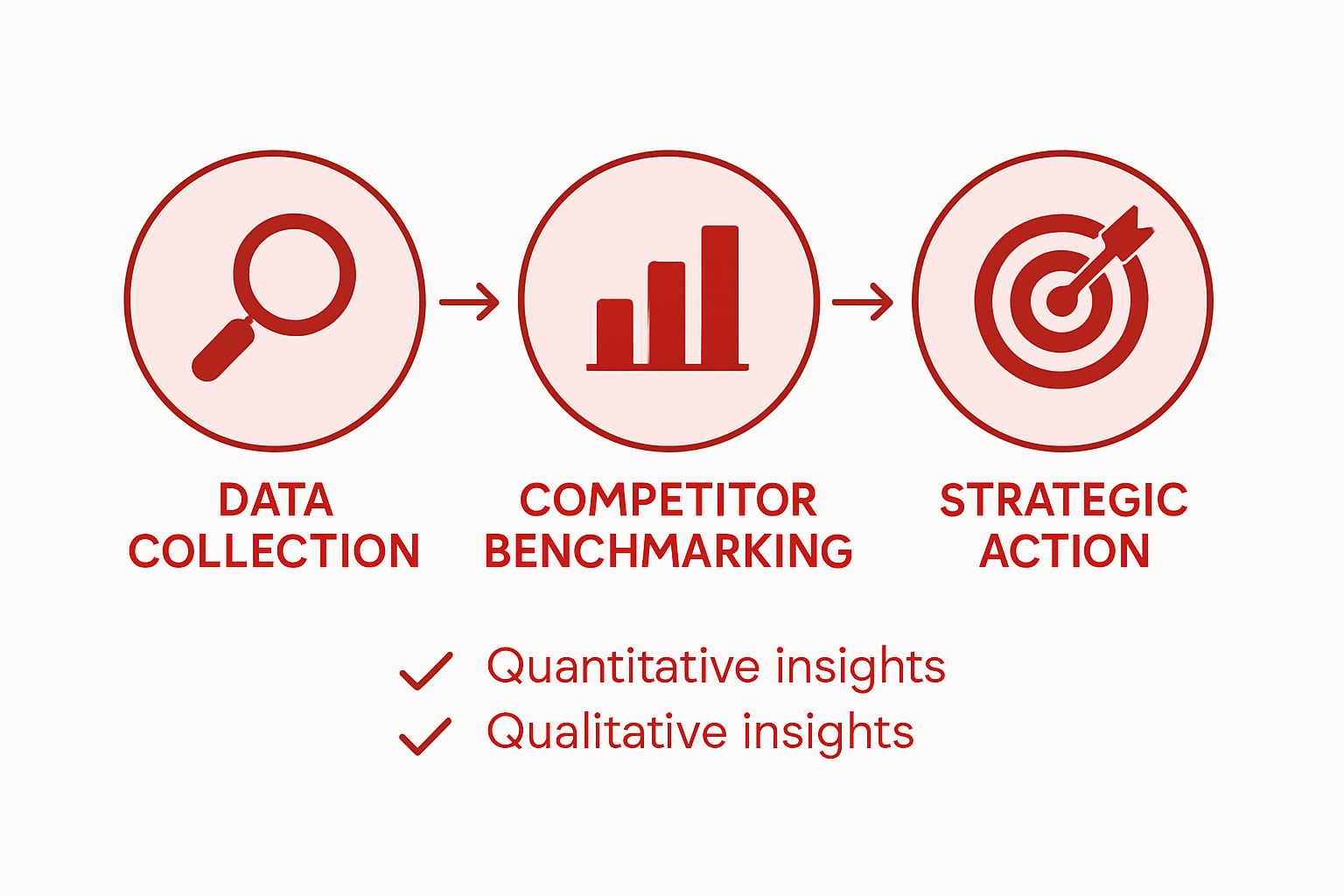
Successful competitive analysis requires a multidimensional approach that combines quantitative metrics with qualitative insights. Retailers must continuously refine their analytical frameworks, recognizing that competitive landscapes are dynamic and ever-changing. By developing robust, flexible comparison tools, businesses can transform raw data into actionable strategic intelligence that drives meaningful competitive advantages.
Misaligning strategic intent with core organizational capabilities represents one of the most critical challenges in competitive analysis. Retailers frequently make the mistake of developing strategies that sound promising but cannot be effectively implemented due to fundamental resource constraints or organizational limitations.
Comprehensive competitive analysis requires integrating insights across multiple levels - including industry trends, strategic group dynamics, and individual firm capabilities. Many organizations falter by examining these dimensions in isolation, which leads to fragmented and ineffective strategic planning.
Common competitive analysis pitfalls include:
Successful retailers develop robust safeguards against these pitfalls by maintaining flexible, adaptive analytical frameworks. By cultivating a comprehensive understanding of competitive dynamics and consistently challenging existing assumptions, businesses can transform potential weaknesses into strategic opportunities for growth and innovation.
Understanding your competitors is not just about watching their moves. It is about strategically aligning your unique capabilities to win in an ever-changing retail marketplace. The article highlights common challenges such as misaligned resources, strategic myopia, and fragmented analysis that can hold retailers back from seizing real growth opportunities. If you are striving to harness data-driven insights, dynamic omnichannel strategies, and precise benchmarking to elevate your brand’s position, expert guidance is essential.
At Reddog Group, we specialize in bridging the gap between analysis and action. Our proven expertise in omnichannel retailing, Amazon FBA, DTC channels, and integrated marketing empowers your business to convert competitive intelligence into measurable revenue growth. With hands-on experience managing over 30,000 SKUs and delivering tailored marketing campaigns, we ensure your organization is never caught off guard by shifting market dynamics.
Take control of your retail future now.
Explore how our strategic consulting services can help you avoid common pitfalls and leverage competitor insights for sustainable omnichannel success. Visit Reddog Group to start transforming your retail strategy today and experience the power of smart competitive analysis combined with actionable solutions.
Competitor strategy analysis is a systematic approach retailers use to understand their competitive landscape by identifying current and potential rivals. It helps assess strengths, weaknesses, and market responses, enabling businesses to develop strategic advantages.
Understanding competitor strategies is essential for retailers as it allows them to proactively position themselves against market challenges, anticipate competitive responses, and create robust strategic initiatives that lead to sustained competitive advantages.
Key components of effective competitor strategy analysis include market positioning, capability assessment, strategic forecasting, and performance benchmarking. These elements help retailers gain nuanced insights into their competitive environment.
Retailers can leverage competitive analysis for omnichannel growth by integrating data from multiple sales channels, mapping consumer behavior, benchmarking against competitors, and developing dynamic pricing strategies that respond to market conditions.
Leave a comment: