
Published: March 2020 | Last Updated:May 2026
© Copyright 2026, Reddog Consulting Group.

TL;DR:
- Influencer marketing offers emerging CPG brands a trusted connection to niche consumers, driving both online and offline growth. Effective strategies require authenticity, transparent disclosures, targeted creator partnerships, and rigorous ROI measurement. Building long-term creator relationships and integrating influencer content into broader marketing workflows enhances brand credibility and sustained profitability.
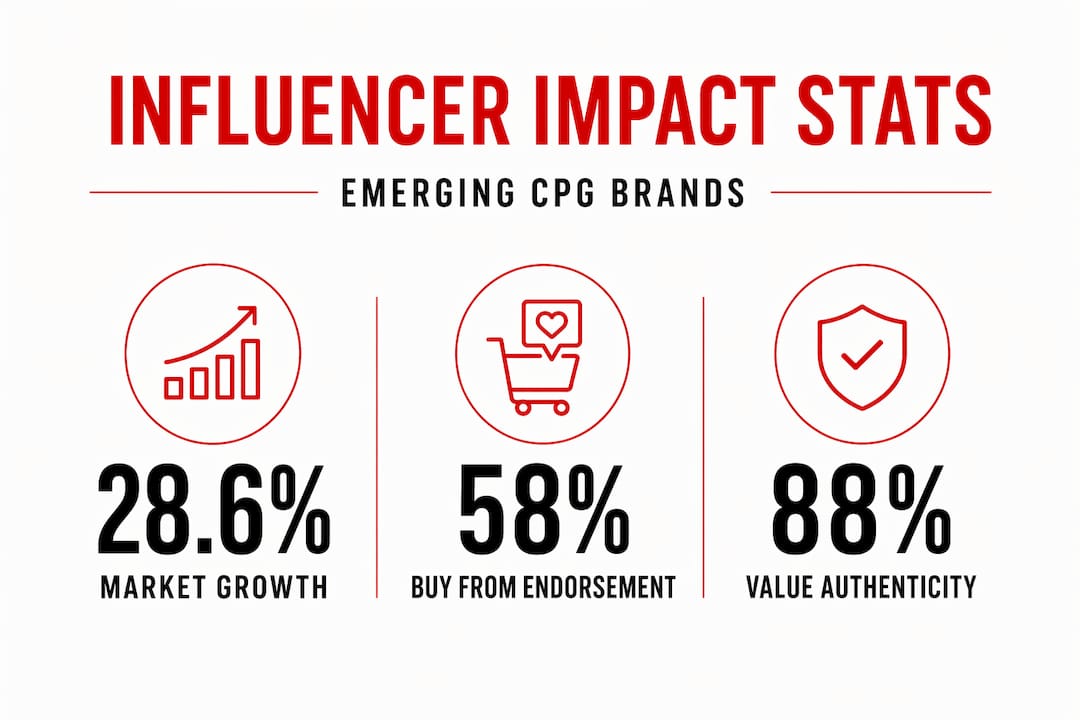
Influencer marketing is booming — and deeply distrusted at the same time. That paradox is exactly why so many emerging CPG brands get burned by it. They see the numbers, jump in, and wonder why the results don’t match the hype. Here’s the reality: 58% of consumers over 18 have purchased a product because of an influencer endorsement. That’s not a small signal. But converting that potential into profitable, repeatable growth requires more than a gifting program and a prayer. This guide explains why use influencer marketing — and how to do it in a way that actually moves your brand forward.
Influencer marketing is not a fancier form of display advertising. That distinction matters more than most brands realize. Traditional advertising interrupts. Influencer marketing inserts your product into a conversation a consumer was already having with someone they follow, trust, and often treat like a peer. Creators build trust with specific communities over years, and that trust is the actual asset you’re accessing when you run an influencer campaign.
For emerging CPG brands, this is especially powerful. You’re not yet a household name. You don’t have the ad budget of a legacy brand. What you do have is a product story worth telling and niche consumers who are actively looking for better options. Influencer marketing gives you a direct line to those people through a voice they already believe.

The platforms where this plays out most effectively for CPG right now are Instagram, TikTok, and YouTube. Instagram excels at lifestyle integration and product aesthetics. TikTok drives discovery at scale with short-form content that can turn an unknown brand into a trending item overnight. YouTube is slower but builds deeper consideration, particularly for products that benefit from demonstration or explanation.
The formats that consistently work for CPG brands include:
The thread connecting all of them is authentic brand storytelling. When a creator uses your hot sauce in their meal prep video because they genuinely like it, that’s not an ad. That’s a recommendation. Understanding the local marketing strategies for CPG that complement this kind of creator-led awareness helps you build a complete regional and national presence.
Here’s the uncomfortable truth behind the numbers. 88% of consumers say authenticity matters, yet a significant portion of those same consumers believe influencers are fake or misrepresent products. That’s not a contradiction. It’s a warning.
The trust gap exists because too many brands treat influencer campaigns like paid placements with a human face. They send a script. They demand specific language. They push disclosure to the smallest possible font in the most buried location. The result is content that audiences see through immediately, and when that happens, your brand doesn’t just fail to gain trust. You actively borrow the creator’s credibility and return it damaged.
Disclosure is directly tied to consumer trust and campaign legitimacy. When audiences know a creator is being paid or gifted, and the creator is still enthusiastic and honest, trust can actually increase. The problem isn’t the paid relationship. It’s hiding it.
Common pitfalls that erode authenticity include:
“The brands that win with influencer marketing aren’t the ones with the biggest budgets. They’re the ones who treat creators like collaborators, not contractors.”
Pro Tip: Before signing any creator agreement, review their last 20 posts for tone, comment quality, and audience interaction. A creator with 80,000 followers whose audience actively engages in real conversation is worth far more than one with 500,000 followers and generic emoji comments.
Measuring the actual return from these campaigns is non-negotiable. Building strong frameworks for measuring influencer marketing ROI keeps your spending accountable and your strategy improvable.
The market size alone tells a compelling story. Influencer marketing is growing at a 28.6% CAGR, fueled largely by social commerce and omnichannel discovery. That growth rate isn’t accidental. It reflects where consumer attention lives and how purchase decisions are actually being made.
For CPG brands specifically, the impact operates on two tracks simultaneously.
Online: Influencer content drives product discovery on TikTok Shop, Amazon, and DTC sites. A single well-placed video can trigger a surge in search volume for your brand name, lift conversion rates on your Amazon listing, and generate backlinks and social proof that compound over time.
Offline: Retail buyers pay attention to social velocity. If your product is gaining traction on social media, regional grocery buyers and distributors notice. Several brands have negotiated shelf placement partly on the strength of demonstrated influencer-driven demand. Your social proof becomes a sales tool in wholesale conversations.
| Channel | Influencer marketing impact | Metric to track |
|---|---|---|
| Amazon | Increased product search and listing conversions | Branded search volume, unit session percentage |
| TikTok Shop | Direct purchase from short-form content | GMV per video, affiliate commission data |
| DTC website | Traffic spikes and email list growth | UTM-tracked visits, first-time buyer rate |
| Wholesale/retail | Social proof supporting buyer conversations | Follower growth, engagement rate trends |
| In-store | Consumer familiarity at point of purchase | Sales velocity post-campaign, reorder rate |
With 58% of consumers making purchases based on influencer endorsements, the direct sales impact is real. But the indirect benefits, including brand recall, category authority, and retail buyer confidence, often deliver even more long-term value.
Pro Tip: When running an influencer campaign timed to a retail launch, provide creators with in-store availability information so their audience knows exactly where to buy. This bridges the online discovery gap to offline purchase and gives your retail partner data on consumer pull-through.
Brands that think about influencer marketing as part of a broader channel mix rather than a standalone tactic get significantly better results. Understanding how to coordinate this across touchpoints is central to any serious omnichannel growth strategy for CPG brands.
Strategy is where most emerging brands either win or waste money. Here’s how to build one that holds up.
Step-by-step approach:
The influencer tier you choose shapes everything from engagement quality to cost.
| Influencer tier | Follower range | Engagement rate | Best use case for CPG |
|---|---|---|---|
| Nano | 1K to 10K | Very high (5-10%+) | Hyper-local, community trust, low cost |
| Micro | 10K to 100K | High (3-6%) | Niche category reach, strong conversion |
| Macro | 100K to 1M | Moderate (1-3%) | Broad awareness, retail buyer credibility |
| Mega/celebrity | 1M+ | Low (0.5-1%) | Mass awareness, usually poor CPG ROI |
For most emerging CPG brands in the $500K to $20M revenue range, micro and nano creators deliver the best return per dollar spent. They have tighter audience relationships, lower fees, and conversion rates that often outperform macro creators by a wide margin.
Legal compliance is not optional. Brands must disclose material connections clearly and conspicuously, beyond what platform tagging tools alone provide. In practice, this means the creator should verbally or textually state the partnership in plain language, not rely on a small “paid partnership” label that disappears in two seconds.
Ongoing creator partnerships with genuine creative freedom consistently outperform one-off campaigns in both credibility and sustained audience impact. Building a roster of three to five creators who know your brand and can speak to it naturally over months is more valuable than activating 50 creators once.
Pro Tip: Include creators in product feedback loops before campaigns launch. Creators who genuinely shaped a product or knew about it before the public feel authentic enthusiasm that audiences immediately sense.
Connecting your influencer work to a well-structured content marketing workflow keeps campaigns from running in isolation and ensures creator content feeds your broader marketing ecosystem.
Most brands treat influencer marketing like a media buy with a face attached. They set a budget, activate a batch of creators, watch the content go live, see a bump in impressions, and move on. The problem isn’t the tactic. It’s the mindset.
When you treat every campaign as episodic, you pay the education tax every single time. Each new creator has to learn your brand story, your tone, your product claims, your competitive positioning. You get content that’s technically compliant and mostly mediocre. Then you wonder why the ROI doesn’t justify the spend.
The brands that break this cycle understand that influencer marketing’s growth is threatened by trust erosion unless authenticity is designed in from the start. Not layered on at the end. Not handled by adding a disclosure. Authenticity built into the creator selection, the brief, the content structure, and the ongoing relationship.
There’s also a governance problem that founders rarely discuss openly. When budgets are tight and growth pressure is high, compliance shortcuts are tempting. You skip the vetting. You look the other way on a disclosure that’s technically buried. You let a creator make a product claim you know is exaggerated because the content performed well. Each of those decisions is a liability you’re building quietly into your brand.
The answer isn’t less influencer marketing. It’s more intentional influencer marketing. That means tighter creator vetting, stricter disclosure standards, longer partnerships, and metrics tied to real business outcomes rather than vanity metrics like reach and impressions. Consistent tracking through frameworks for measuring ROI from influencer investments is what separates brands that learn from campaigns from brands that repeat mistakes at higher spend.
The most underutilized competitive advantage in this space is patience. Brands willing to build two or three creator relationships over a full year, rather than blasting 40 creators in Q4, come out with authentic advocates who drive real purchase behavior. That’s not a media strategy. That’s brand building.
Knowing why influencer marketing works is one thing. Building a strategy that fits your channel mix, margin structure, and growth stage is another.
At RedDog Group, we work with CPG founders and marketing leaders who need more than general advice. Our free strategy session is built around your actual numbers: contribution margin by channel, inventory velocity, retail expansion readiness, and how influencer marketing fits into a profitable growth plan. No generic frameworks. No pitch decks full of impressions. Just a focused conversation about what’s working, what isn’t, and where the real margin opportunity lives in your brand’s growth strategy.
Influencer marketing connects brands with niche communities through trusted creators, driving awareness and purchase intent in ways that paid ads rarely match for brands without established consumer recognition.
Authenticity directly determines whether audiences act on a recommendation or scroll past it. Campaigns that feel scripted or hide the paid relationship lose the creator’s trust equity, which is the only real asset you’re paying to access. 88% of consumers say authenticity matters, yet widespread skepticism persists.
Platform labels alone are insufficient — disclosures must be clear and conspicuous, using plain language so audiences immediately understand the brand relationship, not buried in hashtags or visible for less than two seconds.
Use unique discount codes, affiliate links, and UTM-tracked landing pages to connect creator activity to actual revenue. Track conversions, engagement rates, and cost per acquisition rather than impressions, which tell you nothing about profitable growth.
Leave a comment: