
Published: March 2020 | Last Updated:May 2026
© Copyright 2026, Reddog Consulting Group.

TL;DR:
- Unified retail is a platform-based operating model that consolidates all sales channels and backend systems into a real-time, integrated ecosystem. Unlike omnichannel, it enables instant data sharing across systems, improves order speed, reduces costs, and enhances inventory accuracy. Successful implementation requires careful data cleanup, a composable architecture, and a focus on operational and human factors to build a foundation for AI-driven growth.
Most retail professionals have heard the term “unified retail” and assumed it means the same thing as omnichannel. It does not. What is unified retail, exactly? It is a platform-centric operating model that integrates every sales channel and backend system into a single, real-time ecosystem. Not just a consistent storefront experience across channels. Not just synchronized email and in-store promotions. A true architectural merger of your POS, OMS, CRM, inventory, and payment systems into one living, breathing data environment. The difference between omnichannel and unified retail is the difference between coordinated and connected.
| Point | Details |
|---|---|
| Unified retail is not omnichannel | Unified retail integrates backend systems in real time; omnichannel links front-end experiences with nightly syncs. |
| Real-time data drives profit | Dynamic order routing powered by live inventory data can reduce delivery costs by 15 to 30 percent. |
| Data cleanup comes first | Normalizing customer records and SKU data before migration prevents system logic failures and poor customer experiences. |
| People matter as much as tech | Store associates need real-time tools to make physical locations active fulfillment hubs, not just sales floors. |
| AI depends on unified foundations | AI-driven retail execution only works reliably when it operates on a single, real-time data layer. |
The unified commerce definition describes it as a retail operating model that integrates all sales channels — online, in-store, mobile, and marketplaces — along with all backend systems into one real-time platform. That means every touchpoint your customer uses and every operational tool your team depends on speaks the same language, at the same moment.
Here is what gets unified under this model:
The architectural backbone here matters. Unified commerce requires a composable, API-first design so every channel accesses the same live database. This is not something you patch together with middleware. Middleware creates fragile connections, introduces latency, and eventually collapses under the weight of scaling operations.
The concept of a single source of truth is central to all of this. When your inventory count is the same in your warehouse management system, your eCommerce storefront, and your store associate’s mobile device simultaneously, you stop making decisions on outdated information. That single point of truth is what separates unified retail from the systems most brands are currently running.
Pro Tip: Before evaluating any unified retail solutions, map your current data flow on paper. Identify where your systems currently sync and how often. That gap analysis will reveal exactly where your biggest margin and fulfillment risks are hiding.
The benefits of unified retail go well beyond cleaner operations. The performance data is specific and significant.
| Benefit | Impact | Source Context |
|---|---|---|
| Purchase frequency | Omnichannel customers buy 70% more than single-channel shoppers | Unified experience drives repeat engagement |
| Delivery cost reduction | 15 to 30 percent lower with dynamic order routing | Real-time inventory enables smarter fulfillment sourcing |
| Order processing speed | 25 percent faster with integrated systems | Eliminates manual data transfers and reconciliation delays |
| Inventory accuracy | Reduces out-of-stock and overstock exposure | Real-time stock data across all channels |
| Annual inventory losses | Retailers lose $1.8 trillion annually from poor inventory management | Unified data closes the gap |
Dynamic order routing is where the cost savings get concrete. When a customer places an order online, a unified system evaluates every possible fulfillment source in real time, including your stores, your distribution centers, and any third-party logistics partners. It selects the most efficient option based on current stock levels, proximity to the customer, and shipping cost. Without real-time inventory data, that logic breaks down entirely.
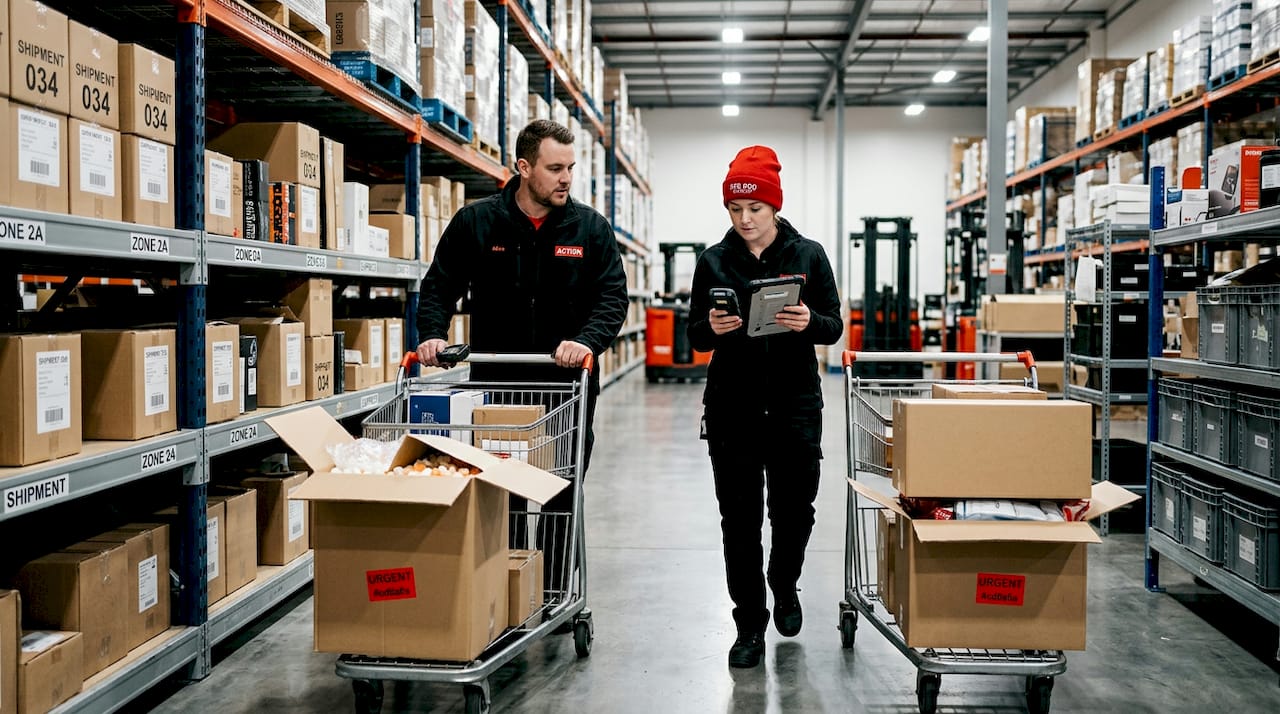
The 25 percent reduction in order processing time matters more than it sounds. When you eliminate the manual reconciliation between your eCommerce platform, warehouse system, and customer service records, you are not just saving labor hours. You are cutting the delay between an order being placed and it being fulfilled, which directly affects customer satisfaction and repeat purchase rates.
For CPG brands scaling across Amazon, Walmart, DTC, and brick-and-mortar simultaneously, these numbers are not abstract. Every percentage point of fulfillment cost saved goes straight to contribution margin. That is the metric that actually determines whether your growth is profitable or just busy.
Adopting a unified retail strategy is not a plug-and-play project. The technology decisions matter, but they are rarely the hardest part.
The most common pitfalls that derail implementations include:
The failure pattern Reddog sees repeatedly is brands investing in the technology layer while treating the operational and people layer as an afterthought. A well-chosen platform with poor adoption produces worse results than an imperfect platform with excellent execution discipline.
Pro Tip: Build your implementation timeline to include a data audit phase of at least four to six weeks before any system migration begins. Clean data going in means accurate decisions coming out.
These three terms get used interchangeably in vendor decks and analyst reports, but they describe fundamentally different operating models. Understanding the distinctions clarifies why the role of unified commerce is not just another iteration of omnichannel thinking.
Multichannel retail means selling across multiple platforms — your website, Amazon, a physical store. Each channel typically operates independently with its own inventory, pricing logic, and customer data. There is minimal coordination and no shared backend.
Omnichannel retail adds a coordination layer. You work toward consistent branding, pricing, and customer experience across channels. But the backend systems often remain separate, syncing on scheduled intervals rather than in real time. Omnichannel often relies on nightly syncs that create latency. A customer who buys in-store at 6 PM may still see that item in stock on your website at midnight.
Unified retail is the architectural evolution of both. It integrates backend systems rather than just connecting front-end touchpoints. Every channel accesses the same live data simultaneously. The distinction is not cosmetic. It changes what decisions you can make, how fast you can make them, and how reliably AI tools can act on your behalf.
The table below captures the core differences:
| Dimension | Multichannel | Omnichannel | Unified retail |
|---|---|---|---|
| Backend integration | None | Partial | Full, real-time |
| Data sync frequency | Manual or periodic | Nightly or scheduled | Continuous |
| Inventory accuracy | Channel-specific | Approximate | Single source of truth |
| AI-readiness | Low | Limited | Full execution capability |
| Customer data view | Fragmented | Partially unified | Complete and live |
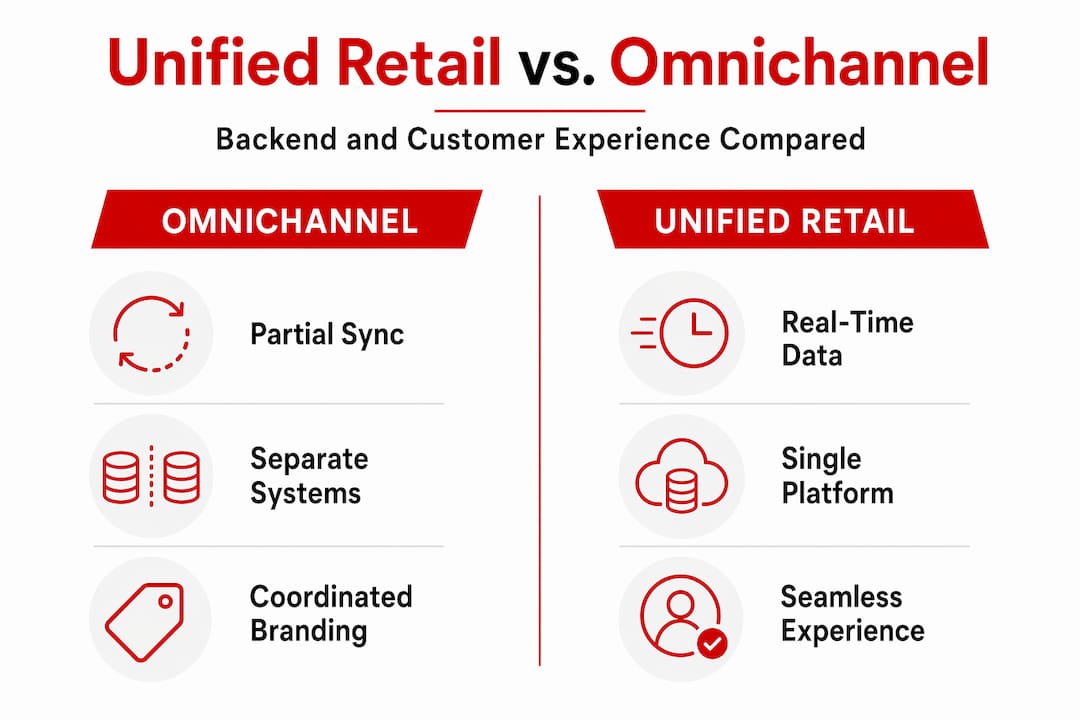
The practical implication for brands scaling across channels: omnichannel can get you to a certain level of coordination, but it cannot support the real-time decisions that competitive retail now requires. Unified commerce forms the foundation for AI-driven execution because AI tools need live, accurate, complete data to move from recommending actions to actually executing them.
Knowing what unified retail is and actually moving toward it are two different challenges. Here is a practical sequence for getting started.
The most important thing to understand about how to implement unified retail is that it is a staged process, not a single deployment. Most brands build toward full unification over 12 to 24 months, prioritizing the integrations with the highest margin and operational impact first.
I have worked with enough CPG brands scaling across channels to have a clear view of the pattern. Most of them believe they have an omnichannel problem when they actually have an architecture problem. They keep adding channels, adding tools, and adding headcount to manage the gaps between systems. The result is operational complexity that grows faster than revenue.
What I have learned is that the jump from omnichannel thinking to unified retail thinking is not primarily a technology decision. It is a mindset shift. Omnichannel asks: “How do we connect these channels?” Unified retail asks: “How do we make every channel an expression of one operating system?”
The brands that get this right do not necessarily have the biggest budgets. They have clarity on what a single source of truth actually means for their operations. And they invest in that foundation before layering on features. The ones who struggle are the ones who buy a unified commerce platform and then configure it to replicate their existing fragmented workflows. You cannot get unified outcomes from fragmented thinking.
The future of AI-powered retail execution depends entirely on this foundation. AI cannot execute against data it cannot trust. Brands building a unified architecture today are not just solving a current operations problem. They are building the infrastructure for what retail competition will look like in three years.
— Reddog
If this article has surfaced questions about where your current systems are leaking margin or holding back growth, that is worth a focused conversation.
Reddog works with CPG brands in the $500K to $20M range who are scaling across channels and need clarity on what each channel actually contributes to profit. A free 30-minute strategy call with our team can cover your current channel economics, inventory velocity, or fulfillment cost structure. No generic advice. We look at your actual numbers. If you are ready to evaluate whether your retail architecture is built for profitable growth, book your strategy call and we will bring the analytical framework with us.
Unified retail is an operating model where all sales channels and backend systems share one real-time data platform. Unlike omnichannel, which coordinates the customer experience, unified retail integrates the actual systems behind it.
Omnichannel aligns the front-end customer experience across channels but often relies on scheduled data syncs. Unified retail integrates backend systems so every channel accesses the same live data simultaneously.
The primary benefits include a 25 percent reduction in order processing time, delivery cost savings of 15 to 30 percent through dynamic routing, and significantly higher purchase frequency from customers who engage across multiple channels.
Not necessarily all at once. Most implementations are staged, starting with real-time inventory integration and OMS consolidation. The key requirement is moving toward an API-first composable architecture rather than patching legacy systems with middleware.
No. Growth-stage CPG brands scaling across Amazon, Walmart, DTC, and wholesale face the same fragmentation problems at smaller scale. The margin impact of poor inventory accuracy and slow order routing is often proportionally larger for smaller brands than for enterprise retailers.
Leave a comment: