
Published: March 2020 | Last Updated:August 2026
© Copyright 2026, Reddog Consulting Group.

Omnichannel shopping is a retail model where every channel, a website, an app, a marketplace listing, a physical shelf, pulls from the same customer profile, the same inventory pool, and the same pricing logic. Shoppers move between them without friction, and the business tracks them as one person, not five disconnected sessions. For CPG brands, this matters because omnichannel customers spend roughly 4% more in-store and 10% more online than single-channel buyers.
TL;DR:
- Achieving true omnichannel requires real-time data synchronization across customer profiles, inventory, and pricing, unlike multichannel which often runs independently.
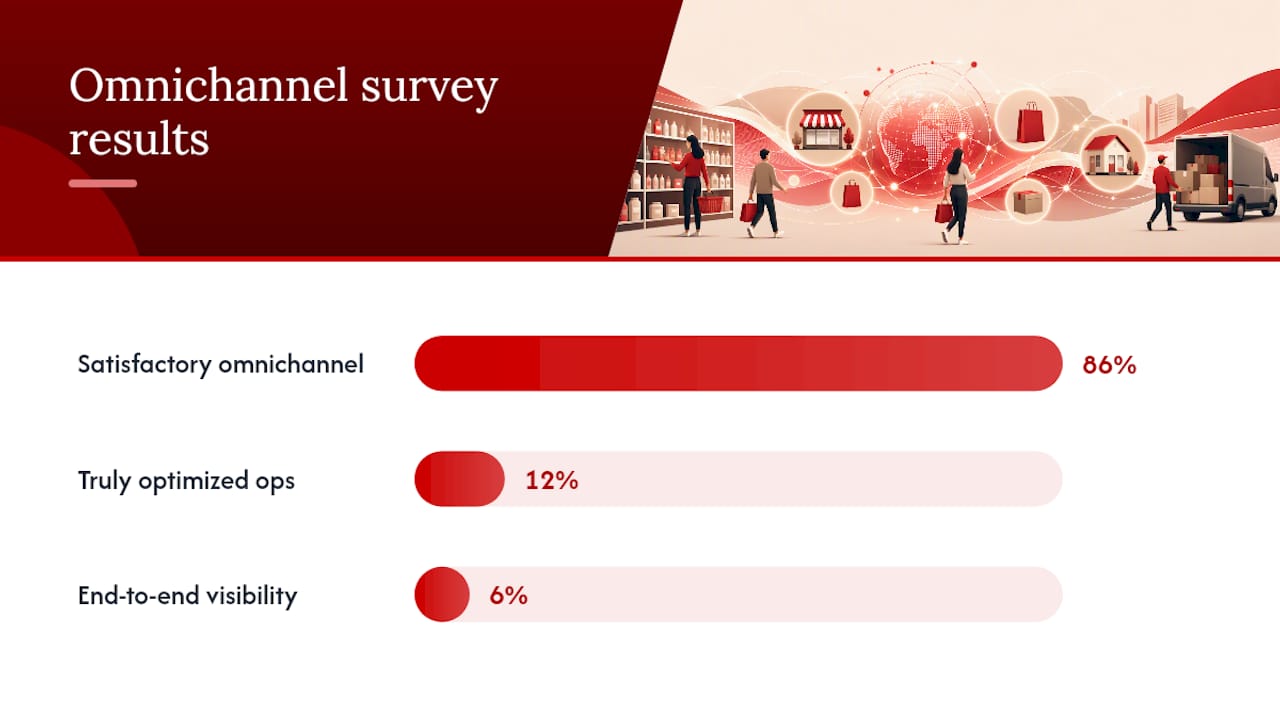
- Only 12% of companies report fully optimized omnichannel operations, despite 86% calling their performance satisfactory, highlighting significant internal gaps.
- Operational savings stem from smarter fulfillment routes, such as local store or warehouse shipping, reducing costs and improving delivery speeds.
- Starting with three to four prioritized channels and pilot programs helps avoid overspending and ensures systems can support each step effectively.
- Major pitfalls include poor data quality, inventory misplacements, overextension across channels, and misaligned partner contracts that erode margins.
Omnichannel retail means one customer record, one view of inventory, and one consistent price no matter where someone shops. If a customer adds a jar of hot sauce to their cart on your app, then opens your website on their laptop, that cart should still be there. If a store associate looks up their loyalty status, it should match what your call center sees.
Multichannel retailing is different, and it’s the model most CPG brands actually run today without realizing it. You might sell on Amazon, run a Shopify store, and stock Walmart shelves, but each channel operates independently. Inventory doesn’t sync. Pricing drifts. A customer who buys on Amazon is a stranger to your DTC site.
Single-channel is simpler still, one primary sales point and nothing to reconcile. The tradeoff is you miss shoppers who want to discover on social media, compare on marketplaces, and buy from wherever is most convenient that day.
What separates the three in practice:
A shopper who searches your product on TikTok, checks stock at a nearby Target, then buys online for pickup is living the omnichannel experience. That entire path only works if your systems talk to each other in real time.
Unified commerce is the technical foundation that makes omnichannel possible. Instead of stitching together point integrations between separate systems, unified commerce runs on a single source of truth: one database that every channel reads from and writes to. Point integrations, by contrast, sync data on a delay, which is why so many brands still show “in stock” online for a product that sold out in-store an hour earlier.
Four systems typically carry the weight:
When these pieces are wired correctly, they unlock capabilities customers actually notice: real-time stock visibility, click-and-collect, a cart that survives a device switch, and loyalty points that accrue no matter where you bought.
The gap between ambition and reality here is wide. An Anchanto survey of 408 commerce decision-makers found 86% call their omnichannel performance satisfactory, but only 12% describe their operations as truly optimized, and just 6% have end-to-end visibility across channels.
Pro Tip: Audit whether your inventory feed updates in minutes or in batches overnight. That single detail, batch versus real-time sync, explains most of the “we’re omnichannel but customers still hit stockouts” complaints we hear from CPG operators.
The financial case starts with spend behavior. Beyond the HBR figures on higher in-store and online spend, Gartner’s research on unified commerce points to roughly 25% higher customer retention and a 30% reduction in fulfillment operational costs for companies running unified strategies versus fragmented ones.
The numbers that matter: Omnichannel customers spend more per transaction, stick around longer, and cost less to fulfill when inventory sits in the right place. That combination is rare in retail economics, most levers improve one metric while hurting another.
Operational savings come from smarter fulfillment orchestration. When an OMS can route an order to the nearest store instead of a distant warehouse, shipping costs drop and delivery speed improves simultaneously. That’s not a marketing win, it’s a margin win, and it shows up directly in contribution margin per order.
Strategically, omnichannel brands personalize better because they see the whole customer, not a channel fragment, and they’re more resilient when one channel underperforms. A brand overexposed to a single marketplace has no cushion if that platform changes its algorithm or fee structure overnight.
Readiness comes down to five categories, and skipping any one of them creates the exact silos that undermine everything else.
McKinsey’s analysis of omnichannel excellence makes a point worth repeating: this transformation demands cross-functional organization and supply-chain redesign, not just new software. Plenty of brands have “efforts under way,” but few report being fully on track, because the org chart never caught up to the tech stack.
Pro Tip: Before buying any platform, map which system currently owns the “truth” for inventory count. If three systems each claim to be authoritative, you have a governance problem no software purchase will fix.
Trying to unify every channel at once is the single most common way CPG brands blow their omnichannel budget without seeing results. A staged rollout works better.
Mid-market brands that succeed tend to unify three specific layers first: inventory, customer record, and pricing or promotion logic, rather than trying to be everywhere on day one, according to AiSolv’s mid-market omnichannel framing. That discipline is what separates a working pilot from an expensive science project.
Most omnichannel failures trace back to a handful of repeatable mistakes:
Insist on clear SLAs with fulfillment partners and model the margin impact before signing anything, not after.
Two tiers of KPIs matter here, and conflating them is a common measurement mistake.
Primary, customer-level KPIs include omnichannel customer lifetime value, cross-channel repeat purchase rate, and assisted-revenue, sales influenced by a discovery channel like social media even when the purchase happened elsewhere. NielsenIQ’s omnichannel guide frames measurement, activation, and consumer experience as the three pillars brands need to track together, not in isolation.
Operational KPIs include percentage of orders fulfilled from store, stockout rate, fulfillment cost per order, and inventory turns.
Last-click attribution routinely undercounts omnichannel performance because it credits whichever channel closed the sale, ignoring the discovery channel that started the journey. Customer-level event tracking and incremental margin measurement give a truer picture of what’s actually driving growth.
The right setup depends heavily on your business model:
Most brands chase channel expansion before they’ve earned the right to. We’d argue the opposite order works better: measure contribution margin by channel first, then decide where omnichannel investment actually pays back.
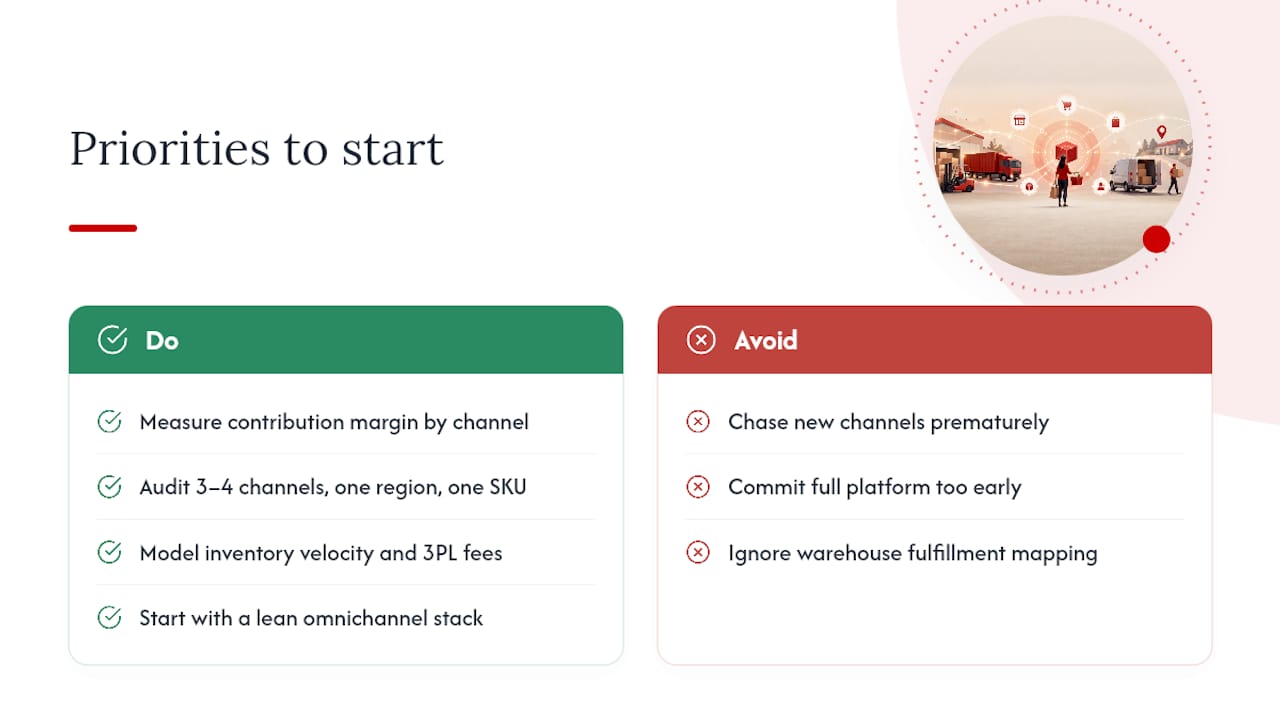
Inventory velocity and 3PL cost structure are the real gatekeepers here. A brand can have a beautifully unified customer profile and still bleed margin if stock sits in the wrong warehouse or a 3PL contract has fee tiers nobody modeled against actual order volume. For brands in the $500K to $20M range, we typically recommend starting with a focused audit, three to four channels, one region, one SKU family, before committing budget to a full platform buildout. A lean omnichannel stack unifying inventory, customer, and pricing data can run roughly 0.15% to 0.40% of revenue when scoped correctly, and that’s a fraction of what most brands waste chasing every new channel simultaneously.
Supply-chain segmentation matters more for CPG than most categories realize. Perishability windows and SKU velocity differences mean the network design question, which warehouse or store fulfills which order, is a profitability lever, not just a logistics detail, a point McKinsey’s CPG omnichannel research backs up directly.
— Reddog
Reddog works with CPG founders and operators who need clarity on what each channel actually contributes to profit, not just top-line growth. If you’re weighing an omnichannel buildout, a Walmart WFS expansion, or you suspect your 3PL fee structure is quietly eating margin, a structured review beats guessing every time.
Our omnichannel strategy resources and 7 omnichannel strategy types walk through the frameworks we use with clients, but the fastest way to see where your channel mix stands is a direct conversation. We offer a free 30-minute strategy call focused on contribution margin, channel economics, inventory velocity, or growth planning, whichever is most pressing for your business right now. Book your strategy call and bring your current channel breakdown; we’ll help you see where the margin is actually hiding.
For deeper research, see NielsenIQ’s omnichannel guide, McKinsey’s CPG omnichannel analysis, and Anchanto’s State of Omnichannel Commerce report. For implementation specifics, explore Reddog’s guide on omnichannel marketing integration and boosting omnichannel sales.
Leave a comment: