
Published: March 2020 | Last Updated:August 2026
© Copyright 2026, Reddog Consulting Group.

A digital marketing strategy is a long-term plan that aligns digital channels and measurement to specific business outcomes, revenue, contribution margin, or distribution, not a list of tactics. Success means every channel has a defined job, spend ties back to profit, and acquisition connects to retention. For CPG founders and operators, that translates to clearer margin visibility and fewer wasted dollars chasing vanity metrics.
TL;DR:
- A digital marketing strategy must connect specific business goals with profit-driven channel roles, not just focus on vanity metrics.
- Building buyer personas, mapping their journeys, and assigning clear funnel roles to channels are essential for long-term success.
- Accurate attribution, using multi-touch or data-driven models, is critical to understanding true channel contribution and avoiding misallocated spend.
- Regular auditing of assets, data, and tracking lineage helps prevent leaks and ensures campaigns are effectively linked to profit margins.
- Focusing on contribution margin and operational fundamentals, like tracking and fulfillment, avoids common failures often mistaken for marketing issues.
A real strategy rests on five interlocking parts. Skip one, and the whole structure gets shaky, usually in the form of spend that looks fine on a dashboard but does nothing for your P&L.
Start with buyer personas and journey mapping. You need to know not just who buys your product, but where they discover it, what makes them hesitate, and which touchpoint, Amazon search, a Walmart shelf, a retargeting ad, actually closes the sale. Layer in a value proposition that flexes by channel: the pitch that wins on a product detail page is rarely the pitch that wins in a 15-second social clip.
From there, strategy assigns each channel a role. Some drive awareness, some convert, some retain. Content pillars should map directly to those roles instead of existing as a generic calendar of posts. Underneath all of it sits your data and martech foundation, analytics, a customer data platform if you’re mature enough, and clean tagging, because none of the rest matters if you can’t measure it.
The core elements include:
Top-performing CPG companies invest more heavily in this kind of omnichannel infrastructure and prioritize long-term channel economics over short-term wins, which is exactly the discipline smaller brands tend to skip when cash is tight.
Strategy is the destination and the logic for getting there. Campaigns are the specific initiatives you run to move toward it. Tactics are the individual actions inside those campaigns, an ad set, an email sequence, a promotion. Confuse the three, and you end up optimizing tactics that serve no strategic goal at all.
Here’s how one objective should cascade:
When that chain breaks, usually because a marketing team gets a tactic request with no strategic anchor, you get wasted spend and attribution nobody can explain. A campaign that performs well on last-click ROAS but erodes margin isn’t a win; it’s a strategy failure wearing a campaign’s clothes.
Building a digital marketing plan doesn’t require a 40-page deck. It requires sequence discipline. Here’s the order that actually works for CPG brands scaling across channels.
Pro Tip: Before you scale any paid channel, confirm the tracking lineage from ad creative to landing page to order to warehouse fulfillment. Missing links in that chain are the most common reason brands kill campaigns that were actually working.
Auditing your own website and PDP performance before you add spend is a cheap insurance policy against scaling a leak.

Vanity metrics, impressions, clicks, even top-line ROAS, tell you almost nothing about whether a channel is making you money. Seventy percent of CPG executives say precision analytics are critical to ROI optimization, yet most lack the infrastructure to tie spend directly to P&L outcomes. That gap is where strategies quietly fail.
Attribution models each carry trade-offs:
Omnichannel data matters here too. Fusing retailer and manufacturer data lets CPGs compare cross-channel ROI properly, though most brands are still early in that adoption curve and need real governance to make it work.
At minimum, build a tracking foundation with consistent event naming, a UTM convention every team member actually follows, and a weekly or monthly reporting cadence that reviews channel-level contribution margin, not just spend and revenue. Data-driven marketing at scale can lift net sales 3% to 5% and improve marketing efficiency by 10% to 20%, but only once the underlying analytics infrastructure is actually in place. Understanding how to calculate contribution margin by channel is the step most brands skip, and the one that changes every decision after it.

You don’t need software to start. A single page with six fields does the job.
For a hypothetical CPG snack launch prioritizing margin over volume, the objective might specify a contribution margin target within a few months, the primary channels might be Amazon FBA for reach and DTC for margin recapture, and the 90-day roadmap would front-load PDP optimization before any paid spend. A volume-first version of the same template would flip that order, spend first, optimize margin second, so decide which goal governs before you fill in the boxes without relying on specific percentage targets.
Most CPG marketing “failures” aren’t marketing failures. They’re operational ones, broken tracking, missing fulfillment linkage, no retention flow, that get blamed on the channel instead of the backend. We consistently see brands over-index on ROAS while ignoring contribution margin, which quietly funds unprofitable growth. Our discovery audits run a five-point check: margin by channel, tracking lineage, inventory velocity, retention infrastructure, and channel role clarity. Fix those first.
— Reddog
Reddog gives CPG founders something most digital agencies never offer: a strategy conversation built around contribution margin and channel economics, not just top-line growth promises. If you’re a founder or operator doing $500K to $20M in revenue and wondering whether your Amazon, Walmart, DTC, and wholesale channels are actually pulling their weight profitably, this is worth 30 minutes.
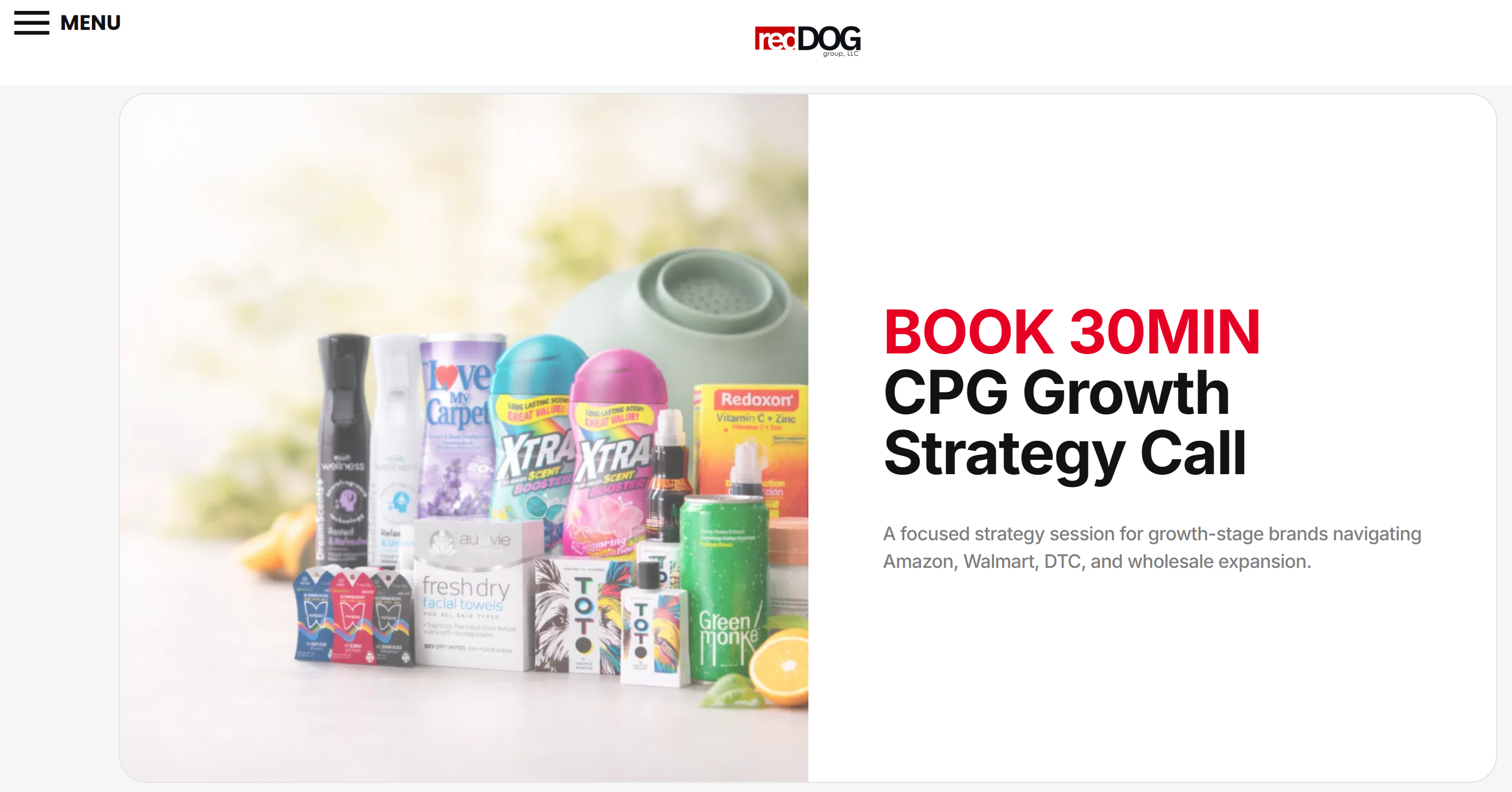
The call is a practical review, not a pitch. We’ll look at where your channel economics stand, how your inventory velocity is trending, and where growth planning might be masking margin leaks. No pressure, no scripts, just a clear-eyed look at your numbers. Book your free 30-minute strategy call and bring your toughest channel question.
For more on omnichannel execution, review Building Omnichannel Excellence from McKinsey, plus Reddog’s guide on measuring marketing ROI.
Leave a comment: