
Published: March 2020 | Last Updated:July 2026
© Copyright 2026, Reddog Consulting Group.

TL;DR:
- D2C sells products directly to customers, allowing brands to control their storefront, pricing, and data.
- Success depends on managing operational costs such as fulfillment, returns, and customer retention.
D2C, or direct-to-consumer, is a sales model where brands market and sell products directly to end customers without using third-party retailers, wholesalers, or distributors. The brand owns the entire transaction: the storefront, the pricing, the customer relationship, and the data. This model has reshaped how growth-stage CPG brands think about channel strategy, because it removes the margin tax that traditional retail imposes at every step. Understanding what D2C means operationally, not just conceptually, is what separates founders who scale profitably from those who grow revenue while bleeding cash.
D2C is defined by one structural fact: the brand controls the full path from product to customer. There are no retail buyers to negotiate with, no wholesale minimums to hit, and no shelf-space fees to absorb. The brand builds its own storefront, typically through a platform like Shopify, and drives traffic through owned and paid channels including email, SMS, Meta ads, and search.
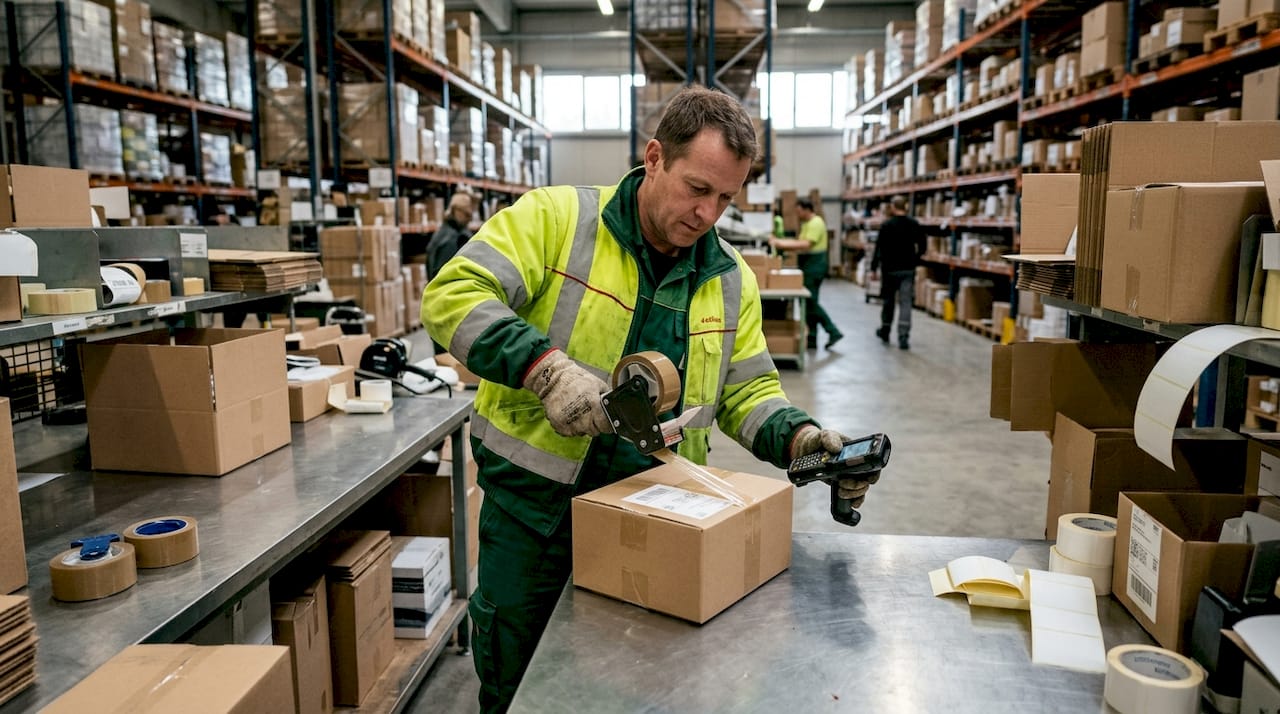
Operationally, a D2C brand runs four core functions simultaneously.
The fourth function is the one most founders underinvest in early. Retention marketing margins can reach +77% compared to cold acquisition margins of -22%. That gap is not a rounding error. It is the difference between a profitable D2C operation and one that burns cash indefinitely.
Pro Tip: Set up post-purchase email flows before you scale paid acquisition. Retention infrastructure built early compounds over time; retrofitting it after growth is expensive and disruptive.
The core financial argument for direct-to-consumer selling is margin recapture. D2C brands reclaim 30–50% margin typically taken by retail intermediaries. That is real money that stays in the business rather than flowing to a distributor or a big-box retailer.
The catch is that recaptured margin does not automatically become profit. D2C brands absorb costs that traditional retail used to carry: paid media, customer service, packaging, returns processing, and last-mile shipping. Each of these is a line item that erodes gross margin before you reach contribution margin.
“Profit bottlenecks in D2C are almost never in the product cost. They hide below the gross margin line in fulfillment and returns. Most founders don’t find them until the P&L is already under pressure.”
Returns are a particularly sharp pain point. Return to Origin rates can reach 39%, which effectively doubles the cost per order when you factor in reverse logistics and restocking. Simultaneously, last-mile delivery costs have risen 22% since Q1 2025, compressing margins further on every shipment.
The table below maps the key financial trade-offs founders face when evaluating the D2C model.
| Factor | D2C impact |
|---|---|
| Gross margin | Higher: 30–50% recaptured from intermediaries |
| Marketing spend | Higher: brand funds all customer acquisition |
| CAC payback period | 6–12 months vs. 1–3 months for marketplace models |
| Returns cost | High: RTO rates up to 39% double cost per order |
| Customer data ownership | Full: brand owns all first-party data |
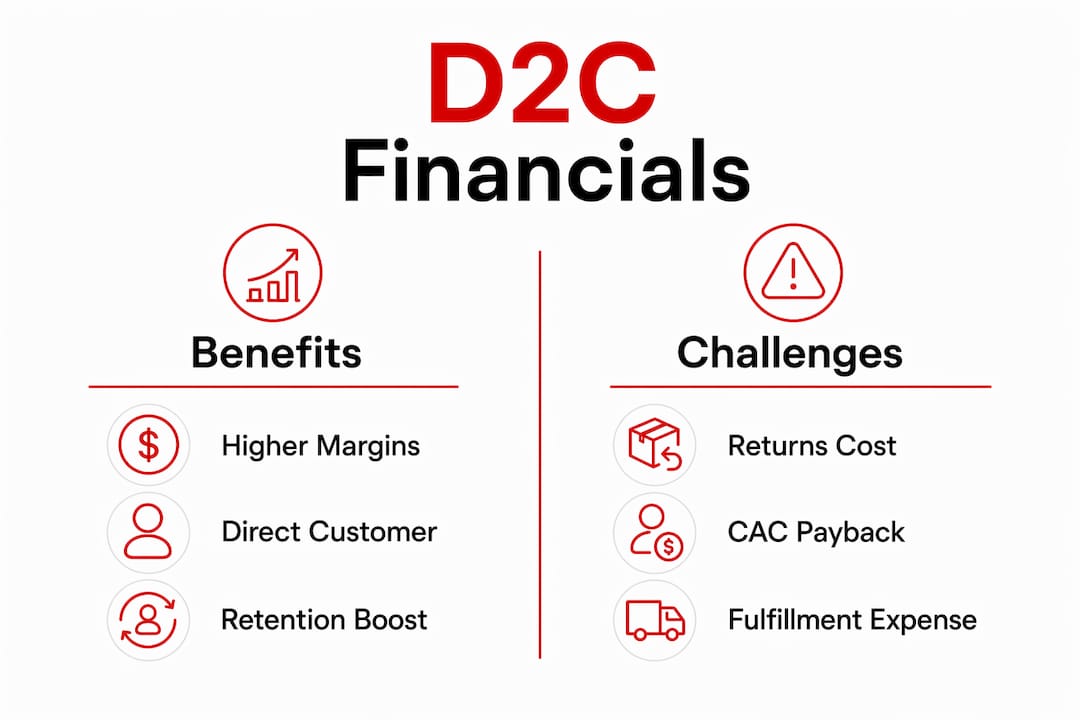
CAC payback periods of 6–12 months create a cash flow timing problem that catches many founders off guard. You spend money acquiring a customer today, but you may not recover that spend for nearly a year. Planning for that gap is not optional. It is a survival requirement.
Pro Tip: Model your CAC payback before scaling ad spend. If your average order value and repeat purchase rate do not support a sub-12-month payback, fix the retention economics first.
The direct-to-consumer model is often confused with B2C retail or marketplace selling. The distinctions matter because they determine who owns the customer relationship and how margin flows.
Marketplace sales are not true D2C because the marketplace owns the customer data and the relationship. When a brand sells on Amazon, Amazon controls the buyer’s email address, purchase history, and future remarketing. The brand fulfills the order but loses the data asset that makes D2C valuable in the first place.
Here is how the main models compare across the dimensions that matter most to founders:
| Model | Margin control | Customer data | Acquisition complexity | Volume potential |
|---|---|---|---|---|
| D2C (brand-owned) | High | Full ownership | High | Moderate |
| Wholesale/retail | Low | None | Low | High |
| Marketplace | Medium | None | Medium | High |
| Hybrid (D2C + wholesale) | Mixed | Partial | Medium | High |
Key distinctions to keep in mind:
Most founders treat the D2C versus wholesale decision as ideological. It is actually a financial strategy question. The right answer depends on your margin structure, cash flow position, and how quickly you can build a retention engine that justifies the higher acquisition cost.
Scaling a D2C brand shifts the challenge from acquiring customers to managing the operational complexity that comes with volume. The brands that sustain profitable growth solve four operational problems well.
Understanding last-mile delivery mechanics is foundational for any D2C operator managing fulfillment at scale. The cost structure of the final mile is where most margin leaks hide, and most founders do not find them until volume exposes the problem.
Pro Tip: Before adding a second fulfillment node, map your top 10 customer zip codes against your current warehouse location. If more than 40% of orders ship three or more carrier zones away, distributed inventory will pay for itself quickly.
Building customer retention into the growth plan from day one is not a marketing preference. It is a margin strategy. Proven retention strategies consistently show that keeping an existing customer costs a fraction of acquiring a new one, and the margin difference compounds at scale.
D2C brands capture more margin per sale than wholesale or marketplace models, but only when fulfillment costs, returns, and customer acquisition payback periods are managed with the same discipline as top-line growth.
| Point | Details |
|---|---|
| Margin recapture is real but conditional | D2C recovers 30–50% lost to intermediaries, but fulfillment and returns can erase those gains. |
| CAC payback requires cash flow planning | Expect 6–12 months to recover acquisition costs; model this before scaling ad spend. |
| Retention outperforms acquisition | Retention marketing margins reach +77% vs. -22% for cold acquisition; build this infrastructure early. |
| Marketplace selling is not D2C | Platforms like Amazon own the customer data; true D2C requires a brand-owned storefront. |
| Operational costs are the hidden risk | Last-mile costs rose 22% in 2025; dimensional weight audits and distributed inventory protect margin. |
At Reddog, we work with CPG brands across the $500K–$20M revenue range, and the pattern we see most often is this: founders launch D2C with a strong product and a paid media plan, hit early revenue milestones, and then stall when the unit economics stop working. The culprit is almost never the product. It is the operational layer underneath.
The brands that scale D2C profitably treat fulfillment as a financial function, not a logistics afterthought. They audit carrier rates quarterly, right-size their packaging, and build retention programs before they need them. They also understand that the D2C versus wholesale decision is not permanent. The best operators run both channels intentionally, using wholesale volume to fund D2C infrastructure and using D2C data to sharpen wholesale positioning.
The uncomfortable truth about D2C in 2026 is that the marketing side has never been more competitive or expensive. The operational side, however, still has significant room for margin improvement that most brands have not touched. That is where the real opportunity sits.
— Reddog
Growing a D2C brand takes more than a good product and a paid media budget. The brands that scale profitably understand their contribution margin by channel, control their fulfillment costs, and build retention systems that reduce dependence on expensive cold acquisition.
Reddog works with CPG founders and operators to review channel economics, inventory velocity, and fulfillment cost structure in a focused 30-minute strategy session. If you are building or scaling a D2C operation and want a clear picture of where your margin is going, book a free strategy call with the Reddog team. No pitch. Just a practical review of your numbers and where the levers are.
D2C, or direct-to-consumer, means a brand sells products directly to the end customer without using retailers, distributors, or wholesalers. The brand owns the storefront, the pricing, and the customer relationship.
Amazon is a marketplace, not a D2C channel. When you sell on Amazon, Amazon owns the customer data and the relationship. True D2C requires a brand-owned storefront where the brand controls all first-party data.
The main risks are high customer acquisition costs with payback periods of 6–12 months, rising last-mile delivery expenses, and return rates that can reach 39%, all of which compress contribution margin below the gross margin line.
D2C can be profitable for small brands when retention economics are built early and fulfillment costs are actively managed. Brands that rely solely on paid acquisition without a retention strategy typically struggle to reach sustainable margins.
Yes. A hybrid model that combines D2C with wholesale or marketplace channels is common among growth-stage brands. The key is tracking contribution margin by channel so each channel earns its place in the mix.
Leave a comment: