
Published: March 2020 | Last Updated:March 2026
© Copyright 2026, Reddog Consulting Group.

Walmart Marketplace commands over 100 million monthly visitors, yet many CPG brands still treat it as a secondary channel or ignore it entirely. That’s a costly mistake. This platform offers access to high-intent shoppers actively searching for products, not just browsing. However, succeeding on Walmart requires understanding strict performance standards, leveraging marketing programs like Sales Rewards & Attribution, and integrating marketplace operations into your broader omnichannel strategy. This guide reveals how CPG brands can harness Walmart Marketplace for sustainable, profitable growth in 2026.
| Point | Details |
|---|---|
| Massive reach potential | Walmart Marketplace attracts 100M+ monthly visitors, offering CPG brands significant sales opportunities with high-intent shoppers. |
| Strict performance standards | Sellers must meet rigorous metrics including cancellation rates below 2% and on-time delivery above 95% to avoid penalties. |
| Rewards program impact | The Walmart Sales Rewards & Attribution program drives measurable GMV growth and conversion improvements for participating brands. |
| Operational excellence required | Success demands data-driven strategies, compliance focus, and integration with existing wholesale and DTC channels. |
Walmart Marketplace isn’t just another sales channel. It’s a gateway to over 100 million monthly visitors who arrive with purchase intent already formed. These shoppers trust the Walmart brand, expect competitive pricing, and value fast delivery. For CPG brands, this represents a fundamentally different audience than Amazon’s bargain hunters or DTC site visitors.
The demographic profile skews toward middle-income families seeking everyday essentials, pantry staples, and household goods. These aren’t impulse buyers. They’re planning grocery runs, restocking cabinets, and solving immediate needs. Your products appear alongside trusted national brands, giving emerging CPG companies instant credibility they’d struggle to build independently.
Walmart’s platform growth in 2026 reflects broader shifts in online grocery and household shopping. More consumers now start product searches directly on Walmart.com rather than Google. They compare prices, read reviews, and complete purchases without leaving the ecosystem. This closed-loop behavior creates conversion rates that often exceed other marketplaces when you optimize listings correctly.
Many brands mistakenly assume Walmart Marketplace only works for low-margin commodity products. Wrong. Premium CPG brands thrive here by positioning products as quality alternatives to mass-market options. The key is understanding that Walmart shoppers value both price and quality, not just the lowest cost. Your selling on Walmart Marketplace guide should emphasize value propositions that resonate with practical, budget-conscious buyers who still want superior products.
Complementing your wholesale and DTC channels with Walmart Marketplace creates a powerful omnichannel presence. Shoppers who discover your brand in-store can reorder online. Digital-first customers might try your product on Walmart before committing to a DTC subscription. This cross-channel reinforcement builds brand recognition faster than any single channel approach.
Key advantages of Walmart’s customer base for CPG brands:
Walmart doesn’t tolerate mediocre seller performance. Period. The platform enforces strict metrics that separate professional operators from amateur sellers trying to make quick money. For CPG brands serious about channel growth, these standards aren’t obstacles but quality signals that protect your brand reputation.
You must maintain cancellation rates below 2%, on-time delivery above 95%, valid tracking above 99%, refund rates below 6%, and response rates above 95%. Miss these targets and Walmart removes listings or suspends accounts entirely. No warnings, no second chances. The platform prioritizes customer experience over seller convenience every single time.

Walmart calculates expected delivery dates based on your stated handling time plus carrier transit estimates. You can’t game this system by promising fast shipping then using slow methods. The algorithm tracks actual delivery performance against promises, not just whether you shipped on time. This means your 3PL partner, inventory positioning, and carrier relationships directly impact your seller health.
Shipping method restrictions eliminate corner-cutting temptations. Walmart prohibits stamps, prepaid envelopes, and other budget shipping options that lack proper tracking. Every order requires a valid tracking number uploaded within 24 hours of shipment. This protects customers but also forces sellers to invest in legitimate fulfillment infrastructure.
Customer inquiry response times get measured in hours, not days. You have 24 hours maximum to respond to buyer questions or order issues. Most successful sellers aim for under 12 hours. Automated responses don’t count unless they actually resolve the inquiry. Walmart’s system detects canned replies that don’t address specific customer concerns.
The consequences of failing to meet standards escalate quickly. First, Walmart suppresses your listings in search results, tanking organic visibility. Then they remove individual products that generate complaints. Finally, they terminate seller accounts for repeated violations. Each step costs you sales, but account termination means starting over from zero with no guarantee of reinstatement.
Pro Tip: Build a weekly performance audit into your operations calendar. Review metrics every Monday morning, identify trends before they become violations, and adjust fulfillment processes immediately when numbers drift toward thresholds.
Successful marketplace management for CPG brands requires treating these standards as baseline expectations, not stretch goals. Your systems should comfortably exceed minimums even during peak seasons or supply chain disruptions. Buffer capacity prevents one bad week from triggering account penalties that take months to recover from.
Key performance areas requiring constant monitoring:
Walmart’s Sales Rewards & Attribution program transforms how CPG brands approach marketplace marketing. Instead of guessing which external channels drive Walmart sales, you get precise attribution data showing exactly where conversions originate. This visibility enables smarter budget allocation and reveals hidden growth opportunities most brands completely miss.
The program provides unique product and brand shop links you can deploy across social media, email campaigns, influencer partnerships, and paid advertising. When shoppers click these links and purchase on Walmart.com, you earn detailed insights into that customer journey plus commission on the sale. It’s like having an affiliate program where you’re both the merchant and the affiliate.
Dashboard metrics go far beyond basic sales numbers. You see click-through rates, conversion rates by traffic source, average order values, and customer demographics. This data reveals which marketing channels actually drive profitable Walmart sales versus which just generate clicks that never convert. Many brands discover their Instagram ads perform poorly while email campaigns crush it, or vice versa.
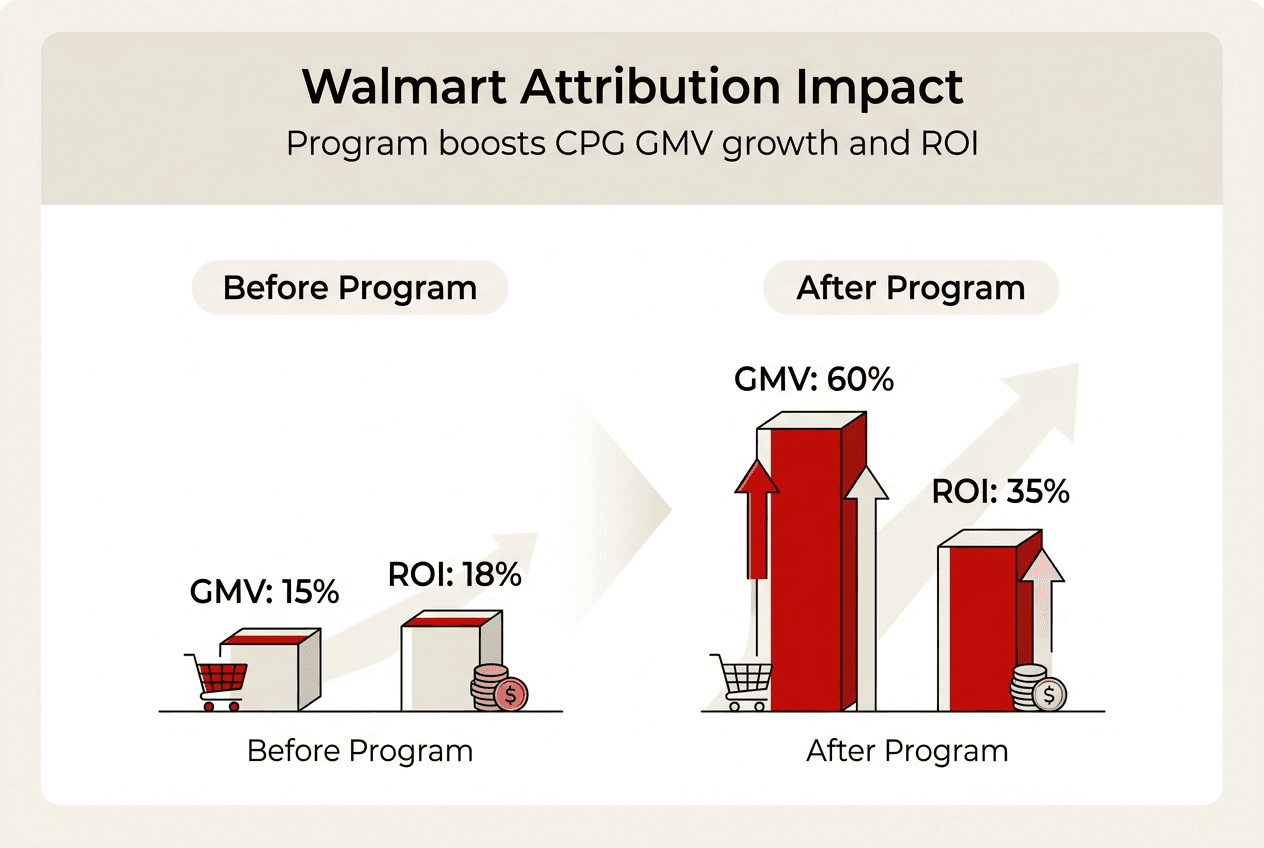
A top-tier toy brand achieved over 60% YoY GMV growth by systematically testing traffic sources through the attribution program. They identified that Pinterest drove their highest-converting traffic, then tripled their Pinterest ad spend while cutting underperforming Facebook campaigns. The result was 30% conversion boost and commission equal to 10% of item sales.
Integrating program insights into your marketing strategy requires connecting Walmart data with your broader analytics. Compare Walmart conversion rates against DTC site performance. Identify whether the same customer cohorts buy on both channels or if you’re reaching entirely different audiences. Use this intelligence to refine messaging, pricing, and product positioning across all touchpoints.
Pro Tip: Create separate attribution links for each marketing campaign and traffic source, then track performance weekly. Kill underperforming campaigns fast and reallocate budget to winners before competitors discover the same opportunities.
The commission structure rewards brands for driving external traffic to Walmart rather than relying solely on organic marketplace discovery. This aligns perfectly with omnichannel strategies where you control brand narrative through owned channels but leverage Walmart’s conversion infrastructure and fulfillment capabilities. You get the best of both worlds without building redundant ecommerce systems.
| Metric | Before Program | After Optimization | Improvement |
|---|---|---|---|
| GMV Growth YoY | 15% | 60% | +300% |
| Conversion Rate | 2.3% | 3.0% | +30% |
| Commission Earnings | $0 | 10% of sales | New revenue |
| Marketing ROI | 2.1x | 4.5x | +114% |
Your conversion rate optimization guide should incorporate attribution insights to understand not just what converts but where high-intent traffic originates. This knowledge transforms generic optimization into targeted improvements that address actual customer behavior patterns rather than assumptions.
Succeeding on Walmart Marketplace requires methodical execution across multiple operational areas. Adhering to Walmart’s standards and leveraging marketing programs forms the foundation, but profitable growth demands strategic thinking about channel positioning and resource allocation.
Start by auditing your current fulfillment capabilities against Walmart’s performance requirements. Can your 3PL consistently ship within 24 hours? Do you have backup carriers when your primary partner experiences delays? Is your inventory management system accurate enough to prevent overselling? Address gaps before launching products, not after violations tank your account health.
Optimize product listings with the same rigor you apply to Amazon. High-quality images, keyword-rich titles, detailed bullet points, and comprehensive descriptions all impact conversion rates. Walmart’s search algorithm rewards listings that answer customer questions and reduce return rates. Invest in professional product photography and copywriting that speaks directly to Walmart’s family-focused shopper base.
Leverage the Sales Rewards & Attribution program from day one. Create unique links for every marketing channel, track performance religiously, and kill underperforming campaigns within 30 days. Most brands waste months on ineffective marketing because they lack attribution data. You have that advantage, so use it ruthlessly.
Balance inventory between Walmart Marketplace and other channels carefully. Stockouts destroy your seller metrics and organic ranking. Overstocking ties up cash and increases storage costs. Use sales velocity data from your first 90 days to establish reorder points that maintain 30 days of inventory during normal periods and 60 days before peak seasons.
Continuously refine your approach using both internal performance data and external market intelligence. Monitor competitor pricing, review customer feedback for product improvement opportunities, and test new marketing channels quarterly. Marketplace success isn’t a set-it-and-forget-it operation.
Actionable steps to maximize Walmart Marketplace performance:
| Factor | Walmart Marketplace | Amazon |
|---|---|---|
| Monthly Visitors | 100M+ | 200M+ |
| Seller Fees | 6-20% category-based | 8-45% with FBA |
| Performance Standards | Very strict, account termination risk | Strict but more warnings |
| Customer Demographics | Middle-income families | Broad, price-sensitive |
| Onboarding Difficulty | Moderate, application review | Easy, instant approval |
Understanding Walmart Marketplace vs Amazon helps you position products appropriately for each platform’s audience. Don’t assume identical strategies work everywhere. Walmart shoppers value different attributes and respond to different messaging than Amazon’s customer base.
Implementing proven tactics to increase ecommerce sales for CPG brands across all channels creates compounding growth effects. A customer who discovers your brand on Walmart might become a DTC subscriber. An Instagram follower might make their first purchase through your Walmart attribution link. Omnichannel success comes from connecting these touchpoints strategically.
Navigating Walmart Marketplace’s complexities while managing Amazon, DTC, and wholesale channels simultaneously stretches most CPG brand teams beyond their expertise. You need partners who understand marketplace economics, performance optimization, and profitable channel expansion strategies that actually work in 2026’s competitive retail environment.
Reddog Group specializes in helping CPG brands maximize omnichannel growth Amazon Walmart TikTok through contribution-margin-first strategies that prioritize profitability over vanity metrics. We’ve guided dozens of brands through successful Walmart Marketplace launches, performance recoveries, and scaling initiatives that doubled GMV while maintaining healthy margins. Our approach combines marketplace technical expertise with broader retail strategy, ensuring your Walmart presence complements rather than cannibalizes other channels. Ready to turn Walmart Marketplace into a profit center? Let’s build your customized Walmart Marketplace brand growth guide together.
Walmart requires sellers to keep cancellation rates below 2%, on-time delivery above 95%, valid tracking above 99%, refund rates below 6%, and seller response rate at least 95%. These metrics get measured continuously, and falling below thresholds triggers listing suppression or account termination. Maintaining performance standards protects your selling privileges and organic search visibility, making them non-negotiable for sustainable marketplace success.
The program allows earning commissions, boosts conversion by 30%, and drives GMV growth over 60% for participating brands who actively optimize their external marketing. You receive unique tracking links for products and brand shops, detailed attribution data showing which traffic sources convert best, and commission payments on sales driven through your marketing efforts. This transforms Walmart from a passive listing platform into an active marketing channel where you control customer acquisition while leveraging Walmart’s conversion infrastructure.
Begin by ensuring your fulfillment operations meet Walmart’s performance standards before launching any products. Optimize listings with professional images and keyword-rich copy, then implement the Sales Rewards & Attribution program to track marketing effectiveness from day one. Consult expert resources or partners to navigate application requirements, avoid common violations, and establish sustainable operational processes. Your selling on Walmart Marketplace guide should address both technical setup and strategic positioning within your broader channel mix.
Walmart Marketplace reaches high-intent shoppers who trust the Walmart brand, creating a different customer acquisition path than Amazon’s price-focused buyers or DTC site visitors. Customers might discover your brand in Walmart stores then reorder online, or find you through social media and purchase via Walmart for faster delivery. This cross-channel reinforcement builds brand recognition faster while diversifying revenue streams and reducing dependence on any single platform for growth.
Most brands underestimate performance standard strictness and launch without adequate fulfillment infrastructure, leading to violations that tank their accounts within months. Others treat Walmart as an Amazon clone, using identical strategies that ignore platform-specific shopper behaviors and algorithm preferences. Many skip the Sales Rewards & Attribution program entirely, missing attribution insights that reveal which marketing channels actually drive profitable sales. Avoiding these mistakes requires treating Walmart as a distinct channel deserving dedicated strategy and operational focus.
Leave a comment: