
Published: March 2020 | Last Updated:March 2026
© Copyright 2026, Reddog Consulting Group.

Choosing the right online sales channels can make or break your CPG brand’s profitability. With dozens of platforms competing for your attention, each promising reach and revenue, the real challenge isn’t finding channels but selecting the ones that actually drive margin, not just volume. This guide breaks down the major online sales channel types, compares their economics, and shows you how to build a multichannel strategy that aligns with your brand’s size, goals, and operational capacity.
| Point | Details |
|---|---|
| Multiple channel types exist | Direct-to-consumer, marketplaces, brand.com, and social commerce each offer distinct trade-offs in reach, control, and cost. |
| Strategic selection matters | Channel choice should align with your brand’s revenue stage, operational capacity, and margin goals rather than chasing every platform. |
| Data access varies widely | DTC channels provide rich customer data for personalization, while marketplaces limit visibility into buyer behavior and retention metrics. |
| Margin impact differs | Marketplace fees can compress contribution margins by 15-30%, while DTC channels preserve higher margins but require marketing investment. |
Before adding another platform to your sales mix, you need a framework for evaluation. Too many CPG brands jump into new channels based on hype or competitor activity, only to discover hidden costs that erode profitability. Optimizing multichannel approaches requires balancing reach, control, and cost factors to build sustainable growth.
Six core criteria should guide your channel decisions. Reach measures the size and quality of the audience you can access without massive ad spend. Brand control determines how much influence you have over product presentation, pricing, and customer experience. Cost encompasses platform fees, fulfillment expenses, and marketing requirements. Complexity reflects the operational lift needed to manage inventory, orders, and customer service. Customer data access defines what information you can capture for retention and personalization. Margin impact calculates the true contribution each channel makes after all costs.
For CPG brands in the $500K to $20M range, these criteria carry different weight depending on your stage. Early brands need channels that build awareness without destroying cash flow. Growth stage brands require platforms that scale efficiently while preserving unit economics. Upper mid-market brands seek channels that support premium positioning and customer lifetime value.
Pro Tip: Map your top three business objectives against these six criteria before evaluating specific channels. If brand building tops your list, prioritize control over raw reach. If cash flow is tight, focus on channels with lower upfront costs even if fees are higher.
Four major channel types dominate the CPG landscape, each with distinct characteristics that impact your growth trajectory. Understanding how they work helps you build multichannel retailing success without spreading resources too thin.
Direct-to-consumer (DTC) channels let you sell through owned platforms like Shopify, controlling every aspect of the customer journey. You set pricing, craft the brand story, and capture complete purchase data. The trade-off is significant: you fund all marketing, handle fulfillment logistics, and build traffic from zero. DTC works best when you have compelling brand differentiation and customer acquisition costs below 30% of order value.

Marketplaces like Amazon and Walmart bring massive built-in traffic and buyer intent. Customers already trust these platforms and search actively for products. However, marketplace fees typically consume 15-30% of revenue, and you compete directly with similar products in a price-driven environment. Brand control is limited, customer data is restricted, and platform algorithm changes can tank your visibility overnight.
Brand.com represents your owned website optimized specifically for storytelling and community building. Unlike pure DTC storefronts focused on conversion, brand.com sites emphasize content, education, and loyalty programs. This channel excels at retaining existing customers and supporting wholesale partners who want to verify your brand credibility before placing orders.
Social commerce platforms like TikTok Shop and Instagram Shopping merge content discovery with instant purchasing. These channels reach younger demographics where traditional retail has less influence. Social commerce requires consistent content creation and community engagement, making it resource-intensive but potentially high-ROI for brands with strong visual appeal.
Key considerations for each channel type:
To evaluate these channels systematically:
Seeing channels side by side clarifies the real trade-offs you face when building your sales mix. This comparison focuses on factors that directly impact omnichannel retail strategy execution and bottom-line results.
| Channel Type | Reach | Brand Control | Typical Fees | Customer Data | Margin Impact | Scalability |
|---|---|---|---|---|---|---|
| DTC (Shopify) | Low initially | Complete | 2-3% + apps | Full access | High (60-70%) | Moderate |
| Amazon FBA | Very high | Limited | 15-30% | Minimal | Medium (40-50%) | High |
| Walmart WFS | High | Limited | 12-25% | Minimal | Medium (45-55%) | High |
| Brand.com | Moderate | Complete | 2-3% + hosting | Full access | High (65-75%) | Low to moderate |
| TikTok Shop | Growing fast | Moderate | 5-8% + ad spend | Partial | Medium (50-60%) | Variable |
The table reveals patterns that should influence your channel selection. Marketplaces sacrifice margin and control for reach and easy scaling. DTC channels preserve profitability but require you to build traffic and infrastructure. Social platforms offer a middle ground with moderate fees but demand content investment that doesn’t show in the fee column.
Brand experience varies dramatically across channels. On your own site, you control every pixel, message, and upsell opportunity. On Amazon, you’re confined to a product detail page template with strict guidelines. Social platforms offer creative freedom but within the constraints of each platform’s format and user expectations.
Pro Tip: Start with one DTC channel plus one marketplace to balance control and reach. This combination lets you test pricing and positioning on your site while capturing high-intent marketplace traffic. Add channels only when you’ve optimized the first two and have systems to manage increased complexity.
Your optimal channel mix depends on where you are today and where you’re headed. A $500K brand needs different channels than a $10M operation, and trying to be everywhere simultaneously dilutes focus and capital. Strategic channel selection means scaling ecommerce for omnichannel success at a pace your team can execute well.
For brands under $2M in revenue, start with two channels maximum. Typically this means one marketplace (Amazon or Walmart) for reach plus a DTC site for brand building and customer data. This combination generates revenue quickly while establishing your owned audience. Avoid spreading inventory and attention across four platforms when you lack the systems to manage them profitably.
Brands in the $2M to $10M range can support three to four channels if operations are solid. Add a second marketplace or social commerce channel once your core channels run smoothly and profitably. At this stage, channel expansion should solve specific problems like reaching new demographics or reducing platform dependency, not just chase incremental revenue.
Upper mid-market brands above $10M can manage five or more channels with proper infrastructure. However, more channels only make sense when each contributes meaningfully to profit and strategic goals. A channel generating $500K in revenue but requiring dedicated headcount and destroying margin might hurt more than it helps.
Key decision factors for your channel mix:
Test new channels with limited SKU sets and budget before full rollout. Run a 90-day pilot with your top five products, measure true all-in costs, and compare results to projections. This approach prevents expensive mistakes and reveals whether a channel deserves more investment or should be abandoned.
Measure channel performance monthly using contribution margin, not just revenue. A channel producing big sales but thin profits drains resources better deployed elsewhere. Track customer acquisition cost, repeat purchase rate, and inventory turn by channel to understand total economics.
Building a profitable multichannel sales strategy requires more than platform knowledge. You need deep expertise in marketplace economics, DTC operations, and how channels interact to support or cannibalize each other. Reddog Group specializes in helping CPG brands in your revenue range develop channel strategies that actually improve contribution margin, not just top-line growth.
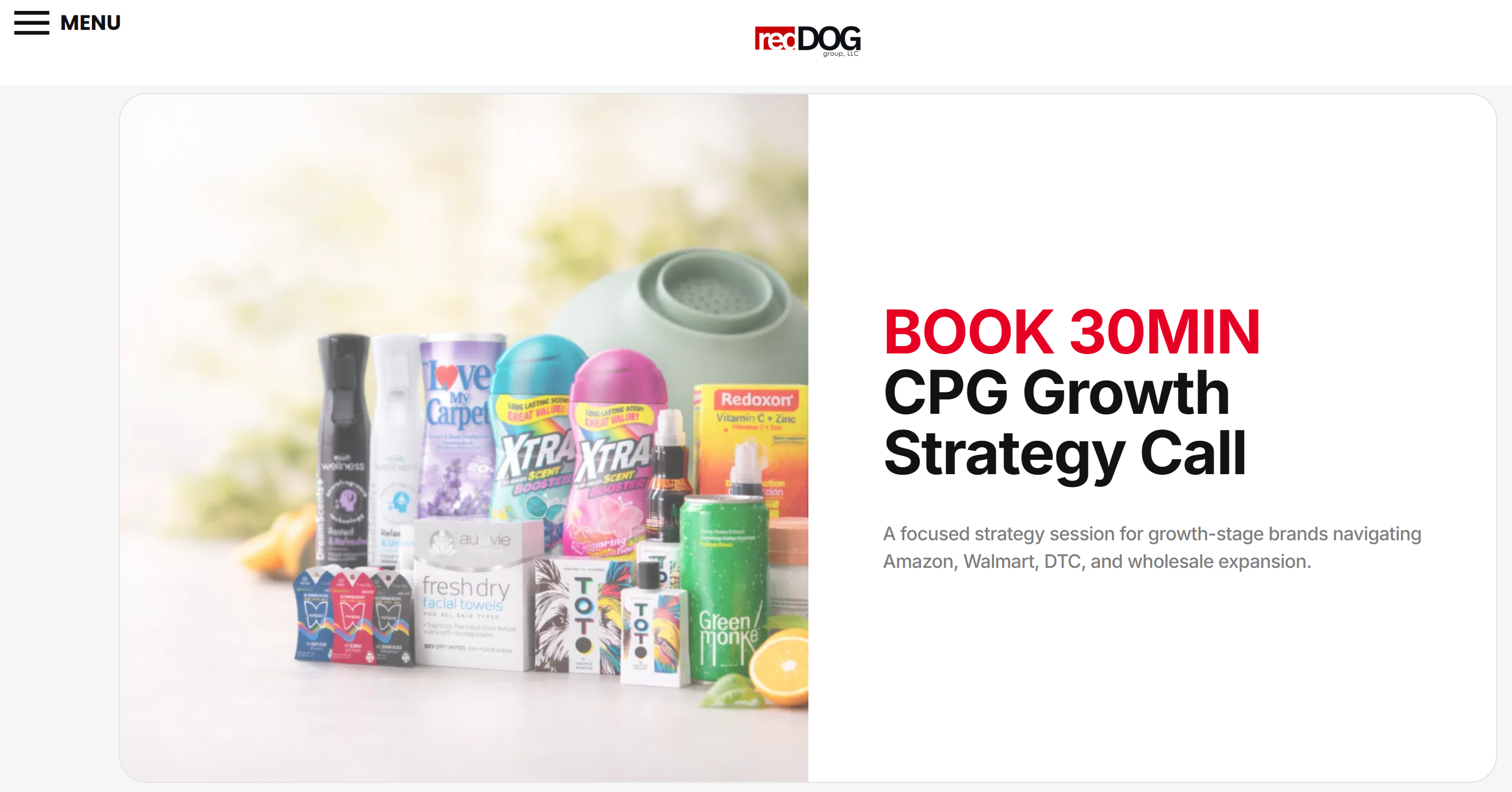
We work with founders and operators navigating Amazon FBA fee structures, Walmart WFS economics, DTC customer acquisition, and social commerce testing. Our approach focuses on understanding what each channel truly contributes to profit after all costs, then optimizing your mix for sustainable growth. Whether you’re choosing your first marketplace or refining a complex omnichannel operation, we provide the analytical clarity and execution support to scale profitably with Reddog Group.
Direct-to-consumer channels typically offer the highest contribution margin, often 60-75% after fulfillment costs, despite requiring upfront marketing investment. Marketplaces like Amazon and Walmart add significant reach but platform fees of 15-30% reduce margins to 40-55%. The most cost-effective approach balances one DTC channel for margin preservation with one marketplace for volume and customer acquisition. Your optimal mix depends on whether you have marketing expertise and budget to drive DTC traffic profitably.
Implement an inventory management system that syncs stock levels in real time across all selling channels to prevent overselling and stockouts. Platforms like Shopify, Amazon, and Walmart can integrate through tools like SellerCloud, Cin7, or Extensiv to maintain accurate counts. Set safety stock levels by channel based on sales velocity and replenishment lead times. Review channel performance data weekly to adjust inventory allocation toward higher-margin or faster-turning channels.
Channels offering complete customer data access enable personalized marketing, accurate lifetime value calculation, and retention strategies that drive profitability beyond first purchase. DTC channels provide full buyer information including email, purchase history, and browsing behavior. Marketplaces restrict data access, giving you only basic order details without customer contact information. For brands building subscription models or high-value customer relationships, prioritize channels with unrestricted data access even if initial reach is lower.
Leave a comment: