
Published: March 2020 | Last Updated:November 2025
© Copyright 2026, Reddog Consulting Group.

Nearly 60 percent of retailers report that disconnected systems slow down their business and frustrate customers. As shoppers demand smoother experiences across stores, websites, and apps, the pressure is on for brands to unify every touchpoint. Unified commerce offers a strategic answer by linking data, payments, and inventory into one seamless platform, empowering retailers to deliver the reliable, personalized service modern consumers expect.
| Point | Details |
|---|---|
| Unified Commerce Framework | Unified commerce centralizes data, commerce, and payments on one platform, improving operational efficiency and customer experience across multiple channels. |
| Real-Time Integration Importance | Synchronizing sales channels in real-time enables accurate inventory management and consistent customer information, enhancing overall service quality. |
| Key Technologies | Technologies such as API integration frameworks and cloud platforms are essential for enabling seamless operations and personalized customer interactions. |
| Distinct from Omnichannel | Unified commerce differs from traditional omnichannel approaches by providing a cohesive environment with centralized management versus fragmented systems. |
Unified commerce represents a transformative approach to retail strategy that goes beyond traditional multichannel selling. According to The Payments Association, unified commerce is a financial strategy that centralizes data, commerce, and payments onto one platform, simplifying business processes and enhancing customer experience. This holistic approach breaks down the technological and operational silos that traditionally fragmented retail operations.
At its core, unified commerce is about creating a seamless, integrated ecosystem where every customer touchpoint communicates in real-time. The strategy enables businesses to provide consistent experiences across physical stores, online platforms, mobile applications, and social media channels. International Journal of Innovative Science and Advanced Engineering highlights how Unified Omnichannel Order Management Systems (UOMS) streamline operations and improve customer experiences by integrating various sales channels into a cohesive system.
The fundamental principles of unified commerce include:
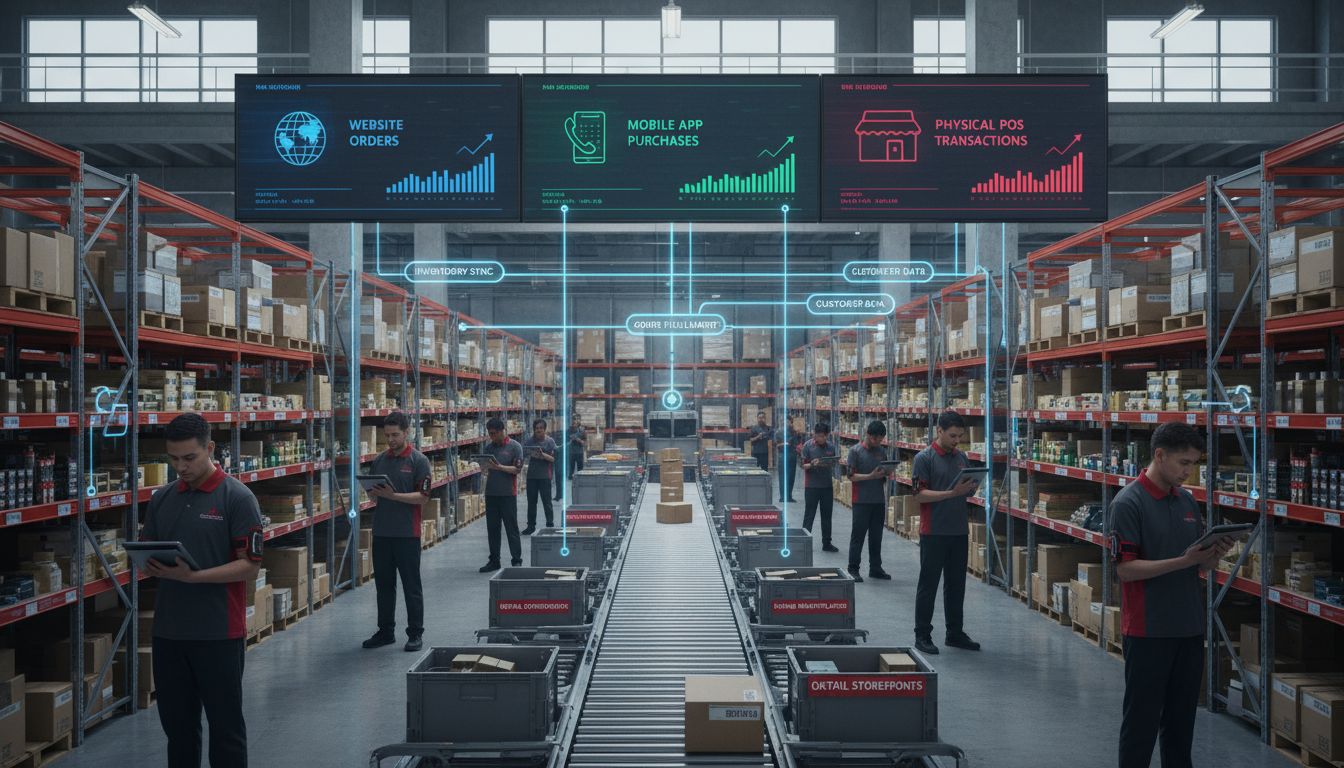
By adopting a unified commerce approach, retailers can transform fragmented systems into a dynamic, responsive business model that meets modern consumer expectations for convenience, personalization, and instant gratification. Understanding Why Build Omnichannel Presence for Growth provides deeper insights into the strategic advantages of this comprehensive approach to retail management.
Unified commerce creates a holistic framework for integrating diverse sales channels into a seamless operational ecosystem. International Journal of Innovative Science and Advanced Engineering reveals that Unified Omnichannel Order Management Systems (UOMS) achieve synchronized inventory, quicker fulfillment, and higher cross-channel uniformity by integrating sales channels, ultimately enhancing operational efficiency and customer satisfaction.
The integration process involves multiple strategic components that transform disconnected sales platforms into a cohesive network. Sales channel synchronization means establishing real-time communication between physical stores, online marketplaces, mobile applications, and social media platforms. This approach ensures that inventory, pricing, customer data, and transaction histories are consistently updated across all touchpoints.
Key integration strategies include:
Research from the Digital Marketing and Advertising Management e-Journal highlights that Omni-Channel Retailing (OCR) enhances unified customer experiences by focusing on critical enablers like integration, visibility, and advanced distribution centers. How to Start Omnichannel Sales for Retail Success provides additional insights into implementing these sophisticated integration strategies effectively.
International Journal of Innovative Science and Advanced Engineering reveals that Unified Omnichannel Order Management Systems leverage modular, API-first architectures to synchronize inventory and streamline operations across sales channels. These sophisticated technological solutions form the backbone of modern unified commerce strategies, enabling businesses to create interconnected and responsive retail ecosystems.
Cloud-based platforms play a critical role in powering unified commerce technologies. These advanced systems provide the computational infrastructure necessary to process complex data flows, integrate multiple sales channels, and deliver real-time insights. By utilizing scalable cloud technologies, retailers can rapidly adapt their technological capabilities without significant hardware investments.
Key technological components driving unified commerce include:
Research from the International Journal of Computer Technology and Trends demonstrates how advanced modeling techniques, including ontologies and user characteristic analysis, contribute to creating cohesive e-commerce solutions. Role of CRM in Ecommerce provides additional context on how these technological innovations transform customer relationship management in the digital marketplace.
International Journal of Innovative Science and Advanced Engineering highlights that implementing Unified Omnichannel Order Management Systems (UOMS) leads to significant business advantages, including improved operational efficiency, enhanced customer satisfaction, and increased customer loyalty by providing seamless, personalized experiences. These systems transform traditional retail approaches by creating interconnected and responsive business models.
Retail and e-commerce businesses represent the primary adopters of unified commerce strategies. Typical use cases span multiple industries, from fashion and electronics to specialty goods and services. These organizations leverage unified commerce to create consistent customer experiences across physical stores, online platforms, mobile applications, and social media channels, ultimately breaking down traditional operational silos.
Key business benefits include:
Research from the Digital Marketing and Advertising Management e-Journal demonstrates how Omnichannel Retail (OCR) adoption, particularly during challenging business environments like the pandemic, significantly improved customer engagement and provided a unified experience. Why Automate Business Processes offers additional insights into how technological integration can transform business operations and drive strategic growth.
Unified commerce implementation presents complex technological and strategic challenges that can derail even well-intentioned business transformation efforts. International Journal of Innovative Science and Advanced Engineering highlights significant challenges in implementing Unified Omnichannel Order Management Systems (UOMS), particularly in achieving synchronized inventory and maintaining cross-channel uniformity, which require sophisticated modular architectures and efficient coordination.
Data integration complexity represents one of the most significant obstacles businesses encounter. Disparate systems, legacy technologies, and inconsistent data formats can create substantial barriers to creating a truly unified commerce ecosystem. Organizations often underestimate the technical sophistication required to seamlessly connect multiple sales channels, customer databases, and operational platforms.
Common challenges and potential pitfalls include:
Digital Marketing and Advertising Management e-Journal emphasizes that inconsistency in pricing and product discounts remains a significant barrier to omnichannel retail adoption. For deeper insights into avoiding technological implementation pitfalls, Why Automate Business Processes provides comprehensive guidance on strategic technological transformations.
The Payments Association provides a critical distinction between unified commerce and traditional omnichannel approaches, highlighting that unified commerce centralizes data, commerce, and payments onto one platform, whereas omnichannel strategies often involve coordinating multiple separate systems. This fundamental difference represents a significant evolution in retail technology and customer experience management.
Strategic integration marks the primary differentiator between these two approaches. Traditional omnichannel strategies typically focus on providing multiple sales channels, but often lack deep technological synchronization. Unified commerce, by contrast, creates a comprehensive, interconnected ecosystem where every customer interaction and operational process is seamlessly integrated and managed through a single, centralized platform.
Key differences include:
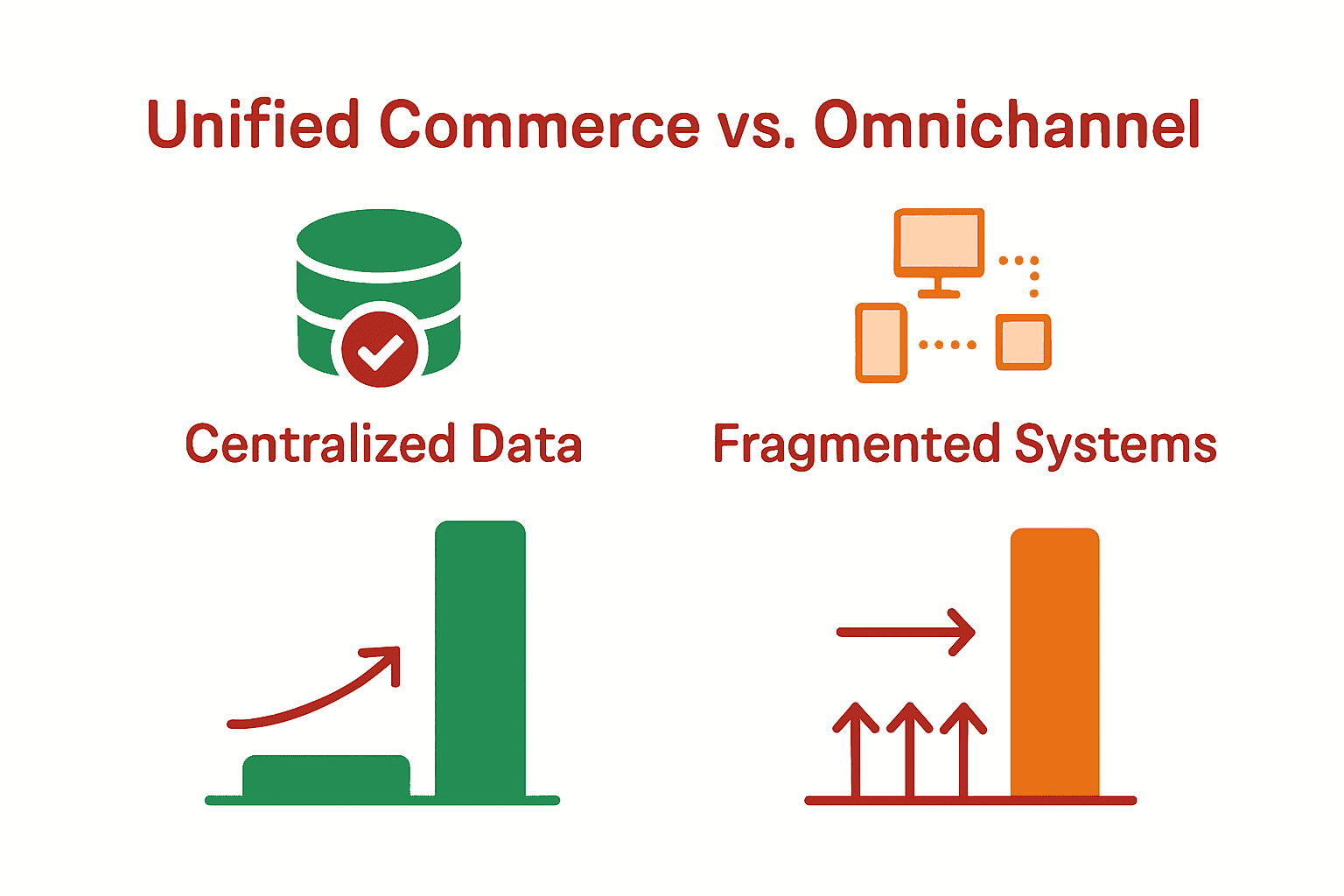
International Journal of Innovative Science and Advanced Engineering reinforces this perspective, demonstrating how Unified Omnichannel Order Management Systems provide a more sophisticated approach to order management compared to traditional omnichannel strategies. Omnichannel Marketing Integration for Retail Growth Success offers additional insights into navigating these complex technological transformations.
Unified commerce demands real-time synchronization, centralized data management, and seamless integration across all sales channels. If you find yourself struggling with inconsistent pricing, fragmented inventory, or disconnected customer experiences, you are not alone. Many businesses face these challenges when trying to unify their sales platforms and deliver personalized, flexible fulfillment options that modern shoppers expect. Understanding and overcoming these obstacles is crucial to staying competitive and scaling your brand effectively.
At Reddog Group, we specialize in turning these unified commerce challenges into growth opportunities. With proven expertise in omnichannel retailing, marketplace management, and integrated online-offline sales strategies, we help brands like yours create cohesive ecosystems that drive revenue and build lasting customer loyalty. Leverage our experience managing over 30,000 SKUs and growing more than 50 brands to gain a strategic edge in today’s complex retail environment.
Ready to transform your fragmented sales channels into a unified commerce powerhouse that delights customers and boosts profits Discover how our tailored solutions deliver measurable growth now.
Explore our comprehensive services including marketplace management and DTC strategies at Reddog Group and start your journey to seamless omnichannel mastery today.
Unified commerce is a retail strategy that centralizes data, commerce, and payments onto a single platform, allowing businesses to break down operational silos and provide a seamless customer experience across various channels.
Unlike traditional omnichannel approaches that often involve multiple separate systems, unified commerce uses an integrated platform to centralize data and processes, ensuring consistent and synchronized customer interactions across all touchpoints.
The core principles include centralized data management, real-time synchronization, personalized customer experiences, and flexible fulfillment options across all sales channels.
Key technologies for unified commerce include API integration frameworks, cloud-based platforms, machine learning algorithms, and microservices architecture, which collectively enhance data management and operational efficiency.
Leave a comment: