
Published: March 2020 | Last Updated:December 2025
© Copyright 2026, Reddog Consulting Group.

Most American businesses still underestimate the power of storytelling in branding, even though brands that master authentic narratives can outperform competitors by over 30 percent. In today’s saturated marketplace, customers are not just buying products—they are connecting with stories that echo their own values and experiences. Understanding how storytelling shapes perception and loyalty will help your brand cultivate meaningful connections that stand out and last.
| Point | Details |
|---|---|
| Storytelling Enhances Branding | Authentic narratives create emotional connections with consumers, enhancing brand loyalty and engagement. |
| Understand Your Audience | Successful storytelling requires deep empathy; brands must connect with customer hopes and challenges for meaningful engagement. |
| Maintain Narrative Consistency | Omnichannel storytelling should have a cohesive narrative across various platforms while being tailored to specific channel characteristics. |
| Avoid Common Pitfalls | Prioritize emotional connection over sales messaging, maintain consistency, and keep the audience’s perspective central to narratives. |
Storytelling transforms brands from mere commercial entities into compelling narratives that resonate deeply with audiences. At its core, storytelling is about creating an emotional bridge between a business and its customers, transcending traditional marketing approaches by crafting authentic, memorable experiences. When done effectively, storytelling can turn simple product interactions into meaningful connections that inspire loyalty and engagement.
In brand communication, storytelling serves as a powerful mechanism for differentiating your business from competitors. Understanding the role of branding in growth reveals that successful brands do not just sell products - they sell stories that reflect shared values and aspirations. These narratives help consumers understand not just what a company does, but why it exists and what it stands for.
The anatomy of effective brand storytelling involves several critical components. Authenticity stands as the fundamental cornerstone - consumers can quickly detect manufactured narratives. Your story must reflect genuine experiences, challenges, and missions that align with your brand’s true identity. This means going beyond surface-level marketing tactics and revealing the human elements behind your business - the struggles, innovations, and passionate individuals driving your organization forward. By sharing transparent, relatable narratives, brands can create emotional resonance that transforms casual customers into committed brand advocates.
Successful storytelling also requires strategic emotional mapping. Brands must understand their audience’s psychological landscape - their hopes, fears, dreams, and challenges. This deep empathy allows for crafting narratives that feel personally meaningful. Whether you’re a small online retailer or a growing marketplace seller, your brand’s story should connect with customers on a level that transcends transactional relationships, creating a sense of shared journey and mutual understanding.
Brand storytelling encompasses diverse narrative approaches, each designed to connect with audiences in unique and powerful ways. Different types of brand stories can dramatically transform how consumers perceive and interact with a business, offering strategic opportunities for emotional engagement and brand positioning.
Four primary types of brand stories emerge as particularly impactful for businesses seeking meaningful audience connections. Origin Stories reveal a company’s founding narrative, highlighting the passion, challenges, and vision that sparked its creation. These narratives humanize brands by showcasing the real people and motivations behind the business. Mission-driven Stories communicate a brand’s deeper purpose beyond profit, connecting with consumers who value social responsibility and authentic commitment to specific values or causes.
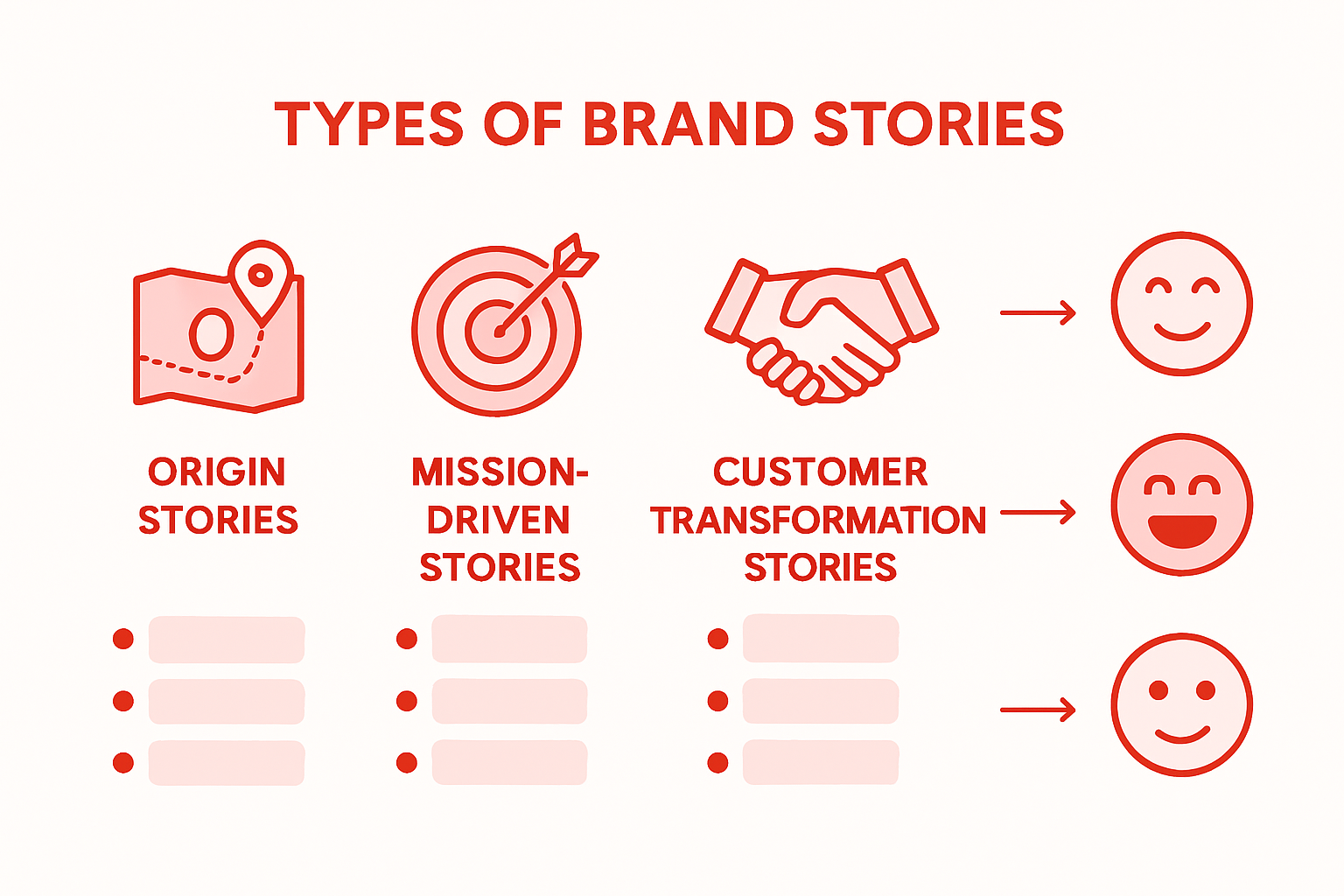
Additionally, Customer Transformation Stories provide powerful social proof by illustrating real-world impact. These narratives showcase how a product or service genuinely improved someone’s life, creating emotional resonance through authentic human experiences. Behind-the-Scenes Stories offer transparency by revealing a brand’s internal processes, innovations, and human elements. By pulling back the curtain on company culture, product development, or workplace dynamics, brands can build trust and demonstrate their commitment to authenticity.
Successful brand storytelling requires strategic narrative construction that goes beyond mere marketing. Each story type must be carefully crafted to reflect genuine experiences, align with brand values, and create meaningful connections. The most effective narratives transcend promotional tactics, instead focusing on shared human experiences, challenges, and aspirations that resonate deeply with target audiences.
Perception transformation is the fundamental power of strategic brand storytelling, fundamentally altering how consumers interpret and connect with a business. Consumer attitudes and purchasing behaviors are profoundly influenced by narrative experiences, creating complex psychological pathways that extend far beyond traditional marketing approaches.
Brands leverage multiple psychological mechanisms to shape customer perception through storytelling. Narrative Transportation represents a critical concept where audiences become emotionally immersed in a brand’s story, temporarily suspending their analytical thinking. This immersive experience allows businesses to bypass rational skepticism, creating deep emotional connections that traditional advertising cannot achieve. When consumers feel genuinely engaged with a narrative, they become more receptive to the underlying brand message, transforming passive observers into active participants in the brand’s journey.
The neurological impact of storytelling on perception is equally fascinating. Human brains are fundamentally wired to process information through narrative structures, making stories exponentially more memorable and impactful than isolated facts or statistics. Brands that understand this neurological mechanism can craft stories that trigger specific emotional responses, effectively programming how customers perceive their identity, values, and offerings. By strategically constructing narratives that resonate with shared human experiences, businesses can create powerful cognitive associations that persist long after the initial interaction.

Ultimately, storytelling’s true power lies in its ability to humanize brands and create genuine emotional resonance. Consumers no longer evaluate businesses solely on product features or pricing, but on the authenticity, values, and emotional intelligence demonstrated through their narratives. Successful brands recognize that perception is not just about what is communicated, but how it is communicated - transforming marketing from a transactional approach to a deeply personal, emotionally intelligent dialogue.
Omnichannel storytelling represents a sophisticated approach to building brand narratives that seamlessly flow across multiple customer touchpoints. Storytelling elements strategically deployed across social media and digital platforms can dramatically enhance stakeholder engagement, creating a cohesive and immersive brand experience.
Successful integration requires maintaining narrative consistency while adapting storytelling nuances to each specific channel’s unique characteristics. Physical retail spaces might leverage immersive visual displays and interactive experiences, while digital platforms can use video content, social media stories, and personalized email narratives. Each channel becomes a chapter in the brand’s larger story, with core messaging remaining consistent but presentation styles strategically tailored to audience expectations and platform dynamics.
Technology plays a critical role in enabling sophisticated omnichannel storytelling. Advanced customer data platforms allow brands to track narrative engagement across channels, understanding how specific story elements resonate with different audience segments. This data-driven approach enables businesses to create increasingly personalized and contextually relevant narratives that feel intuitive and authentic to individual customer journeys. By tracking customer interactions, brands can dynamically adjust their storytelling approach, ensuring that each touchpoint feels like a natural continuation of the overarching brand narrative.
Ultimately, omnichannel storytelling transcends traditional marketing by creating a holistic brand experience. Successful retailers recognize that customers do not see channels in isolation but expect a seamless, interconnected narrative. This means crafting stories that are flexible enough to be experienced across mobile apps, websites, physical stores, social media platforms, and customer service interactions while maintaining a coherent emotional core that makes the brand feel genuinely human and relatable.
Brand storytelling demands precision and authenticity, with numerous potential pitfalls that can undermine narrative effectiveness. Common storytelling mistakes can significantly diminish a brand’s ability to connect with audiences, making it crucial to understand and proactively address potential narrative weaknesses.
One of the most critical mistakes brands make is prioritizing sales messaging over genuine emotional connection. Audiences can quickly detect when a story feels manufactured or overtly transactional. Effective storytelling requires vulnerability, authenticity, and a willingness to share genuine experiences that transcend simple product promotion. This means moving beyond highlighting product features to revealing the human motivations, challenges, and aspirations that drive your brand’s mission. Successful narratives invite audiences into a shared journey, creating emotional resonance that feels organic and meaningful.
Inconsistency represents another significant storytelling pitfall that can erode brand credibility. Brands must maintain a cohesive narrative voice across all communication channels, ensuring that core messaging remains synchronized whether expressed through social media, website content, advertising, or customer interactions. This requires developing a comprehensive storytelling strategy that establishes clear guidelines for tone, messaging, and emotional positioning. Successful brands treat their narrative as a living document, regularly reviewing and refining their storytelling approach to ensure it remains authentic, relevant, and aligned with evolving audience expectations.
Ultimately, the most damaging mistake in brand storytelling is losing sight of the audience’s perspective. Compelling narratives are not about the brand talking at consumers, but creating a collaborative dialogue that makes customers feel genuinely understood and valued. This means continuously listening to audience feedback, adapting storytelling approaches based on real-world interactions, and demonstrating a commitment to understanding the complex emotional landscapes of your target market. Brands that approach storytelling as a dynamic, empathetic conversation will consistently outperform those treating it as a static, one-way communication channel.
The article highlights how transformative storytelling builds deep emotional connections by sharing authentic, mission-driven narratives that resonate with your audience’s aspirations and challenges. Yet crafting and maintaining these compelling stories across multiple channels remains a challenge for many small and medium-sized businesses striving for consistent brand perception and meaningful engagement.
At Reddog Group, we specialize in bridging this exact gap by integrating storytelling strategies with proven omnichannel retail and digital marketing solutions. With extensive experience managing over 50 brands and 30,000 SKUs, our expert team helps you translate your brand’s unique story into impactful marketing campaigns, optimized product listings, and coordinated online-offline sales strategies. This approach drives emotional resonance and measurable year-over-year growth.
Discover how our tailored services can make your brand story come alive across marketplaces like Amazon FBA, DTC platforms, and retail channels. Visit Reddog Group to explore our strategic guidance and proven growth tactics.
Unlock your brand’s potential through storytelling that sells and omnichannel mastery that scales.
Are you ready to transform your brand narrative into powerful growth?

Connect with Reddog Group now to start crafting authentic stories that engage customers everywhere. Explore our full range of services and take the first step towards lasting brand loyalty and amplified revenues at Reddog Group.
Storytelling in branding creates an emotional connection between a brand and its audience, transforming a business from a commercial entity into a relatable narrative that resonates with customers.
Brands can ensure authenticity by sharing genuine experiences, challenges, and missions that align with their true identity, avoiding manufactured narratives that can be easily detected by consumers.
Common types of brand stories include Origin Stories, Mission-driven Stories, Customer Transformation Stories, and Behind-the-Scenes Stories, each designed to foster emotional engagement and reflect the brand’s values.
Storytelling can fundamentally alter customer perception by creating deep emotional connections, making brands more relatable, and influencing consumer attitudes and purchasing behaviors beyond traditional marketing approaches.
Leave a comment: