
Published: March 2020 | Last Updated:December 2025
© Copyright 2026, Reddog Consulting Group.

Over 80 percent of american businesses struggle to turn digital marketing efforts into real growth. With so many tactics and tools available, finding a clear starting point often feels confusing. Knowing which steps drive results is the key to building a strategy that actually delivers. This guide breaks down each critical phase so you can confidently reach your goals and connect with your ideal audience.
| Key Insight | Explanation |
|---|---|
| 1. Define clear business goals | Establish specific, measurable objectives using the SMART framework to guide your marketing strategy. |
| 2. Understand your target audience | Conduct detailed research on demographics and preferences to create effective buyer personas. |
| 3. Build an omnichannel strategy | Integrate various digital channels to ensure a seamless customer experience and consistent messaging. |
| 4. Optimize marketing campaigns | Regularly analyze performance data to identify improvement areas and enhance campaign effectiveness. |
| 5. Refine tactics based on results | Continually assess outcomes against goals to make data-driven adjustments for marketing strategies. |
Successful digital marketing begins with crystal clear business goals and a deep understanding of your target audience. This foundational step determines the trajectory of your entire marketing strategy and ensures your efforts are focused and effective.
To define your business goals, start by conducting a comprehensive assessment of your current business performance and future aspirations. Utilize strategic business growth approaches to identify specific, measurable objectives. These might include increasing online sales by 25%, expanding market reach in a new demographic, or improving customer retention rates. Each goal should follow the SMART framework: Specific, Measurable, Achievable, Relevant, and Time-bound.
Understanding your target audience requires meticulous research and data analysis. Develop detailed buyer personas by collecting demographic information, behavioral patterns, purchasing preferences, and motivational triggers. Social media marketing insights can provide valuable context about your potential customers. Consider factors like age, income, interests, online behaviors, and pain points. The more granular your audience understanding, the more precisely you can tailor your marketing messages and channels.
Pro Tip: Don’t rely solely on assumptions. Use real data from customer surveys, website analytics, and social media interactions to build accurate audience profiles.
Once you have defined your goals and audience, you’re ready to develop a targeted digital marketing strategy that speaks directly to your potential customers and drives meaningful business growth.
Building robust omnichannel digital marketing foundations is crucial for creating a seamless customer experience across multiple platforms and touchpoints. This step involves strategically integrating your digital channels to provide a consistent and interconnected brand experience.

Omnichannel marketing integration requires a comprehensive approach that connects your digital and physical sales channels. Start by mapping out all potential customer interaction points including your website, mobile app, social media platforms, email marketing, physical stores, and customer service channels. Ensure that each channel maintains consistent messaging, branding, and user experience. Personalized marketing strategies play a critical role in creating a unified customer journey that feels seamless and intuitive.
Data integration is the backbone of successful omnichannel marketing. Implement robust customer relationship management (CRM) systems that can track and analyze customer interactions across different channels. This approach allows you to create a unified customer profile that enables targeted marketing, personalized recommendations, and more effective customer engagement. Research indicates that effective inventory management across channels is essential for maintaining customer satisfaction and operational efficiency.
Pro Tip: Invest in technologies that provide real time data synchronization across all your marketing and sales channels to ensure a truly integrated customer experience.
By establishing strong omnichannel foundations, you create a flexible and responsive marketing ecosystem that can adapt to changing customer preferences and technological advancements.
Successfully implementing marketplace and direct to consumer strategies requires a nuanced approach that maximizes your brand’s digital sales potential across multiple channels. This step focuses on creating a comprehensive strategy that leverages both online marketplaces and your own direct sales platforms to drive revenue and customer engagement.
Marketplace management strategies are critical for expanding your brand’s digital footprint. Begin by selecting the most appropriate online marketplaces that align with your target audience and product offerings. Amazon, eBay, Etsy, and platform specific marketplaces offer unique opportunities for reaching different customer segments. Optimize your product listings with high quality images, comprehensive descriptions, and competitive pricing to stand out among competitors. Advanced marketplace strategies involve understanding each platform’s specific algorithms and optimization requirements.
Direct to consumer channels require a more personalized approach. Emerging artificial intelligence techniques are transforming consumer engagement strategies, enabling more sophisticated targeting and personalization. Implement robust digital marketing techniques that create seamless user experiences across your website, mobile platforms, and social media channels. Develop a strong brand narrative that resonates with your target audience and provides clear value propositions. Utilize advanced analytics to track customer behaviors, preferences, and purchasing patterns to continuously refine your marketing approach.
Pro Tip: Invest in technologies that provide real time data integration and analytics across your marketplace and DTC channels to create a unified and responsive marketing strategy.
By strategically balancing marketplace and direct sales channels, you create a flexible and robust digital sales ecosystem that can adapt to changing market dynamics and consumer preferences.
Successfully optimizing and monitoring your digital marketing campaigns is a critical process that transforms raw data into actionable insights for continuous improvement. This step focuses on developing a systematic approach to tracking, analyzing, and refining your marketing strategies to maximize performance and return on investment.
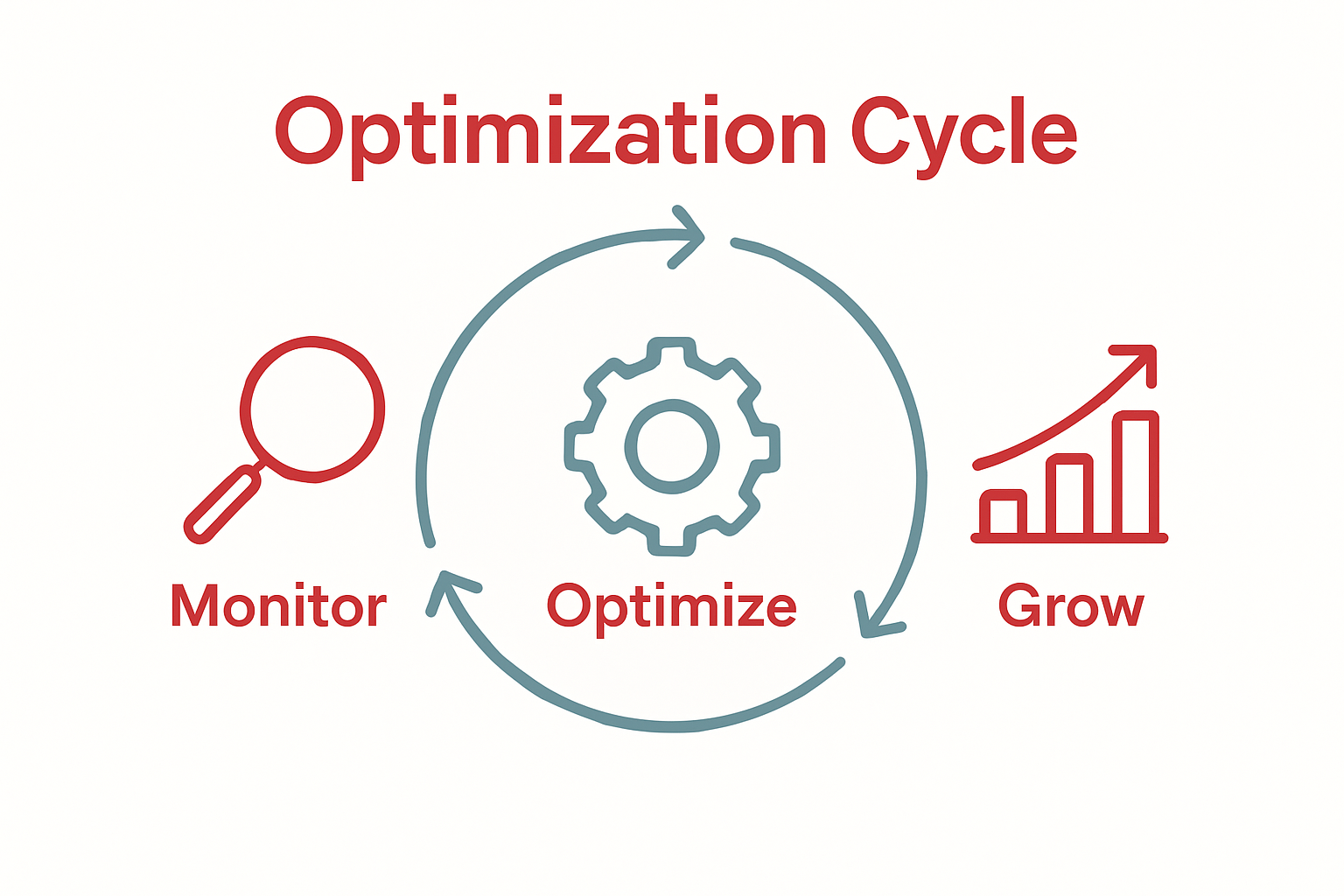
Data driven marketing strategies require a comprehensive performance monitoring framework. Implement robust analytics tools that provide real time insights across all your digital marketing channels. Track key performance indicators such as conversion rates, click through rates, customer acquisition costs, and return on ad spend. Utilize platform specific analytics like Amazon advertising management tools to gain granular insights into marketplace performance. Regularly conduct A/B testing on ad creatives, landing pages, and marketing messages to identify the most effective approaches.
Continuous optimization is the cornerstone of successful digital marketing. Create a systematic review process where you analyze performance data weekly or monthly. Look for patterns in customer behavior, identify underperforming campaigns, and reallocate resources to strategies that demonstrate the highest potential. Pay special attention to audience segmentation, targeting parameters, and ad placement strategies. Develop a responsive approach that allows you to quickly pivot your marketing efforts based on emerging data and market trends.
Pro Tip: Establish a performance dashboard that consolidates metrics from all your marketing channels, enabling quick and comprehensive performance assessments.
By maintaining a data driven and adaptive approach to campaign optimization, you create a dynamic marketing strategy that can rapidly respond to changing market conditions and customer preferences.
Verifying and refining your digital marketing results is an essential process that transforms raw performance data into strategic improvements. This critical step ensures your marketing efforts remain agile, responsive, and aligned with your core business objectives.
Digital marketing workflow strategies require systematic performance evaluation against predefined benchmarks. Develop a comprehensive review process that examines key performance metrics across all marketing channels. Compare your actual results with initial goals and identify areas of overperformance and underperformance. Pay close attention to conversion rates, customer acquisition costs, engagement levels, and revenue generated from different marketing initiatives. Ecommerce SEO best practices can provide additional insights into optimizing your digital presence.
Refining digital tactics is an iterative process that demands continuous learning and adaptation. Create a structured approach to analyzing performance data that goes beyond surface level metrics. Look for deeper insights such as customer behavior patterns, emerging market trends, and shifts in audience preferences. Develop a responsive strategy that allows for quick pivots and tactical adjustments. Implement regular performance review cycles where you critically assess each marketing channel and reallocate resources to the most effective strategies.
Pro Tip: Establish a quarterly strategic review that combines quantitative performance data with qualitative insights from customer feedback and market research.
By maintaining a disciplined approach to result verification and tactical refinement, you create a dynamic marketing strategy that can quickly adapt to changing market conditions and customer needs.
If you are ready to move beyond defining goals and setting up your omnichannel strategy, Reddog Group offers tailored solutions perfectly aligned with the challenges outlined in this step-by-step guide. Whether you struggle with marketplace management, optimizing DTC channels, or integrating your digital and offline sales, our professionals bring proven expertise managing over 50 brands and more than 30,000 SKUs to help you drive measurable revenue growth. Key pain points like data integration, campaign optimization, and marketplace-specific tactics are our everyday focus.
Explore how our Digital & Business Consulting Services by Reddog Consulting can streamline your marketing workflows and maximize ROI today.
Don’t wait to transform your retail marketing success. Visit Reddog Group now to access industry-leading strategies for omnichannel mastery and innovative growth tactics. Start crafting a responsive, data-driven marketing roadmap for your brand and gain a competitive edge in the evolving retail landscape.
To define business goals effectively, conduct a thorough assessment of your current performance and future aspirations. Start by setting specific, measurable objectives like increasing online sales by 25% within six months.
Develop detailed buyer personas by gathering demographic information, purchasing preferences, and motivational triggers. Use customer surveys or social media insights to create profiles that accurately reflect your audience within 30 days.
Building an omnichannel strategy requires integrating all digital and physical sales channels for a seamless customer experience. Map out customer interaction points like your website and social media, ensuring consistent messaging across all platforms.
To optimize your digital marketing campaigns, implement robust analytics tools to track key performance metrics like conversion rates and click-through rates. Regularly review performance data to identify trends and quickly adjust your strategies, ideally on a monthly basis.
Start by evaluating your marketing performance against set benchmarks to identify areas of improvement. Schedule regular performance reviews, at least quarterly, to adjust your tactics based on both quantitative data and qualitative customer feedback.
Enhancing direct-to-consumer strategies involves personalizing customer engagement and leveraging advanced analytics for targeting. Focus on creating seamless experiences across your website and social media, and continuously refine your approach based on customer behavior patterns.
Leave a comment: