
Published: March 2020 | Last Updated:March 2026
© Copyright 2026, Reddog Consulting Group.

CPG brands lose up to 30% of revenue to unmanaged marketplace fees and costs every year. Without structured marketplace management, scaling across Amazon, Walmart, and other channels creates margin compression instead of profitable growth. This guide shows you how marketplace management solves operational complexity, eliminates hidden profit leaks, and builds clarity around what each channel actually contributes to your bottom line.
| Point | Details |
|---|---|
| Margin leaks | Unmanaged marketplace fees drain 10 to 30% of revenue through FBA costs, storage fees, and pricing errors. |
| Economics matter | Understanding fee structures and channel-specific costs is essential for sustainable profitability. |
| Contribution-first strategy | Prioritizing margin over revenue ensures growth decisions strengthen your bottom line. |
| Data-driven decisions | Tracking inventory velocity, fulfillment costs, and contribution margin per channel reveals where profit hides. |
| Operational clarity | Marketplace management reduces storage overruns, pricing mistakes, and cash flow surprises. |
Marketplace management is the ongoing, data-driven coordination of sales, inventory, pricing, and fulfillment across online marketplaces like Amazon and Walmart. For CPG brands, this isn’t just ecommerce optimization. It’s the discipline of understanding what each channel actually costs and contributes to profit.
Marketplaces now dominate CPG sales ecosystems. Amazon alone captures over 40% of U.S. ecommerce sales, and Walmart’s online growth continues accelerating. But marketplace dominance comes with complex fee structures, inventory velocity pressures, and channel-specific pricing demands that erode margins if left unmanaged.
CPG brands face unique challenges compared to other ecommerce sellers. Your products move through multichannel selling advantages for CPG brands including wholesale, distribution, and brick-and-mortar retail. Managing marketplaces means balancing online fees with offline pricing, coordinating inventory across 3PLs, and understanding how fulfillment costs impact your ability to increase ecommerce sales for CPG brands profitably.
Marketplace management differs from generic growth tactics by focusing on contribution margin first. You’re not chasing top-line revenue. You’re identifying where profit leaks occur and fixing operational inefficiencies that prevent sustainable scaling. Every decision ties back to one question: does this channel or tactic improve our bottom line?
Key marketplace complexities for CPG brands include:
Marketplace fees are the silent profit killers. FBA fees account for 15 to 20% of product cost on Amazon, and Walmart WFS compresses margins by up to 25%. Without active management, brands typically experience 10 to 30% margin leakage. That’s money you could reinvest in inventory, marketing, or retail expansion.
These fees aren’t just the obvious costs you see on invoices. Hidden expenses accumulate quickly. 3PL warehouses charge $15 to $40 per pallet monthly, and storage overruns spike costs by another 10 to 20%. Delayed cash flow from marketplace payment cycles creates working capital pressure that forces brands to carry more inventory than necessary.
Payment processing fees, returns handling, and promotional markdown costs add layers of margin compression. Many brands focus on gross revenue without calculating true contribution margin per channel. You might see $100,000 in monthly Amazon sales but only $15,000 in actual profit after all fees and costs.
| Fee Type | Typical Cost Range | Margin Impact |
|---|---|---|
| Amazon FBA | 15-20% of product cost | High |
| Walmart WFS | 20-25% margin compression | Very High |
| 3PL Storage | $15-$40 per pallet/month | Medium |
| Payment Processing | 2-3% of sales | Low to Medium |
| Returns Handling | 5-10% of sales | Medium |
The financial impact compounds when you scale without clarity. Adding more SKUs or entering new marketplaces multiplies fee complexity. Brands often assume higher volume will offset lower margins, but operational costs scale linearly while margins shrink. Your lead generation workflow for CPG profit must account for these realities from day one.

Pro Tip: Audit your marketplace fee structures quarterly. Compare actual costs against your pricing model to uncover margin drains before they become structural problems. Small adjustments to pack size, pricing tiers, or fulfillment methods can recover 5 to 10% in lost margin.
Inventory velocity determines whether you’re paying reasonable storage fees or bleeding cash. Slow-moving products sit in 3PL warehouses costing $15 to $40 per pallet monthly, with overruns causing 10 to 20% unexpected cost spikes. Fast-moving inventory improves cash flow and reduces per-unit storage burden, but forecasting velocity across multiple channels is complex.
Marketplace fulfillment fee compression hits CPG brands harder than other sellers. Your products often carry lower price points and higher weight-to-value ratios. A $12 food item with FBA fees eating 20% of revenue leaves slim margin for marketing, returns, or profitability. This compression forces difficult trade-offs between promotional pricing, advertising spend, and sustainable unit economics.
Pricing complexity multiplies across channels. Amazon’s algorithm pressures you toward the Buy Box with competitive pricing. Walmart expects everyday low prices. Your wholesale accounts need MAP pricing consistency. Meanwhile, DTC channels allow premium pricing but require higher marketing spend. Uniform pricing across all channels guarantees margin erosion somewhere in your distribution mix.
Managing multichannel selling advantages for CPG brands means accepting that each channel has unique economics. A pricing strategy optimized for Amazon may destroy profitability on Walmart. Channel-specific approaches are essential, but they require operational clarity most brands lack.
Key operational challenges include:
Pro Tip: Use inventory velocity analytics to segment SKUs into fast, medium, and slow movers. Reorder fast movers more frequently with smaller batches. Consider discontinuing or bundling slow movers to reduce storage costs and improve overall portfolio profitability. Implementing marketplace optimization for omnichannel growth strategies accelerates this process.
Adopting a contribution-margin-first mindset changes everything. You stop celebrating revenue milestones that don’t improve profitability. Every decision gets filtered through one lens: does this increase the dollars left after all channel-specific costs? This approach prevents the trap of unprofitable scaling that destroys cash flow and limits growth options.
Robust channel profitability analytics form the foundation. Track revenue, marketplace fees, fulfillment costs, 3PL storage, payment processing, returns, and marketing spend per channel. Subtract all costs from revenue to calculate true contribution margin. Most brands discover that their highest-revenue channels aren’t their most profitable ones.
Dynamic pricing and promotions must respond to channel-specific data. Amazon might tolerate aggressive promotional pricing during Prime Day because volume offsets margin compression. Walmart’s fee structure might make the same promotion unprofitable. Adjust pricing based on actual costs, not assumptions. Test promotional mechanics to understand their true ROI before committing budget.
Optimizing inventory velocity reduces 3PL costs and improves cash flow. Fast-moving products generate profit faster and minimize storage expenses. Slow movers drain resources and create margin pressure. Regularly review SKU performance and make tough calls about discontinuing underperformers or bundling them with popular items.
Continuous monitoring and strategy iteration keep you ahead of marketplace changes. Fee structures shift. Algorithms evolve. Competitor dynamics change weekly. Sustainable growth requires ongoing data review and operational adjustments, not set-it-and-forget-it tactics.
Follow these steps to implement marketplace management:
The marketplace management strategies guide provides additional frameworks for executing these approaches across your specific channel mix.
Essential metrics reveal which channels deserve more investment and which drain resources. Contribution margin shows dollars remaining after direct channel costs. Net margin includes allocated overhead to show true bottom-line impact. Customer acquisition cost per channel determines marketing efficiency. Inventory turnover indicates capital efficiency and storage cost exposure. Marketing ROI per channel guides budget allocation.
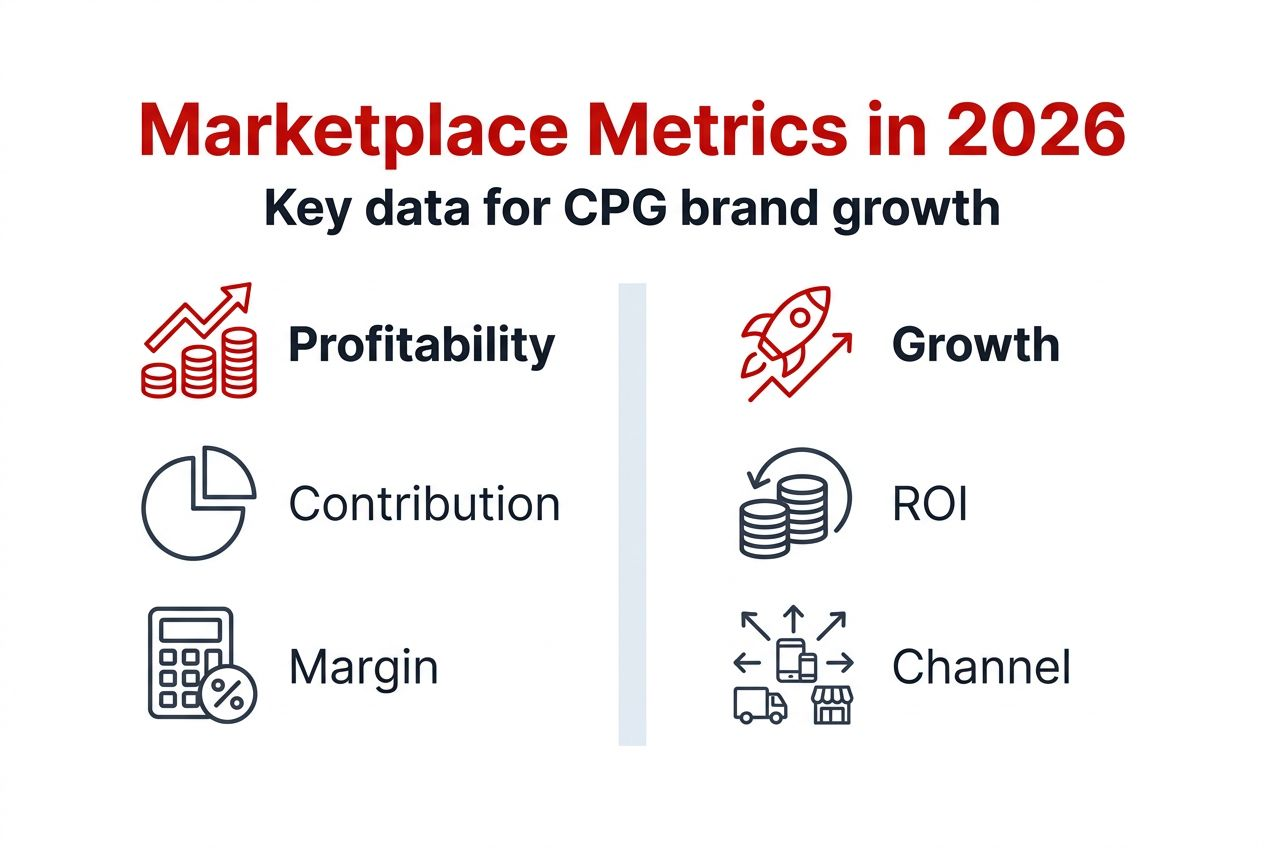
Integrating marketplace data with physical retail sales creates holistic profit views. Your Amazon performance affects retail buyer interest. Walmart.com success influences brick-and-mortar placement. DTC data reveals consumer preferences that inform wholesale assortment planning. Siloed channel analysis misses these interconnections.
These metrics directly influence retail expansion decisions and channel prioritization. CPG brands report 20% higher ROI on prioritizing channels after gaining better profitability insights through marketplace management. When you know which channels actually generate profit, you stop wasting resources on vanity metrics and focus investment where it compounds returns.
| Metric | What It Measures | Decision Impact |
|---|---|---|
| Contribution Margin | Profit after direct channel costs | Channel viability and pricing strategy |
| Net Margin | Profit after all allocated costs | True profitability and reinvestment capacity |
| CAC by Channel | Customer acquisition efficiency | Marketing budget allocation |
| Inventory Turnover | Capital efficiency and storage exposure | SKU mix and reorder strategy |
| Marketing ROI | Return per dollar spent by channel | Promotional calendar and spend prioritization |
Implementing multichannel retailing success guide principles ensures these metrics drive actual operational improvements rather than becoming vanity dashboards. The goal is actionable clarity that informs daily decisions about pricing, inventory, promotions, and channel investment.
Many brands equate marketplace success with sales volume. High revenue feels validating, but volume without margin creates financial fragility. You might hit $2 million in annual marketplace sales while barely breaking even after fees and costs. Profitable growth means prioritizing contribution margin over vanity metrics.
Neglecting margin data leads to unprofitable scaling. Brands add SKUs, enter new marketplaces, and increase ad spend without understanding true unit economics. Revenue grows but profit shrinks. Cash flow tightens. The business becomes more complex but less sustainable. Detailed margin analysis prevents this trap.
Uniform pricing policies fail across channels. What works on Amazon destroys profitability on Walmart. What retail buyers expect differs from DTC pricing freedom. Channel-specific fee structures demand channel-specific pricing strategies. One-size-fits-all approaches guarantee margin leaks.
Thinking marketplace management equals fulfillment logistics ignores strategic elements. Yes, FBA and WFS coordination matters. But pricing strategy, promotional calendar design, inventory forecasting, and channel prioritization determine whether operational excellence translates to profitability. Fulfillment is table stakes. Strategy creates sustainable advantage.
Common misconceptions include:
Addressing these misconceptions through marketplace management strategies guide principles creates clarity that drives better decisions across your entire channel portfolio.
CPG brands implementing structured marketplace management see measurable profitability improvements. One Texas-based food brand reduced marketplace fees by 18% through strategic SKU bundling and fulfillment method optimization. Another beverage company improved contribution margin by 24% after implementing channel-specific pricing strategies that accounted for actual fee structures.
Marketing ROI gains appear when brands align spend with channel profitability. A household products brand increased marketing efficiency by 32% by reallocating budget from high-fee, low-margin channels to more profitable alternatives. Another brand cut wasted promotional spend by 40% after analyzing which marketplace promotions actually delivered positive ROI.
Operational clarity benefits reduce surprises and improve forecasting. Brands report 15 to 25% reductions in storage overruns after implementing inventory velocity tracking and data-driven reorder systems. Cash flow predictability improves when you understand marketplace payment timing and can forecast working capital needs accurately.
Real-world marketplace management outcomes:
These results aren’t from massive operational overhauls. They come from clarity about what each channel actually costs and contributes. Small adjustments compound when you make decisions based on accurate profitability data instead of assumptions.
Contribution-margin-first thinking transforms marketplace performance. You stop chasing revenue for its own sake and start building sustainable profitability. Detailed channel analysis reveals where margin hides and where operational changes deliver the highest returns. This clarity enables confident decisions about pricing, inventory, promotions, and channel investment.
Starting marketplace management doesn’t require complex systems. Begin with a thorough audit of marketplace fees across all channels. Assess inventory velocity to identify slow movers draining storage costs. Implement channel-specific pricing adjustments based on actual fee structures. These initial steps often recover 5 to 15% in lost margin within the first quarter.
Choosing marketplace management tools or partners requires specific criteria. Look for detailed channel data that goes beyond surface metrics. Seek CPG-specific expertise that understands food, beverage, and consumer product economics. Prioritize operational clarity over generic growth promises. The right partner helps you understand what’s actually happening in your business, not just what could happen with perfect execution.
Ongoing data monitoring and strategy iteration sustain profit growth. Marketplace dynamics shift constantly. Fee structures change. Algorithms evolve. Competitor actions require responses. Monthly reviews of operational KPIs and profitability metrics keep strategies aligned with current realities. The marketplace management strategies for success framework provides structure for this ongoing optimization.
Next steps to implement marketplace management:
Managing marketplaces profitably requires data clarity most CPG brands lack. RedDog Group helps $500K to $20M brands optimize Amazon, Walmart, and multichannel selling through contribution-margin-first strategies. We specialize in uncovering margin leaks, fixing operational inefficiencies, and building channel profitability frameworks that drive sustainable growth.
Our approach focuses on what each channel actually contributes to your bottom line. We analyze fee structures, inventory velocity, pricing strategy, and fulfillment costs to identify where profit hides. Then we implement tailored solutions that improve margins without sacrificing growth. Whether you need Amazon growth consulting or comprehensive omnichannel growth consulting, we bring analytical rigor and CPG expertise to accelerate your marketplace management success.
Marketplace management coordinates sales, pricing, inventory, and fulfillment across online marketplaces to drive profitable multichannel growth. It focuses on optimizing contribution margin rather than just increasing sales volume. The discipline requires understanding channel-specific economics and making data-driven decisions about where to invest resources.
Marketplace fees can reduce product margins by 15 to 25%, significantly compressing profits if unmanaged. FBA and WFS costs, payment processing, and promotional expenses compound quickly. Hidden indirect costs like storage fees and cash flow delays further impact profitability, often creating 10 to 30% total margin leakage.
It focuses on true profitability rather than just revenue, ensuring growth enhances bottom-line results. This mindset prevents unprofitable scaling that drains cash flow and limits expansion options. Contribution-margin-first thinking helps identify which channels and tactics yield highest profit returns for strategic reinvestment.
Track contribution margin, inventory velocity, fulfillment costs, marketing ROI, and net margin by channel. Also monitor customer acquisition cost, inventory turnover, and cash flow timing per marketplace. Integrating these metrics informs pricing, inventory, and expansion strategies while revealing where operational improvements deliver highest returns.
Leave a comment: