
Published: March 2020 | Last Updated:July 2026
© Copyright 2026, Reddog Consulting Group.

A contribution-margin-first, SKU-level hybrid fulfillment strategy paired with Amazon Brand Registry enrollment is the fastest route to profitable Amazon sales for emerging CPG brands. Three actions matter immediately: enroll in Brand Registry using your USPTO-registered trademark, run per-SKU contribution-margin math before you price a single ASIN, and route your highest-velocity SKUs to Fulfillment by Amazon (FBA) while keeping slow or oversized items in FBM or with a 3PL. Two metrics tell you whether the channel is healthy from day one: your Inventory Performance Index (IPI) and your Order Defect Rate (ODR). Let either slip and you lose Buy Box position, pay higher storage fees, or face account restrictions.
Pro Tip: Keep IPI above Amazon’s minimum threshold and ODR below 1% from week one. Both metrics affect your selling privileges and storage limits before you ever hit meaningful volume.
Start with Seller Central, not Vendor Central. Vendor Central is an invitation-only wholesale model where Amazon buys your product; Seller Central gives you direct control over pricing, inventory, and data. For CPG founders building margin discipline, that control is worth more than the simplicity of a vendor relationship.
Account setup checklist with estimated lead times:
Brand Registry requires an active USPTO trademark to unlock A+ Content, Sponsored Brands ads, and enhanced brand protection. The trademark must cover the product classes you intend to sell. A trademark in Class 25 (apparel) will not unlock Brand Registry for a Class 5 supplement brand.
USPTO trademark registration typically takes several months from filing to registration. If you need Brand Registry access sooner, Amazon accepts an IP Accelerator trademark application as a provisional path. Plan this timeline before you build your launch calendar.
Pro Tip: Verify your trademark’s Nice Classification matches your Amazon product categories before filing. A mismatch is the single most common reason Brand Registry enrollment gets rejected.
Brand Registry stat: Brands enrolled in Brand Registry gain access to A+ Content, which Amazon reports can lift conversion rates on product detail pages.
Clear title plus benefit-driven bullets plus two conversion-focused images plus A+ Content is the combination that moves the needle. Each element serves a different job: the title captures search; the bullets close the consideration; the images build trust; A+ Content lifts perceived brand value and reduces returns.
Title template: [Brand] + [Primary Keyword] + [Key Benefit or Format] + [Size/Count/Variant]
Example: “Reddog Protein Bar, High-Protein Snack with 20g Protein, Chocolate Fudge, 12-Count”
Recommended image shot list:
A+ Content, available once you complete Brand Registry enrollment, lets you add enhanced images, comparison charts, and brand story modules. Use it on every ASIN. Brands that skip it leave conversion rate on the table.
For keywords, prioritize backend search terms for phrases that drive purchases, not just clicks. Broad-match waste in backend terms inflates impressions without improving rank. Use tools like Helium 10 or Data Dive to identify high-conversion, lower-competition phrases before you build your Amazon product listing.
Pro Tip: Run a two-week content test: change one listing element (title or hero image), hold ad spend constant, and measure conversion rate delta before scaling budget.
Use a hybrid, SKU-level routing model. FBA is a conversion engine for Prime-sensitive, fast-moving SKUs. FBM or a 3PL protects margin on slow, oversized, or hazmat items where FBA’s fee stack erodes contribution. Top sellers keep the highest-velocity portion of their catalog in FBA and route the long tail elsewhere.

| Dimension | FBA | FBM (self-ship) | 3PL + FBM |
|---|---|---|---|
| Cost impact on margin | Fulfillment + storage + inbound placement fees | Outbound shipping + labor | 3PL pick/pack + outbound; often lower per-unit than FBA for slow SKUs |
| Speed to customer | Prime 1–2 day | Varies; SFP can match Prime | Varies; SFP-eligible with right carrier |
| Inventory control | Amazon-managed; limited visibility | Full seller control | Full seller control via 3PL WMS |
| Scalability | High; Amazon handles peaks | Labor-constrained at volume | Scales with 3PL capacity |
| Best fit | Small, light, fast-moving CPG SKUs | Oversized, slow, or hazmat | Long-tail, seasonal, or bulky items |
Seller Fulfilled Prime (SFP) lets FBM sellers compete for the Prime badge, but the operational bar is steep: on-time delivery thresholds and tracking compliance are strictly enforced. Only pursue SFP if your 3PL or in-house operation can sustain those metrics consistently.
Quarterly SKU audit triggers: move an ASIN off FBA when aged inventory exceeds 90 days, velocity drops below your margin floor, or the unit is oversized and storage fees compress net contribution below your target.
Pro Tip: Use a 3PL as your master inventory hub. Replenish FBA in smaller, more frequent batches based on velocity data. This reduces stranded inventory, lowers aged-inventory surcharges, and frees working capital tied up in Amazon warehouses.
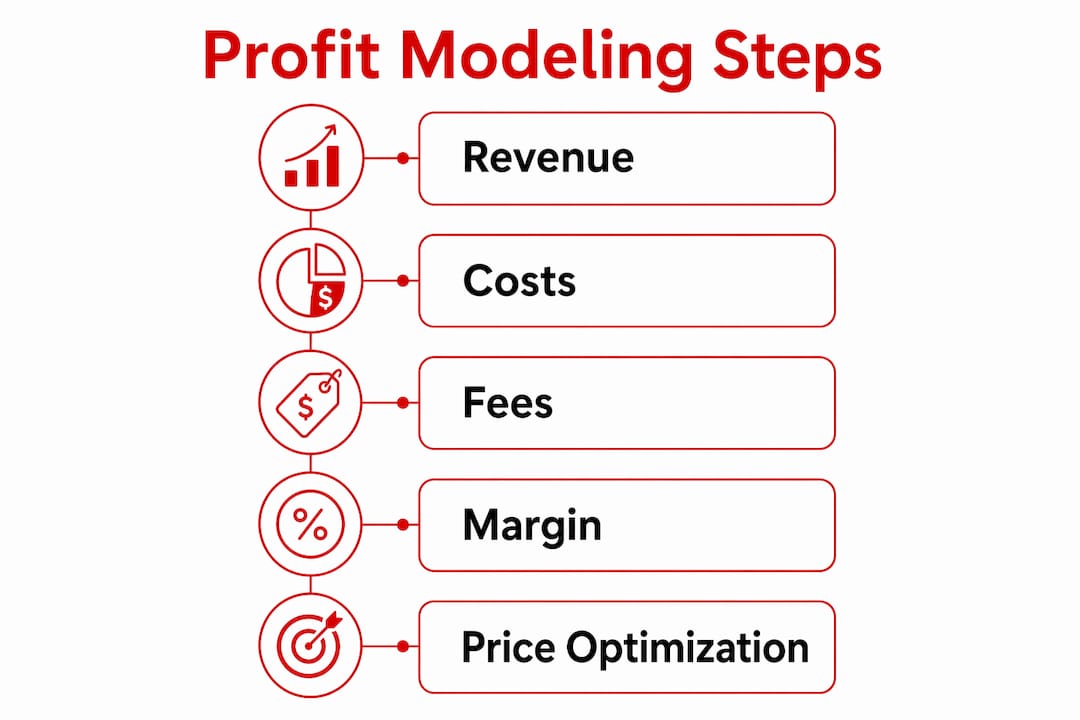
SKU-level contribution margin is the only number that tells you whether a product belongs on Amazon. The formula: Revenue − COGS − referral fee − FBA fulfillment fee − inbound placement − storage − returns reserve − ad CAC = contribution margin.
| Fee Component | Typical Range | Notes |
|---|---|---|
| Referral fee | — | Varies by category |
| FBA fulfillment fee | — | Based on size/weight tier |
| Inbound placement surcharge | — | Added since 2024 fee changes |
| Monthly storage | — | Higher October–December |
| Aged-inventory surcharge | Escalating after 181 days | Avoid with velocity management |
| Removal/disposal fee | — | Budget for slow SKUs |
Amazon’s fee changes since 2024 added inbound placement surcharges and inventory rebalancing charges that meaningfully affect per-unit economics. Model these before you set a price, not after.
Build your SKU P&L spreadsheet with these columns: ASIN, COGS, sell price, referral fee, fulfillment fee, inbound cost, storage estimate, returns reserve, ad CAC, and net contribution %. Set a margin floor of 20–25% net after all platform fees. Any SKU that cannot clear that floor at a competitive price point needs a different channel or a reformulation.
Pro Tip: Run your fee model in Amazon’s Revenue Calculator first, then layer in your actual ad CAC from campaign data. The calculator alone understates true cost because it excludes advertising.
A staged launch keeps customer acquisition cost aligned with your margin target. Paid, organic, and review acquisition run in parallel from day one, not sequentially.
For reviews, use Amazon’s Vine program (available to Brand Registry enrollees) to seed initial reviews on new ASINs. Post-purchase email sequences via Seller Central’s “Request a Review” button are compliant and effective. Never incentivize reviews outside Amazon’s policies.
Coupons and Subscribe & Save work well for consumables. Subscribe & Save locks in repeat purchase velocity and improves inventory forecasting. Use coupons tactically at launch to accelerate rank, but model the discount against your margin floor before activating.
Pro Tip: For Amazon Sponsored Products, bid by placement. Top-of-search placements often convert 2–3x better than rest-of-search for CPG categories. Adjust placement multipliers based on your actual conversion data, not category averages.
Consistent operations protect your Buy Box position and reduce fee leakage. IPI, ODR, and inventory accuracy are the three metrics that determine whether Amazon treats your account as a trusted seller or a liability.
Daily checklist:
Weekly checklist:
Target thresholds: IPI above 400 (Amazon’s minimum to avoid storage restrictions), ODR below 1%, late shipment rate below 4%, and cancellation rate below 2.5%. Active FBA reimbursement audits recover margin that most operators leave unclaimed.
Quarterly: run a full SKU-level profitability review. Any ASIN with aged inventory above 90 days, declining velocity, or net contribution below your margin floor gets rerouted to FBM or 3PL, or removed from the catalog.
Pro Tip: Use a 3PL with real-time WMS visibility to cross-reference against Amazon’s inventory reports. Discrepancies of even a few units per ASIN add up to material reimbursement claims over a quarter.
Confirm GTIN/UPC accuracy, product labeling, and safety documentation before you list. These are the three areas that generate the most listing blocks and account suspensions for CPG brands.
Compliance reminder: A missing SDS for a hazmat product will result in FBA rejection and potential listing suppression. Incorrect GTINs cause catalog errors that are time-consuming to resolve. Confirm both before your first inbound shipment.
Pro Tip: Register your trademark with the USPTO before you launch, not after. Brand Registry enrollment requires an active registration, and the 8–12 month filing timeline means you should start the process during product development, not at launch.
Three milestone buckets get you from setup to first sale to operational discipline.
Days 1–30: Account and brand setup
Days 31–60: Catalog launch
Days 61–90: Operational controls and optimization
Quick wins for cash flow:
Profitable Amazon selling for CPG brands requires Brand Registry, SKU-level margin modeling, and a hybrid fulfillment strategy executed with operational discipline from day one.
| Point | Details |
|---|---|
| Brand Registry first | Enroll with an active USPTO trademark to unlock A+ Content, Sponsored Brands, and brand protection. |
| Model margin before pricing | Use the full fee stack (referral + FBA + inbound + storage + ad CAC) to set a 20–25% net contribution floor per SKU. |
| Hybrid fulfillment by SKU | Keep top 20–30% velocity SKUs in FBA; route slow, bulky, or hazmat items to FBM or a 3PL. |
| Protect account health | Maintain IPI above 400 and ODR below 1% to protect Buy Box position and avoid storage restrictions. |
| Reddog’s approach | Reddog helps CPG brands model channel economics, optimize fulfillment routing, and build margin-first Amazon operations. |
The conventional wisdom says “get on Amazon fast and figure out the margin later.” We’ve seen that approach destroy cash flow for brands that had genuinely good products. The problem isn’t the product. It’s that founders treat Amazon as a sales channel and ignore that it’s also a fee engine, an inventory management system, and a compliance framework all running simultaneously.
The brands that build durable Amazon businesses treat contribution margin as the filter for every decision: which SKUs to list, which fulfillment method to use, how much to bid on ads, and when to pull a product entirely. That discipline is harder to build than a listing, but it’s the only thing that makes the channel worth the complexity.
Operational metrics like IPI and ODR aren’t bureaucratic hurdles. They’re the signals Amazon uses to decide how much of its platform to give you access to. Brands with strong operational discipline get better placement, lower storage restrictions, and more advertising inventory. The math compounds in your favor when you run a clean account.
CPG founders building their Amazon channel don’t need more generic advice. They need a structured review of their actual numbers: fee assumptions, fulfillment routing, inventory velocity, and contribution margin by SKU. That’s exactly what Reddog does.
Reddog works with CPG brands in the $500K–$20M revenue range to build Amazon growth strategies grounded in real channel economics, not top-line projections. We review your SKU-level P&L, identify where margin is leaking, and build a fulfillment and advertising plan that protects profitability as you scale.
If you’re ready for a practical review of your Amazon channel economics, book a free 30-minute strategy call with the Reddog team. Bring your current fee assumptions, a rough inventory velocity report, and your top 5 ASINs by revenue. We’ll show you exactly where the margin opportunity is and what to prioritize first. Schedule your strategy call to get started.
Leave a comment: