
Published: March 2020 | Last Updated:February 2026
© Copyright 2026, Reddog Consulting Group.

Every CPG brand founder in Texas knows the frustration of seeing customers try a product once, then disappear without a trace. Consistency and repeat business are the backbone of healthy margins, but understanding why buyers return—or leave—can feel confusing when your sales happen in so many places. By focusing on the voice of the customer data, smart operators pinpoint friction across online and offline channels, paving the way for strategies that truly move the needle on loyalty and profit.
| Main Insight | Explanation |
|---|---|
| 1. Measure Customer Experience | Use surveys, social media, and purchase behavior to assess customer satisfaction across different touchpoints. |
| 2. Personalize Loyalty Programs | Create rewards tailored to specific customer segments based on their purchasing behaviors and preferences for higher engagement. |
| 3. Unify Channel Engagement | Ensure a seamless experience across all sales channels by maintaining consistent messaging, pricing, and product availability. |
| 4. Track Key Loyalty Metrics | Focus on metrics like retention rates and average order value to evaluate loyalty program effectiveness and adjust strategies as needed. |
You can’t improve what you don’t measure. Start by collecting voice of the customer data from multiple sources to understand how your brand actually shows up across touchpoints.
Begin with these key data collection methods:
Next, map your customer journeys across all channels where your products sell. For a CPG brand in Texas, this likely means online (Amazon, your website, DTC), in-store (grocery, convenience, specialty retailers), and possibly foodservice.
Identify the friction points where customers hesitate, abandon carts, switch brands, or never return. These aren’t minor annoyances—they’re profit leaks. Maybe your online shipping costs kill conversions. Maybe in-store display confusion leads to lost sales. Maybe post-purchase support is nonexistent.
Here’s how major sources of loyalty friction compare and their business impact:
| Friction Point | Typical Cause | Business Impact |
|---|---|---|
| Abandoned shopping carts | High shipping costs | Lower online conversion rates |
| In-store confusion | Poor shelf display or signage | Missed in-person sales |
| Slow fulfillment | Delayed third-party logistics | Increased customer churn |
| Lack of support | Weak post-purchase experience | Fewer repeat purchases |
Use available tools to streamline this process. Customer retention metrics reveal who’s actually coming back, and which channels or customer segments are most loyal. This matters for your margin math—a repeat customer costs less to serve and buys more per year.
Document what you find clearly. Don’t just note “customers want better service.” Be specific: “Walmart customers abandon their second purchase because shipping takes 8 days from our 3PL while competitors ship in 2 days.” That’s actionable.
Your current customer experience assessment should reveal three things: where customers succeed easily, where they struggle, and where you’re losing them entirely to competitors.
Pro tip: Ask your operations team to track one simple metric this week: how many customers who made a first purchase online never bought again within 90 days, and compare this across your sales channels to pinpoint which channel has the lowest repeat rate.
Generic loyalty programs fail. Your customers don’t want a generic points card that applies to everyone equally. They want to feel seen. Build personalized touchpoints that reward behavior specific to their preferences and purchase history.
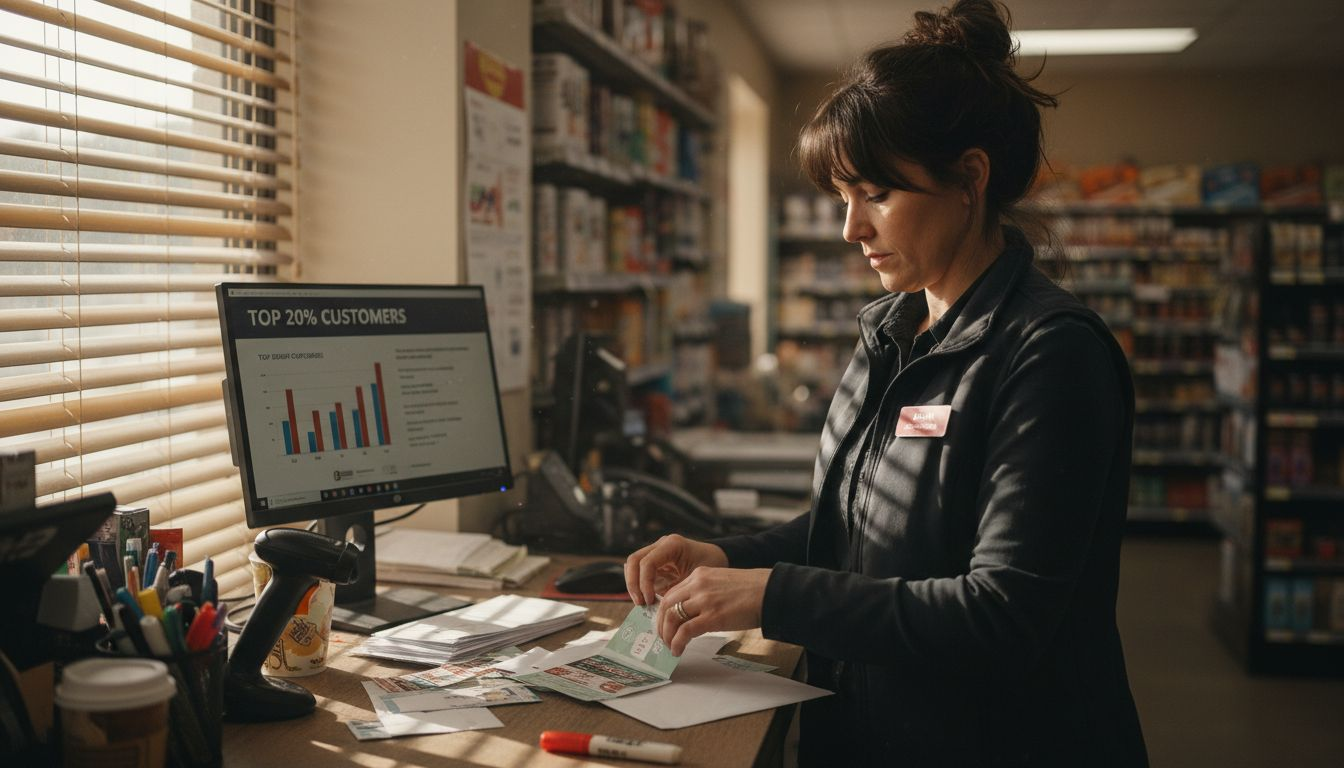
Start by segmenting your customer base beyond basic demographics. Pull data on what each segment actually buys, how often, at which price point, and through which channel. A customer buying your premium line at Whole Foods has different needs than someone buying your value pack at Walmart.
Create tailored rewards for each segment:
Deliver these rewards through channels where customers actually engage. Personalized marketing strategies that include tailored content based on purchase history show measurably higher retention. For CPG brands, this typically means email, SMS, social media, and in-app notifications, not just in-store signage.
The key shift: move beyond points and discounts to include experiential rewards. Send early product samples to top customers before launch. Offer exclusive educational content about your products. Recognize milestones (they’ve bought 50 units, invite them to a tasting or brand event). These emotional connections drive repeat purchases more reliably than another five percent off.
Time your touchpoints strategically. Don’t blast everyone on the same day. Send offers when each customer segment is most likely to purchase based on their historical buying patterns. Amazon customers may respond to weekend promotions. Convenience store buyers respond to weekday alerts.
Personalization without relevance is just noise. Each touchpoint should feel natural to that specific customer’s relationship with your brand.
Pro tip: Start by personalizing just one channel for your top 20 percent of customers this month; measure repeat purchase rate and average order value before rolling out to broader segments.
Your customers shop across multiple channels, but most CPG brands treat each one separately. Amazon strategy doesn’t talk to wholesale strategy. DTC email sits in its own silo. This fragmentation costs you loyalty and margin.
Build a unified engagement system where data and messaging flow seamlessly across all channels. Your customers should receive consistent brand experience whether they buy online, in-store, or through a distributor.
Start with channel inventory transparency. If a customer sees your product out of stock online, can they easily find it at a nearby Whole Foods or local retailer? Create systems that show product availability across all channels in real time. This removes friction and keeps customers engaged rather than sending them to competitors.
Next, sync your messaging and pricing across channels:
To succeed in an omnichannel world, provide seamless information and product fulfillment across all platforms. This means your 3PL understands both online and offline fulfillment. Your wholesale team knows what promotions the direct team is running. Your retail partners have visibility into your inventory strategy.
Invest in a customer data platform or CRM that consolidates purchase history from all channels. Use this data to identify your highest-value customers across the entire ecosystem, not just within one channel. Someone buying case quantities through your distributor may deserve different treatment than a casual Amazon browser.
Test cross-channel campaigns. Run a promotion through email that rewards both online and in-store purchases. Measure repeat rate separately for each channel. You’ll quickly discover which customer segments respond to what messaging and timing.
Seamless omnichannel experience doesn’t mean identical experience. It means consistent brand promise delivered through each channel’s strengths.
Pro tip: Pick one customer segment and track their journey across three channels for 30 days, noting where they drop off and where engagement spikes; use this single-segment insight to redesign engagement for that group before scaling to others.
You’ve built your loyalty program. Now you need to measure what’s actually working and ruthlessly cut what isn’t. Most CPG brands collect data but never act on it. That’s where real opportunity lives.
Start tracking loyalty metrics that reveal both attitude and behavior. Don’t just measure points earned or discounts redeemed. Those numbers hide what’s really happening.
Focus on these critical metrics:
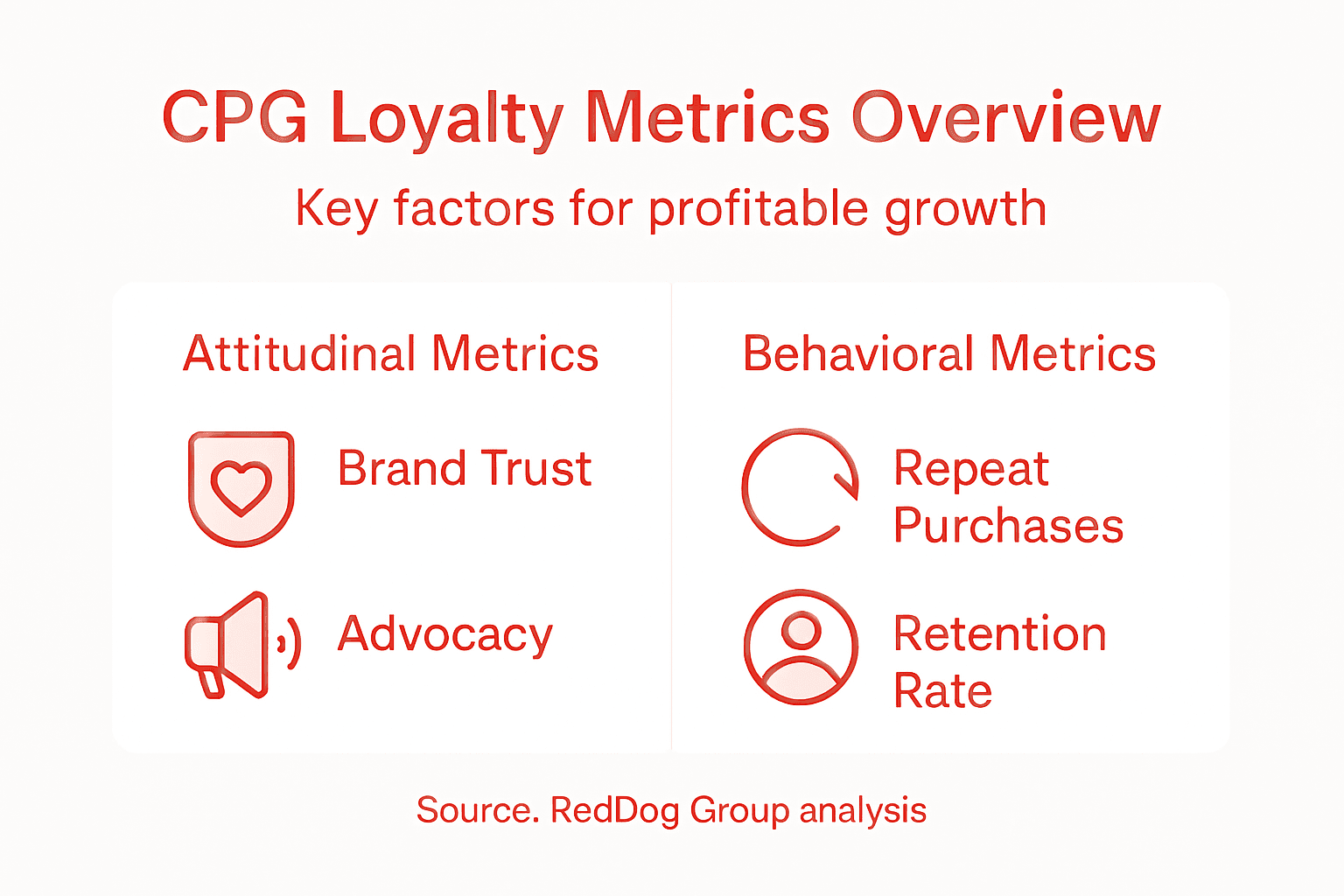
Understanding loyalty as both attitudinal and behavioral components means measuring not just what customers do but why they keep coming back. Run quarterly surveys asking Net Promoter Score (NPS) alongside your behavioral data. A customer with high purchase frequency but declining NPS is at risk of leaving.
This summary contrasts attitudinal and behavioral loyalty metrics for improvement focus:
| Loyalty Metric Type | What It Measures | Action Opportunity |
|---|---|---|
| Attitudinal | Brand sentiment, advocacy | Adjust messaging and rewards |
| Behavioral | Actual purchase patterns | Fine-tune offers and timing |
Set clear benchmarks for each metric. What does success look like for your business? If your current repeat purchase rate is 28 percent, what’s your target for six months? Make metrics visible to your entire team, not just marketing.
Review data monthly and adjust tactics quickly. If email campaigns have a 1.2 percent click rate while SMS has 8 percent, shift your personalization investment. If seasonal promotions spike Walmart purchases but tank Amazon visibility, test timing adjustments. If your highest-value customers engage with product education content but your mid-tier customers ignore it, create segment-specific content.
Test changes in small cohorts first. Never roll out a new loyalty tier or redemption rule to everyone simultaneously. You need control groups to measure actual impact versus assumed impact.
Metrics without action are just vanity numbers. Every metric should lead to a decision within 30 days.
Pro tip: Create a one-page dashboard showing six metrics updated weekly for your top three customer segments; share it in Monday morning team meetings to build accountability and spark tactical adjustments before problems compound.
Building genuine customer loyalty is one of the toughest challenges for CPG brands aiming for sustainable growth. If you are struggling to identify where loyalty leaks occur or need help implementing personalized loyalty touchpoints that truly resonate with your customers, you are not alone. Many brands face friction in omnichannel engagement, pricing strategy, and operational clarity that directly impact customer retention and margin. RedDog Group specializes in turning these complexities into actionable growth through margin-focused strategies tailored for emerging and growth-stage CPG brands.
Don’t leave your customer loyalty to chance. Partner with RedDog Group—Houston’s leading CPG retail growth consultancy—to discover what each sales channel truly contributes to your profits and where you can plug margin leaks to fuel repeat purchases. Learn how our deep expertise in Amazon, Walmart, DTC, wholesale, and distribution storefronts can help you implement measurable loyalty solutions now. Take control of your growth with a clear, data-driven plan focused on real customer behavior and lasting relationships. Start your journey with us at CPG Retail Growth Offer and witness the difference margin-first strategy makes.
Start by collecting voice of the customer data using surveys, customer feedback, and purchase behavior analysis. Document specific pain points where customers struggle to help identify areas for improvement.
Create tailored rewards based on customer segments’s buying behavior and preferences. For example, offer exclusive discounts to frequent buyers or surprise rewards for lapsed customers to encourage re-engagement.
Consolidate your customer data across channels to deliver a consistent brand experience. Ensure inventory transparency and synchronized messaging so customers receive the same promotions and product info whether online or in-store.
Focus on critical metrics like purchase frequency, customer retention rate, and average order value. Regularly reviewing these metrics will help you identify areas for tactical adjustments to reinforce customer loyalty.
Monitor loyalty metrics and conduct quarterly surveys to understand customer sentiment. Use this data to refine your loyalty program by adjusting rewards or addressing any dissatisfaction highlighted by your customers.
Implement changes in small control groups first to measure their impact effectively. For instance, test a new reward tier with a specific customer segment for 30 days before rolling it out to the entire customer base.
Leave a comment: