
Published: March 2020 | Last Updated:March 2026
© Copyright 2026, Reddog Consulting Group.

Growing a CPG brand across multiple channels demands more than good products. You need structured planning that balances marketplace economics with operational reality. Most brands in the $500K to $20M range struggle with scattered tactics and unclear priorities. This checklist provides criteria-driven frameworks to evaluate growth options, proven strategies backed by real metrics, and actionable steps to streamline your ecommerce expansion. You’ll learn how to assess tactics against your goals, implement disciplined execution cycles, and avoid the costly mistakes that drain margin without driving sustainable growth.
| Point | Details |
|---|---|
| Evaluation criteria matter | Use simplicity, scalability, cost efficiency, and performance metrics to assess every growth tactic before implementation. |
| Proven tactics deliver results | CTV advertising and omnichannel integration have driven 400% growth and 24% conversion lifts for CPG brands. |
| Disciplined execution wins | Weekly data visibility on price, content, availability, and ratings accelerates performance improvements faster than sporadic campaigns. |
| Avoid fragmented strategies | Disconnected digital and physical retail approaches create inconsistent messaging that confuses customers and wastes budget. |
Before adding new tactics to your growth plan, establish clear evaluation standards. Too many CPG brands adopt tools and platforms because competitors use them, not because they align with business goals. The challenge was to enhance the e-commerce experience without a bloated tech stack, as one successful brand discovered. Your criteria should filter out complexity that adds cost without improving outcomes.
Start with simplicity. Every new platform, integration, or marketing channel adds overhead. Ask whether each option requires dedicated staff, ongoing maintenance, or specialized expertise. Solutions that demand constant attention pull resources from core operations. Your evaluation framework should prioritize tools that work with existing workflows rather than forcing you to rebuild processes.
Align tactics with direct consumer sales goals. Some strategies excel at awareness but struggle with conversion. Others drive transactions but fail to build brand equity. Define what success looks like for your specific situation. A brand launching into retail needs different capabilities than one optimizing existing Amazon presence. Your ecommerce growth tips small retail brands should match your current stage and immediate objectives.
Evaluate four core dimensions for every growth option:
These criteria help you move past marketing hype to assess real business impact. A tactic might promise revolutionary results but require six months of implementation and specialized consultants. Another option could deliver modest gains immediately with minimal setup. Your evaluation framework reveals which path makes sense for your current resources and growth timeline.
CTV advertising has emerged as a cost-effective channel for CPG brands seeking awareness without premium cable costs. Streaming platforms deliver targeted reach at accessible price points. One home goods brand grew online revenue by 41% with Streaming TV Ads and doubled branded search volume, demonstrating how video content drives both immediate sales and long-term brand discovery. The key advantage is capturing attention during high-engagement moments without competing in crowded social feeds.
Focusing on branded search reduces acquisition costs while capturing high-intent traffic. When customers search for your brand name, they’re already aware and interested. Conversion rates for branded search typically exceed cold traffic by 300% to 500%. This makes optimizing your branded presence across Amazon, Google, and retailer sites a high-return activity. Invest in content that answers common questions and showcases product benefits clearly.
Flexible ecommerce platforms enable rapid testing without technical bottlenecks. Liquid I.V. experienced a 400% growth, 24% higher conversion rate, and 12% increase in average order value after implementing a solution that supported quick iterations. The ability to test pricing, bundling, and promotional strategies weekly rather than quarterly accelerates learning. Look for platforms that empower your team to make changes without developer dependencies.

Pro Tip: Start with one high-impact tactic rather than launching multiple initiatives simultaneously. Master execution on a single channel before expanding. This builds operational discipline and generates learnings you can apply across other tactics.
Key features of effective ecommerce solutions include:
These capabilities matter more than flashy features that look impressive in demos but rarely get used. Your increase ecommerce conversion rate efforts depend on tools that support continuous optimization rather than one-time setup projects. Prioritize solutions that make testing easy and measurement automatic.
The most successful CPG brands treat ecommerce growth as an operational discipline, not a marketing campaign. They establish weekly review cycles, track leading indicators like add-to-cart rates and checkout abandonment, and adjust tactics based on performance data. This approach compounds results over time as you identify what works and double down on winning strategies. Learn how to improve conversion rates smb ecommerce through systematic testing rather than guesswork.
Omnichannel integration delivers the most consistent customer experience by connecting digital and physical touchpoints. Nestlé views digital as a category growth accelerator, growing ecommerce 15.1% organically and reaching 20.1% of total sales in Q1 2025, demonstrating how unified strategies drive results across all channels. When your messaging, pricing, and product information align everywhere customers shop, you eliminate friction and build trust.
Different growth options suit different business stages and resource levels. A startup with limited capital needs low-risk tactics that generate quick wins. An established brand expanding into new categories can invest in longer-term awareness building. Compare options based on your specific situation rather than copying competitor strategies that may not fit your operational reality.
| Strategy | Best For | Typical Results | Implementation Complexity | Ongoing Effort |
|---|---|---|---|---|
| CTV Advertising | Awareness and branded search growth | 40-100% revenue increase, 2x search volume | Medium (creative and targeting setup) | Low (monthly optimization) |
| DTC Platform Upgrade | Conversion rate optimization | 15-30% conversion lift, 10-15% AOV increase | High (migration and integration) | Medium (weekly testing) |
| Omnichannel Integration | Consistent customer experience | 15-25% overall sales growth | High (system integration) | Medium (cross-channel coordination) |
| Marketplace Optimization | Existing channel performance | 20-40% sales increase per marketplace | Low (listing and advertising improvements) | High (daily monitoring) |
Pro Tip: Avoid mixing incompatible strategies that create operational conflicts. Running aggressive Amazon discounts while positioning as premium in retail confuses customers and trains them to wait for deals. Choose tactics that reinforce each other rather than sending contradictory signals.
The risk of fragmented approaches becomes clear when customers encounter different prices, product information, or availability across channels. This erodes trust and sends shoppers to competitors with more consistent experiences. Your scale ecommerce omnichannel success depends on integrated systems that maintain accuracy everywhere you sell.
Consider total cost of ownership when comparing options. A platform with low monthly fees might require expensive consultants for every change. Another solution with higher upfront costs could include support and training that accelerates results. Calculate the true investment including staff time, external resources, and opportunity cost of delayed implementation. The cheapest option rarely delivers the best value.
Evaluation should also account for how each option supports your ecommerce merchandising best practices across channels. Can you easily update product content? Does it support the bundling and cross-selling strategies that increase average order value? Will it scale as you add SKUs and expand into new categories? These operational considerations matter as much as initial performance metrics.
Successful implementation starts with establishing weekly visibility into core performance metrics. Discipline beats sporadic campaigns; weekly visibility on price, content, availability, ratings, and search fuels faster execution loops that compound results over time. Set up dashboards that surface the metrics that actually drive decisions, not vanity numbers that look good in presentations.
Build execution cycles around these regular review points:
This cadence creates momentum that sporadic monthly reviews cannot match. Small weekly improvements compound into significant annual gains. A 2% weekly conversion rate increase becomes 100% annual growth through consistent optimization.
Align your digital strategy with brick-and-mortar execution by treating them as complementary rather than competing channels. Online presence should drive retail foot traffic through local inventory visibility and store locator tools. Physical retail should capture customer data and drive online subscriptions. This integrated approach maximizes the value of every customer interaction regardless of where it occurs.
Measurement mandates ensure accountability and prevent resource waste on underperforming tactics. Establish clear success metrics before launching any initiative. Define what good looks like in 30, 60, and 90 days. If a tactic isn’t hitting benchmarks by day 60, either fix the execution or reallocate budget to better opportunities. This disciplined approach prevents the common trap of continuing failed experiments because of sunk costs.
Your ability to boost omnichannel sales for retail success depends on operational systems that support rapid iteration. Invest in tools and processes that make testing easy rather than requiring weeks of planning and approvals. The brands that win in 2026 will be those that can test, learn, and scale winning tactics faster than competitors.
Prioritize initiatives based on potential impact and implementation speed. Quick wins build momentum and fund larger projects. A pricing optimization that increases margin 3% this month generates cash flow for a platform upgrade next quarter. This staged approach reduces risk while maintaining forward progress toward your growth goals.
Navigating ecommerce growth across multiple channels requires expertise that most internal teams lack. You need partners who understand marketplace economics, retail operations, and the specific challenges CPG brands face in the $500K to $20M revenue range. RedDog Group specializes in omnichannel growth services that deliver operational clarity alongside revenue growth.
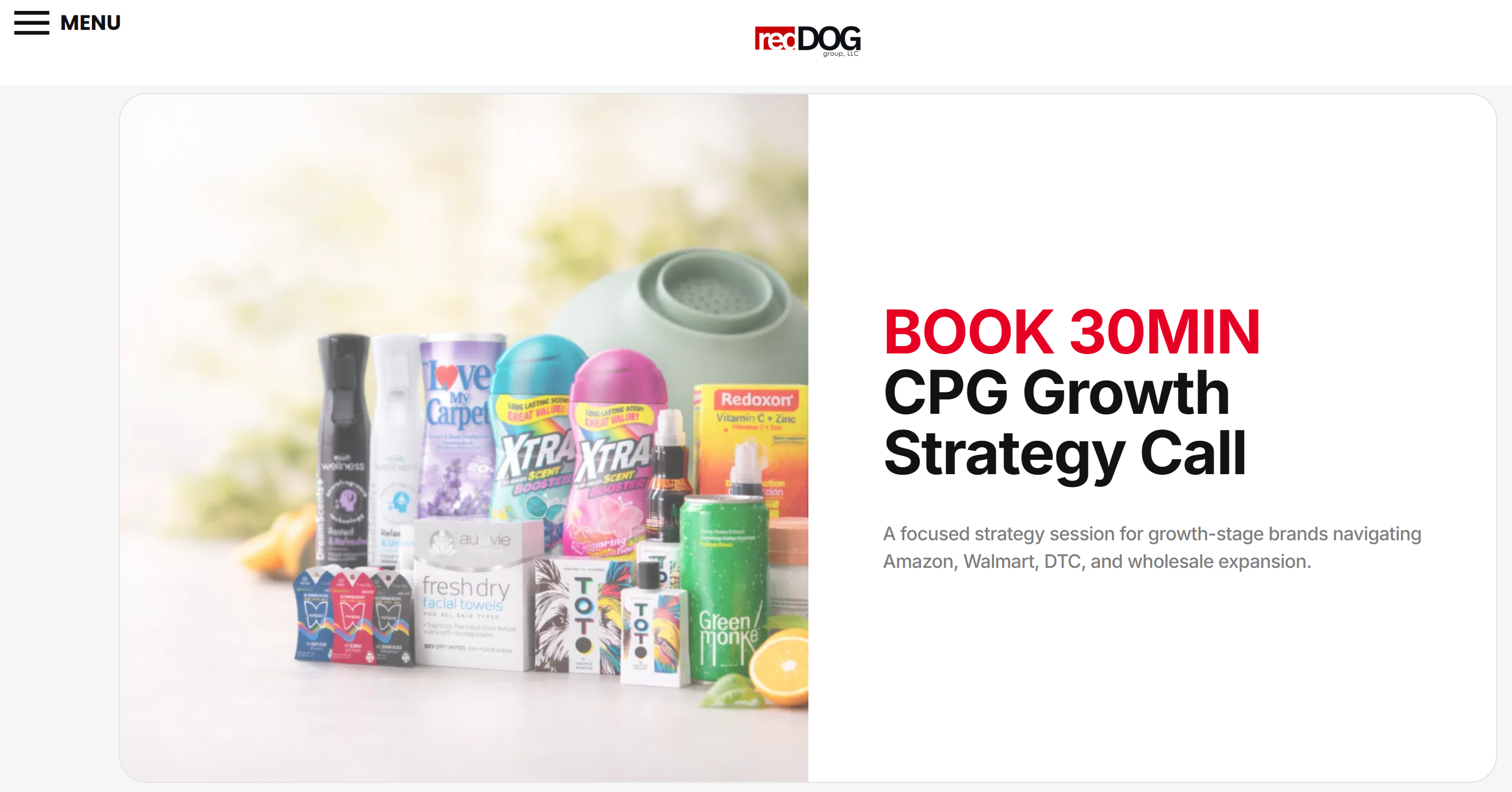
We help you implement structured growth checklists tailored to your current stage and resources. Our approach focuses on contribution margin rather than vanity metrics, ensuring every tactic actually improves profitability. Whether you’re optimizing Amazon presence, expanding into Walmart, or building DTC capabilities, we provide the analytical frameworks and execution support that accelerate results. Explore our CPG retail growth solutions to see how we can support your 2026 growth objectives.
Focus on omnichannel integration that delivers consistent customer experiences across all touchpoints. Invest in cost-effective advertising channels like CTV that build awareness without premium costs. Establish disciplined weekly execution cycles that surface performance issues quickly and enable rapid optimization. These priorities create sustainable growth rather than temporary spikes from sporadic campaigns.
Track conversion rates, average order value, customer acquisition cost, and omnichannel sales mix as your core metrics. Monitor these weekly rather than monthly to catch trends early and adjust tactics quickly. Use cohort analysis to understand how customer behavior changes over time and which acquisition sources deliver the highest lifetime value. Weekly data visibility fuels faster improvement cycles than quarterly reviews.
CPG brands often fail to connect their digital and brick-and-mortar strategies, leading to inconsistent messaging that confuses customers and wastes marketing spend. Avoid relying on sporadic campaigns without ongoing performance visibility. Don’t add tools and platforms just because competitors use them without evaluating fit for your specific goals. These mistakes drain resources without building sustainable competitive advantages.
Most tactics show initial signals within 30 days and meaningful results by 60 days if executed properly. CTV advertising typically drives branded search increases within two weeks. Conversion optimization efforts should show measurable lifts within 30 days of implementation. Set clear 30-60-90 day benchmarks before launching initiatives so you can identify underperformers early and reallocate resources to better opportunities.
Leave a comment: