
Published: March 2020 | Last Updated:April 2026
© Copyright 2026, Reddog Consulting Group.

TL;DR:
- Choosing the right automation type is essential for effective multi-channel marketing in CPG brands.
- Unifying customer data before automating is critical to avoid poor campaign performance.
- Starting with segmentation-based flows and CRM triggers offers faster ROI for brands with limited data infrastructure.
Running a CPG brand across DTC, Amazon, retail, and wholesale simultaneously means your customer touchpoints multiply fast. Most founders try to solve this by adding more tools, only to end up with disconnected campaigns, leaky margins, and a team stretched thin. The real problem is not the volume of channels. It is choosing the wrong automation type for each one. Marketing automation types span email, behavioral, CRM, journey, segmentation, AI-driven, transactional, mobile, and omnichannel, and each serves a different purpose. This guide breaks down what each type does, how to match it to your channel strategy, and how to build toward true omnichannel orchestration without burning budget on tools you are not ready for.
| Point | Details |
|---|---|
| Start with segmentation | Segmenting customers and automating CRM touchpoints creates reliable baseline ROI before scaling complexity. |
| Unify channel data | Integrating DTC and retail data prevents wasted spending and enables precise automation across platforms. |
| Choose methods by stage | Pick email and CRM automation for early-stage CPG, and adopt AI/predictive flows as you scale multi-channel operations. |
| Omnichannel drives retention | Unified omnichannel automation boosts lifetime value by keeping customer journeys consistent and connected. |
Before you can pick the right tool, you need to know what you are actually choosing between. Automation in marketing is not one thing. It is a spectrum of capabilities, and where you sit on that spectrum depends heavily on your revenue stage and channel mix.
Here is a breakdown of the nine core automation types CPG brands encounter:
| Automation type | Primary use case | Complexity | Typical ROI timeframe |
|---|---|---|---|
| Retention, reactivation | Low | 30-90 days | |
| Behavioral trigger | Cart recovery, upsell | Medium | 14-60 days |
| CRM/lead nurturing | Buyer pipeline, wholesale | Medium | 60-180 days |
| Customer journey | Lifecycle orchestration | High | 90-180 days |
| Segmentation-based | Personalization at scale | Medium | 30-90 days |
| AI-driven predictive | Churn prediction, LTV growth | High | 90-365 days |
| Transactional | Post-purchase experience | Low | Immediate |
| Mobile (SMS/push) | Real-time engagement | Medium | 14-45 days |
| Omnichannel | Unified customer journeys | Very high | 6-18 months |
For brands in the $500K to $5M range, transactional, email, and segmentation-based automation deliver the fastest margin impact. They require minimal data infrastructure and connect directly to your existing sales flows.
Knowing the types is step one. Matching them to your actual channel mix is where founders most often get it wrong. The tendency is to buy a platform because a competitor uses it, rather than auditing what your specific channels actually need.
Start with these three filters before evaluating any tool:
Here is how automation types map to common CPG channels:
For a practical reference on building channel-specific campaigns, the omnichannel commerce guide and resources on building omnichannel campaigns offer strong frameworks.
CPG brands in the $500K to $20M range get the most traction by starting with email and CRM automation combined with segmentation, then scaling toward AI-driven and omnichannel once data foundations are solid.
| Channel | Best automation fit | Avoid until data is unified |
|---|---|---|
| DTC | Email, behavioral, transactional | AI-driven, full journey |
| Wholesale/retail | CRM, transactional, mobile | Omnichannel orchestration |
| Amazon | Behavioral (within rules), transactional | CRM, journey |
| All channels combined | Journey, segmentation, AI-driven | Omnichannel (until POS+DTC unified) |
Pro Tip: Before scaling any automation platform, pull your POS, DTC, and CRM data into a single source. Even a basic spreadsheet audit of your customer touchpoints will expose gaps that would otherwise cost you months of bad automation output.
Once you know which automation type fits your channel, you face a second decision: do you use rule-based logic or AI-driven systems to power it?
Rule-based automation works on if-then logic. A customer buys a product, a thank-you email fires. A cart sits abandoned for four hours, a reminder goes out. These are scheduled tasks, fixed triggers, and predetermined segments. Simple, predictable, and effective when your customer behavior is consistent.
AI-driven automation replaces fixed rules with predictive models. Instead of sending an email at hour four, the system decides when each individual customer is most likely to convert based on behavioral patterns. It scores lifecycle stages dynamically and personalizes content without manual segmentation.

Here is how each approach plays out in practice for CPG founders:
Rule-based pros:
Rule-based cons:
AI-driven pros:
AI-driven cons:
The shift from multi-channel parallel campaigns to unified omnichannel journeys represents the same leap as moving from rule-based to autonomous AI: both require process discipline before the technology can deliver.
| Feature | Rule-based | AI-driven |
|---|---|---|
| Setup speed | Fast (days to weeks) | Slow (weeks to months) |
| Data requirement | Moderate | High (clean, unified) |
| Personalization depth | Segment-level | Individual-level |
| Cost | Lower | Higher |
| ROI timeframe | 30-90 days | 90-365 days |
| Best for | $500K-$5M brands | $5M-$20M+ brands |
For CPG founders looking at real examples, data-driven marketing examples from established brands show how rule-based systems scale into AI-driven ones. The data-driven strategies that actually work start with clean inputs, not expensive platforms.
Most CPG brands run multichannel marketing. Fewer run true omnichannel. The difference matters more than most guides acknowledge.
Multichannel means you send campaigns across platforms independently. Your email team runs one sequence. Your SMS vendor runs another. Your Amazon ads operate separately. Customers move between these channels but the systems do not know it.
Omnichannel orchestration unifies all touchpoints and data sources. When a customer clicks an Amazon ad, visits your DTC site, and then walks into a retail store, every subsequent message reflects that complete journey. That is the ceiling of automation capability.
Here are the steps to build toward it:
The benefits of getting this right are significant:
Resources on omnichannel marketing integration, the omnichannel strategy process, and best omnichannel platforms can help you evaluate where your brand stands today.
Pro Tip: Run a pilot flow connecting your DTC post-purchase sequence with a retail proximity SMS message before building out full omnichannel orchestration. It exposes data gaps early and gives you a proof-of-concept without a full platform commitment.
Here is what most automation guides will not tell you: the technology is rarely the bottleneck. The data is.
We see CPG founders invest in sophisticated platforms before their POS, DTC, and CRM data are even speaking the same language. The result is automation that fires at the wrong customers, at the wrong time, with the wrong message. That is not a platform problem. It is a process problem.
Unifying POS and DTC data before scaling any automation layer is the single highest-leverage move most brands in the $500K to $20M range can make. Until that is done, even rule-based automation underperforms.
Our recommendation: start with segmentation-based flows and CRM triggers. These require less data infrastructure and expose the gaps in your customer journey faster than any AI tool will. Once you can see the full picture of who buys, when they repurchase, and where they drop off, you will know exactly which automation upgrade to make next.
The brands that win with automation are not the ones with the most tools. They are the ones who mapped their multichannel lead generation process before automating it. Avoid tech for tech’s sake. Build clarity first, then automate what is already working.
If you have read this far, you now have a clear picture of the automation types available, how they map to your channels, and where to start based on your revenue stage. The next step is applying that framework to your specific brand, your actual data, and your real margin structure.
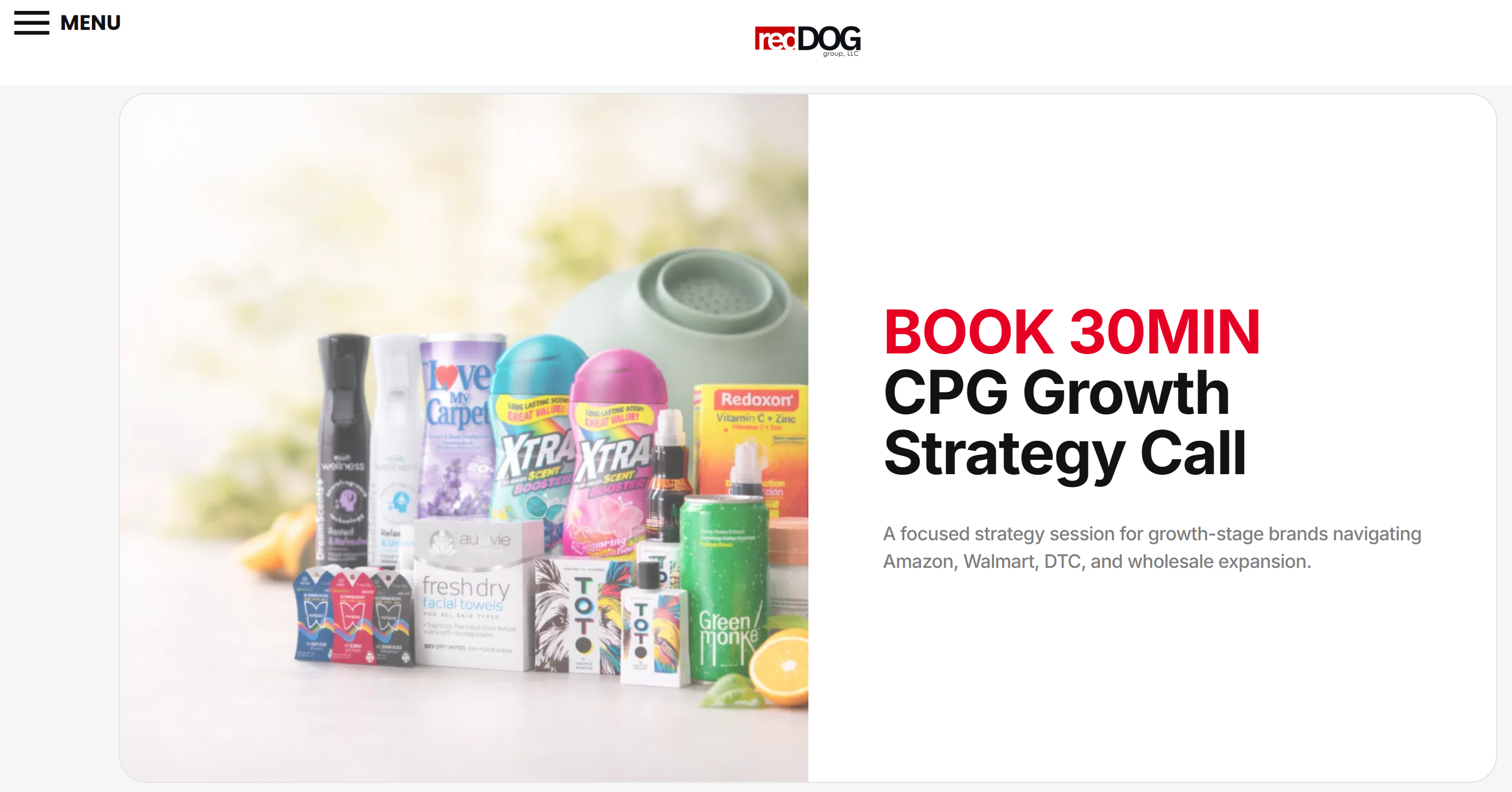
At RedDog Group, we work with CPG brands in the $500K to $20M range to build automation strategies grounded in contribution margin, not just campaign metrics. Whether you are starting with email flows or ready to build omnichannel orchestration, we help you prioritize what actually moves the needle. Explore our retail growth solutions to see how we structure automation roadmaps that connect your channels and protect your margins.
Multichannel automation sends separate, independent campaigns across platforms, while omnichannel automation unifies all customer touchpoints into a single, seamless journey that adapts based on behavior across every channel.
CPG brands maximize automation ROI by starting with email and CRM flows, segmenting their customer base, and unifying data across channels before scaling to AI-driven or omnichannel systems.
Behavioral trigger automation includes sending cart abandonment reminders, post-purchase upsell offers, or personalized replenishment prompts based on a customer’s last purchase date or browsing activity.
Small CPG brands should build segmentation and CRM flows first before investing in AI-driven automation, since AI systems require clean, unified data to function accurately and deliver positive ROI.
Leave a comment: