
Published: March 2020 | Last Updated:July 2026
© Copyright 2026, Reddog Consulting Group.

TL;DR:
- Selling on multiple platforms boosts revenue by over 140% and increases customer interactions significantly. Marketplace presence reduces customer acquisition costs and builds brand credibility, which benefits direct-to-consumer sales. Brands should treat marketplaces as customer acquisition channels, not as their main revenue source, to maintain margin and control.
Marketplace selling is defined as listing and selling products through third-party platforms that provide built-in traffic, payment infrastructure, and customer trust. The advantages of marketplace selling go well beyond convenience. Merchants who sell on three or more channels generate over 140% more revenue than single-channel sellers. That number alone reframes marketplaces from a secondary option to a primary growth engine. For entrepreneurs and small to mid-sized business owners, the benefits of online marketplaces include faster customer acquisition, lower upfront marketing costs, and a credibility boost that owned channels take years to build.
Selling on multiple platforms multiplies your exposure without multiplying your overhead at the same rate. Merchants on three or more channels also generate 3.2 times more customer interactions than those selling on a single platform. More interactions mean more data, more repeat purchases, and more word-of-mouth.

The revenue math works because marketplaces bring buyers who are already in purchase mode. You are not interrupting someone’s social feed. You are showing up where they are actively searching for products like yours.
Multichannel presence also reduces single-platform risk. If one marketplace changes its algorithm, raises fees, or suspends your account, your revenue does not collapse overnight. Selling across platforms acts as a structural hedge against those disruptions.
Key revenue drivers from marketplace selling include:
Multichannel customers spend 4% more per shopping trip than single-channel buyers. That incremental lift adds up fast at scale.
Customer acquisition cost is the single most underestimated variable in direct-to-consumer growth. DTC customer acquisition costs now average $68 per customer, a 34% increase over 2024. That trajectory makes paid social and search increasingly difficult to justify for early-stage brands.
Marketplace advertising operates differently. Sponsored listings on major platforms maintain a stable 12–18% advertising cost of sale, which is predictable and directly tied to actual sales. You pay for performance, not impressions.
The cost efficiency compounds when you treat marketplace buyers as the start of a longer relationship, not a one-time transaction. Brands that follow up marketplace purchases with email sequences, insert cards, or loyalty offers convert a meaningful share of those buyers into owned-channel customers.
Practical ways to reduce acquisition costs through marketplace selling:
Pro Tip: Run your marketplace ads at a 15% target ACoS for 30 days before scaling. That baseline tells you which products can profitably fund their own acquisition before you layer on DTC spend.
Presence on a reputable marketplace signals legitimacy to buyers who have never heard of your brand. This is the platform validation effect. A shopper who finds your product on a trusted platform is more likely to search for your brand directly afterward. That behavior lifts conversion rates on your own website without any additional ad spend.
Building a branded storefront within a marketplace takes this further. A well-designed storefront with consistent imagery, a clear brand story, and organized product categories functions as a mini website inside the platform. Brands that invest in storefront design see higher session times and lower bounce rates within the marketplace.
Three ways marketplace presence builds brand authority:
The credibility transfer works in both directions. A strong marketplace presence makes your DTC site more convincing. A strong DTC site makes your marketplace listings more trustworthy. Both channels reinforce each other when managed consistently.
Centralized inventory management is the operational backbone of successful multichannel selling. Without it, overselling, stockouts, and fulfillment errors erode the customer experience and trigger account health issues on major platforms.
Operational complexity without unified systems causes what practitioners call “channel entropy.” Channel entropy occurs when inventory counts, pricing, and order data fall out of sync across platforms. The result is poor customer experience, negative reviews, and potential account suspensions.
The solution is canonical product IDs and automated integrations that push real-time inventory updates across every channel. This is not optional at scale. Brands that treat inventory orchestration as a core system rather than an afterthought grow faster and with fewer operational crises. For a detailed breakdown of how to set this up, Reddog’s guide on multichannel inventory management covers the systems architecture in practical terms.
Pro Tip: Assign a single SKU master record in your inventory system and let every marketplace pull from it. Never manage inventory counts manually per platform. One source of truth prevents the errors that kill marketplace accounts.
Operational comparison: multichannel vs. single-channel selling
| Feature | Single-channel selling | Multichannel selling |
|---|---|---|
| Revenue exposure | Concentrated on one platform | Distributed across platforms |
| Inventory risk | Lower complexity, higher platform dependency | Higher complexity, lower platform dependency |
| Customer data | Limited to one platform’s analytics | Broader behavioral data across channels |
| Fulfillment options | One logistics model | Multiple fulfillment options by channel |
| Brand visibility | Narrow audience reach | Wider reach across buyer segments |
The most effective marketplace sellers do not treat platforms as their primary brand home. They use marketplaces as a top-of-funnel acquisition engine that feeds customers into owned channels where lifetime value is higher. Marketplace selling has evolved from a compromise into an integrated acquisition strategy.
SKU architecture is the clearest expression of this strategy. Brands that restrict subscriptions and premium bundles to their own channels while selling commodity SKUs through marketplaces protect their margins and build a moat around their DTC business. The marketplace drives discovery. The owned channel captures the long-term relationship.
Price parity discipline matters here. Undercutting your own DTC price on a marketplace trains buyers to never pay full price on your site. Consistent pricing across channels protects margin and brand perception simultaneously.
Key principles for balancing marketplace and owned-channel strategy:
Understanding multichannel marketing fundamentals helps clarify how each channel plays a different role in the customer lifecycle. The brands that grow most efficiently assign each channel a specific job and measure it accordingly.
For a practical look at how other brands have structured this, Reddog’s breakdown of marketplace strategy examples shows how SKU architecture and channel sequencing work in real CPG contexts.
Marketplace selling generates the most value when it functions as a customer acquisition engine that feeds into owned channels, not as a standalone revenue source.
| Point | Details |
|---|---|
| Revenue multiplier effect | Selling on 3+ channels generates over 140% more revenue than single-channel selling. |
| Lower acquisition costs | Marketplace ACoS of 12–18% outperforms DTC CAC of $68 per customer. |
| Platform validation | Marketplace presence builds brand credibility that lifts DTC conversion rates. |
| Operational discipline | Unified inventory systems prevent channel entropy and protect account health. |
| SKU architecture | Reserve high-margin SKUs for DTC; use marketplaces to drive discovery and acquisition. |
Most brands I work with at Reddog come in treating their marketplace channel as their business. Their revenue lives there. Their reviews live there. Their customer relationships live there. That is a fragile position, and the fee structures on major platforms make it more fragile every year.
The brands that use marketplaces well treat them the way a smart retailer treats a trade show. You show up, you get discovered, and then you work hard to move that relationship somewhere you own it. The marketplace is not the destination. It is the introduction.
What I have seen work consistently is a deliberate SKU split. Put your entry-level or high-velocity products on marketplaces. Keep your bundles, subscriptions, and premium configurations on your own site. That architecture protects your margin and gives buyers a reason to find you directly.
The other thing most brands underestimate is the data. Marketplace search term reports tell you exactly what language buyers use to find products like yours. That language belongs in your DTC product descriptions, your email subject lines, and your paid search campaigns. The brands that mine that data grow faster and spend less doing it.
Overdependence on any single platform is a risk management failure. The DTC and marketplace boundary is dissolving, and the brands that win are the ones building fluid infrastructure that extracts margin from every channel without losing control of their brand.
— Reddog
Reddog works with CPG founders and operators in the $500K to $20M revenue range who need clarity on what each channel actually contributes to profit.
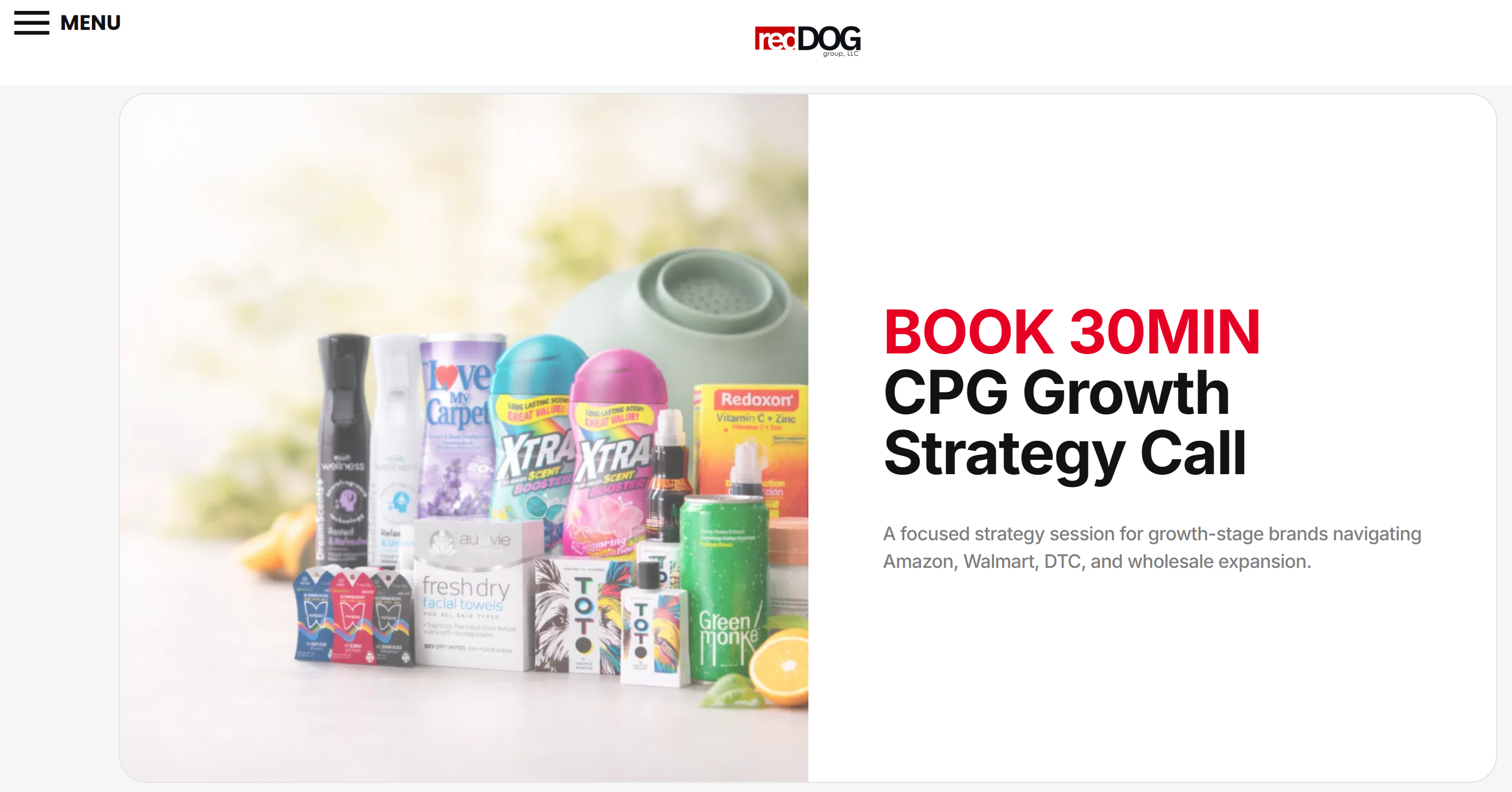
If you are selling on Amazon, Walmart, or both, and you are not sure whether your marketplace revenue is actually profitable after fees, ad spend, and fulfillment costs, that is exactly the conversation a free 30-minute strategy call with Reddog is built for. We review your contribution margin by channel, identify where margin is leaking, and give you a clear picture of how to structure your marketplace and DTC channels for sustainable growth. No generic advice. Just a focused review of your numbers and your next move.
Marketplace selling gives small businesses immediate access to large, high-intent audiences without building their own traffic from scratch. The core benefits include lower customer acquisition costs, faster revenue growth, and brand credibility from platform association.
DTC customer acquisition costs have risen sharply, averaging $68 per customer in 2026. Marketplaces offer a more cost-efficient top-of-funnel channel that feeds buyers into owned channels over time.
Sell on at least three channels and treat no single platform as your primary revenue source. Multichannel selling reduces the risk of account suspensions, algorithm changes, or fee increases wiping out your business.
Reserve high-margin SKUs, bundles, and subscriptions for your DTC channel. Use marketplaces for high-velocity, lower-margin products that drive discovery and first-time purchases.
Up to 12% of marketplace buyers convert to direct subscribers within 60 days when brands use packaging inserts, email sequences, or loyalty incentives to give buyers a clear reason to purchase directly.
Leave a comment: